Bed Skirt Styling Ideas for a Polished Bedroom Look

Bed Skirt Styling Ideas for a Polished Bedroom Look - Featured Image

Bed Skirt Styles That Add a Polished Bedroom Look

Bed skirts are a small yet powerful way to elevate your bedroom’s look while hiding storage and keeping things clean. Here’s how to style them perfectly and choose the right type for your space. Pillar read: [CBQ_LINK:bed-styling-guide]

How to style bed skirts for a polished bedroom look while hiding storage

Key Takeaways

  • Bed skirts hide clutter, complete the bed look, and support sleep hygiene.
  • Choose from styles like tailored, ruffled, and elasticized to suit your décor.
  • Fabrics and colors influence the vibe—go from casual cotton to luxe velvet.
  • Bed skirts add warmth, symmetry, and depth to any bedroom design.
  • Pro styling tips ensure a balanced, cohesive, and seasonal bedroom refresh—bed skirts are the secret finisher.

1. What Are Bed Skirts?

A bed skirt—sometimes called a dust ruffle—is a decorative piece of fabric that covers the box spring or bed foundation and hangs to the floor. It serves dual purposes: enhancing the visual appeal of your bedroom and concealing any items stored underneath your bed. This simple textile addition creates a polished, hotel-like look and provides a clean transition from the bed to the floor.

Think of it as the frame around a picture—it completes the whole image. For instance, in our bed styling guide, we suggest incorporating bed skirts for rooms aiming for cohesion and design flow: [CBQ_LINK:bed-styling-guide]

In my own bedroom, adding a crisp white tailored skirt instantly concealed storage bins while making the bed look “dressed up,” much like putting on a blazer over casual clothes. It felt neater and more intentional.

To sum up, bed skirts are practical and aesthetic game-changers, especially for those who value both form and function in bedroom design. According to the Sleep Foundation, a tidy and cohesive bedroom environment can promote better rest.
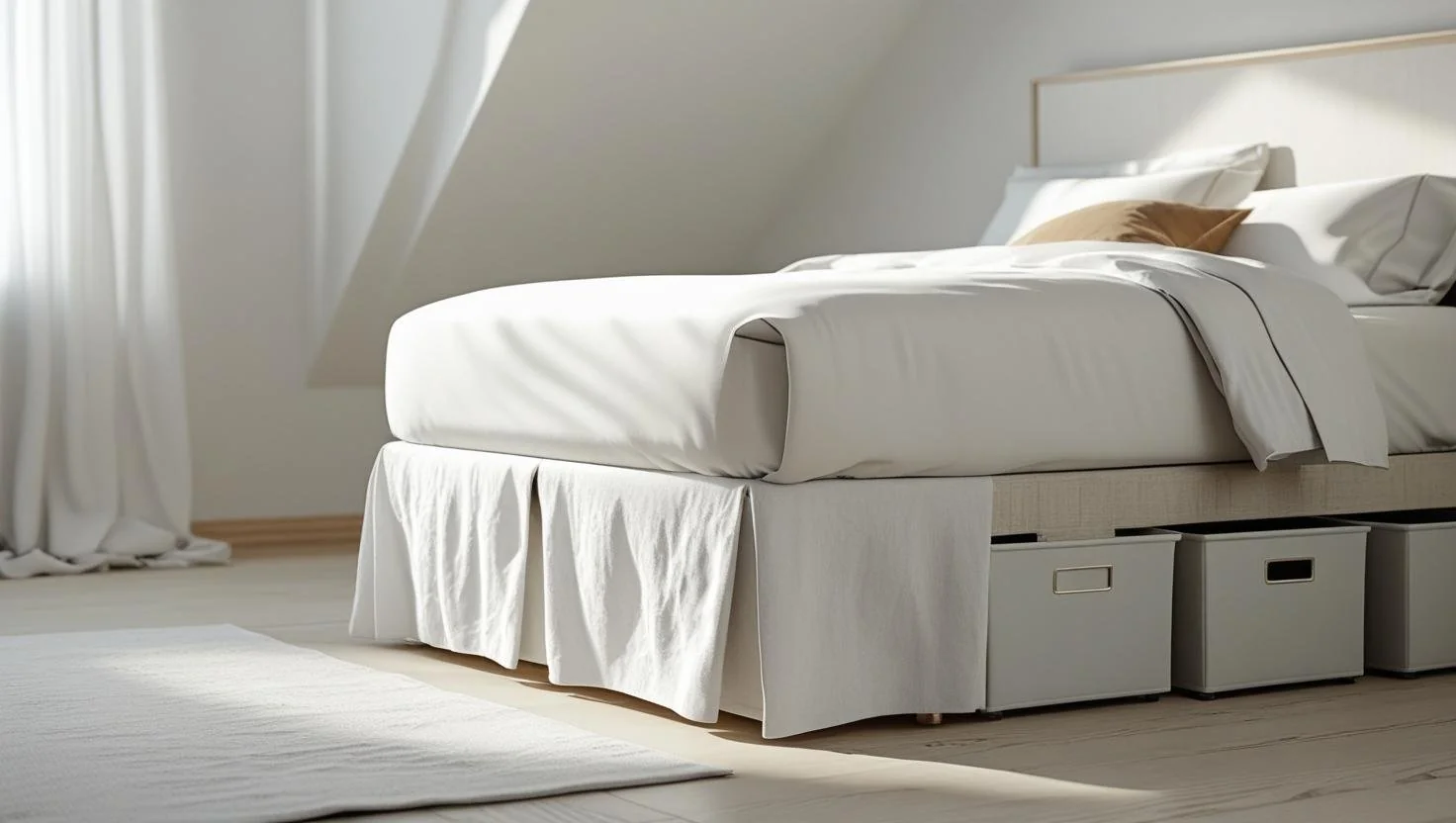
Bed skirts provide a stylish way to hide under-bed storage and enhance bedroom aesthetics

2. Types of Designs

The style of your bed skirt can either complement your existing decor or create an eye-catching statement. Understanding the different design types ensures your choice fits both your taste and the practical setup of your bed.

  • Tailored Bed Skirts: Crisp lines, minimal design, structured elegance.
  • Ruffled Bed Skirts: Soft and charming, perfect for vintage vibes.
  • Box-Pleated Skirts: Balance of structure and detail for transitional decor.
  • Elasticized Bed Skirts: Convenient and easy to install, ideal for busy homes.
  • Split-Corner Designs: Great for beds with posts or footboards, drapes cleanly.

For a deeper breakdown by bed frame and mattress type, see: [CBQ_LINK:bed-accessories-upgrade-sleep]

Layering more décor? Explore options in: [CBQ_LINK:bedding-accessories-cozy-stylish-bedroom]
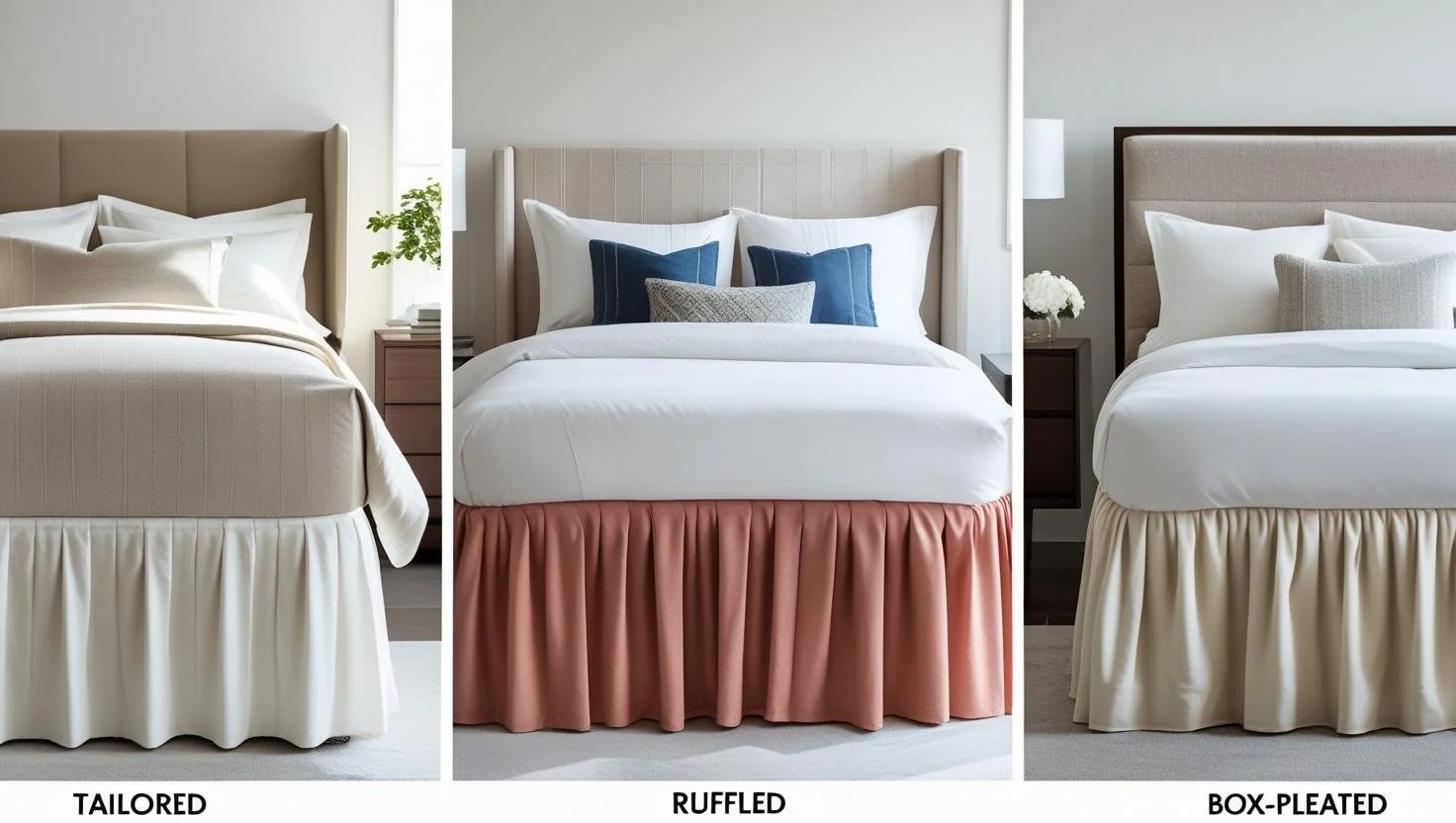
Bed skirts add softness or structure depending on the design you choose

3. Choosing Fabric and Color

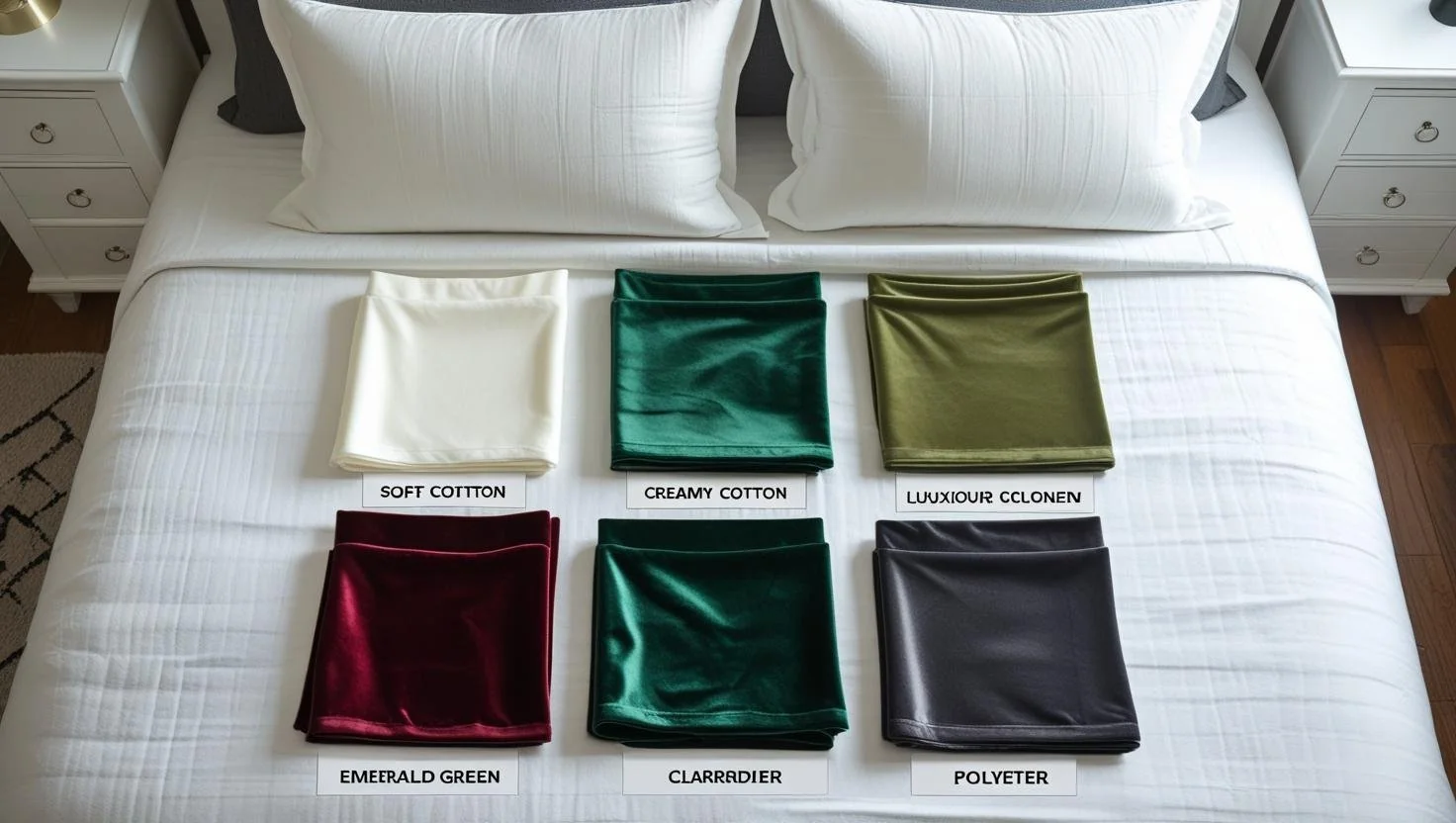
Fabric and color choices shape the look and performance of your bed skirt—think of them as your room’s “texture and tone.” Light, breathable cotton or linen reads casual and effortless; velvet or satin turns up the drama. Designers often start with texture to set the mood and then layer color and pattern. See guidance on layering from Architectural Digest and material pros/cons in Parachute’s fabric guide.

  • Cotton & Linen: Light, breathable, easy to maintain.
  • Polyester: Durable, cost-effective, great for kids’ rooms.
  • Velvet or Satin: Luxurious and dramatic for upscale decor.
  • Blends: Softer hand + strength; ideal for high-traffic rooms.
  • Neutrals: Timeless and flexible with any palette.
  • Bold Hues: Add contrast and personality.
  • Patterns/Reversible: Seasonal styling with quick flips.

Coordinating with your duvet and shams? Try: [CBQ_LINK:bedding-color-mix-and-match-guide]
Bed skirts are available in a variety of fabrics and colors to suit your bedroom design

4. Practical Benefits

Beyond aesthetics, bed skirts deliver handy perks: they hide bins and boxes, minimize dust bunnies, protect frames from scuffs, and can support better sleep hygiene when combined with good cleaning routines.

  • Conceal Storage: Especially useful in small spaces.
  • Block Dust: Easier upkeep and cleaner floors.
  • Prevent Damage: A barrier against scuffs and scratches.
  • Health Boost: Combine with air-quality habits; see the EPA’s guide to improving indoor air.

More on sensitivities: [CBQ_LINK:bedding-and-allergies-facts]

Keep everything fresh: [CBQ_LINK:how-often-wash-bedding]

Bed Skirt Styling Ideas for a Polished Bedroom Look

5. Styling Tips

These finishing moves take your setup from good to gorgeous. Start with the right drop, then unify color and texture across your bedding for a designer look—without going overboard. Bed skirts offer one of the easiest ways to switch up a bedroom’s mood, so don’t be afraid to experiment.

  • Match Your Bedding: Repeat tones across shams, duvet, and skirt for cohesion.
  • Get the Right Drop: Measure from top of box spring or platform to floor—your skirt should gently “kiss” the floor.
  • Play with Texture: Mix linen sheets, a quilted coverlet, and a smooth skirt for depth.
  • Change with Seasons: Swap in airy cotton for summer; richer velvet for winter.

Seasonal Looks

In warmer months, light bed skirts in cotton or linen add breezy freshness. Pair them with crisp percale sheets and pastel throws. For autumn, a deep-hued box-pleated skirt in flannel or tweed creates instant coziness. Winter calls for velvet or faux suede bed skirts—both add depth and warmth. Spring is the perfect time to try reversible designs or patterned dust ruffles that echo florals and greenery outside.

Common Mistakes to Avoid

A few missteps can make bed skirts look sloppy. The biggest mistake is choosing the wrong length: a skirt that pools on the floor looks messy, while one that hovers awkwardly above the floor feels unfinished. Another error is clashing fabrics—if your bedding is silky, a coarse skirt can break the flow. Finally, avoid neglecting seasonal care; dusty, wrinkled skirts detract from the whole room.

Budget vs Luxury Options

If you’re on a budget, elasticized bed skirts are affordable, easy to install, and often machine washable. They’re a great choice for kids’ rooms or rental apartments. On the other hand, luxury options—such as custom-made linen or velvet bed skirts—can be tailored to your exact bed height and finished with box pleats or piping for a designer feel. Mixing both approaches works too: invest in one timeless, high-quality skirt and rotate with budget-friendly styles for everyday use.

Bed skirts might seem like a small detail, but they pack a punch for style, storage, and cleanliness. By understanding types, fabrics, colors, and benefits, you can choose one that enhances your space in both form and function. Whether you’re aiming for a minimalist refresh or a cozy makeover, the right bed skirts help your bedroom feel complete and thoughtfully styled.

FAQ

What is the purpose of a bed skirt?
It conceals under-bed storage, protects the bed frame, and gives your setup a polished, cohesive finish. Many homeowners find bed skirts essential for balancing style with function.
Are bed skirts outdated?
No—modern, tailored dust ruffles and pleated skirts feel current and pair well with layered bedding. In fact, many designers use bed skirts as a secret tool to finish a high-end look.
How do I choose the right size bed skirt?
Measure the drop (top of foundation to floor) and choose a matching length for a neat drape. A properly sized bed skirt transforms a bed from casual to intentional.
Can I use a bed skirt on a platform bed?
Yes. Look for wrap-around or elastic styles; split corners also help with platform frames and footboards. These options ensure your bed skirts fit cleanly.
How do I wash a bed skirt?
Most are machine-washable on gentle—always check the label. For delicate fabrics like velvet, consider dry cleaning to maintain texture and drape.

Related Reading from Cozy Bed Quarters


Under Bed Storage Frames That Maximize Bedroom Space

Beds with Built-In Storage


Beds With Built-In Storage for Organized Living

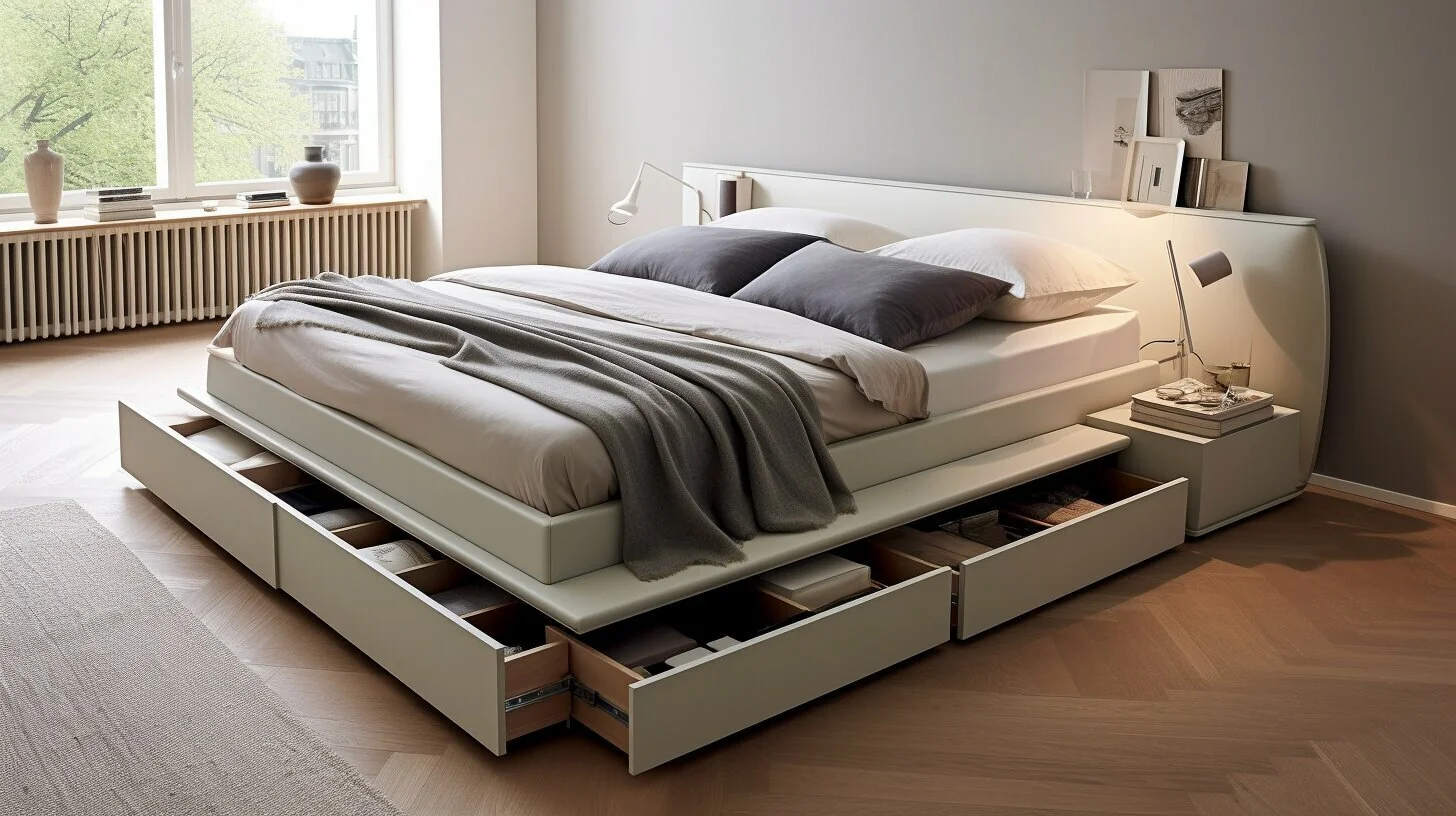
If your bedroom feels cluttered or you’re looking to make the most of every square foot, Beds with Built-In Storage offer the perfect solution. These smart designs integrate drawers, shelves, or hidden compartments directly into the bed frame, combining comfort with practicality. For more ideas, explore Hidden Storage Beds: Smart Space Savers.

Serene modern bedroom featuring Beds with Built-In Storage to maximize floor space and organization

Key Takeaways

  • Beds with Built-In Storage help maximize bedroom space while maintaining a stylish design.
  • Popular choices include platform beds, ottoman beds, captain’s beds, and Murphy beds.
  • These designs are ideal for small apartments, guest rooms, or multipurpose spaces.
  • Choosing the right storage bed depends on accessibility, storage needs, and room layout.

Why Choose Beds with Built-In Storage?

Bedrooms often double as storage areas, leaving closets overstuffed and under-bed bins in disarray. That’s where Beds with Built-In Storage stand out. By integrating storage into the frame itself, they eliminate clutter and free up valuable floor space. Whether in a city apartment or a compact guest room, these beds make organization effortless. For further ideas, check out Better Homes & Gardens’ bedroom storage solutions.

Types of Beds with Built-In Storage

There are multiple types of Beds with Built-In Storage, each offering a different balance of convenience, accessibility, and storage capacity. From sleek drawers to hidden lift-up compartments, the right choice depends on your space and lifestyle. For guidance, see How to Choose the Right Platform Bed with Storage.

Type of Storage Bed Best For Storage Capacity Key Advantage
Platform Beds with Drawers Minimalist bedrooms, daily essentials Moderate Accessible drawers without visible clutter
Ottoman Beds Small spaces, bulky seasonal storage High Gas-lift design reveals full under-bed space
Captain’s Beds Kids’ rooms, multipurpose layouts Moderate Mix of drawers and shelving
Murphy Beds with Storage Studios, guest rooms, tiny homes Moderate to High Saves floor space while adding hidden compartments

Each of these Beds with Built-In Storage caters to different needs. The best option depends on how much space you need and how you prefer to access it.

Platform Beds with Drawers

Answer first: choose platform beds if you want simple, everyday storage that blends into a minimalist design. Platform beds integrate two to four drawers into the frame, ideal for linens, shoes, or clothing. They’re especially useful in rooms with enough clearance for drawer access. Explore IKEA’s storage bed collection for affordable options.

Buyer’s tip: Opt for full-extension drawers to reach the back easily; felt-lined bottoms protect delicates. If your rug is thick, confirm the drawer height clears the pile.

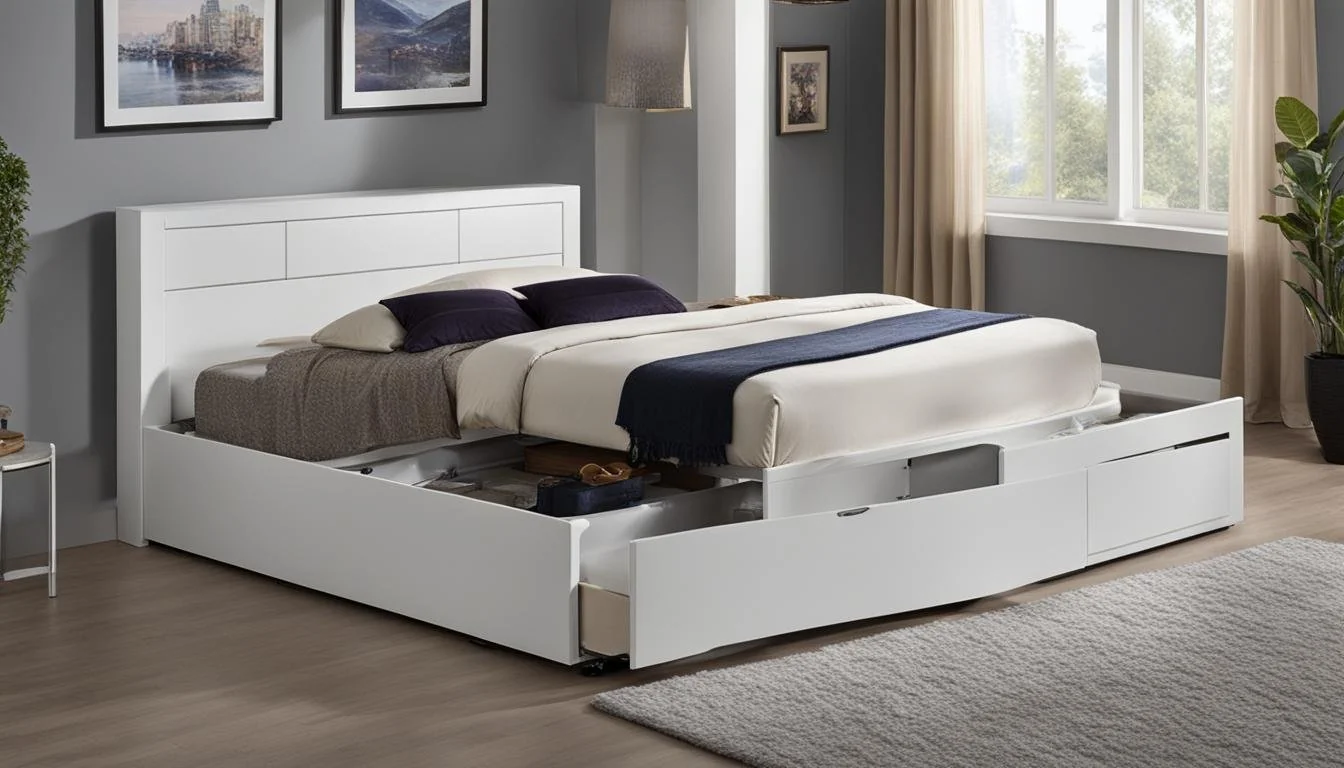
Wood platform storage bed with drawers keeping a small bedroom organized and clutter-free

Ottoman Beds

Answer first: pick an ottoman base when you need maximum capacity in the same footprint as a standard bed. The mattress lifts on gas struts to reveal a single large compartment—ideal for winter duvets and gear. For complementary ideas, read Under-Bed Drawers for Small Bedroom Storage.

Buyer’s tip: Side-lift models are easier to open in tight rooms. Always match the gas-lift rating to your mattress weight, and add bins or cubes so the big cavity doesn’t become a jumble.

Space-saving ottoman bed raised to show under-bed compartment for seasonal storage

Captain’s Beds

Answer first: choose a captain’s bed for kid-friendly organization and multi-zone storage. These ship-inspired frames combine side drawers with headboard shelves, corralling toys, clothes, and books without extra furniture. See this Sleep Foundation guide to the best storage beds for inspiration.

Buyer’s tip: Prioritize soft-close drawers to protect little fingers, and look for adjustable shelving in the headboard to handle everything from picture books to baskets.

Captain’s storage bed with drawers and headboard shelves organizing a busy kids’ room

Murphy Beds with Storage

Answer first: select a Murphy bed when you need daytime floor space plus cabinetry for linens and gear. Wall-mounted designs fold away and often include side closets, cubbies, or hidden compartments. Explore more ideas in Space-Saving Bed Frame Solutions.

Buyer’s tip: Verify ceiling height, wall studs, and swing clearance before purchase. Many systems need professional installation; plan for lead times and anchoring hardware.

Murphy bed with side storage cabinets folded into a compact studio for flexible floor space

How to Choose the Right Storage Bed

Answer first: match access (drawers vs. lift) to how often you’ll use items, then confirm clearance and mattress compatibility. A quick checklist below narrows the field.

  • Measure movement: Map drawer swing, lift height, and door clearances; tape the footprint to test flow.
  • Match mattress weight: Dense foam/hybrids are heavy—verify gas-lift ratings or choose drawers instead. See Innovative Bed Frames with Storage Options.
  • Plan ventilation: Use breathable bags, cedar inserts, and avoid storing damp textiles.
  • Hardware quality: Full-extension slides, soft-close action, and reinforced corners extend lifespan.
  • Assembly needs: Murphy systems and heavy ottomans may need pros; check delivery path and stairwells.
  • Warranty & returns: Longer warranties signal durability; review weight limits and trial windows.
Style Access Best Use Capacity Room Fit
Platform Drawers Side pull-out drawers Daily linens, clothing Moderate Needs 24–36″ side clearance
Ottoman Lift Top lift on gas struts Bulky/seasonal items High Great for tight rooms; plan top clearance
Captain’s Bed Drawers + headboard shelves Kids’ rooms, multi-use Moderate Compact footprint replaces extra furniture
Murphy + Cabinets Folds into wall unit Studios/guest rooms Moderate–High Requires wall anchoring and ceiling clearance

FAQ

Are beds with built-in storage worth it?
Yes, they maximize space, reduce clutter, and add convenience, especially in smaller bedrooms.
Which storage bed offers the most capacity?
Ottoman beds typically provide the most storage, as they use the full under-bed space.
Can storage beds support heavy mattresses?
Many can, but always check manufacturer specifications. Reinforced frames and gas-lift systems work best with dense foam or hybrid mattresses.
Do storage beds require special care?
Keep drawer tracks clean, inspect gas-lift hardware annually, and avoid overloading compartments to preserve performance.

Final Thoughts

A thoughtfully chosen Bed with Built-In Storage transforms your bedroom into an organized, clutter-free retreat. From platform drawers to wall-mounted Murphy beds, these designs enhance both function and comfort. For even more inspiration, explore the full range of ideas at Cozy Bed Quarters.

Related Reading from Cozy Bed Quarters

Other Reading We Found Popular


More Expert Insights

Before discovering under-bed storage bags, my bedroom floor felt like a dumping ground. I unearthed forgotten treasures like a concert ticket from 2010, entire dust colonies, and, of course, the infamous odd sock graveyard. These discoveries were my wake-up call to start organizing smartly with proper storage solutions.

For expert recommendations, explore Real Simple’s under-bed storage solutions or browse Better Homes & Gardens’ best picks. You can also find budget-friendly yet stylish options at IKEA.

Organization starts with categorizing items—seasonal clothing, spare bedding, and those “just in case” items. For bulky items, vacuum-sealed bags work wonders, reducing volume significantly. Rolling clothes instead of folding makes packing more efficient and even satisfying, like completing a perfect game of Tetris.

To maximize space, I place rarely used items toward the back and stack bags in an even layer. I even created a quick “storage map” to remember where everything is—no more pulling out three bags just to find a scarf!

Every season, I rotate my under-bed storage bags to keep my wardrobe fresh and relevant. I follow a one-in-one-out rule to prevent unnecessary buildup and toss a dryer sheet inside each bag to maintain a pleasant scent. Regular checks ensure bags stay in good condition, protecting my belongings from damage.

Besides saving space, under-bed storage bags protect items from dust, moisture, and pests. No more finding sweaters with moth holes or bedding that smells musty. According to The Spruce, vacuum-sealed bags also help reduce allergens by keeping dust mites at bay.

For real-world user insights, see discussions on Reddit’s organization tips or trusted reviews on Consumer Reports.

From overstuffing bags (and sitting on them to zip them shut!) to crushing fragile ornaments, I’ve made all the rookie mistakes. Labeling fragile items and not overpacking has helped me refine my storage strategy.

Under-Bed Storage Bags are more than just convenient—they transform cluttered bedrooms into functional, tidy spaces. With a little effort, you can reclaim your under-bed area and make it work smarter for you.

Under-bed storage is more than just a place to stash random items. When used strategically, it frees up valuable closet and drawer space, reduces clutter, and creates a serene, minimalist atmosphere in your bedroom. By organizing this hidden zone, you can store seasonal clothes, linens, keepsakes, and occasional gear without sacrificing accessibility.

The golden rule of under-bed storage is simplicity. Start by sorting your belongings into key categories such as seasonal clothing, bedding, shoes, memorabilia, and occasional gear. Avoid placing daily-use items under the bed to prevent constant digging. For example, winter coats and comforters are perfect for storage during summer months, while flip-flops and summer hats can be stored in winter.
For more insights on bedding care, visit the Bedding Guide from Jabbour Linens.

The right storage tools can make all the difference. Use clear containers to instantly see what’s inside. Vacuum-seal bags are ideal for compressing bulky bedding. Rolling storage bins offer smooth accessibility, especially for heavier items. Lastly, dust-proof covers protect items from dirt and allergens.

Label each bin or container with both its contents and storage date. This prevents confusion and keeps your under-bed storage system organized. A quick glance at the labels means no more wasting time rummaging for that extra sheet or holiday decoration.

Even with limited clearance, you can optimize vertical space. Stackable containers and multi-compartment organizers work like a charm, creating layers of storage that function like a game of Tetris—every inch counts!

Place frequently used items near the front for quick access, while less-used items like holiday decorations or camping gear can be pushed to the back. This approach keeps your storage system functional and hassle-free.

Sketching a simple map of your under-bed layout might sound excessive, but it’s a huge time-saver. Tape this map inside your closet door, marking exactly where each category lives—no more searching in the dark abyss!

A clutter-free under-bed space requires periodic maintenance. Every 3–6 months, rotate seasonal items, remove things you no longer need, and ensure everything is stored properly. This keeps the space efficient and prevents buildup.

An organized under-bed storage system gives you more space in your bedroom, improves accessibility to your items, and maintains a tidy, clutter-free environment that promotes relaxation and better sleep. For deeper insights into bedding essentials, see the Sleep Foundation’s guide on bed shams or explore Crane & Canopy’s explanation of shams.

Organizing your under-bed storage is a simple yet powerful way to reclaim hidden space. By decluttering, using smart tools, and maintaining the system, you’ll enjoy a more functional and serene bedroom. Start small today, and soon you’ll wonder how you ever lived without this storage hack!

Bed Risers for Storage: How to Pick, Fit and Load Them Safely

Bed risers for storage lifting a bed frame to fit bins underneath

Bed risers for storage lift each leg of your bed 2 to 8 inches, turning the dead zone under the frame into space for bins, luggage, and off-season bedding. Most sets are stackable plastic or solid wood with a recessed cup that grips the leg or caster, and a good set fits your leg shape, holds the combined weight of frame plus mattress plus sleepers, and still leaves your mattress at a height you can sit on comfortably. The measurement that decides everything isn’t the riser height — it’s the clearance under the side rail, because that’s the opening your bins actually pass through.

What bed risers for storage actually add

A riser lifts the leg. Your storage opening, though, is measured from the floor to the lowest point of the frame — usually the bottom edge of the side rail, sometimes a center support leg or a low slat. On a lot of metal frames the rail hangs 2 to 3 inches below the top of the leg, so a 5-inch riser doesn’t give you 5 inches of usable slot. It gives you 5 inches added to whatever slot you already had.

Fabric storage bag sliding into the gap created by bed risers for storage

Here’s roughly what different lifts get you:

Riser height Typical result What fits underneath
2–3 in Mild lift, bed still looks normal Low-profile bins (about 6 in tall), shoes, flat vacuum bags
5 in Noticeably taller; bed skirts start to fall short Standard underbed bins, rolling carts, carry-on luggage
8 in (usually 3 + 5 stacked) High bed; you may slide off the edge rather than step down Tall totes, duffels, storage drawers, a folded stroller

Keep the mattress top in mind too. For most adults, a mattress top around 22 to 25 inches lets you sit on the edge with your feet flat and knees about level with your hips. If you’re already at 25 inches and you add 8, you’re climbing into bed — fine for a young renter, rough for anyone with knee, hip, or balance trouble.

Take these three measurements first

  1. Floor to the bottom of the side rail. Tape measure at the middle of the long side, not at the corner. This is your real storage opening.
  2. The leg or caster footprint. Measure the width of a square leg and the diameter of a round post or wheel. Most molded risers take legs up to about 3 inches round or 2 1/4 inches square, with a cup roughly 1 inch deep. Chunky farmhouse posts and wide plinth feet often won’t seat.
  3. The bin you plan to buy. Underbed boxes commonly run 6 inches tall, and rolling ones sit a bit taller with the casters. Add an inch of wiggle room, or you’ll be shoving lids off every time you pull one out.

Also check ceiling-adjacent stuff: a bolted-on headboard has fixed bolt slots, and lifting the frame 5 inches can leave the headboard sitting low against the mattress. Slotted headboard brackets usually have a couple of inches of play. If yours doesn’t, the headboard legs need risers too.

Matching riser type to your bed

Stackable plastic risers

The cheap, common ones. They’re light, they stack (3 + 5 to reach 8), and many have a foam or rubber pad in the cup that grips a caster. Downsides: the plastic can splay under a heavy platform bed with a big mattress, and they slide on hard floors if the base has no rubber. Good pick for dorm frames, twin beds, and light metal frames.

Solid wood blocks

Heavier, steadier, and easier to live with under a king. Look for a routed recess at least 3/4 inch deep. A flat wood block with no recess is a slipping hazard — legs walk off it over months of getting in and out. Add felt pads underneath on hardwood.

Steel or adjustable clamp risers

These bolt or clamp to the leg instead of just cupping it, which is the safest setup for frames with odd leg shapes or for anyone who moves around a lot in bed. They’re the priciest option and usually the ugliest, but they don’t skate.

Risers with outlets or USB ports

Handy, and fine when the unit carries a recognized safety certification mark (UL, ETL, or similar) printed on the housing. Don’t plug a space heater or an air conditioner into one, and don’t run a power strip into another power strip under the bed where you can’t see it.

Weight limits: read the number twice

Listings love big numbers. “Supports up to 5,000 lbs” is often the figure for a set of four under ideal, perfectly centered load — not what one riser holds at an angle when you flop down on the corner. Add up your real load: a queen mattress runs roughly 100 to 160 pounds, a foundation or box spring another 50 to 70, the frame 30 to 80, plus two adults, plus whatever you stash underneath. That’s easily 600 pounds on four contact points.

Three habits that prevent the wobble-then-crack sequence:

  • Use a riser under every load-bearing point, including the center support leg that most queen and king frames have. Lifting only the corners leaves the middle hanging and puts the whole load on four legs it wasn’t designed for.
  • Re-check the bolts. Frame hardware loosens when you lift and set down. Snug every bolt the day after, then again in a month.
  • Do a shove test. Push each corner sideways with your hip. Any rock or slide means the leg isn’t seated, the floor isn’t level, or the riser is too small for the leg.

Installing them without hurting yourself or the frame

  1. Strip the bed and pull the mattress off. That single step removes most of the weight and most of the risk. Lean it against a wall, not on your foot.
  2. Clear the floor all the way around, and set the risers where each leg will land before you lift anything.
  3. Work one corner at a time with a helper. Lift just enough to slide the riser under — an inch or two. Tilting the whole bed up on two legs is how frames bend.
  4. Seat each leg fully in the cup, then lower slowly and feel for the leg dropping in.
  5. Do the center leg last; many are threaded and adjust up or down, so you may be able to spin it out instead of adding a riser.
  6. Put the mattress back, sit hard on each corner, and re-check.

Renting or in student housing? Check the rules before you buy. Policies vary a lot — the University of Colorado Boulder’s housing guide, for instance, permits bed risers up to 6 inches and notes that many residence hall beds already adjust to different heights, while other schools ban risers outright.

What to store under there — and what to skip

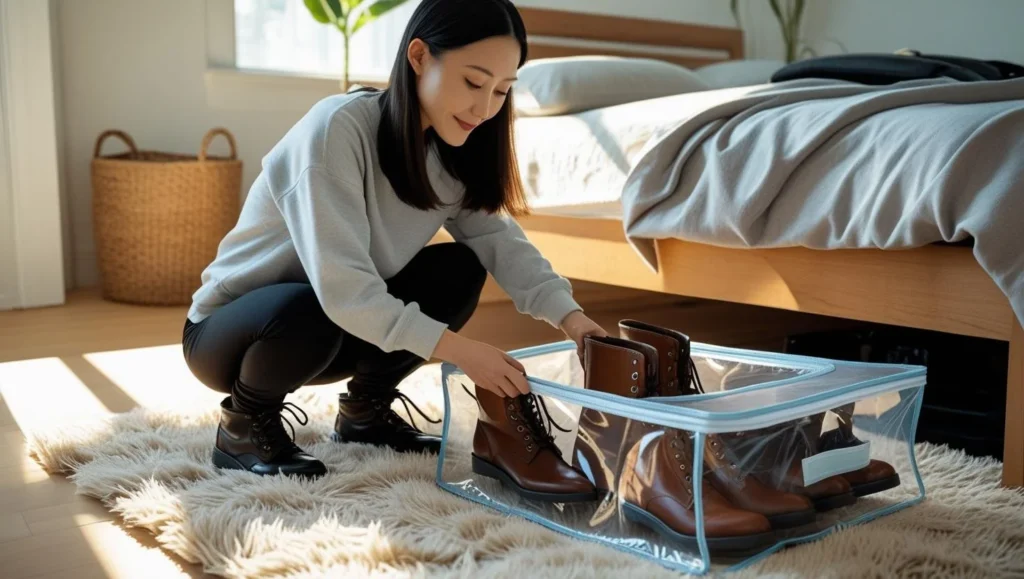
Good candidates: off-season clothing, spare sheets and blankets, empty suitcases (nest the small one inside the big one), wrapping paper, shoes in clear boxes, sports gear. Rolling bins on the sides you can reach; long, awkward stuff pushed toward the wall side.

Clear zippered storage box holding boots being tucked beneath a low bed frame

Leave out anything that hates heat or humidity, and anything you’d hate to lose: important documents, photos, candles, anything in cardboard if you’re in a basement bedroom. Skip bulk food, too, unless it’s sealed in hard plastic — crumbs under a bed are an open invitation to pantry moths and mice.

A few space tricks that genuinely pay off:

  • Vacuum bags for lofty items only. Duvets, puffer coats, and pillows compress well. Don’t crush memory foam pillows or down you plan to use soon; they need time to recover loft.
  • Uniform bin sizes. Three of one size beats six random tubs — they slide evenly and you can see the row at a glance.
  • Label the short end, the side facing out. Labels on the lid are useless once the bin is under a bed.
  • Leave a lane. Keep 6 inches of empty floor at the front so you can pull a bin without moving two others.

Dust, allergens, and airflow

A raised bed is easier to vacuum under — as long as you can still get the nozzle in there. If you pack the whole footprint solid, you’ve built a dust trap you’ll never clean. Lidded bins beat open baskets for this reason, and a quick vacuum pass under the bed every few weeks keeps things reasonable.

It matters more if anyone in the house has allergies or asthma. The American Lung Association advises keeping indoor humidity below 50 percent and cutting down on the fabric surfaces where mites settle, so sealed containers make more sense than loose piles of blankets right under where you sleep.

Bed risers for storage vs. a frame built for it

Risers are the fast, cheap fix: a set costs less than dinner out, installs in 20 minutes, and comes back off when you move. What you give up is looks and convenience. You’ll see the risers, you’ll see the bins unless you add a longer bed skirt (standard skirts drop about 15 inches; after a 5-inch lift you need 18 to 21), and you’re still crawling on the floor to reach things.

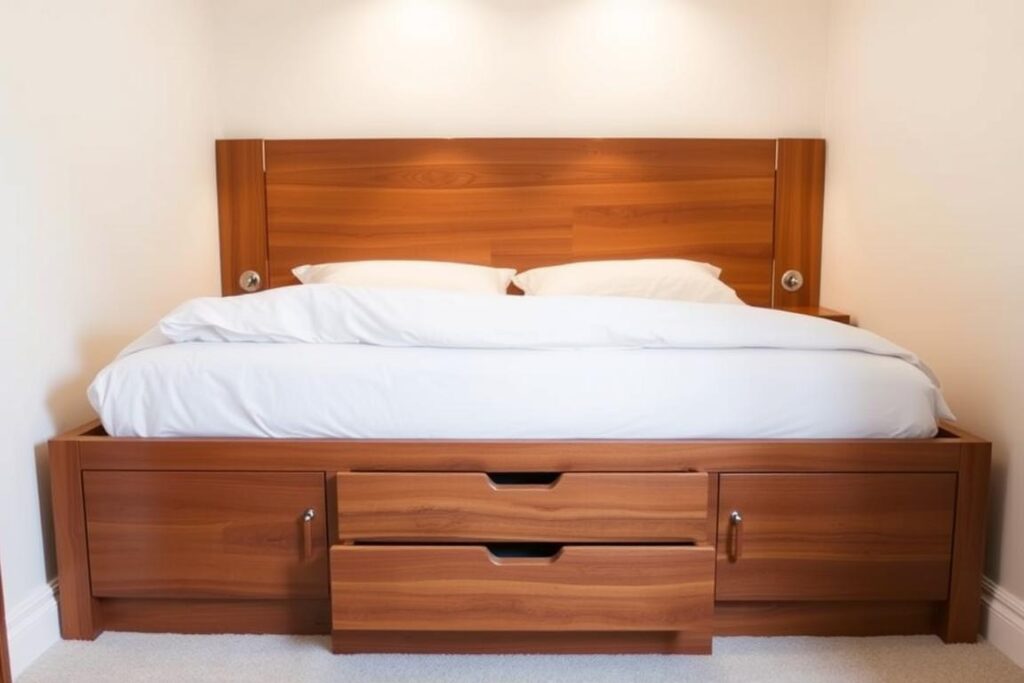
Wooden platform bed with built-in drawers set into the base instead of risers

If you’re buying a bed anyway, drawers built into the base are a better long-term answer. Compare the options in our guide to platform and storage beds, and see how built-in drawer frames handle the same problem in under-bed storage frames. For a kid’s or guest room, a twin bed with storage underneath usually beats risers because the drawers glide instead of dragging on carpet. Working with a larger room, a king frame with storage gives you far more capacity than any riser setup.

Common questions

Are bed risers safe?

They are when the legs seat fully in the cup, every support point is raised, and you stay under the rated load. The failure cases are predictable: a leg perched on an oversized cup, a plastic riser under a heavy king, or a riser sitting on plush carpet that lets it tip. Check the corners for rocking every few months.

Will risers work on a platform bed?

Sometimes. Platform beds with four distinct legs work fine. Solid panel, sled, or plinth bases have no leg to cup, and lifting those on blocks is asking for a slide. Beds with a floating base or a wide center rail need risers under the center supports too.

Can I use bed risers on carpet?

Yes, but pick a wide, flat base rather than a narrow foot, and expect the riser to sink a bit into thick pile. Re-level after a couple of weeks. On hardwood or vinyl, add felt pads to protect the finish.

What about a bed with caster wheels?

Most risers have a cup sized for casters, which is actually a nice bonus — the bed stops rolling. Alternatively, unscrew the casters and use the bare post in a deeper cup for a lower, steadier result.

Do risers make the bed noisier?

They can. Adding height to a wobbly frame amplifies existing creaks. Tighten the hardware, add a nylon washer at any metal-on-metal joint, and make sure all four risers touch the floor before blaming the risers themselves.

How high is too high?

Once you can’t sit on the edge with your feet flat on the floor, you’ve gone past useful for daily life. Reserve 8-inch stacks for guest rooms, dorms, and anyone young and nimble. Also want the room to feel bigger, not just hold more? Pair the extra clearance with the tricks in our post on hidden storage beds.

Updated September 2026.

Duvet vs Comforter: Differences and How to Choose

Duvet or Comforter: 7 Key Differences to Help You Decide - Featured Image

A duvet is a two-piece system: a filled insert that slips inside a removable, washable cover. A comforter is a single quilted piece with its fill sewn permanently inside the outer shell, so you use it as-is and wash the whole thing. Neither is automatically warmer or better made — warmth comes from the fill and loft, so the real decision is about laundry habits, how often you like to restyle your bed, and the look you want.

Duvet vs Comforter at a Glance

  Duvet (insert + cover) Comforter
Pieces Two: insert and removable cover One: shell and fill stitched together
Routine laundry Wash the cover with your sheets; insert occasionally Wash the whole piece, often needing a large machine
Restyling Swap covers; keep the same insert Replace the comforter or layer over it
Warmth control Change insert weight and cover fabric by season Fixed warmth unless you add or remove layers
Drape Usually sits closer to the mattress footprint Often cut with more side drop for a fuller look
Daily bed-making Fast — one layer, top sheet optional Fast — one layer, nothing to assemble

What Is a Duvet?

A duvet (sometimes sold as a “duvet insert”) is a soft, flat, quilted bag filled with down, feathers, wool, cotton or synthetic down-alternative fibers. The insert itself is usually plain white or off-white because it isn’t meant to be seen — it lives inside a duvet cover that closes with buttons, ties or a zipper, much like an oversized pillowcase. Most covers and inserts have corner loops and ties so the fill stays aligned instead of sliding into one end.

That two-piece design is the whole point: the cover takes the daily wear and goes in the wash, while the insert stays protected. It also means you can change the entire look of the bed without buying new bedding — the same principle behind swapping in seasonal duvet covers for a few weeks a year. white down duvet with removable cotton cover

What Is a Comforter?

A comforter is a single quilted blanket: the fill is sewn between two layers of decorative outer fabric, held in place by box stitching or quilted channels. There’s no cover to buy or wrestle with, and comforters are commonly sold in coordinated sets with shams and sometimes sheets, so the bed looks finished the moment you unwrap it.

The trade-off is laundry and longevity. Because the shell is permanently attached, every wash puts the fill through the machine, and a queen or king comforter may not fit a standard home washer at all. plush comforter in a minimalist bedroom

Where Quilts, Coverlets and Shams Fit In

Quilts and coverlets are thinner: batting stitched between two fabric layers, usually flatter than either a duvet or comforter and often reversible. They work as a light summer top layer or as texture folded at the foot of a duvet-covered bed. Shams are decorative pillow covers, not bed covers — if the terminology gets confusing, our breakdown of a sham versus a duvet cover sorts out which piece does what.

Warmth: It’s the Fill, Not the Format

People often ask which is warmer. The honest answer is that a duvet and a comforter of the same fill, fill weight and shell will feel about the same on the bed. Warmth is set by three things: what’s inside, how much of it there is, and how well the stitching keeps it spread out.

  • Down and feather: the most loft for the least weight, and very good at trapping air. Down’s quality is described by fill power — a lab measure of how many cubic inches of loft one ounce of down produces — so a higher number means less down is needed for the same insulating loft. It is a quality indicator, not a direct temperature rating.
  • Wool: insulates while moving moisture, which suits cool, damp rooms and sleepers who run hot and cold in the same night.
  • Down alternative (polyester microfiber): mimics down’s loft at a lower price, dries faster and is usually machine washable — which is why it dominates comforters.
  • Cotton and cotton blends: heavier and flatter, but breathable for warm climates.

Construction matters just as much. Baffle-box construction (fabric walls between compartments) lets fill expand to full loft; simple box stitching is flatter but keeps fill from migrating; channel quilting lets you shake fill toward or away from you. Any of these beats a thinly stitched piece that clumps after a few washes.

If you shop UK or European bedding, you’ll also see tog ratings, a measure of thermal resistance. Retailers generally position roughly 4.5 tog for summer, around 10.5 for all-year use and 13.5 or higher for winter. US bedding rarely lists tog and instead uses vague labels such as “lightweight,” “all-season” and “winter weight,” which vary a lot between brands — check the fill weight in ounces or grams if it’s published. Duvet Vs. Comforter - materials used for duvets and comforters

Hot Sleepers and Allergy Considerations

For hot sleepers, the duvet system has a practical edge: you can pair a low-loft insert with a breathable percale or linen cover and swap to something warmer in winter. A lightweight, breathable comforter can work just as well — you simply can’t adjust it. Bedding is only part of the picture, though; mattress and room temperature matter too, which is why our guide to cooling mattresses for hot sleepers is worth a look if you overheat every night regardless of the top layer.

On allergies, down-alternative fills are widely marketed as hypoallergenic and are easier to wash frequently, which helps with dust and dander. Tightly woven shells also limit what gets into the fill. If you have a diagnosed feather or down sensitivity, synthetic is the safer pick — but treat broad health claims on bedding packaging with caution and ask a doctor about persistent symptoms.

Size, Fit and Drape

Sizing is where most disappointment happens, and it’s more inconsistent than shoppers expect. Queen duvets and inserts are commonly cut somewhere in the 88–90 inches wide by 90–94 inches long range, with brands varying noticeably, and comforter “queen” labels differ from one brand to the next as well. Two rules help:

  • Match the cover to the insert, not to the bed. Guidance from bedding size guides is that a duvet cover should be the same size as the insert or up to about four inches larger in each direction; too small and the fill bunches, too large and you get cold gaps at the corners.
  • Size up for depth. Thick mattresses, toppers and tall platform beds eat side coverage. If you have a deep mattress or share with a cover-puller, going one size up is the simplest fix.

Stylistically, comforters are often cut with more overhang for a soft, draped look, while duvet-covered beds tend to read neater and more tailored within the mattress footprint. Either can look intentional — the mistake is a top layer that stops short of the mattress edge. duvet vs comforter mattress fit and drape - duvet vs. comforter

Care and Cleaning

This is the clearest practical difference. With a duvet, the cover absorbs skin oils, sweat and spills, and it washes like a sheet. With a comforter, the whole piece — fill included — has to go through the machine or to a laundromat or dry cleaner.

Published advice on frequency varies rather than converging on one rule. Duvet covers are generally washed on the same cycle as sheets, roughly every one to two weeks. For the filled layer, one home-and-garden guide reports bedding specialists suggesting washing a duvet insert about every three months and a comforter about every two months, while other bedding sources suggest a couple of times a year for inserts that always live inside a cover. Use those as brackets, wash sooner after spills or illness, and follow the care label above all.

  • Wash filled pieces alone, on a gentle cycle in cool water, with a small amount of mild detergent added to the dispenser rather than poured on the fabric.
  • Dry low and long, with dryer balls, and stop to break up damp clumps. Fill that isn’t bone dry can mildew inside the shell.
  • Air the insert out regularly — draped over a chair or line — to release overnight moisture between washes.
  • Tie the corner loops before stuffing a cover, then shake the whole thing out so the fill sits evenly.
  • Using a top sheet adds a washable barrier and stretches the time between cover washes.

When a comforter or insert is past saving, don’t default to the trash — many textiles can be rehomed, and our guide to where to donate bedding covers who accepts what.

Cost and Long-Term Value

Prices move constantly and vary hugely by fill and brand, so treat any specific figure with suspicion — including ones you’ll see quoted in older articles. What’s reliable is the structure of the spending:

  • Comforters and comforter sets are a single purchase and are usually the cheaper way to get a finished-looking bed today. Restyling means buying another comforter.
  • Duvets cost more up front because you buy two things, but a new look later costs only a cover. A good insert can outlast several cover styles.
  • Either way, spend on the shell and the stitching. Fill retention and seam quality are what you notice in year two, not the pattern you liked in the store.

Down is also the most expensive fill, which is worth knowing if you like the feel of it — the same trade-offs we cover in down versus memory foam pillows apply to bedding fills more broadly.

Style and Seasonal Flexibility

A duvet cover is the cheapest redecorating tool in a bedroom: crisp white percale in summer, brushed cotton or flannel when it gets cold, pattern for a few weeks around the holidays. Comforters lean the other way — the design is fixed, so seasonal change comes from layering quilts, throws and shams on top.

A useful middle path: keep a neutral comforter and put a duvet cover over it. This works as long as the sizes are close, and it gives a one-piece sleeper the washability and restyling of a duvet system without buying an insert. bedroom with seasonal duvet covers and layered decor

Which Should You Choose?

Choose a duvet if you want routine laundry to be easy, you like changing your bedroom’s look, you sleep hot in summer and cold in winter, or you’d rather buy one good insert and keep it for years. The downsides: two pieces to store and manage, and the occasional wrestling match with cover ties.

Choose a comforter if you want bedding that works straight out of the bag, you like matching sets, you’re furnishing a guest room or rental where simplicity wins, or you prefer a softer, draped bed. The downsides: bulky washing and no easy way to change warmth or style.

Edge cases are easy to solve. Hot climate year-round? A light comforter or a low-loft insert with a linen cover. Love a layered, textural bed? Comforter plus quilt. Want one piece but hate laundromat trips? Comforter inside a cover. side-by-side beds showing duvet and comforter for seasonal use

FAQ

What’s the main difference between a duvet and a comforter?

A duvet is an insert used inside a removable cover; a comforter is one quilted piece with the fill sewn in. That single structural difference drives everything else: washing, restyling and how the layer drapes.

Is a duvet warmer than a comforter?

Not inherently. Compare fill type, fill weight and loft rather than the category name. Duvets do make warmth easier to adjust, since you can change inserts and cover fabrics by season.

Can I use a duvet without a cover?

You can, but it isn’t ideal. The insert then takes all the sweat and oils and needs washing far more often, which shortens its life. Inserts are also typically plain white.

Can I put a duvet cover on a comforter?

Yes, and it’s a good trick. Match the sizes closely and use the internal corner ties if either piece has them so the comforter doesn’t shift inside.

Do I need a top sheet with a duvet?

No. Many people skip it European-style because the cover is washable. A top sheet is still useful if you like the crisp feel or want to wash the cover less often.

What size duvet fits a queen bed?

Most queen inserts fall roughly in the 88–90 by 90–94 inch range, but labels vary by brand. Check the actual measurements, and size up if your mattress is deep or topped.

How often should I wash each part?

Wash the duvet cover with your sheets, about every one to two weeks. Wash the insert or a bare comforter a few times a year — more often if there’s no cover, if you sleep without a top sheet, or after a spill — always following the care label.

Updated September 2026.

How to Break In a New Mattress: Timeline and Faster Tips

Break in a New Mattress - break new mattress faster - ways break new

Most new mattresses need roughly two to eight weeks of nightly use before they feel normal, and a firm, stiff or slightly “off” feeling in the first nights is expected rather than a sign of a defect. The fastest way through it is simple: let the mattress fully expand, sleep on it every night instead of switching back to the old bed, keep the room warm during the day so foam layers stay pliable, and rotate it every couple of weeks. If it still feels wrong after a month of consistent use, the problem is usually firmness or support — not break-in — and that’s what your sleep trial is for.

How Long Does It Take to Break In a Mattress?

Break-in is the period during which comfort layers soften slightly under body weight and heat, while your body adapts to a new support surface. Guidance from mattress guides generally puts the window at about 20 to 90 days depending on materials, construction and the base underneath. Most brands quote something in the 30-day range in their own care instructions.

The table below shows the ranges most commonly quoted by manufacturers and mattress guides. Treat them as expectations, not measured results — break-in isn’t a standardised test, and identical models can feel settled at different times depending on body weight, room temperature and how often the bed is used.

Mattress Type Commonly Quoted Break-In Period Why
Memory foam About 30–60 nights Dense viscoelastic foam softens gradually with body heat and pressure
Hybrid About 3–6 weeks Foam comfort layers settle while pocketed coils stay largely unchanged
Innerspring About 2–4 weeks Thin padding compresses quickly; coils do most of the work from night one
Latex About 2–4 weeks Latex is elastic and changes least; most of the adjustment is yours, not the mattress’s

Cozy bedroom scene showing how to break in a new mattress with warmth

A new mattress softens with warmth and consistent use.

Why a New Mattress Feels Firmer at First

Three separate things are usually happening at once, and they get blamed on each other.

The mattress may not be fully expanded yet

Bed-in-a-box models are vacuum-compressed, and manufacturers typically ask for 24 to 72 hours for full expansion, with most of the loft returning within the first several hours. A mattress that hasn’t finished expanding feels denser and firmer than the finished product, so judging comfort on night one is judging the wrong bed. Cool rooms slow expansion down; warmer rooms speed it up.

The comfort layers haven’t settled

Foam and fibre padding are manufactured, compressed, shipped and stored. Repeated loading from your body weight is what relaxes those layers into the shape you’ll actually sleep on. This is the part people mean by “breaking in,” and it’s gradual — you notice it week over week, not night over night.

Your body is adjusting too

If you slept on a sagging bed for years, your muscles adapted to that sag. A supportive surface holds your spine differently, and that can feel stiff or even mildly achy for a week or two before it feels better. Persistent or worsening pain, however, is not break-in — see the troubleshooting section below.

New mattress unboxed—ready to break in - break new mattress featuring ways break new

A freshly unboxed mattress often feels firmer before breaking in.

How to Break In a New Mattress Faster

1. Let it expand completely before you judge it

Unbox promptly, remove all plastic, and give a compressed mattress a full day or more in a ventilated room before deciding anything about the feel. This also overlaps with airing out: new-mattress odour from foams and adhesives is strongest in the first few days and fades with ventilation. If the smell bothers you, our guide to reducing mattress off-gassing covers airing times and certifications such as CertiPUR-US, GREENGUARD Gold and OEKO-TEX.

2. Sleep on it every single night

This is the one step that actually does the work. Alternating with the guest bed or sofa stretches break-in out for months and makes it much harder to tell whether the mattress is improving. Commit to consistent nightly use for at least 30 nights.

3. Apply pressure during the day

Walk slowly across the surface in socks, crawl on hands and knees, or roll from side to side across the areas where you sleep. A few minutes a day works the comfort layers more than sleeping alone does, because you’re loading parts of the mattress your body never touches at night. Don’t jump or let children bounce: sudden point loads can damage foam and coils, and impact damage isn’t covered by warranties.

4. Warm the room by day, cool it by night

Memory foam is temperature-sensitive and feels firmer when cold, so raising the daytime temperature in the bedroom helps the foam relax. Don’t carry that into bedtime, though — sleep experts generally recommend a cool bedroom, with 65 to 68°F (about 18 to 20°C) cited as a comfortable range for most people. Warm the room while you’re out; cool it before you get in. If you run hot regardless, a cooling mattress or breathable bedding matters more than break-in tricks.

5. Check what’s underneath the mattress

A sagging slatted base, a worn box spring, or slats spaced too far apart will make a new mattress feel wrong no matter how long you wait, and it can also affect warranty coverage. Most foam and hybrid mattresses want a solid or closely slatted surface. If your frame is older than the mattress, read our guide to choosing the right bed frame before blaming the bed. For adjustable bases, check mattress and adjustable base compatibility first.

6. Rotate it every couple of weeks at first

Rotating head-to-foot during break-in helps the comfort layers settle evenly rather than only where you lie. NapLab suggests rotating every two weeks during break-in, then every six to 12 months afterwards. Only flip a mattress if it is explicitly designed to be double-sided; most modern models are not.

7. Hold off on the topper — then use one if needed

A topper masks what the mattress is doing, so it’s better to wait out the first few weeks before adding one. After that, a topper is a legitimate fix for a bed that’s slightly firmer than you’d like, and far cheaper than returning. It cannot fix a mattress that lacks support, only one that lacks cushioning.

8. Use a protector from night one

A waterproof protector is worth adding immediately, because retailer warranty pages routinely state that visible staining voids coverage entirely. It’s the cheapest insurance on the bed.

Cross-section showing layers of a new mattress being broken in

Mattress layers influence how quickly a bed breaks in and how it feels.

What Doesn’t Help

  • Jumping or stomping on it. Impact stresses seams, foam and coils and risks voiding the warranty.
  • Heating pads or hairdryers aimed at the surface. Direct heat can damage foam; warm the room instead.
  • Heavy weights left in one spot. Concentrated load creates uneven compression rather than even break-in.
  • Switching beds “just for tonight.” Every skipped night extends the process and muddies your judgement.

When It Isn’t Break-In: Troubleshooting a Mattress That Still Feels Wrong

After 30 nights of consistent use, you should be able to tell the difference between a bed that’s still settling and one that’s the wrong match. Signs it’s a mismatch rather than a timing issue:

  • You wake with new lower-back pain that isn’t easing week to week. Usually a firmness or support mismatch for your sleeping position.
  • You feel pressure at hips and shoulders as a side sleeper. The comfort layer is too thin or too firm for you.
  • You sink and feel “stuck” or misaligned. Too soft for your weight or position.
  • Something feels lumpy, uneven or noisy. That points to a defect or a failing base, not break-in.

Two guides help here: our mattress firmness scale explained for working out where your current bed sits, and the best mattresses for side, back and stomach sleepers for matching firmness to position. If the bed you replaced was old and sagging, our guide on how often to replace a mattress explains what normal wear looks like.

Use the sleep trial properly

Sleep trials exist precisely for this situation. According to the Sleep Foundation, the average at-home trial runs about 90 to 120 nights, and many trials include a mandatory break-in period you must complete before requesting a return — often around 30 nights. That requirement is the reason not to give up in week one: returning too early may not be allowed at all. Check three things in your paperwork before the clock runs out: the trial length, the minimum nights required, and whether return shipping or a fee applies.

Warranty vs. trial

These cover different problems. A trial covers “I don’t like it.” A warranty covers manufacturing defects, and retailer warranty pages commonly set a sagging threshold in the region of 1 to 1.5 inches of permanent body impression before a claim qualifies — thresholds vary by brand, so read your own document. Comfort preference is not a defect, and using an unsupported or incompatible base can affect coverage.

A Realistic Four-Week Plan

  1. Days 1–3: Unbox, remove all packaging, ventilate the room, let it expand fully before the first night.
  2. Week 1: Sleep on it nightly. Expect stiffness. Don’t add a topper yet. Note down how you feel each morning.
  3. Week 2: Add a few minutes of walking or rolling across the surface most days. Rotate head-to-foot. Warm the room during the day.
  4. Week 3: Rotate again. Compare your notes with week one — improvement should be noticeable even if it isn’t finished.
  5. Week 4: Decide. Better and improving means keep going. No change at all, or worsening pain, means check the base, then start the trial return or exchange while you still can.

FAQ

How long does it take to break in a new mattress?

Commonly quoted ranges run from about two weeks to roughly 90 days, with memory foam at the longer end and innerspring and latex at the shorter end. Most people notice clear improvement within the first month of nightly use.

Can I sleep on a mattress-in-a-box the first night?

Usually yes, but manufacturers typically recommend allowing 24 to 72 hours for full expansion, and the mattress will feel firmer and denser until it finishes. If you can wait a night, wait.

Does walking on a new mattress really help?

Gentle, distributed pressure — walking in socks, crawling, rolling — works the comfort layers faster than sleeping alone. It’s widely recommended, though there’s no rigorous published testing that quantifies how many days it saves. Avoid jumping.

Should I put a topper on a new mattress right away?

Wait a few weeks. A topper changes the feel immediately and hides whether the mattress itself is softening. If the bed is still too firm after break-in, a topper is a reasonable fix for cushioning, but not for inadequate support.

Why does my back hurt on a new mattress?

Mild, improving stiffness for a week or two is common when moving from an old, sagging bed to a supportive one. Pain that persists past a month or gets worse suggests the firmness or support is wrong for you, and is worth raising with your doctor as well as acting on within your trial window.

Do latex and innerspring mattresses need breaking in?

Less so. Latex is elastic and changes little, and innerspring coils perform from the first night — most of the adjustment in both cases is your body getting used to a different surface.

The Short Version

Give a new mattress a full expansion period, then 30 nights of uninterrupted use, warmth during the day, pressure from walking or rolling, a rotation every two weeks, and a solid base underneath. That covers everything that genuinely speeds up break-in. If four weeks of that hasn’t helped, stop waiting and use the trial — no amount of patience turns the wrong firmness into the right one.

Updated September 2026.

How a Nighttime Routine Helps You Sleep Faster & Wake Up Refreshed

Nighttime routine with herbal tea and a book beside a softly lit bed


Nighttime Routine: How to Fall Asleep Faster & Wake Refreshed

Nighttime Routines That Help You Sleep Faster

A nighttime routine trains your body and brain to switch into sleep mode. Start with 3–5 simple steps (dim lights, unplug from screens, relax your body, and wind down with calm rituals) and you can fall asleep faster within days—often by the very first week.

Key Takeaways on Nighttime Routine

  • Keep a consistent nighttime routine to reinforce your circadian rhythm.
  • Dim lights and avoid blue light 60–90 minutes before bed to protect melatonin.
  • Use relaxation (breathing, stretching, warm bath) to lower cortisol and calm the mind.
  • Cool bedroom (60–67°F / 16–19°C) plus breathable bedding improves sleep quality.
  • Make it enjoyable: pair tea, journaling, or light reading to ease the transition.
  • Stick with it nightly for 2+ weeks for durable, effortless sleep.

Do you find yourself tossing and turning at night, unable to fall asleep quickly? A consistent nighttime routine might be the missing piece. Your body thrives on habit and rhythm, and a structured pre-bed routine trains your brain to recognize when it’s time to sleep.

In this guide, we’ll explore how a nighttime routine improves sleep, the best habits to include, and step-by-step strategies to help you fall asleep faster and wake up more refreshed.


Why a Nighttime Routine is Essential for Quality Sleep

Answer first: A consistent evening routine helps regulate your circadian rhythm by preparing your brain and body for sleep, so you fall asleep faster and wake fewer times overnight.

Your body has an internal clock (circadian rhythm) that signals when it’s time to be awake and when to wind down. A consistent evening routine helps regulate this rhythm by preparing your brain and body for sleep.

The Benefits of a Nighttime Routine:

✅ Reduces stress & anxiety – Helps calm racing thoughts before bed.
✅ Increases melatonin production – Supports a natural sleep cycle.
✅ Prevents sleep disruptions – Reduces nighttime wake-ups.
✅ Helps you fall asleep faster – Establishes a reliable signal for sleep.

⏳ Read More: The Ultimate Sleep Hack


The Best Nighttime Habits for Better Sleep

Answer first: Layer a few science-backed habits—light control, device curfew, body relaxation, and a cool bedroom—to get the biggest payoff with minimal effort.

1. Dim the Lights 60–90 Minutes Before Bed

💡 Why? Artificial light, especially blue light, suppresses melatonin and delays sleep.
💡 How? Use warm-toned lighting, candles, or Himalayan salt lamps to create a relaxing atmosphere.

2. Avoid Screens & Blue Light Exposure

📱 Why? Blue light from phones and TVs tricks your brain into thinking it’s still daytime.
📱 How? Use blue light filters, wear blue light-blocking glasses, or stop screen use 1 hour before bed.

🔵 Read More: How Sleep Science & Technology Can Help

3. Take a Warm Bath or Shower

🛁 Why? Helps lower your body temperature, signaling to your brain that it’s time for sleep.
🛁 How? Take a bath 90 minutes before bed to maximize relaxation benefits.

4. Practice Relaxation Techniques (Meditation, Deep Breathing, or Stretching)

🧘 Why? Reduces cortisol levels and promotes deep relaxation.
🧘 How? Try the 4-7-8 breathing technique, progressive muscle relaxation, or bedtime yoga.

🧘 Read More: Sleep Like a Pro

5. Read a Book (But Avoid Thrillers!)

📖 Why? Reading a physical book (not an e-book) helps your brain transition into sleep mode.
📖 How? Choose a light, enjoyable book rather than something too stimulating.

6. Drink a Sleep-Boosting Herbal Tea

🍵 Why? Herbal teas like chamomile, valerian root, and lemon balm promote relaxation.
🍵 How? Drink your tea 30 minutes before bed for best results.

🍵 Read More: 10 Sleep Hacks to Try Tonight

7. Keep a Gratitude or Sleep Journal

📓 Why? Writing down thoughts helps clear your mind and reduces bedtime anxiety.
📓 How? Write down three things you’re grateful for or a short reflection on your day.

8. Set Your Room to the Ideal Sleep Temperature

🌡️ Why? A cool room (60–67°F or 16–19°C) helps regulate melatonin and improve sleep quality.
🌡️ How? Use breathable bedding, a fan, or adjust your thermostat.

🌙 Read More: Genius Sleep Fixes


How to Create Your Personalized Nighttime Routine

Answer first: Build a 30–60 minute sequence of 3–5 steps you’ll actually stick with, then repeat it nightly at the same time.

A successful nighttime routine doesn’t have to be long or complicated. Start with a simple 3–5 step process that works for you.

Example Nighttime Routine (30–60 Minutes Before Bed)

🕰️ 9:00 PM – Dim the lights & reduce screen time.
🛁 9:15 PM – Take a warm shower or practice deep breathing.
📖 9:30 PM – Read a book or journal to clear your mind.
🍵 9:45 PM – Sip herbal tea while relaxing in bed.
😴 10:00 PM – Lights out, sleep time!

🔄 Read More: Why You Should Never Hit the Snooze Button


How Long Does It Take for a Nighttime Routine to Work?

Answer first: Many people feel improvements in a few nights, but consistency over 2–4 weeks locks in lasting results.

Most people see improvements in their sleep within a few nights of following a nighttime routine. However, for long-term benefits, consistency is key.

Timeline for Sleep Improvement:

📅 Week 1: You may still wake up at night but fall asleep faster.
📅 Week 2: Your sleep will feel deeper, and you’ll wake up more refreshed.
📅 Week 3–4: Your circadian rhythm fully adjusts, making sleep effortless.

⏳ Read More: Say Goodbye to Insomnia


FAQ

Quick answers to common questions about building a nighttime routine.

What is the best time to start a nighttime routine?
Begin 60–90 minutes before your target bedtime. Keeping this timing consistent helps your brain associate the sequence with sleep.
Can a nighttime routine help with insomnia?
Yes. While it’s not a cure for clinical insomnia, a predictable wind‑down reduces arousal, supports melatonin, and often shortens sleep onset latency.
Do I need to follow the same nighttime routine on weekends?
As closely as possible. A similar schedule on weekends prevents circadian drift and Monday “social jet lag.”
What if I can’t avoid screens before my nighttime routine?
Use blue-light reduction settings, enable dark modes, wear blue-light filtering glasses, and keep screens at the lowest brightness.

Final Thoughts: Stick to Your Nighttime Routine & Sleep Better Tonight

Creating a consistent nighttime routine is one of the best ways to fall asleep faster, reduce stress, and wake up feeling fully rested. Even small changes—like dimming the lights, avoiding screens, and practicing relaxation techniques—can make a big difference.

✅ Start with 3–5 simple steps that you enjoy.
✅ Stay consistent for at least two weeks to see results.
✅ Customize your routine to fit your lifestyle & needs.

🌙 Try it tonight and wake up feeling refreshed tomorrow! 😴✨


Related reading from Cozy Bed Quarters

Other reading we found popular


Space-Saving Bedroom Ideas for a Stylish, Organized Space

Space-saving bedroom ideas with compact storage furniture and a tidy, organized layout


Space-Saving Bedroom Ideas: 15 Genius Hacks for Small Spaces

Looking for space-saving bedroom ideas that actually work? In this guide, you’ll get 15 creative, tested solutions that transformed my tiny bedroom into a cozy, functional oasis — without sacrificing style or comfort. These space-saving bedroom ideas combine practicality with style, helping you make the most of every square inch.

Key Takeaways on Space-Saving Bedroom Ideas

  • Maximize floor space with multi-functional furniture like Murphy beds and storage ottomans.
  • Use vertical storage such as floating shelves and pegboards to make the most of your walls.
  • Think outside the box — over-door organizers, wall-mounted lighting, and fold-out desks can free up valuable room.
  • Hidden storage solutions keep your bedroom clutter-free while still accessible.
  • These space-saving bedroom ideas work for any small space — from studio apartments to compact guest rooms.

15 Space-Saving Bedroom Ideas That Changed My Room

Bright small bedroom with compact desk and nightstand showing space-saving bedroom ideas in action

When I first moved into my tiny apartment, my bedroom felt like a storage closet with a bed squeezed in. But necessity is the mother of invention, so I got creative. These space-saving bedroom ideas proved to be game changers.

1. The Murphy Bed Miracle

Installing a Murphy bed completely changed how I used my bedroom. During the day, it folded neatly against the wall, leaving enough space for morning yoga or a small desk setup. At night, it transformed into a comfortable sleeping space. This solution is perfect if you want to turn your bedroom into a multi-purpose room without sacrificing comfort. Just make sure to keep the space in front clear so you can fold it down easily. Among space-saving bedroom ideas, this one is a classic for good reason.

2. Floating Shelves For The Win

Floating shelves let you store and display items without bulky furniture eating up floor space. I added them above my desk, over my bed, and even in awkward corners. They’re perfect for books, plants, or decorative items, and they give your bedroom a clean, modern look. Always install them into studs for safety, especially if you plan to store heavier objects. This is one of those space-saving bedroom ideas that works in almost any room.

3. Behind-the-Door Organizer

The back of a bedroom door is often wasted space, but adding an over-the-door organizer gave me storage for shoes, scarves, small bags, and other accessories. It’s an inexpensive upgrade that keeps frequently used items within reach and prevents clutter from spilling into the main room — a true hidden gem among space-saving bedroom ideas.

4. Bed Risers With Built-in Outlets

Bed risers lifted my bed several inches, creating extra storage underneath for bins and boxes. The built-in outlets were a lifesaver for charging my phone and laptop without stretching cords across the room. This small tweak maximized my under-bed space while making my setup more functional.

5. Pegboard Wall Organizer

A pegboard turned one of my walls into a fully customizable storage system. I used hooks for jewelry, shelves for small plants, and baskets for stationery. The beauty of a pegboard is its flexibility — you can rearrange it as your needs change, and it’s a great way to keep items visible yet organized.


Multi-Functional Furniture: The Heart of Space Efficiency

Modern murphy-style wall bed folding down between tall built-in storage cabinets

Multi-purpose furniture is the secret weapon of any small space. These space-saving bedroom ideas maximize function without wasting a single inch.

6. Fold-Out Desk

A fold-out desk gave me the workspace I needed without permanently taking up valuable square footage. I mounted it to the wall, and when I’m not working, I simply fold it up to reclaim the space. This is especially helpful for bedrooms doubling as home offices.

7. Hidden Storage Beds

When a Murphy bed isn’t an option, a storage bed is the next best thing. Mine has built-in drawers that hold extra bedding, seasonal clothes, and even books. It keeps essentials close but out of sight, making my bedroom feel less cluttered. This is a must-have for anyone serious about space-saving bedroom ideas.

8. Convertible Seating

Convertible furniture like an ottoman with hidden storage or a bench that opens up is perfect for small bedrooms. They provide seating when needed, but more importantly, they offer hidden storage for blankets, pillows, or even shoes.

9. Modular Wardrobes

My small closet couldn’t handle all my clothes, so I added a modular wardrobe. This customizable system fit perfectly into my space, and I could adjust the shelves and rods as my storage needs changed.


Vertical Space: Your Secret Weapon

Lofted bed above a living area with tall bookshelves and ladder access

Walls and ceilings can offer more storage than you think. These vertical space-saving bedroom ideas add style and storage in equal measure.

10. Floor-to-Ceiling Curtains

Hanging curtains from the ceiling creates the illusion of higher ceilings and a more open space. I took it a step further by placing storage bins behind them, keeping clutter hidden but accessible.

11. Corner Shelving

Those awkward corners in your bedroom can actually be storage goldmines. Installing corner shelves turned mine into a display for plants and decorative pieces, which made the room look intentional and well-designed.

12. Vertical Mirrors

Adding vertical mirrors not only reflects light but also creates a sense of depth in a small room. It’s a quick visual trick that makes your bedroom feel larger and brighter.


Outside-the-Box Thinking

Some of the most creative space-saving bedroom ideas come from thinking beyond standard furniture arrangements.

13. Wall-Mounted Lighting

Swapping a bedside lamp for a wall-mounted light fixture freed up valuable nightstand space. It also gave my bedroom a more modern, streamlined look without sacrificing lighting quality.

14. Over-Bed Storage Units

The space above your bed can hold more than just a headboard. I installed cabinets there, perfect for storing lightweight items like extra bedding or seasonal decorations. Just avoid storing anything too heavy for safety reasons.

15. Compact Laundry Basket

A slim, collapsible laundry basket replaced my bulky hamper. It takes up very little space when not in use and can be tucked away in a closet or under the bed.


FAQ

What is the best way to save space in a small bedroom?
Use multi-functional furniture, maximize vertical storage, and incorporate hidden storage solutions to free up floor space.
Do space-saving bedroom ideas work for rented apartments?
Yes, most solutions like floating shelves, fold-out desks, and over-door organizers are renter-friendly and removable.
How can I make my small bedroom look bigger?
Use light colors, vertical mirrors, and keep clutter to a minimum to create the illusion of a larger space.

Other reading we found popular

Top Luxury Mattresses: Premium Comfort & Sleep Technology

Top Luxury Mattress


Top Luxury Mattresses 2025: Expert Guide & Picks

If you’re comparing top luxury mattresses, this guide distills what truly sets them apart—premium materials, advanced cooling, and craftsmanship—so you can match the right bed to your sleep style without second-guessing.

This photo shows a premium bedroom setup because top luxury mattresses provide elevated craftsmanship, cooling, and support for restorative sleep.
What “luxury” really looks like: layered support, breathable fabrics, and elevated details.

Key Takeaways: Top Luxury Mattresses

  • True luxury = materials + build + support: Natural latex, high-density foams, and tempered coils deliver stable comfort for years.
  • Cooling matters: Phase-change covers, airy coil cores, and breathable textiles keep temps steady for deeper rest.
  • Customization helps couples: Split firmness and zoned support reduce compromise without sacrificing feel.
  • Value is long-term: Longer warranties and durable construction mean fewer replacements—one reason to choose top luxury mattresses.

Why Invest in Top Luxury Mattresses?

Answer first: Superior construction supports better sleep

Luxury models pair resilient cores with comfort layers that keep your spine in neutral alignment while reducing pressure. The result is fewer toss-and-turn cycles and a calmer nervous system overnight.

Compared to mid-tier options, you’ll often see hand-tufting, natural textiles, reinforced edges, and breathable coil systems that stand up to nightly use. For a broad, research-driven look at current market leaders, see the Sleep Foundation’s 2025 mattress roundup.

This image illustrates how top luxury mattresses use advanced support and breathable layers to keep your body aligned and cool all night.
High-end builds balance pressure relief with resilient support.

Top 5 Luxury Mattress Picks for 2025

1) Hybrid Standouts: Balanced support with plush pressure relief

If you want buoyant support plus contouring comfort, modern hybrids deliver both. Their coil cores encourage airflow while foam or latex layers fine-tune pressure relief. Cross-check popular hybrid categories in the Sleep Foundation hybrid guide.

  • Premium feel: Zoned coils stabilize your midsection while shoulders and hips get just-right cushioning.
  • Edge-to-edge use: Reinforced perimeters keep you secure when sitting or sleeping toward the side.

2) Adjustable-Firmness Luxury: Personalized comfort for couples

Split firmness, air-chamber systems, and modular layers let partners dial in different feels on each side. This reduces motion disputes and keeps everyone sleeping at their preferred comfort level.

  • Dual control: Each sleeper tunes the bed to their body type and position.
  • Future-proofing: Preferences can change—adjustability means your mattress adapts.

3) Cooling Specialists: For hot sleepers who want true temperature control

Look for breathable covers, heat-dissipating foams, and coil designs that move air. See independent testing in the Sleep Foundation’s cooling mattress guide.

  • Breathable textiles: Tencel, cotton, and open-cell foams help manage humidity.
  • Airy core support: Pocketed coils create channels that pull heat away from the body.

4) Ultra-Luxe Naturals: Latex, wool, cotton, and hand-tufted builds

These models favor natural materials for responsive support and year-round comfort. Latex adds bounce and durability while wool helps with moisture balance—an ideal pairing for many sleepers.

  • Material integrity: Fewer synthetics can mean cleaner airflow and a more “lifted” feel.
  • Longevity: High-quality latex resists body impressions better than most foams.

5) Pressure-Relief Leaders: Deep contour without a “stuck” sensation

If aches and pains are your main concern, prioritize slow-response comfort layers over a stable base. The right combination cushions joints while keeping your back supported—especially helpful for side sleepers.

  • Targeted relief: Softer shoulder zones, gusseted Euro tops, and high-density transition foams reduce hotspots.
  • Stability underneath: Durable core layers prevent that hammock effect.

This image shows how top luxury mattresses combine zoned coils and plush comfort layers for a balanced, premium sleep experience.
Hybrids shine when you want both contour and bounce.

Features That Define Top Luxury Mattresses

Craftsmanship & Materials

Answer first: The build is the difference-maker. Expect natural latex, premium memory foams, reinforced coils, hand-tufting, and breathable textiles. These elements work together to support alignment while keeping the sleep surface cool and consistent.

To build a calming bedroom around your new mattress, explore 10 steps to a serene bedroom sanctuary and how investing in quality bedding amplifies comfort.

Cooling & Breathability

Answer first: Better airflow equals better sleep quality. Luxury designs use phase-change fabrics, open-cell foams, and coil channels to maintain a stable microclimate. For accessory upgrades, see expert-tested picks like cooling pads and toppers (e.g., cooling mattress pads).

Edge Support & Motion Control

Answer first: Reinforced perimeters and pocketed coils prevent roll-off and dampen motion. Couples notice fewer disruptions when changing positions, and you’ll get more usable surface area across the entire mattress.

This photo highlights how top luxury mattresses use breathable covers, open-cell foams, and pocketed coils to stay cool and comfortable.
Look for breathable covers and stable cores for temperature control.

Are Top Luxury Mattresses Worth the Price?

Value Over Time

Answer first: Yes—if you prioritize durability and consistent sleep quality. Better materials resist sagging, preserve support, and often extend usable life. For perspective on when to refresh your bed, see Better Homes & Gardens’ guidance on mattress lifespan.

Pair your mattress with quality sheets and textile choices to protect the surface and enhance feel—especially if you prefer eco-conscious sheets or organic bedding.

Who Benefits Most

Answer first: Couples, hot sleepers, and anyone with back or shoulder pain. If you’re sensitive to pressure, look for zoned coils or a plush Euro top. Stomach and back sleepers often prefer firmer, more supportive builds with minimal sink.

This picture demonstrates that top luxury mattresses can justify their higher price through long-term durability, cooler sleep, and tailored support.
Durability, comfort, and cooling add up to long-term value.

Eco-Friendly vs. Conventional: What’s the Real Difference?

Materials & Environmental Impact

Answer first: Sustainable builds favor latex, wool, and certified cotton for breathability and lower environmental footprint. Conventional all-foam designs can run warmer and rely more on petrochemicals.

If lowering your footprint matters, complement your mattress with organic bedding upgrades and consider sustainable bedding choices like linen or Tencel to improve moisture control.

Comfort Feel & Care

Answer first: Latex-forward designs feel buoyant and temperature-neutral, while memory foam feels more “huggy.” Use breathable protectors and rotate as recommended to extend lifespan, whichever route you choose.

Buyer’s Guide: How to Choose Among Top Luxury Mattresses

Firmness & Sleep Position

Answer first: Match firmness to position—side sleepers often prefer medium to medium-soft, back sleepers medium to medium-firm, and stomach sleepers firm. Heavier bodies usually benefit from stronger coil systems and denser foams.

Materials & Construction

Answer first: Coils boost airflow and edge support; latex adds resilience; memory foam improves contour. The best results come from thoughtful layering that balances relief with structure.

Cooling & Accessories

Answer first: If you’re a hot sleeper, choose breathable covers and coil-heavy builds, then layer in accessories like a cooling topper for extra temperature control.

Quality Textiles & Bedding

Answer first: Bedding can make or break comfort. Compare fibers and weaves with our guide to the best bedding materials, and see how premium bedding sets layer with your mattress feel.

FAQ

What qualifies a mattress as “luxury”?
Premium raw materials, precise construction (often hand-finished), breathable design, and a balanced feel that maintains spinal alignment over time.
How long do luxury mattresses last?
Usage varies, but robust builds commonly outlast mid-tier beds; monitor impressions, edge collapse, and comfort changes to know when it’s time to replace.
How do I pick the right luxury model?
Start with your sleep position and temperature needs, then choose the build—hybrid, latex, or foam—that best matches your pressure relief and support preferences.

Final Thoughts

If you want comfort that stays consistent, top luxury mattresses are a smart long-term upgrade. Pair your choice with thoughtful bedroom tweaks from Cozy Bed Quarters to amplify calm, cooling, and nightly recovery.


Related Readings

Bedroom Mirror and Lighting Ideas: 7 Stunning Ways to Glow

Large mirror reflecting natural light for cozy bedroom mirror and lighting ideas.

Creative Ways to Combine Mirrors and Lighting

If you’re dreaming of a bedroom that feels warm, inviting, and full of charm, mirrors and lighting are your best friends. When used together thoughtfully, they can bounce natural light around, create the illusion of space, and wrap your room in a cozy glow you’ll love coming home to.

For design lovers, check out our pillar post on sophisticated bedroom makeover with velvet bed frames for textures and finishes that pair beautifully with mirror and lighting work.

Key Takeaways

  • Use mirrors to reflect light and open up your space.
  • Backlit and fairy-lit mirrors add warmth and ambiance.
  • Layer lighting sources with mirrors to create depth and comfort.

1. Position Mirrors Opposite Light Sources

Quick answer: Place mirrors across from windows or lamps to double perceived light and make the room feel larger—no rewiring required.

One of the easiest ways to brighten your bedroom is to place mirrors across from windows or lamps. This simple trick reflects both natural sunlight and soft indoor lighting, making your space feel instantly bigger and more cheerful.

Go for a large mirror with a sleek or minimalist frame to keep things cohesive. Placing it to reflect greenery or a stylish light fixture adds a little extra visual magic. For more tips, see our guide on creative mirror placement in the bedroom.

External Tip: Want more guidance? Check out Bob Vila’s mirror decorating tips.

Mini scenario: If your room has only one window, angle a tall floor mirror so it catches that daylight and throws it toward the bed. You’ll notice brighter mornings and a more open feel without changing a single bulb.

2. Add a Backlit Mirror for Ambient Glow

In a hurry: Backlit mirrors give you soft, indirect light that flatters skin tones and reduces glare—ideal for winding down at night.

Want that soft hotel-style glow? A backlit mirror gives off gentle, indirect light that reduces harsh shadows and sets a relaxing tone for winding down at night. Many versions include adjustable LEDs so you can tweak brightness and warmth to match your mood.

They look fantastic above dressers or on accent walls—especially where overhead lighting feels too stark. Consider placing a small dimmable lamp nearby; the mirror will diffuse that glow and make the whole corner feel serene.

Pro Tip: Aim for warm-white bulbs around 2700K–3000K. The mirror will “stretch” this cozy tone across the room, so you get ambiance without hotspots.

Quick Fix: If you can’t hardwire, choose a plug-in backlit mirror with adhesive cable clips. Hide cords along the trim and you’re done in minutes.

Use bedroom mirror and lighting ideas to reflect light softly around warm string lights

3. Accent Mirrors with String Lights

Snapshot: Wrap warm fairy lights around a mirror to add instant glow and depth—great for renters and small spaces.

For a cozy, whimsical vibe, try stringing fairy lights around your mirror. It’s an affordable way to create a magical look—perfect for small spaces or a boho-style setup. Stick to warm-toned lights for that golden-hour feeling and drape them loosely for laid-back charm.

Mini scenario: If you wake up to clammy sheets and a dim room, weave micro-string lights around a circular mirror above the dresser. The glow adds warmth without raising the room temperature, so you get ambiance without stuffiness.

4. Combine Pendant Lights and Dresser Mirrors

Fast takeaway: Pendants over a dresser mirror deliver task light and bounce brightness across the wall for a styled, high-end look.

Hanging pendant lights over your dresser mirror can completely transform your bedroom. They provide focused task lighting for your morning routine, then bounce off the mirror to brighten the entire wall.

Pick pendants with personality—think frosted glass, brass finishes, or linen shades—to match your aesthetic. For pendant-specific ideas, explore our quick guide to bedroom pendant lighting ideas.

External inspiration: See clever small-space lighting ideas on Lonny.

5. Layer Lighting with Strategic Mirror Placement

TL;DR: Use three layers—ambient, task, accent—then place mirrors to reflect each layer for even, cozy coverage.

Layering light sources is the secret sauce to making a bedroom feel cozy and complete. Combine overhead lights, bedside lamps, and floor lamps, then place your mirrors to reflect and amplify the glow.

This is especially helpful in rooms with darker walls or long layouts. A mirror tucked beside a lamp can make your space feel twice as warm and far more inviting—ideal for reading nooks or vanity corners.

Explore more mood-friendly options in our lamps and lighting guide.

6. Use Mirrored Furniture for Extra Light Reflection

Bottom line: Mirrored furniture catches and spreads light, helping compact rooms feel brighter without adding fixtures.

Want a subtle way to bring more light into your room? Try mirrored furniture. A dresser, nightstand, or wardrobe with reflective surfaces can catch light and softly spread it throughout the room.

Balance the shine by mixing in cozy textures like chunky throws, soft rugs, and natural wood accents. It’s a great way to keep things bright without feeling too flashy.

Mirrored furniture reflecting lighting for cozy bedroom mirror and lighting ideas

7. Create Focal Points with Decorative Mirrors and Unique Fixtures

Quick win: Pair a statement mirror with character lighting—like vintage sconces—to add personality and warmth in one move.

A mirror doesn’t just have to be functional—it can be a statement piece. Choose one with an ornate frame or an unusual shape, then pair it with standout lighting like vintage sconces or sculptural pendants to set the tone of the entire room.

Want a quick style refresh? Swap plain shades for pleated or ribbed glass and add a mirror with a distinctive silhouette. You’ll get instant character without a full makeover. Browse our favorites in unique mirrors and wall décor.

Decorative mirror reflecting warm lighting for cozy bedroom mirror and lighting ideas

8. Style Ideas: Modern, Boho, and Vintage

Cheat sheet: Match mirror shapes and bulb warmth to your vibe—modern (clean lines), boho (rattan + fairy lights), vintage (gilded + amber glow).

  • Modern: Frameless or thin-black-frame mirrors + dimmable LEDs at 2700–3000K + a single sculptural pendant. Keep lines clean and let reflections add depth.
  • Boho: Rattan or arched mirrors + warm fairy lights + woven pendants. Layer textures (linen, jute, cane) so the glow feels relaxed and earthy.
  • Vintage: Ornate gilded mirrors + fabric-shade sconces + amber bulbs. Add a velvet throw to play up the moody sheen and romance.

Need a full-length option to check outfits and bounce light? See our full-length mirrors bedroom design ideas.

9. Common Mistakes to Avoid with Mirrors & Lighting

Skip these: Bare bulbs in the mirror’s line of sight, ultra-cool color temps, too-high mirror placement, and relying on one overhead light.

  • Glare overload: If your mirror faces a bare bulb, you’ll get harsh reflections. Add a shade or switch to frosted bulbs for soft, flattering light.
  • Too-cool color temps: Ultra-cool LEDs can make bedrooms feel clinical. Aim for warm-white (around 2700K) for a cozy, restful atmosphere.
  • Wrong mirror height: Hanging too high reduces utility and cuts off reflections. Center mirror height roughly at eye level for your household.
  • Single-source lighting: Relying on one overhead light creates shadows. Layer in task lamps and accent lighting, then use mirrors to distribute the glow.

For small-space strategies beyond mirrors, skim HGTV’s cozy room ideas: budget-friendly ways to warm up a bedroom.

With just a few thoughtful changes using mirrors and lighting, your bedroom can go from basic to beautiful. For a cohesive look, start with a hero mirror, add one warm light source per zone, and let textures finish the story. These Bedroom Mirror and Lighting Ideas are easy to try and endlessly customizable—have fun mixing, matching, and making your space shine.

FAQ

How do I choose the best lighting for a bedroom mirror?
Opt for soft, adjustable fixtures that flatter both your space and your reflection. Dimmable warm-white bulbs around 2700K are a great starting point. See our lamps and lighting guide.
Can mirrors really make a small bedroom look bigger?
Yes. Mirrors bounce light and create the illusion of depth, making compact rooms feel open and airy—especially when placed opposite windows or lamps.
Are backlit mirrors worth it in bedrooms?
Absolutely. The indirect glow reduces glare and softens shadows, which is ideal for winding down at night and getting ready in the morning.
What size mirror works best above a dresser?
A good rule is 70–80% of the dresser width so it looks balanced. Leave a few inches between the top of the dresser and the mirror bottom for styling trays or lamps.
How many light sources should a bedroom have?
Plan on three layers: ambient (overhead or flush mount), task (bedside or vanity), and accent (sconces or strips). Use mirrors to reflect each layer for even, cozy coverage.

Related Reading from Cozy Bed Quarters:

Other Reading We Found Popular:

Folding Cot with Mattress: A Travel-Friendly Sleeping Option

comparison chart of folding cot with mattress options

Finding the perfect Folding Cot with Mattress means merging portability, support, and warmth into one cozy setup—even in tight spaces or during impromptu guest visits.

Internal link: Read more about versatile folding bed options in our pillar post on folding couch beds.

Folding Cots With Mattresses for Flexible Sleep Spaces

  • Comfortable & Portable: Folding cots with mattresses offer comfort close to a real bed, yet fold up easily for storage or travel.
  • Great for Small Spaces: Perfect for apartments, dorms, or as a guest bed in multi-use rooms.
  • Variety of Options: Available in different mattress types (memory foam, air cell, etc.), weight capacities, and frame designs to suit any need.

Whether you need a cozy camping setup or a reliable guest bed, these folding cots bring comfort and convenience together.

What Is a Folding Cot with Mattress?

A folding cot with mattress is a lightweight, collapsible sleep solution that blends the portability of a cot with the comfort of a mattress. Think of it as the Swiss Army knife of temporary beds—quick to set up, easy to store, and surprisingly comfy.

Instead of sleeping directly on a hard frame or noisy nylon surface like traditional cots, these models include a cushioned mattress—typically made of foam or air-cell technology—that softens the sleep surface. Many also feature locking legs for stability, breathable fabrics, and built-in headrests or pillow compartments for added support.

folding cot with mattress folded and stored in closet

They’re often used in:

  • Guest rooms when a permanent bed isn’t practical
  • Camping or road trips where comfort is still a priority
  • Small apartments or dorms needing space-smart solutions

One Amazon reviewer raved about their folding cot: “It’s like having a bed-in-a-box that vanishes when you don’t need it—perfect for surprise guests!”

So, whether you’re hosting Grandma or heading off the grid, a folding cot with a mattress can be your cozy MVP.

Top Benefits of a Folding Cot with Mattress

1. Portable Comfort That Doesn’t Feel Temporary

One of the best parts about a folding cot with mattress is that you can move it around easily—yet it doesn’t feel flimsy or disposable. A quality model offers firm support with just the right amount of cushion, so you’re not sacrificing a good night’s sleep just because you’re not in your own bed.

Some fold into a duffel-sized shape with handles, making them perfect for:

  • Overnight visits to family or friends’ homes
  • Travelers who Airbnb hop but prefer their own bedding
  • Outdoor getaways where comfort still matters

folding cot with mattress in outdoor camping setup

2. Versatility Across Every Lifestyle

These cots fit seamlessly into different lifestyles:

  • Parents who want a reliable sleep setup for sleepovers or sick days
  • Campers tired of waking up with sore backs from sleeping on the ground
  • Students looking for a spare bed that won’t crowd their dorm
  • Minimalists who appreciate multi-functional, low-profile furniture

For example, some models with memory foam mattresses mimic a regular bed so closely, your guests might forget they’re on a folding frame.

3. Major Space-Saving Potential

If you’re short on square footage, these beds are a lifesaver. Many fold down to just a few inches tall and can slide under a sofa, lean against a wall, or fit in a coat closet.

folding cot with mattress in compact living space

Some folding cots even come with storage bags, wheels, or rolling frames, making storage even easier. It’s especially handy for urban dwellers in studio apartments or those outfitting multi-purpose rooms like offices-turned-guestrooms.

Summary: From their impressive portability to their home-friendly footprint, folding cots with mattresses offer flexibility without compromising on comfort. They’re the perfect answer to the question: “Where will they sleep?”

How to Choose the Right Folding Cot with Mattress

  • Mattress Type: Memory foam offers contouring support; air-cell tech allows for adjustable pressure points—ideal for back or side sleepers.
  • Mattress Thickness: Look for at least 2.5–4 inches if you’ll use it regularly. Thinner versions are lighter but less forgiving for overnight stays.
  • Frame Material: Steel is sturdy and durable; aluminum is lighter but may feel less robust under higher weight loads.
  • Weight Limit: Always check the manufacturer’s specs. Standard is 200–300 lbs, but heavy-duty models can go higher.
  • Set-Up Simplicity: Look for snap-lock legs, pre-attached components, and one-motion fold mechanisms to avoid frustration.
  • Folded Size: Double-check dimensions to ensure it fits your closet or storage area. Bonus if it has wheels or a bag.
  • Washable Covers: Removable mattress covers are a huge plus for keeping things fresh, especially if it’s used for kids or pets.

Need more space-savvy bed options? Explore our top picks for folding queen beds and fold-up single beds.

Best Options Compared

comparison chart of folding cot with mattress options

Model Mattress Type Weight Limit Folded Size Best For
Classic Rollaway Cot 2″ foam 250 lb 40″ × 24″ × 6″ Guest room backup
Heavy-Duty Camping Cot 3″ memory foam 300 lb 45″ × 28″ × 7″ Outdoor sleeping
Aluminum Lightweight Cot 2.5″ air-cell 200 lb 42″ × 22″ × 5″ Tiny homes & dorm rooms

For more ideas, explore our reviews on fold-out couch beds and folding twin beds.

Quick Answer

If you’re looking for a comfy, compact, and practical sleep solution, a folding cot with mattress hits the sweet spot. Choose one with the right mattress type and thickness for your needs, and enjoy restful sleep wherever you are—no backache or hassle included.

Whether you’re welcoming houseguests, gearing up for a road trip, or just need a flexible sleep space in a small home, a folding cot with mattress checks all the boxes. It’s easy to set up, cozy to sleep on, and disappears neatly when you don’t need it—what’s not to love?

FAQ

Is a folding cot with mattress comfortable?
Absolutely! Models with memory foam or thicker padding can feel surprisingly close to a real bed, especially if paired with a plush blanket or topper.
How heavy are these cots?
Most weigh between 15 to 25 pounds. Aluminum-frame versions are lighter and easier to transport, while steel versions offer more support for heavier users.
Can two people fit?
Not usually. Folding cots are designed for solo sleepers, though there are foldable double beds or full-size alternatives if you need more space.
Are folding cots suitable for long-term use?
They’re fantastic for occasional use, but for nightly sleeping, a thicker mattress or hybrid folding bed might be more appropriate long term.
Can I fold and store them easily?
Yes! Most models fold in seconds and can be tucked away in closets, behind furniture, or even under your main bed for quick access.

Want more cozy living tips? Subscribe to our newsletter and join a community of comfort lovers!