How to Layer Rugs in a Bedroom for a Designer Look

layering rugs in bedroom - layer rugs bedroom designer

Layering Rugs in Bedrooms for Warmth and Style

Layering Rugs in Bedroom can make your space look professionally styled in minutes. A smart stack of textiles adds tone, texture, and depth so your room feels cozy and curated without a full remodel. For bed-by-bed sizing basics, start with our Bedroom Rug Size Guide (pillar).

Key Takeaways

  • Use a larger base to frame the top rug and keep a visible border.
  • Pair natural flatweave with a plush accent to add texture and warmth.
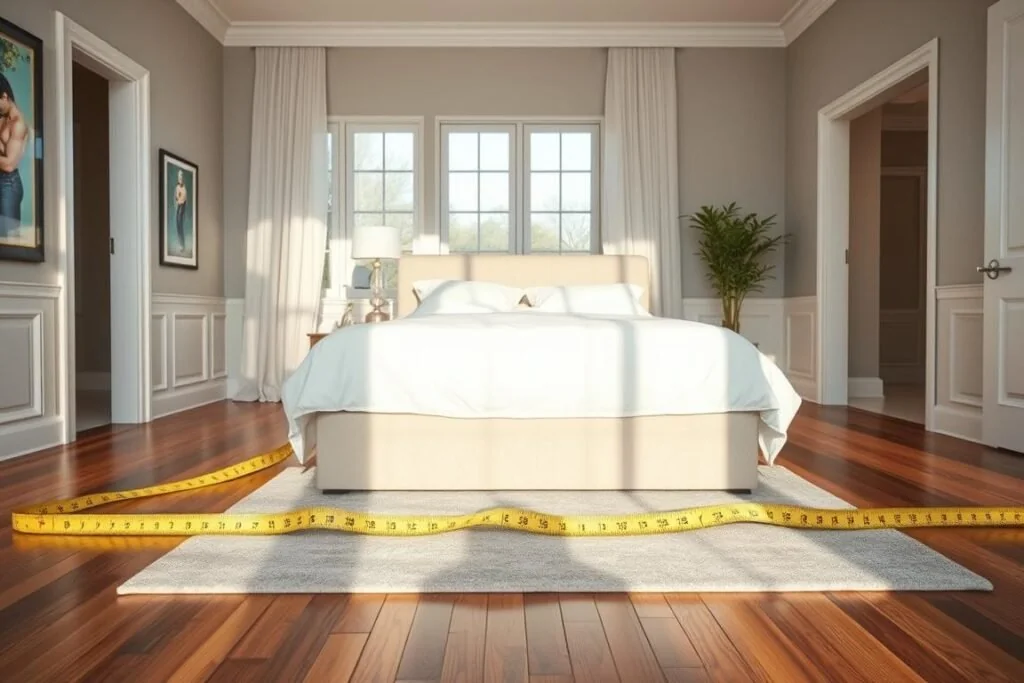
  • Map sizes with painter’s tape so placement feels right before you buy.
  • Let furniture front legs rest on the base for a polished, designer effect.
  • Layering Rugs in Bedroom refreshes what you already own and boosts visual interest.
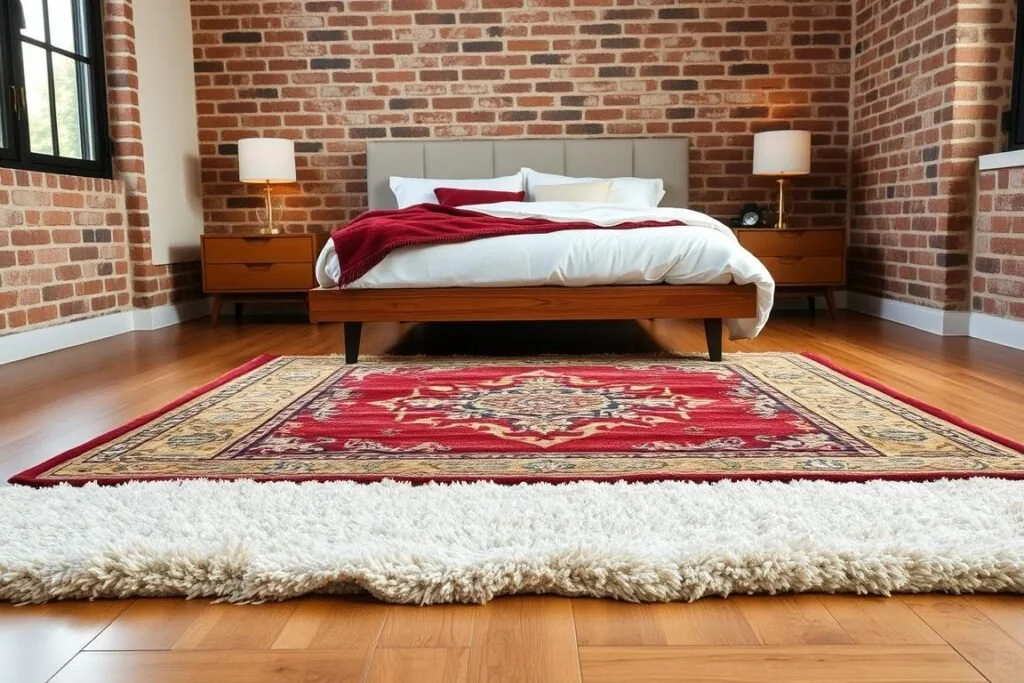

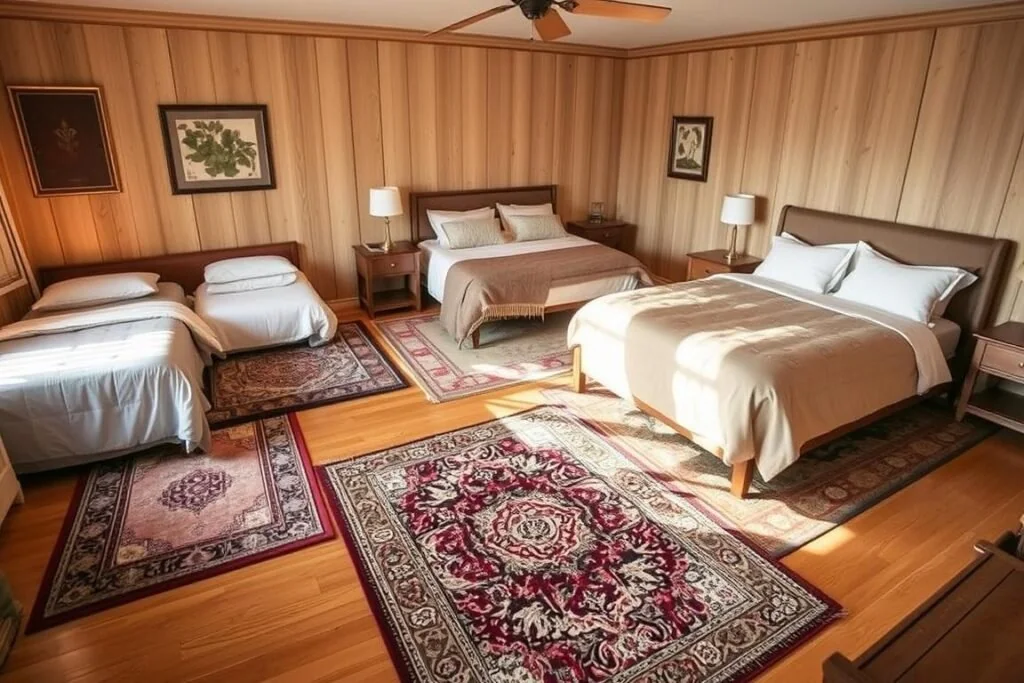
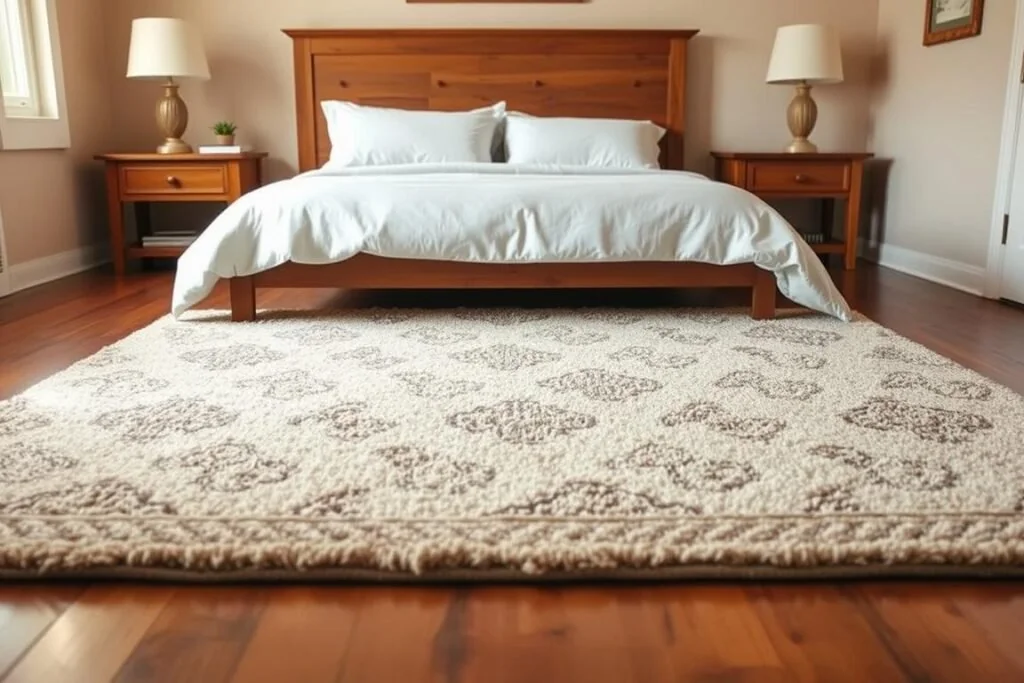
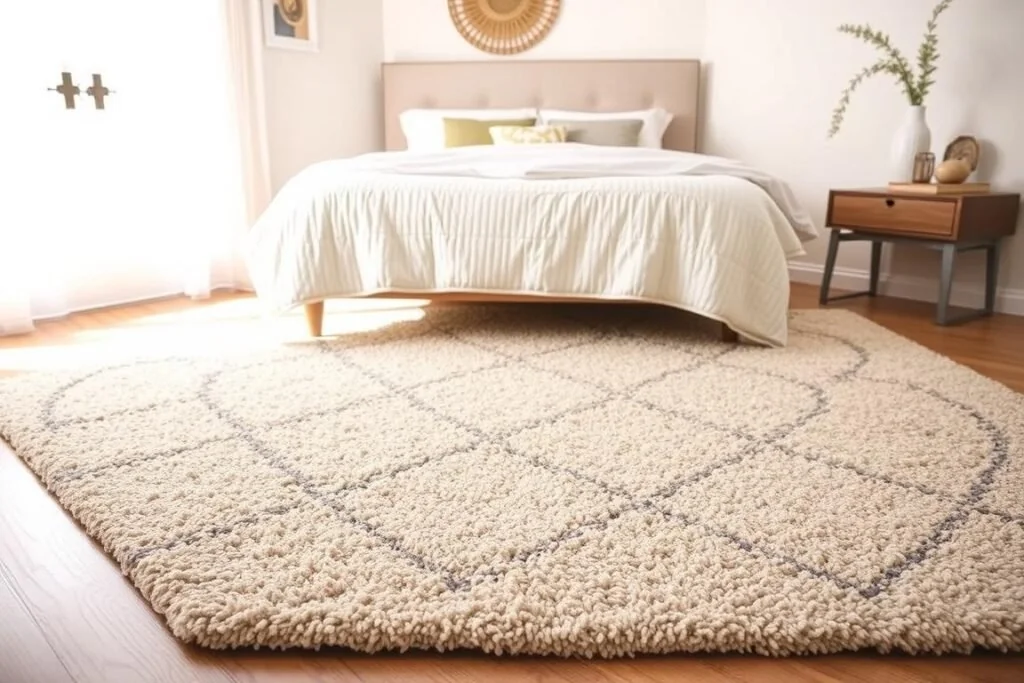
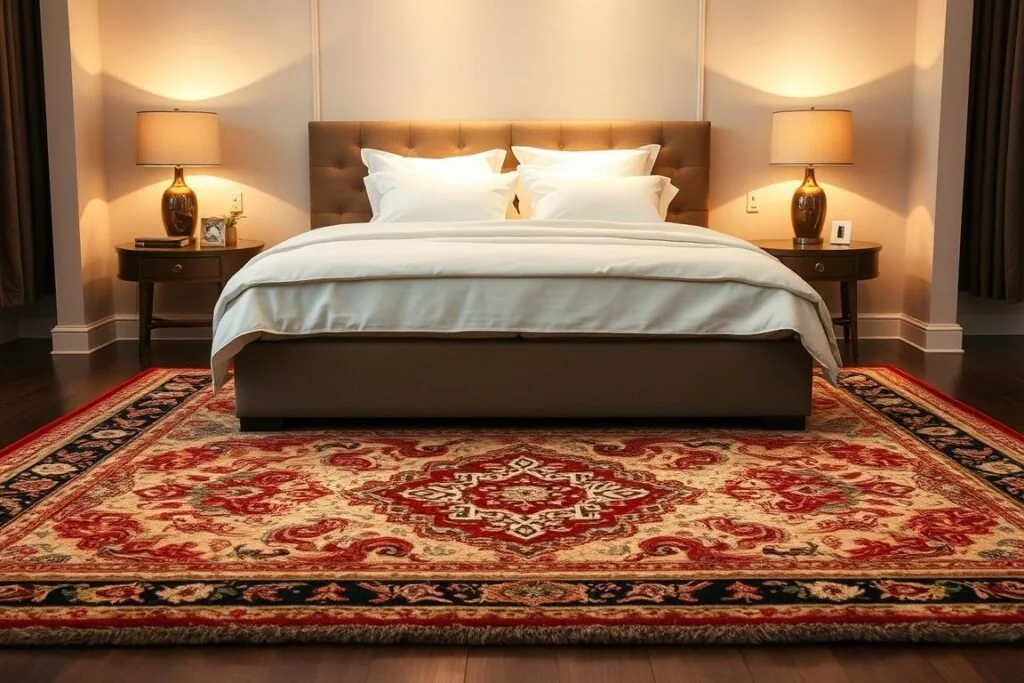
Layering rugs in a bedroom with a neutral flatweave base under a smaller patterned accent rug

Why Layer Rugs in a Bedroom Space

Pairing a large neutral with a smaller colorful piece anchors zones, adds depth, and brings warm texture without a full redesign. Comfort underfoot also supports a calming wind-down routine, which helps set the stage for better rest.

According to the CDC, most adults benefit from a consistent, comfortable sleep environment—layered rugs can reduce echo and add quiet softness.

Above: a generous jute base lets the patterned top rug pop without overwhelming the room.

It’s budget-friendly: a smaller vintage or bold accent over a calm base gives a luxe look without paying for a massive area piece. You can hide wear on a favorite rug or make a too-small piece feel right-sized.

Pro tip: overlap slightly and let the bottom rug dominate; the contrast keeps the layout balanced and easy on the eye.

  • Use a dominant base with a character-rich accent to add color and interest.
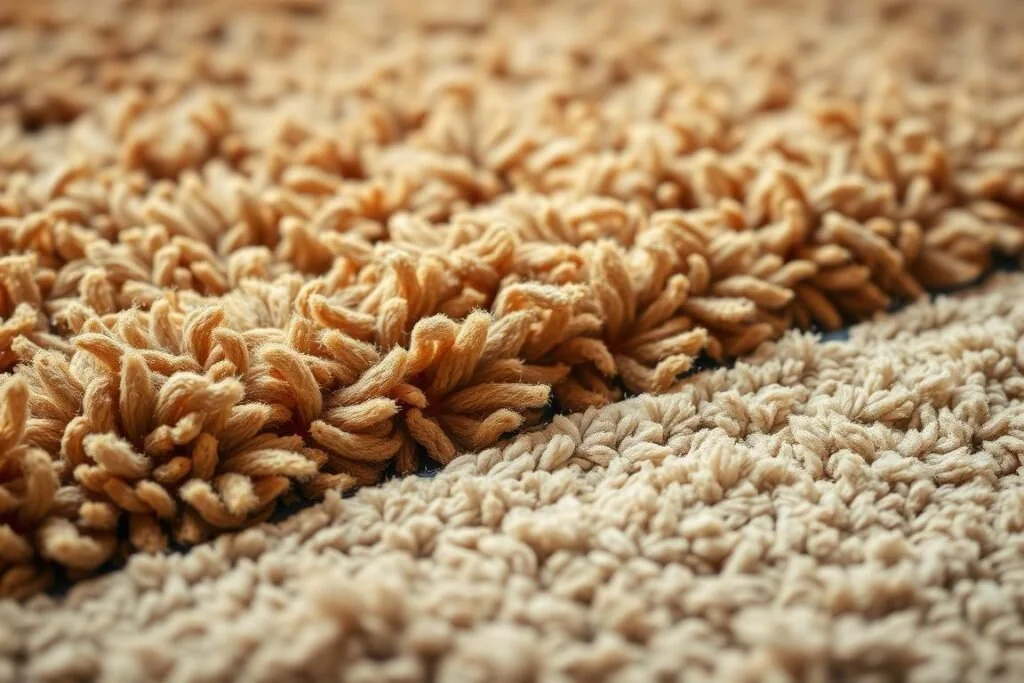
  • Try a tactile mix so texture becomes part of the room’s story.
  • Rotate pieces seasonally to protect the base and refresh the space.
Benefit How it works Quick tip
Depth & warmth Neutral base + textured accent Keep base much larger than top
Budget boost Small statement over affordable area Choose vintage or washable accent
Flexibility Swap top piece seasonally Overlap slightly, not edge-to-edge

Build the Perfect Base: Size, Materials, and Color Foundations

Start with a clean canvas. A flat, durable base grounds the furniture so your accent rug can shine. Measure, mark with tape, and make sure the base reads clearly from all sides.

Get the size right

Measure your room and outline with painter’s tape before buying. An 8′×10′ often fits queen beds, but confirm against your tape map and furniture. For more sizing help, see our Bedroom Rug Size Guide.
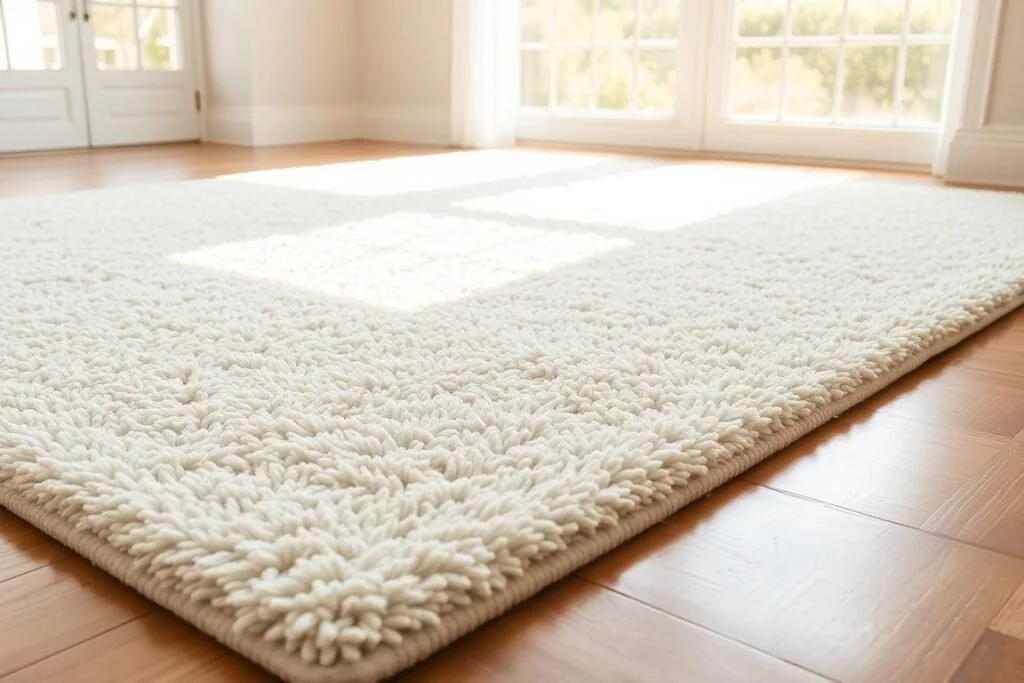
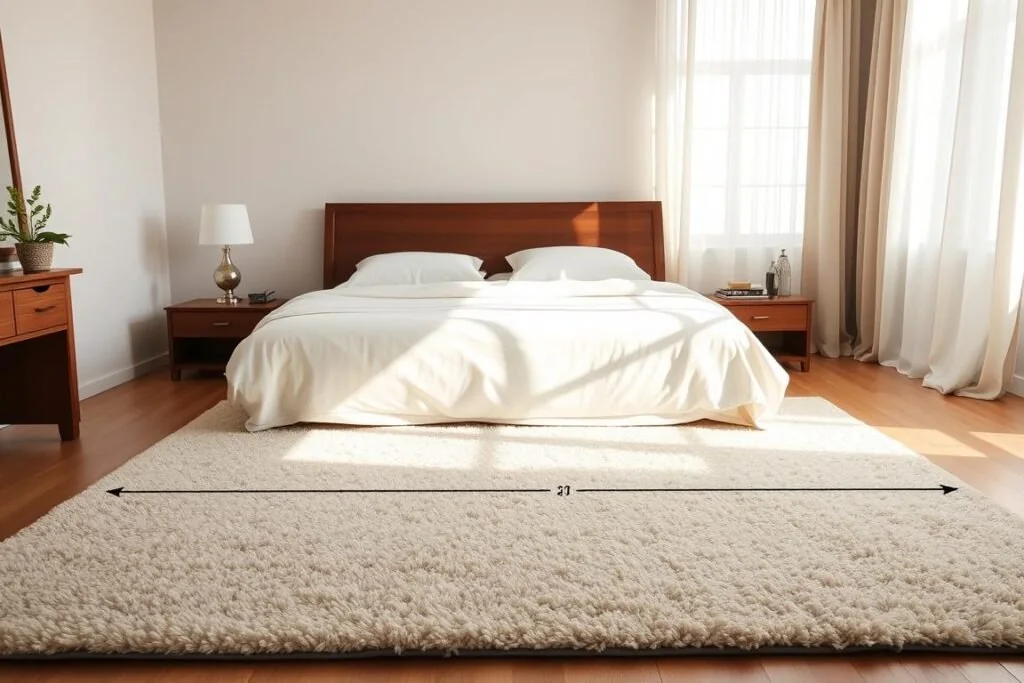
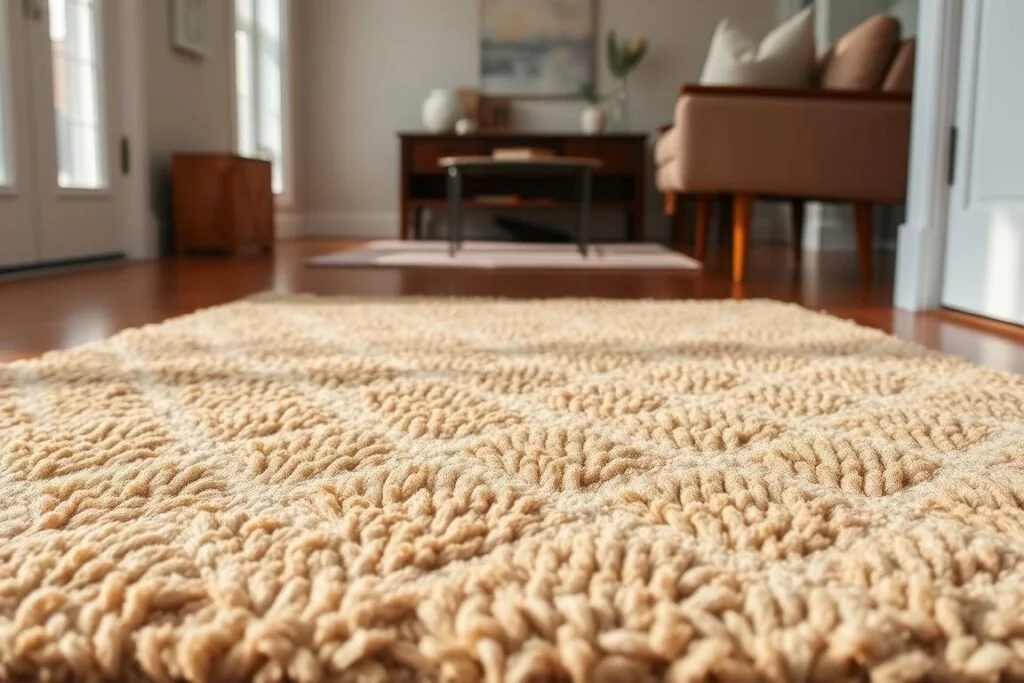
Layering Rugs in Bedroom works best when the base rug is sized first u featuring layer rugs bedroom designer

Mapping with tape shows how far the base should extend around your bed and nightstands.

Choose durable, neutral materials

Pick tightly woven jute or sisal for stability under furniture. A neutral base lets your patterned or colorful top rug stand out without visual clutter.

Shopping eco-conscious? Look for recognized textile and bedding certifications to reduce unwanted odors in the bedroom. See this overview of bedding and materials certifications and this consumer-friendly non-toxic buying guide for context.

  • Place front bed legs and nightstands on the base for a stable, tailored look.
  • If unsure, size up—the extra border looks custom.
  • Slide furniture and recheck clearances before committing.
Tip Why it matters Quick action
Measure first Avoid returns and wrong rug size Use painter’s tape to map footprint
Choose jute/sisal Durable, neutral base with texture Pick flatweave for furniture stability
Hold furniture on base Creates a cohesive, designer feel Place front legs on the rug

Layering Rugs in Bedroom: Step-by-Step for a Cohesive, Safe Layout

Place the biggest rug first, then test a smaller accent for the most flattering overlap. Work in small moves and check sightlines from the doorway and bed.
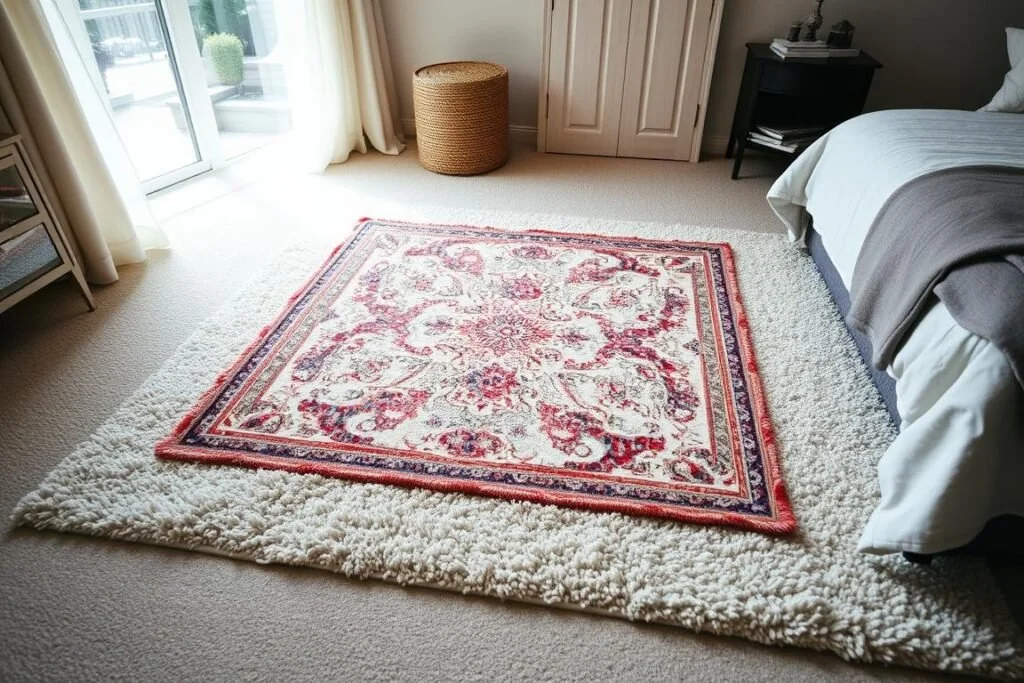
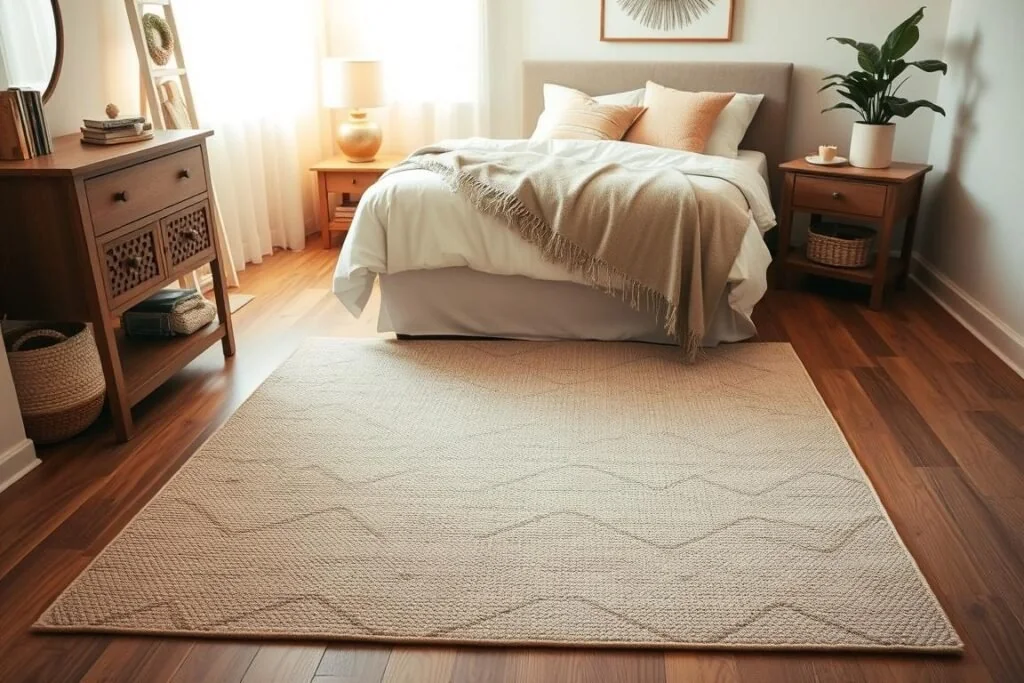
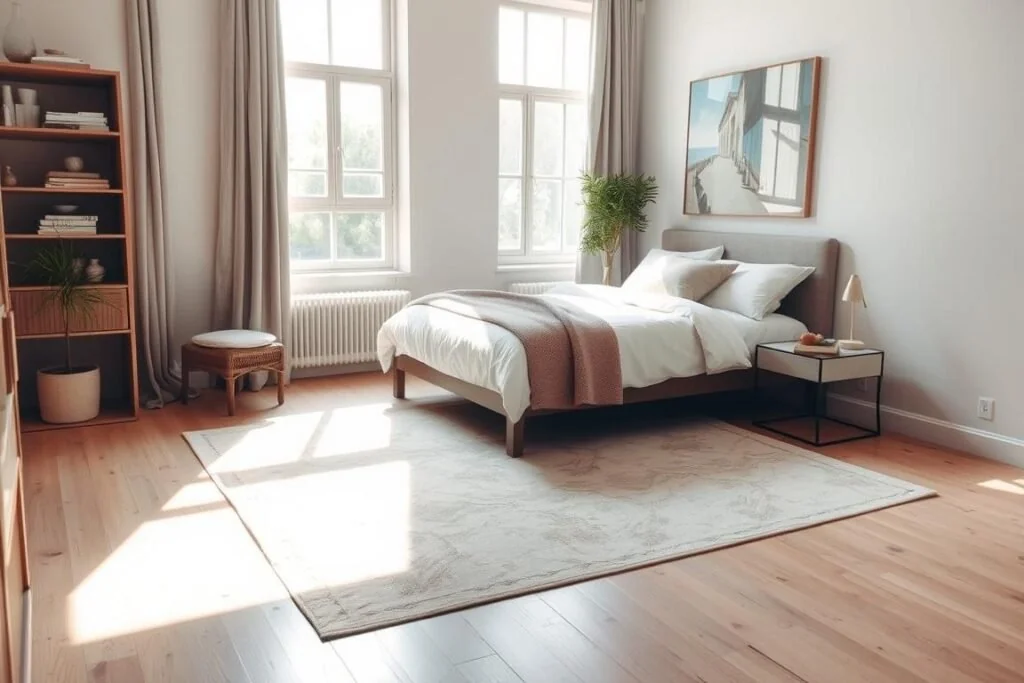
Layering Rugs in Bedroom shown step-by-step with a base rug and top ru featuring layer rugs bedroom designer

A visible border all around the top rug keeps the composition crisp and intentional.

Placement options

Center the base under the bed so the front legs sit on it. Add a top rug under the lower third of the bed, place a small accent at the foot, or run wide side runners for symmetry.

Pairing pattern and texture

Pair a calm, flatweave base rug with a patterned or high-pile top rug to add depth and color. The contrast reads curated without clutter. For low-maintenance care, consider washable low-pile accents.

Proportions that work

Keep the base much larger so a clear border shows all around. Aim for modest overlap—avoid edge-to-edge alignment so the layout feels balanced.

Safety first

Use a quality rug pad under the base and a thin grip under the top rug to reduce slips. Avoid stacking very thick piles, and walk your paths to test stability. See our quick guide to pads in the Bedroom Rug Size Guide.

  • Place base first, then add the top rug.
  • Show a consistent border around the accent piece.
  • Rotate the top rug regularly to refresh the look with minimal lifting.
Step Action Result
Set base Place largest rug under bed; add pad Anchors the space and prevents slip
Add top Center or offset smaller rug Creates contrast and visual interest
Secure Use a thin grip under the top Safe, stable walkways

For an illustrated step-through, see this helpful how-to from The Spruce.

Designer-Approved Combos, Room Scenarios, and What Works Best

Use a tried-and-true pairing when you want instant polish. A generous neutral base with a bolder smaller top works in most bedrooms.

Common size pairings: an 8′×10′ base with a 5′×8′ or 6′×9′ top. If furniture is visually heavy, go with the larger top so the accent still reads intentional. Mark both sizes with painter’s tape and walk the space before you buy.

Want a quick visual demo? Architectural Digest often showcases layered looks that mirror these size rules.

  • 8′×10′ base + 5′×8′ or 6′×9′ top for balanced proportion.
  • Size the top up if the accent feels too delicate.
  • Use a neutral jute or flatweave base so the top’s pattern pops.
Combo Best use Quick tip
8′×10′ base + 5′×8′ top Bedroom anchor Place front furniture legs on the base
8′×10′ base + 6′×9′ top Heavier furniture Let top corners peek past the table or bench
Runner over base Foot-of-bed or narrow spaces Layered look without extra area purchase

Want fit-checks by bed size? Don’t miss our quick explainer: Best Rug Sizes Under a Queen Bed, plus layout notes in the How to Choose a Bedroom Rug guide. For style inspiration, browse real-home examples on Apartment Therapy.

FAQ

Can you layer rugs over carpet in a bedroom?

Yes. Use a low-pile or flatweave base rug over carpet to stabilize the surface, then add a lighter accent on top. A thin pad or grip helps prevent shifting.

What size top rug works on an 8′×10′ base?

A 5′×8′ keeps a generous border; a 6′×9′ feels bolder with heavier furniture. Tape both to see which reads best in your room.

How do you keep layered rugs from slipping?

Use a quality rug pad under the base and a low-profile grip under the top rug. Avoid stacking thick piles in walkways.

Do layered rugs make a small bedroom look smaller?

No, if the base is large enough. A clear border around the top rug actually clarifies the layout and can make the room feel more intentional.

Conclusion

Wrap up the look by setting a generous foundation and letting one smaller piece define the mood. Anchor the plan with a clear base so the top rug shows a visible border, mix one texture with one pattern or color, and secure both layers with pads for safety. With these checks, Layering Rugs in Bedroom becomes a simple designer move that protects pieces, improves traffic flow, and elevates your space. For more cozy bedroom wins, explore Cozy Bed Quarters.

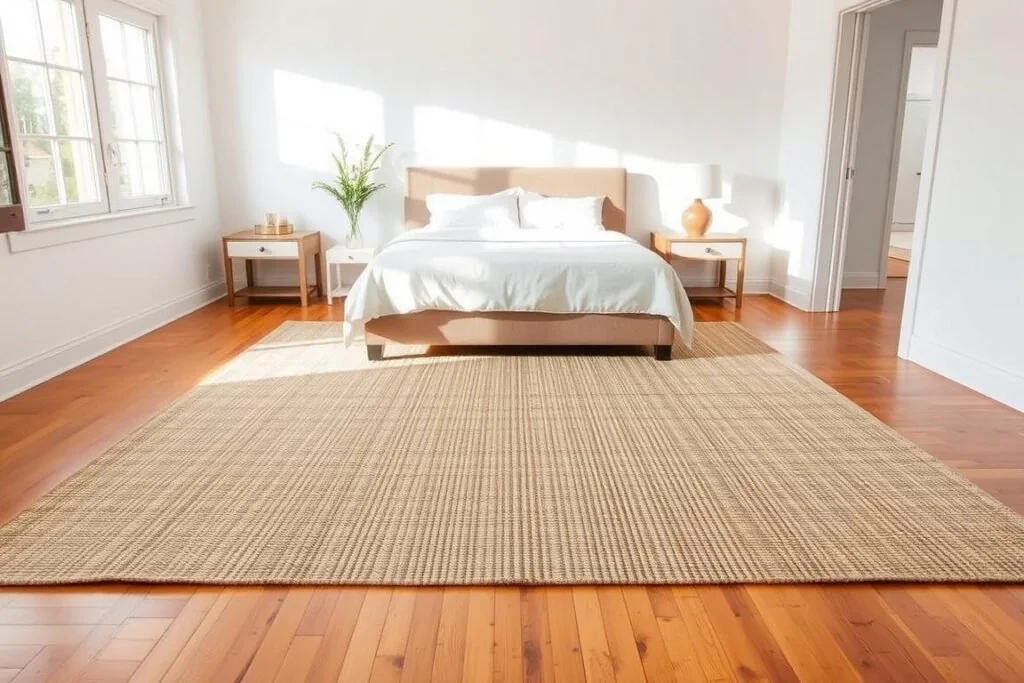
Other reading we found popular

How to Place a Rug Under a Bed: Sizes, Reveals and the Layout Math

how to place a rug under a bed - place rug under bed

How to place a rug under a bed comes down to three layouts: the whole bed plus both nightstands sitting on the rug, the lower two-thirds of the bed on the rug, or two runners flanking the bed. Center the rug on the bed, not on the room, and aim for roughly 18–24 inches (46–61 cm) of rug showing along each side of the mattress so both feet land on something soft. In a typical 10 x 12 ft bedroom that usually means an 8 x 10 under a queen and a 9 x 12 under a king.

Everything below is the arithmetic behind those numbers: what fits, what to measure first, and where the usual advice falls apart.

How to place a rug under a bed: the three layouts and who each one suits

Pick the layout before you pick the rug. It decides the size, and the size decides the price.

1. Full coverage (bed, nightstands, bench all on the rug)

The rug starts a few inches off the headboard wall, runs past the foot of the bed and swallows the nightstands. Hotel look, warmest underfoot, hides scuffed floorboards.

Who it suits: rooms of about 12 x 14 ft (3.7 x 4.3 m) or larger, hard floors, cold climates, anyone who hates stepping onto bare wood in January.

Who should skip it: anyone on a budget. Going from 8 x 10 to 9 x 12 adds 28 sq ft of rug, and 10 x 14 adds 60 sq ft over the 8 x 10 — the cost curve is steep.

2. The two-thirds layout (the one most rooms should use)

Slide the rug under the bed so its top edge sits just past the nightstands — commonly 20–30 inches (51–76 cm) down from the headboard wall. About two-thirds of the bed sits on the rug, and the rest of the rug spreads out at the foot.

You get soft landings on both sides and at the foot, and you don’t pay for rug nobody sees. A 6 x 9 turned sideways under a queen is the classic version: the 9 ft (108 in / 274 cm) dimension runs across the bed, leaving about 24 inches (61 cm) of rug beyond each side of a 60-inch mattress.

Who it suits: most bedrooms between about 10 x 10 and 12 x 14 ft. If you only learn one way of how to place a rug under a bed, learn this one.

Who should skip it: anyone with a very low frame. Under 3 inches (7.6 cm) of clearance and sliding a padded rug underneath means lifting the frame, not shoving.

3. Two runners (or one runner plus a foot rug)

Two runners of about 2.5 x 8 ft (30 x 96 in / 76 x 244 cm) flank the bed, with an optional third across the foot. Nothing goes under the bed.

Who it suits: narrow rooms, beds against a side wall, rentals, and anyone opening under-bed drawers daily. It’s the cheapest warm floor beside a bed, and a small cotton runner goes in the washing machine.

Who should skip it: households where someone has balance problems. Three separate rug edges beside a bed mean three more things to catch a toe on at 3 a.m.

Rug size by bed size, with the exact reveal in inches and cm

Standard U.S. mattress sizes are Twin 38 x 75 in, Twin XL 38 x 80, Full 54 x 75, Queen 60 x 80, King 76 x 80 and California King 72 x 84. The reveal figures below are measured from the mattress edge on a centered rug. Most bed frames add about 2–4 inches (5–10 cm) per side, and upholstered frames can add 4–6 inches (10–15 cm), so subtract that from the reveal.

Bed Mattress (in / cm) Tight but workable Best all-round Rug showing each side (best all-round)
Twin 38 x 75 / 97 x 191 3 x 5 beside the bed 5 x 8 (60 x 96 in / 152 x 244 cm) 11 in / 28 cm
Full 54 x 75 / 137 x 191 5 x 8 turned sideways 6 x 9 sideways (108 in / 274 cm across) 27 in / 69 cm
Queen 60 x 80 / 152 x 203 6 x 9 sideways 8 x 10 (96 x 120 in / 244 x 305 cm) 18 in / 46 cm
King 76 x 80 / 193 x 203 8 x 10 9 x 12 (108 x 144 in / 274 x 366 cm) 16 in / 41 cm
California King 72 x 84 / 183 x 213 8 x 10 9 x 12 or 10 x 14 (120 x 168 in / 305 x 427 cm) 18 in / 46 cm (9 x 12), 24 in / 61 cm (10 x 14)

Do the reveal math yourself in ten seconds

Side reveal = (rug width − bed frame width) ÷ 2. A king frame 80 inches wide on a 9 x 12: (108 − 80) ÷ 2 = 14 inches (36 cm) per side. Enough for one foot; 18 inches is enough for both feet and a dropped phone.

Foot reveal = rug length − (bed frame length − how far down the rug starts). A queen frame 85 inches long with an 8 x 10 starting 24 inches off the headboard wall: 120 − (85 − 24) = 59 inches (150 cm) of rug past the foot. That’s a lot, and it’s why an 8 x 10 in a 12 ft deep room ends up as full coverage whether you planned it or not.

If you’re deciding between two specific sizes, we broke the queen and king cases down further in rug size for a queen bed and the right rug size for a king bed.

Diagram showing how to place a rug under a bed with 18 to 24 inches of rug showing on each side

How much floor should show around the edges?

Most advice on how to place a rug under a bed quotes a bare border of 10–20 inches (25–51 cm) between the rug edge and the baseboards, closer to 18 in larger rooms. Be honest about what that is: a design convention, not a tested standard. What matters functionally is walkway width.

Designers generally call for at least 24 inches (61 cm) of clear floor on each side of a bed, 30–36 inches (76–91 cm) for a queen, and 36 inches or more for a king or Cal King, with main traffic paths around 36 inches. Your rug sits inside that walkway — but the walkway has to exist first. Measure it with the bed where it actually lives.

Two hard minimums: leave at least 6 inches (15 cm) of bare floor at any wall, because a rug that dies into a baseboard reads like failed wall-to-wall carpet, and never let a rug edge land in a doorway threshold.

What to measure before you buy (do all nine)

  1. Bed frame footprint, not the mattress — outside width and length, including feet that splay.
  2. Room, wall to wall, at floor level. Baseboards eat an inch a side.
  3. Door swing. Tape the arc of the bedroom and closet doors.
  4. Door undercut. Interior doors commonly clear the floor by about 5/8–3/4 inch (16–19 mm). A 1/2-inch pile on a 1/4-inch pad is already 3/4 inch. Measure your own gap with a ruler before you buy anything plush.
  5. Floor vents and floor outlets. Covering a supply vent is a heating problem, not just an aesthetic one.
  6. Under-bed clearance, if you’re sliding a rug under a loaded frame.
  7. Drawer and dresser swing at the rug edge.
  8. Delivery path. Rugs ship rolled, and the tube is usually about as long as the rug’s short side — so a 9 x 12 arrives as a roll around 9 ft (2.7 m) long. Measure your tightest stairwell turn and doorway width. A 9-ft tube does not pivot on a landing that’s 3 ft square.
  9. Lift help. Big dense wool rugs are a two-person job. Check the shipping weight on the spec page rather than guessing; it varies hugely between a flatweave and a hand-knotted pile of the same size.

Then tape the outline. Painter’s tape on the floor for 24 hours teaches you more about how to place a rug under a bed than any guide will. Walk it barefoot in the dark.

Nightstands, benches and dressers: on the rug or off?

The rule people repeat is “front two legs on the rug.” That’s a living-room rule; in a bedroom it applies to benches and chairs, not the bed.

  • Nightstands: either all the way on or completely off. Half-on creates a rug edge under a lamp cord and a wobbling drawer, and it’s the single most common thing that makes a bedroom look accidental.
  • Bench at the foot: all four legs on, or the rug ends before it. A bench straddling a rug edge rocks.
  • Dresser against a wall: keep it off the rug entirely. Heavy dressers crush pile permanently, and a dresser half on a rug tilts forward slightly, which matters if you have anti-tip hardware or small children.
  • Beds with storage drawers: keep the rug off the drawer side, or use runners. Drawers that open over a pile rug scrape and eventually stick.

Materials: what each one is actually like to live with

Feel first, then care. A bedroom rug gets bare feet twice a day and little else, which is a gentler life than a hallway rug has. Feel should outrank toughness here.

Fiber Underfoot Holds up to Watch out for Best for
Wool Warm, springy, the best barefoot feel Crushing, years of use; naturally resilient Sheds for months when new; moths; higher cost Bedrooms with hard floors and a real budget
Polypropylene (olefin) Soft but slightly slick Stains and spills; cleans easily Crushes flat under furniture and doesn’t bounce back Kids’ rooms, rentals, pets, tight budgets
Nylon Plush, close to wool in higher grades Heavy traffic; good resilience Fades in direct sun; costs more than olefin Shared or high-use bedrooms
Jute / sisal Coarse and scratchy barefoot Dry wear; good texture as a base layer Water stains; sisal is bad near humidity The bottom layer in a layered setup, not the top
Cotton flatweave Thin, cool, no cushion Washing — the main reason to pick it Slides badly without a pad; wrinkles Small runners beside the bed, allergy households
Viscose / “art silk” Very soft, high sheen Very little Permanent water marks from one dropped glass Low-traffic accents only; avoid beside a bed

On indoor air: if off-gassing worries you, the Carpet and Rug Institute runs third-party emissions testing for carpet and cushion. Its Green Label Plus program tests for VOC emissions and is recognized in the EPA’s federal purchasing recommendations — one of the few labels here with a published protocol behind it.

Rug placement compared for twin, queen and king beds showing full coverage and two-thirds layouts

Rug pads, pile height and the door problem

A pad isn’t optional. It stops creep, adds cushion, keeps grit from grinding into the floor, and it’s the difference between a rug that lies flat and one you straighten weekly.

  • On hardwood, tile or vinyl: felt-and-rubber, 1/4 inch (6 mm) for comfort, 1/8 inch (3 mm) if door clearance is tight. Natural rubber grips best; cheap PVC mesh can mark finished floors over time.
  • Over carpet: use a pad rated carpet-on-carpet. Regular pads let the top rug ripple and walk. Keep the top rug low-pile over plush carpet; two thick layers is how you get a rolling edge.
  • Total stack height: pile plus pad, compared to your door gap. Over roughly 3/4 inch and you’re trimming a door.
  • Trim the pad about 1 inch (2.5 cm) smaller than the rug on all sides so it never peeks out.

Safety: the part most rug guides skip

Loose rugs are a recognized trip hazard. A CDC-authored analysis of U.S. emergency department data on rug- and carpet-related falls in adults 65 and over found most of these injuries happened at home, the bathroom was the most common room, and falls often occurred at the transition between rug and bare floor. The study is on the National Library of Medicine site.

Two caveats: that data covers older adults treated in emergency departments and doesn’t isolate bedroom rugs. Don’t read it as “rugs are dangerous” — read it as a reason to be deliberate about edges.

Practical version: gripping pad under every rug, thin or bound edges rather than thick rolled ones, rug edge kept out of the path between bed and bathroom door, and a light you can reach without standing up (several picks in our bedside lighting round-up are motion-activated for this reason). If someone uses a cane or walker, runners are the wrong call — one large rug with no interior edges is safer.

Small bedrooms, over-carpet, and other awkward cases

Room under 10 x 10 ft: one rug, as large as you can manage, beats three small ones — fewer edges makes a small room read bigger. More on that in choosing a rug for a small bedroom.

Bed against a side wall: forget symmetry. Run the rug out from the open side and let it disappear under the bed.

Over wall-to-wall carpet: fine, and often how renters get a floor color they chose. Low-pile rug, carpet-to-carpet pad, check the edges monthly for curl.

Round beds: a round rug about 2 ft (61 cm) wider than the bed all round. Half-coverage under a round bed looks intentional; under a rectangular bed it rarely does.

Layering: a patterned wool rug over a larger jute base, showing 6–12 inches (15–30 cm) of jute. Use a pad between the layers or the top rug travels.

On cost: prices move too fast and vary too much by fiber and construction for a number here to mean anything. What drives price is fiber, construction and square footage — and square footage is the one you control, by choosing the two-thirds layout over full coverage.

Wool, jute and flatweave rug samples with a felt rug pad for a bedroom floor

Five mistakes that make a good rug look wrong

  • Centering on the room instead of the bed. If the bed isn’t centered on its wall, a room-centered rug looks crooked forever.
  • Buying one size down to save money. A too-small rug is the most common error in how to place a rug under a bed, and styling won’t fix it. Size up.
  • Measuring to the comforter edge. A queen comforter hangs well past a 60-inch mattress. Measure to the frame.
  • Skipping the pad. Creeping, curling, flattening — usually the missing pad, not the rug.
  • Ignoring the door until delivery day. Check the undercut before you order, not after unrolling 80 sq ft of wool in a hallway.

Get those five right and the rest is taste. For style, pile and pattern, our bedroom rug guide covers what this page doesn’t.

FAQ

Should the rug go under the nightstands?

All the way under or fully clear — not half. Under gives the widest soft landing and the hotel look but needs a bigger rug; clear saves money and keeps cords reachable. Half-on is the one version of how to place a rug under a bed that always looks accidental.

What size rug do I need for a queen bed?

An 8 x 10 (96 x 120 in / 244 x 305 cm) is the safe answer: about 18 inches (46 cm) beyond each side of a 60-inch mattress when centered. A 6 x 9 turned sideways suits tighter rooms, giving about 24 inches (61 cm) per side with less rug under the bed.

Which direction should the rug run?

Long dimension in line with the bed’s length for full coverage; across the bed’s width for a two-thirds layout. Either way, keep the rug edges parallel to the walls — two degrees off reads as sloppy from the doorway.

Can I put an area rug over carpet in a bedroom?

Yes, with a carpet-to-carpet pad. Pick a low-pile top rug, especially over plush carpet, and check the corners for curling every few weeks. Bound or flatweave edges lie flatter over carpet than thick rolled edges do.

Do I need a rug at all if my bedroom is already carpeted?

Functionally, no. People add one for color, to define the bed area in a large room, or to protect rental carpet. If none of those apply, skip it and avoid the extra edges.

How do I stop the rug sliding out from under the bed?

The bed’s weight holds the section beneath it; the loose end moves. A felt-and-rubber pad trimmed 1 inch smaller than the rug fixes most of it, and rug tape on one stubborn corner handles the rest without gumming up the whole floor.

Updated September 2026.

Choosing a Rug for a Small Bedroom: Rules to Follow (and Break)

rug for small bedroom - rug small bedroom

Choosing the Right Rug for Small Bedroom Spaces

Rug for Small Bedroom decisions get easy when you plan around the bed. A right-size piece anchors the layout, smooths traffic, and adds cozy underfoot comfort without crowding precious floor.

Use this friendly guide to pick the best size, shape, and material. You’ll learn simple reveals that make a tiny room feel larger, when to slide a rug under the bed, and how light colors or small patterns widen the view. For sleep-health context, adults need at least seven hours a night; a soft landing can make mornings gentler (CDC – Sleep Resources).

A calm, balanced layout starts with consistent floor reveal around the bed.

Key Takeaways

  • Plan placement around the bed to anchor the room fast.
  • Reveal 12–18 inches of floor on all sides for balance.
  • Rug for Small Bedroom rule of thumb: when unsure, size up.
  • Use runners to add visual length and keep walkways clear.
  • Match pile and materials to your cleaning habits and budget.

Start with sizing: simple rules that make small rooms feel bigger

Measure first, then decide. Leave about 12–18 inches of visible floor on the long and short sides of your bed. This reveal calms the eye and prevents a cramped look.

Mini-scenario: you have a full bed tight to one wall. A 6×9 centered from the free wall creates even reveal, while a 5×7 can float at the foot if doors need clearance.

Rug for Small Bedroom sizing diagram showing 12–18 inch floor reveal - rug small bedroom

Check door swings and drawers at the side so edges never block openings.

  • 5×7: Accent at the foot or peeking at sides for full/queen in tight rooms.
  • 6×9: Neat center under a full or queen with modest reveal.
  • 8×10: Two-thirds under most queen/king for generous coverage.
  • 9×12: All four legs on when the room still shows perimeter floor.

Want the full decision tree? See our pillar guide: Bedroom Rug Size & Placement Guide.

Smart placement ideas for a Rug for Small Bedroom

Use layout to stretch your square footage. Slide partway under the bed for a layered look, or use narrow pieces at the sides to keep the center aisle open.

Mini-scenario: small queen room with two doors. An 8×10 starts near the nightstand line so the headboard stays on floor, not textile. Doors clear cleanly and you keep soft landings.

Rug for Small Bedroom using side runners to keep the center aisle clear - rug small bedroom

Two-thirds under the bed: Slide 8×10 so the rug begins near the nightstands. All four legs on: Choose 9×12 if you still see floor around the edges. For tight rooms, matching side runners give warmth without a giant footprint.

Choose materials and pile that match your lifestyle

Pick comfort you’ll enjoy every morning, then match care to your routine. Bedrooms are low traffic, so plush feels great, while flatweaves keep doors moving freely.

Mini-scenario: light-sleeper household with pets. A low-pile, washable rug plus a thin pad helps cleaning while keeping the door glide smooth.

For safer buying, look for recognized labels when choosing bedding and textiles. Learn what common labels mean here: Bedding & Mattress Certifications. If you prefer low-tox home goods, this roundup can help you compare materials and finishes: Non-Toxic Mattress Guide.

  • Plush or shag: Cozy under bare feet; pair with a thin pad to prevent slipping.
  • Flatweave: Door-friendly and easy to vacuum in tight rooms.
  • Wool: Warm, resilient, and naturally soil-resistant.
  • Synthetics (polyester/PP): Stain-resistant and often washable.
  • Jute/sisal: Earthy texture that layers well at the sides of the bed.

Prefer video? Try this short how-to: How to choose the right bedroom rug.

Color, pattern, and shape: easy ways to “stretch” a tiny room

Light, low-contrast rugs bounce light and make the footprint read wider. Small patterns hide lint without visual busyness.

Mini-scenario: narrow room with a queen bed. A pale, small-scale pattern plus a runner along the long wall pulls the eye forward for more “length.” A round rug can soften sharp corners near a dresser.

  • Light neutrals: Open the space; great under mid-tone bedding.
  • Small pattern: Hides daily dust but stays calm.
  • Runner along the long axis: Adds visual length and flow.
  • Round accent: Softens corners and offsets boxy layouts.

Choosing a Rug for a Small Bedroom: Rules to Follow (and Break) - rug small bedroom

Keep edges aligned with furniture lines so the layout feels intentional, not random.

Budget and care: practical wins that still feel polished

Set the budget by size first. It keeps choices focused and prevents overbuying. Washable constructions offer stress-free care in kid- or pet-friendly rooms.

Mini-scenario: you want plush comfort on a budget. Start with an 8×10 synthetic blend and add a quality pad for cushion—often cheaper than stepping up to a pricier dense pile.

  • Use a pad for grip and comfort (thin under doors, cushier in open spaces). See our picks: Best Rug Pads for Bedrooms.
  • Spot clean weekly; rotate seasonally for even wear. Learn more: How to Clean an Area Rug.
  • Map walkways before you buy to avoid curled edges in high-traffic lanes. Layout ideas: Small Bedroom Layout Ideas.

FAQ

What size rug works for a small bedroom with a queen bed?

An 8×10 usually covers two-thirds under the bed with nightstands off the rug. If the room allows a floor perimeter, a 9×12 puts all four legs on for a seamless look.

Should I put the rug under the bed or beside it?

Both work. Two-thirds under is great for coverage without crowding. Side runners give warm landings and keep the center aisle open in very tight rooms.

What material is best if I have allergies?

Low-pile wool or tightly woven synthetics are easy to vacuum. Pair with regular cleaning and a thin pad. Check labels and care notes before buying.

Do I need a rug pad in a small room?

Yes. A pad adds grip and comfort, and it helps rugs lie flat. Choose a thinner pad if doors skim the floor.

Conclusion

Rug for Small Bedroom choices come down to scale, placement, and care. Measure your bed, aim for a 12–18 inch reveal, and choose 8×10 for two-thirds under a queen or 9×12 to place all legs on the textile. Match pile to daily habits, use runners to guide sightlines, and keep tones light to “open” the space. For deeper sizing charts and room layouts, start with our pillar: Bedroom Rug Size & Placement Guide. Thanks for reading Cozy Bed Quarters—sleep cozier, live better.

Other reading we found popular

Rug Size for a Queen Bed: 6×9, 8×10 or 9×12?

rug size for queen bed - size rug need queen

An 8×10 is the safe default rug size for queen bed layouts: it clears the sides of a 60-inch-wide mattress by about 18 inches and fills a typical 12×14 room without crowding the walls. Drop to a 6×9 in a small room where the rug tucks under the bottom two-thirds of the bed, or step up to a 9×12 if you want the bed, both nightstands and a bench sitting on one surface. Aim for roughly 18 to 24 inches of rug showing along both sides and past the foot, and you’ll get the look right on the first try.

Quick size chart

Room size Rug size Usual placement What it looks like
About 10×11 or 10×12 5×8 or 6×9 Bottom two-thirds, run crosswise Soft landing on both sides; nightstands stay on bare floor
About 11×13 7×10 or 8×10 Two-thirds or full Room for a bench at the foot without blocking the walkway
About 12×14 8×10 Full, bed centered Bed and nightstands on the rug, ~18 inches showing per side
13×15 and up 9×12 Full, everything on the rug ~24 inches per side; anchors a chair or dresser too

Those room sizes assume a normal amount of furniture and a door that swings into the room. If your bedroom is an odd shape, trust the tape test further down this page over any chart.

Rug size for queen bed: start with the mattress footprint

A standard queen mattress is 60 inches wide by 80 inches long — 5 feet by 6 feet 8 inches, or about 152 by 203 cm. That footprint, not the bed frame, is what your rug has to work around. Add a frame with a chunky base or a headboard with feet and the outline grows by a few inches on each side, so measure the frame too if it’s wider than the mattress.

Two variants change the math. An Olympic queen is 66 by 80 inches (6 inches wider), and a California queen is 60 by 84 inches (4 inches longer). With either one, size up rather than down — a 6×9 that looked generous under a standard queen suddenly looks skimpy. Our queen size bed dimensions guide has the full numbers in inches, feet and centimeters, and the standard bed size chart is handy if you’re comparing a queen against a full or king before you commit.

Diagram of a 60 by 80 inch queen mattress footprint used to plan rug size for a queen bed

How much rug should show around the bed

Designers usually call for 18 to 24 inches of visible rug along both long sides and past the foot. There’s no standards body setting that number — it’s a convention, not a rule — but it holds up for a practical reason: it’s roughly the width of a step, so both feet land on something soft when you get out of bed. Under about 12 inches per side and the rug starts reading like a bath mat that wandered into the wrong room.

The other half of the equation is the wall. Leave 12 to 18 inches of bare floor between the rug edge and the baseboards so the room still has a frame. In a tight bedroom you can shrink that gap to 8 inches, but a rug that runs wall to wall stops looking like a rug and starts looking like a bad carpet install.

Orientation matters as much as size

Same rug, two very different results. Turn a 6×9 so the 9-foot side runs across the bed and you get 24 inches of overhang on each side, with the rug covering the bottom two-thirds of the mattress and extending about 19 inches past the foot. Turn that same 6×9 the other way — 9 feet running head to foot — and you’re left with only 6 inches showing on each side, which is barely worth having.

Rules of thumb by size:

  • 5×8 and 6×9: run the long side across the bed, under the lower half to two-thirds of the mattress.
  • 8×10 and 9×12: run the long side head to foot and center the bed on it, so the whole bed plus nightstands sit on the rug.
  • 7×10: the awkward middle child. Head to foot it leaves only 12 inches per side; crosswise it gives a generous 30 inches per side but only 7 feet of depth. Check both with tape before you order.

Three placement methods that work

Full placement

The bed, both nightstands and any bench sit entirely on the rug, with 18 to 24 inches extending past the furniture. It’s the hotel-room look, it keeps nightstand legs from wobbling on a rug edge, and it needs an 8×10 or 9×12. Best in rooms 12×14 and up.

Two-thirds (partial) placement

The rug starts about a third of the way down from the headboard, so the lower two-thirds of the bed sits on it and the nightstands stay on bare floor. This is the workhorse for small and medium rooms because you buy less rug and still get softness where your feet land. Works with 5×8, 6×9 and 8×10.

Foot-of-bed placement

A smaller rug — 4×6 or 5×7 — sits across the foot of the bed, covering a quarter to a third of the mattress length or none of it at all. Good for adding pattern without moving heavy furniture, and good for layering a bold rug over a plain base. It won’t give you side comfort, so treat it as decoration rather than the main event.

Small rug placed across the foot of a bed as an accent layer in a bedroom

A fourth option deserves a mention: two runners, one on each side of the bed. In a narrow room, or where a big rug would cover a floor vent or block a closet door, a pair of 2.5×8 runners gives you the soft landing without the bulk. We walk through each of these layouts step by step in how to place a rug under a bed.

Bedroom showing a large area rug centered under a queen bed with nightstands on the rug

Awkward rooms and how to handle them

  • Bed pushed into a corner: skip symmetry. Run the rug out from the two exposed sides instead of centering it, and let it slide under the bed rather than wrapping the wall side.
  • Under-bed storage drawers: a thick pile plus a rug pad can stop drawers from opening. Choose low pile — under about half an inch — or keep the rug clear of the drawer side.
  • Carpeted bedroom: a rug still works and still defines the bed. Layer a flat weave or low pile over the carpet and use a pad made for carpet-over-carpet so it doesn’t creep.
  • Door and closet swings: a bifold or standard door clearing a thick rug by a quarter inch today will drag on it once the pad compresses. Open every door over the taped outline before you buy.
  • Floor vents: covering one with a rug cuts airflow to the room. Shift the layout or drop to runners.
  • Bench or chair at the foot: add its depth — usually 16 to 20 inches — to the length you need past the mattress, or the front legs will hang off the edge.

If you’re also rethinking what’s beside the bed, the nightstand sizing guide covers how much clearance to leave between the mattress and a bedside table.

Materials, pile and pads

Fiber matters less than most guides suggest, but there are real differences:

  • Wool: springy, warm and naturally soil-resistant. It costs more and can shed for the first few months.
  • Nylon: the toughest of the common synthetics and holds its color well, which suits a path that gets walked every day.
  • Polypropylene (olefin): cheap, stain-resistant and easy to clean, though it flattens under heavy furniture faster than wool or nylon.
  • Cotton and jute: casual and affordable. Cotton flat weaves are often machine washable in smaller sizes; jute is rough underfoot, so it’s better at the foot of the bed than beside it.
  • Washable rugs: genuinely useful with pets or small kids. Check the size against your washer drum before you assume an 8×10 will fit — most won’t.

Two practical notes. First, a rug pad is not optional under a bedroom rug: it adds cushion, keeps the edges from curling and stops the rug sliding when you step out of bed. Health organizations that cover fall prevention, including Mayo Clinic, specifically recommend securing loose rugs with slip-resistant backing or tape — worth doing anywhere someone gets out of bed half-asleep. Second, rugs sold in the US have to meet federal surface-flammability requirements under 16 CFR Part 1631; small rugs that don’t pass can only be sold if they’re permanently labeled as flammable, so read the tag on bargain finds.

Patterned rug layered over a larger neutral rug in a bedroom for added texture

Tape it out before you buy

Fifteen minutes with painter’s tape beats any online visualizer.

  1. Mark the mattress footprint on the floor first — 60 by 80 inches — even if the bed is already in place.
  2. Tape the outline of your two best rug candidates, in the orientation you plan to use.
  3. Measure the gap from the tape to each wall and to the mattress edges. You’re looking for 18 to 24 inches past the bed and 12 to 18 inches to the walls.
  4. Open the bedroom door, closet doors and any under-bed drawers over the outline.
  5. Walk the route from the bed to the door and to the closet in bare feet. Then photograph the room from the doorway so you can compare options side by side.
  6. If you’re torn between two sizes, leave the tape down overnight and decide in the morning. Bigger usually wins.

For layout, style and colour decisions beyond sizing, our bedroom rug guide covers the rest of the room.

FAQ

Will a 5×7 rug work under a queen bed?

Not as the main rug. A 5×7 is narrower than the bed is long and barely wider than the mattress, so you get no usable side overhang. Use it at the foot of the bed or layered over a larger neutral base.

Is a 6×9 big enough for a queen?

Yes, in a small room, as long as you run the 9-foot side across the bed and slide it under the bottom two-thirds. You’ll get around 24 inches of rug on each side. It won’t reach the nightstands, which is fine.

Should the nightstands sit on the rug?

Either is correct. All-on looks more finished and needs an 8×10 or 9×12; nightstands off the rug saves money and suits two-thirds placement. What looks unfinished is a rug edge that runs under only the front legs of a nightstand.

8×10 or 9×12 for a queen?

Room size decides it. Under about 12×14, an 8×10 gives the better proportions; in a 13×15 or larger bedroom, a 9×12 keeps the rug from floating in the middle of the floor.

Can I layer rugs under a queen bed?

Yes. Put a large, plain low-pile rug down as the base and a smaller patterned one on top, usually across the foot of the bed or on one side. Keep total thickness low if you have under-bed drawers or a door that swings close to the floor.

Does the rug have to be centered on the bed?

Center it on the bed, not on the room — that’s the detail people get wrong. If the bed isn’t centered on its wall, a rug squared to the room will look crooked even though it’s perfectly straight.

Before you order

  • Measure the frame, not just the mattress, if the frame is wider.
  • Confirm the orientation you plan to use, not just the size.
  • Add a rug pad cut about an inch smaller than the rug on all sides.
  • Check the return policy — rug returns on big sizes can be expensive to ship back.

Updated September 2026.

The Definitive Bedroom Rug Guide: Size, Placement & Style

bedroom rug guide - definitive bedroom rug

A Practical Guide to Choosing Bedroom Rugs

Updated: August 30, 2025

Bedroom rug guide: Ever notice how some rooms feel calm the second you walk in? The right textile underfoot fixes scale and style at the same time. This friendly bedroom rug guide gives you fast rules, mattress-by-mattress sizes, and small-space workarounds so you step onto softness every morning. For a full-room approach, also see our living room rug size rules.

Key Takeaways

  • Follow the two-foot rule: leave ~24″ of rug on the two long sides and the foot of the bed.
  • Queen = 8’x10’, King = 9’x12’; use 6’x9’ for tight queen rooms pulled slightly past the footboard.
  • Float living room pieces so at least front legs sit on the rug; extend dining rugs 24–36″ past the table.
  • Pick pile height for lifestyle: plush for comfort, low pile for easy cleaning and door clearance.
  • Measure first. A bedroom rug guide mindset prevents the “too small” look and saves returns.

Bedroom rug size guide showing an 8x10 rug under a queen bed with 24-inch borders

A quick visual: an 8’x10’ under a queen, leaving ~24″ around the sides and foot.

Bedroom Rug Guide at a Glance: Sizes That Always Work

You don’t need guesswork. Use these dependable dimensions and you’ll get balanced proportions in most bedrooms.

Quick bedroom rug guide: Twin 5’x8’, Full 6’x9’, Queen 8’x10’, King 9’x12’

Start here to shortlist options. These sizes anchor the bed and keep nightstands and benches reading as one composition.

The 2-foot rule: Leave about 24 inches on three sides of the bed

Plan for roughly 24″ of soft surface on the two long sides and at the foot. In a tight queen room, a 6’x9’ can still work if you pull it a quarter past the footboard.

  • Prioritize width so the rug extends slightly beyond nightstand edges.
  • Avoid matching rug width too closely to the mattress—it looks squished.
  • Planning an upgrade? Choose a size that can scale with a larger mattress later.

Quick tip: Note bed, nightstand, and room measurements before you shop. It turns buying into a one-step decision.

How to Place an Area Rug Under Your Bed for the Right Look

Placement changes how the whole room reads. Test these four layouts and pick what fits your space and habits best.

Four classic layouts from the bedroom rug guide showing rug placement under bed - definitive bedroom rug

Four classic placements: full coverage, two-thirds under, side accents, or a runner at the foot.

All the way under

Go hotel-plush: the bed, nightstands, and bench sit fully on the rug. The result is cohesive, quiet, and anchored.

Two-thirds under

Slide the rug so the top third stays in front of nightstands and pull it a bit past the footboard. You’ll see more pattern where it counts.

Side-by-side accents

In very tight rooms, use two 2’x3’ mats for soft landings on each side. Align their front edges with the nightstands for symmetry.

Runner at the foot

A runner warms the aisle without bulk on the sides. If possible, rest footboard legs on the runner for a finished edge. Layer a favorite small rug over a larger neutral base when you need extra scale.

  • Center the layout on the room’s main axis for cleaner sightlines.
  • Check doors and drawers—leave clearance so nothing scrapes the pile.
  • Mark edges with painter’s tape to preview coverage before committing.

According to the Sleep Foundation, a calming, well-designed sleep space supports rest—and soft rugs underfoot contribute to that restful environment.

Bed-By-Bed Rug Size Breakdown: Twin, Full, Queen, and King

This section of the bedroom rug guide matches real room constraints with sizes that feel right the moment you step out of bed.

Twin

A 5’x8’ usually provides generous side coverage in kids’ or guest rooms. In narrow layouts, try a long runner on one side or two shorter runners for targeted softness.

Full

For a full bed, 6’x9’ hits the sweet spot. If space is tight, flank with runners aligned to nightstand fronts so feet land on cushioned surfaces.

Queen

Choose an 8’x10’ for balanced proportions. If a 6’x9’ is all that fits, pull it down so at least a foot of rug shows at the end of the bed.

King

A 9’x12’ feels properly scaled. Keep ~8″ between rug edges and nightstands and aim for ~12″ beyond the foot so the setup reads finished.

  • Footboard detail: If your frame has feet, place them on the rug for an intentional look.
  • Low-profile platform frames can sometimes size down and still feel balanced.
  • Check vents and heater registers so nothing blocks airflow.

Materials That Feel Great Barefoot: Wool, Viscose, and Synthetics

Fiber choice changes the first step of your day. Pick what matches comfort, care, and budget.

Different rug materials from the bedroom rug guide including wool, vis featuring definitive bedroom rug

Wool for cozy durability, viscose for sheen in low-traffic rooms, synthetics for value and easy care.

Wool: Naturally soft, insulating, and great at hiding footprints. A top pick for cozy bedrooms.

Viscose (silk blends): Velvety sheen and luxe look, but gentler care—best for low-traffic primary suites.

Synthetics (nylon, polyester, PET): Budget-friendly and easy to clean. PET resists stains and holds color well.

For responsible shopping, review textile standards with Ethical Bedding’s certification guide before you buy.

  • Tip: Check door clearance, rotate rugs for even fading, and filter by material when shopping to save time.

Color and Style: From Neutral Bedroom Rugs to Statement Patterns

Color sets the mood in seconds. Use this bedroom rug guide mindset: calm where you rest, character where you want energy.

Neutral tones for a calm, sophisticated look

Beige, gray, and ivory play nicely with changing bedding and paint. Wool adds warmth without shouting; viscose blends give a subtle, dressy sheen.

Bold colors and patterns that won’t overwhelm

Let the rug be the statement. In smaller rooms, pick tighter motifs or tone-on-tone patterns so the eye can rest. On hardwood, layer a flatweave under a patterned top piece for depth without bulk.

  • Echo a hue from the rug in pillows or art for cohesion.
  • Test swatches in daylight and lamplight—colors shift after dark.
  • Lighting matters. See our Bedroom Lighting Guide.

Small Bedrooms and Apartments: Smart Rug Layouts That Maximize Space

Small floor plans benefit from layered solutions that make the room read larger and calmer.

Bedroom rug guide example for small room rug layouts using layering - definitive bedroom rug

Layer a natural jute base, then center a smaller patterned rug for scale without overspending.

When smaller textiles work

If your bed sits against a wall, float a smaller rug in front to keep the footprint tidy. When furniture floats, size up so legs land on the rug and the floor reads as one field.

  • Keep 3–6 inches between rug edges and baseboards in very tight rooms.
  • Prefer light tones to expand visual space; avoid heavy borders that box the area.
  • Use low pile to clear doors and reduce trip edges.

Try these space-smart strategies:

  • Layered base + top: 9’x12’ jute with a smaller showpiece on top for scale.
  • Small float: A compact rug in front of a wall-anchored sofa or bed.
  • Upsized field: Choose the next standard dimension when furniture floats.

For whole-home flow, see our Dining Room Rug Size Guide.

Runners and Side Rugs: Cozy Alternatives to Full Area Rugs

Not every room needs a giant rug. Place softness exactly where you step and keep the center open and airy.

Two 2’x3’ accents for warm landings

Set a 2’x3’ on each side and align their front edges with your nightstands. It feels intentional from both sides of the bed.

2.5’x8’ runners for narrow layouts

Great in tight aisles or along a king. Pick low pile so doors and closet swings clear the surface.

  • Side mats give softness where you need it without crowding the room.
  • A long runner warms the path at the foot of the bed.
  • Leave ~3″ from baseboards to avoid curling and ease cleaning.
  • Use cushioned pads under runners for extra comfort and grip.
  • Match pieces from one collection to repeat pattern across the room.

Common Rug Mistakes to Avoid in the Bedroom

Small scale choices can make a good design feel piecemeal. Fixes are simple when you know what to look for. Prefer a video walk-through? Watch this concise explainer: How to choose the right rug size.

Buying too small: Why chopped-up rooms look accidental

Undersized pieces leave skinny strips on the sides of the bed. Aim for at least ~24″ on three sides so the bed ties to the floor.

Rug width too close to bed width: The “squished” effect

When widths match, the outline feels tight. If you love a smaller piece, layer it over a larger natural-fiber base for proper scale.

Legs on or off: Be consistent

Pick a lane—either all legs on or all off. Mixed legs look awkward and make zones feel incomplete.

Orient to the room, not just the bed

  • Run the rug with the room’s long axis in narrow spaces.
  • Maintain clear walkways to closets, baths, and doors.
  • Preview with painter’s tape; it catches scale issues fast.

Quick tip: In multi-use bedrooms, one larger rug usually beats several small ones for unity.

Beyond the Bedroom: A Quick Room-to-Room Rug Size Guide

Use these simple sizing rules to make every space feel intentional and easy to move through.

Living room essentials: Start with 8’x10’ or 9’x12’. Keep 30–36″ of walkway around major furniture and set at least front legs of seats on the rug. See our living room size rules.

Dining room math: Add 24–36″ beyond table edges so chairs stay on the rug when pulled out. Choose low pile for easy movement. Learn more in our dining room rug guide.

Hallways & entryways: Use runners with ~3″ wall clearance. Avoid seams at doorways on very long corridors.

Kitchen & bath: Place runners or 2’x3’ accents at sinks and vanities for traction and comfort.

Want fiber deep-dives? Try Rug Materials 101 next.

FAQ

What size rug works best under a queen bed?

An 8’x10’ is the most reliable pick. In tight rooms, a 6’x9’ can work if you pull it down so at least a foot of rug shows at the end.

Should nightstands sit on the rug?

It’s optional. For a plush, hotel feel, place them fully on. For flexibility, keep the top third of the rug in front of the nightstands.

Do I need a rug pad in the bedroom?

Yes. Pads add cushion, reduce slipping, and help rugs last longer—especially helpful on hardwood and with runners.

What if my rug is a bit too small?

Layer it over a larger jute or sisal base. You keep the pattern you love and gain the scale the room needs.

Conclusion

Wrap up your layout with sizes that fit how you live. This bedroom rug guide boils it down: Twin 5’x8’, Full 6’x9’, Queen 8’x10’, King 9’x12’, plus the ~24″ rule for comfy step-offs. Pick wool for warmth, viscose for low-traffic sheen, or PET for easy care. Anchor living and dining furniture (front legs on; chairs fully on), keep measurements handy, and you’ll build calm, cozy rooms that work every day. For more cozy, practical ideas, visit Cozy Bed Quarters.
Other reading we found popular

The Right Rug Size for a King Bed to Anchor Your Room

rug size for king bed - rug size king bed - right rug size

Rug Size Guide for King Beds Made Simple

Updated 2025

Rug size for king bed is the simple swap that makes your bedroom feel pulled together instead of chopped up. This guide shows you how to choose a footprint that grounds the mattress, keeps traffic clear, and delivers a polished look. In most rooms, larger options like 8×10 or 9×12 tie furniture and walkways into one cohesive zone.

Key takeaways

  • Start bigger: 8×10 or 9×12 usually prevents a chopped look around a king bed.
  • Designer default: a 9×12 often places footboard legs on the rug with ~24 inches visible on three sides.
  • Breathing room: keep space off the walls; avoid wall-to-wall placement.
  • Comfort first: consider orientation, material, and pile height for daily use.
  • Measure before buying: map nightstands, benches, doors, and traffic paths.

Understand your goal: anchor, comfort, and visual balance

Decide what the rug should do—define the sleep zone, add softness, or elevate the look.

A well-chosen rug pulls the space together rather than chopping it up. Keep leg placement consistent so the setup reads as one composed area. Flatweave or low-pile options make moving chairs easier and keep noise down. Aim for plushness where you step each morning without blocking door swings.

  • Choose your primary aim: anchoring, comfort, or a design lift.
  • Tie bed, nightstands, and foot seating into one visual zone.
  • Preserve negative space so the room can breathe.

According to the CDC, adults need at least seven hours of sleep—prioritize soft landings where you start and end the day.

Measure your bedroom and bed before you buy

A quick tape-measure check prevents cramped layouts.

Trace real footprints for the mattress, frame, headboard, and any overhang. Mark door swings and traffic paths. Plan walkways at 30–36 inches when possible; 18–24 inches still works in tight rooms.

Measured layout showing the right rug size for a king bed in a cozy bedroom

Map doors, vents, and outlets so the rug sits naturally—not wall-to-wall.

  • Decide if nightstands sit on or off the rug and allow coverage past the sides.
  • Measure any bench at the foot so the rug lands cleanly beneath it.
  • Keep space from walls and clear floor vents and outlets.
Area Ideal Minimum
Walkway 30–36 in 18–24 in
Foot clearance 24–36 in 18 in
Overall coverage Rug wider than bed Visible floor near walls

Rug size for king bed: the gold-standard dimensions

Pick the footprint that frames your sleeping area and lifts the whole composition.

9×12 feet is the designer’s ideal in many rooms. It gives generous coverage, lets the footboard legs rest on the rug, and supports seating at the foot while keeping a neat border.

8×10 feet: the balanced minimum

An 8×10 works in many standard bedrooms. Expect roughly 12–24 inches visible on each side, which feels intentional without crowding the room.

10×14 feet: a luxurious option

Choose 10×14 in expansive rooms. It accommodates a bench or a pair of chairs and makes furniture groupings feel cohesive.

6×9 feet: a compact solution

In tighter layouts, a 6×9 slid under the lower two-thirds of the bed keeps softness at your feet while leaving doors and walls clear.

  • Check the first view from the doorway—does the scene feel calm?
  • Match your measurements to ensure clean placement.
  • When unsure, size up to avoid a chopped look.

How far should the rug extend beyond the sides and foot?

A measured reveal makes the sleep area look planned and proportional.

Target 18–24 inches on each side. This gives a comfortable landing and a consistent border. Nightstands look integrated instead of tacked on.

Allow 24–36 inches at the foot when you add a bench or chairs. If there’s a footboard, rest its legs on the rug so the bed and floor covering feel like one cohesive zone.

Measure bedroom inches to choose the right rug size for king bed - rug size king bed

Area Recommended inches Why it matters
Sides 18–24 in Comfortable landing and clean visual border
Foot 24–36 in Seats sit fully and the look stays balanced
Under footboard Legs on rug Unifies bed and floor covering

Placement methods that work in real rooms

Where the rug sits defines landing zones and visual flow.

Be intentional about anchoring the sleep area. Either keep furniture legs consistently on the rug or consistently off. A larger rug that holds all pieces feels luxurious, but many rooms look great with partial placement.

Two-thirds under the bed

Slide the front two-thirds of the frame onto the rug. You’ll keep more pattern visible at the sides and foot while anchoring the mattress.

All legs on

When space allows, place the bed and nightstands fully on a 9×12 or larger. The result is a unified, island effect.

Consistent legs-on or legs-off

In smaller rooms, match how you treat nearby pieces. Consistency keeps the design calm and balanced.

Method When to use Visual effect
Two-thirds under Standard bedrooms, tighter widths Proportional, visible border
All legs on Large rooms, 9×12+ Unified, luxurious island
Legs-off consistency Small spaces or tight walkways Balanced, uncluttered flow

Runner rugs beside a king bed: a smart alternative

If a full rug feels too large, two slim runners warm both sides without crowding the room.

One runner on each side

Place runners so they extend beyond the nightstands. Keep edges parallel to the mattress for a clean geometry and a soft morning landing.

Layer complementary runners

Layer two low-pile runners for texture and color. Choose easy-care materials so edges stay tidy and cleaning stays simple.

  • Runners hit the exact landing zones you use daily.
  • They preserve open floor while framing the sleep area.
  • Match colors with bedding and curtains for cohesion.

Small bedrooms vs. spacious rooms: choose the right size

Different room scales call for different rug strategies.

Compact rooms: 6×9 or 8×10 with partial placement

A 6×9 under the lower two-thirds of the bed preserves circulation. Jumping to an 8×10 often makes the layout feel cohesive while keeping floor reveal at the walls.

Large rooms: 9×12 or 10×14 to avoid a chopped look

In bigger spaces, a 9×12 or 10×14 lets the sleep area read as one composition. Benches or chairs can sit fully on the rug for a polished finish.

Room type Common recommendation Why it works
Compact bedrooms 6×9 or 8×10 Preserves circulation and adds bedside softness
Standard bedrooms 8×10 or 9×12 Balances coverage without crowding walls
Large bedrooms 9×12 or 10×14 Prevents a chopped look and unifies furniture

Orientation, materials, and pile height

Orient to the room—not just the mattress—so the floor reads as one calm field.

Align the rug with the room

Run the long edge with the longest wall for smooth sightlines from the doorway. Keep a steady reveal to the wall for balance.

Choose flatweave, low-pile, or jute

These materials allow easy chair movement and simpler cleaning. Natural fibers hide wear; synthetics boost durability. For certifications, see this overview of bedding and mattress labels.

Mind door swing and thickness

Measure door clearance in inches before placing a thick pile. Leave a slim perimeter so the rug frames the sleep zone cleanly. For a quick visual primer, watch this short guide: how to place bedroom rugs.

Layering strategy: make a smaller favorite rug work

If your favorite piece is undersized, layer it on a natural-fiber base to restore scale.

Use a sisal or jute foundation—often a 9×12—then float your patterned rug on top. Keep piles low for neat transitions, match tones so the composition feels calm, and use grippers so layers stay flat and easy to vacuum.

Common mistakes to avoid

Going too small and crowding nightstands or walls

Don’t pick a rug that barely peeks out. Decide early whether nightstands sit on or off the rug and keep that choice consistent with other furniture.

Ignoring symmetry and uneven borders

Watch for uneven reveals. A rug that hugs one wall and leaves a gap on the opposite side breaks balance. Measure twice and match the footprint to your floor plan, not a showroom setup.

FAQ

What is the best rug size for a king bed in most homes?

A 9×12 is the most forgiving rug size for king bed layouts. It supports nightstands and foot seating while preserving clean borders.

Will an 8×10 rug work under a king bed?

Yes—especially in standard rooms. You’ll see about 12–24 inches on each side. Keep door swings and traffic paths clear.

How far should the rug extend beyond the bed?

Aim for 18–24 inches per side and 24–36 inches at the foot if you plan a bench or chairs.

Can I use runners instead of a large area rug?

Absolutely. Place a runner on each side of the bed, extending beyond nightstands for a deliberate look.

Conclusion

Finish strong by balancing traffic, furniture, and sightlines.

Rug size for king bed decisions are simple with a few benchmarks: start with a 9×12, size up or down based on measurements, and keep reveals consistent. An 8×10 suits many standard rooms, a 6×9 works under the front two-thirds in tight layouts, and a 10×14 shines in large spaces. Target 18–24 inches on the sides, 24–36 inches at the foot when seating is planned, and choose flatweave or low-pile so doors and chairs glide. If a favorite rug is too small, layer it or use runners. With clear measurements and these small refinements, you’ll land on the right choice and enjoy a calm, cohesive bedroom.

Helpful references

Explore trusted resources on sleep and safer materials:

Related reading from Cozy Bed Quarters

Other reading we found popular