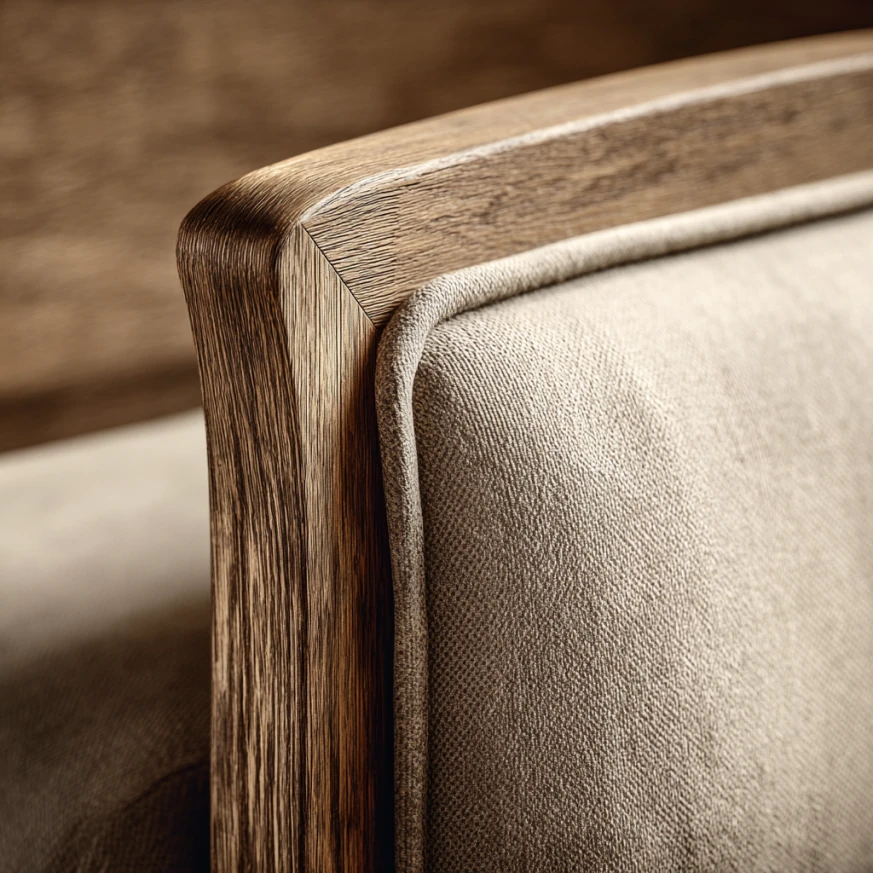
Modern Velvet Upholstered Beds: Styles, Care & Buying Tips

Modern Velvet Upholstered Beds for Stylish Homes - bedroom

Modern Velvet Upholstered Beds: The Short Answer

A modern velvet upholstered bed is a wood or metal bed frame wrapped in a short, dense pile fabric, usually polyester or a polyester blend, with a padded headboard that doubles as a backrest. Choose one for the soft texture, light-catching colour and comfort it adds to a bedroom; skip it if your room gets hours of direct sun or you want a frame you can wipe down in seconds. The two things that decide whether you love it in five years are the frame underneath (solid, kiln-dried hardwood or reinforced metal rather than thin particleboard) and the density of the velvet pile.

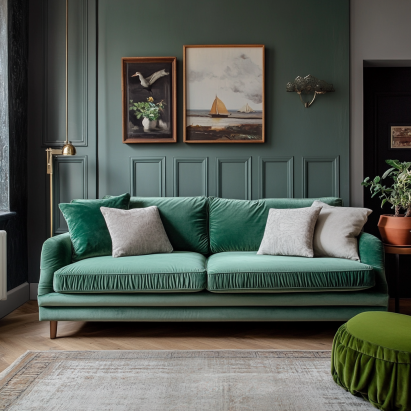
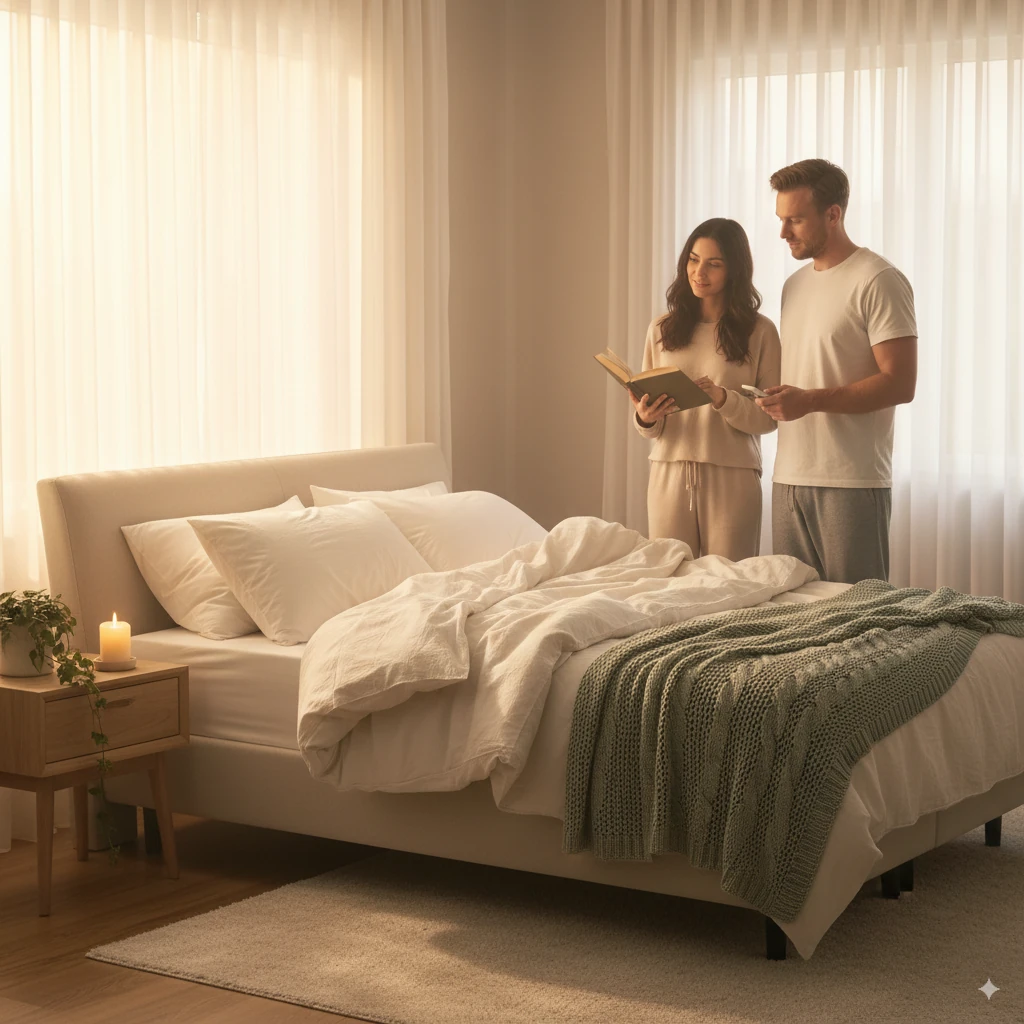
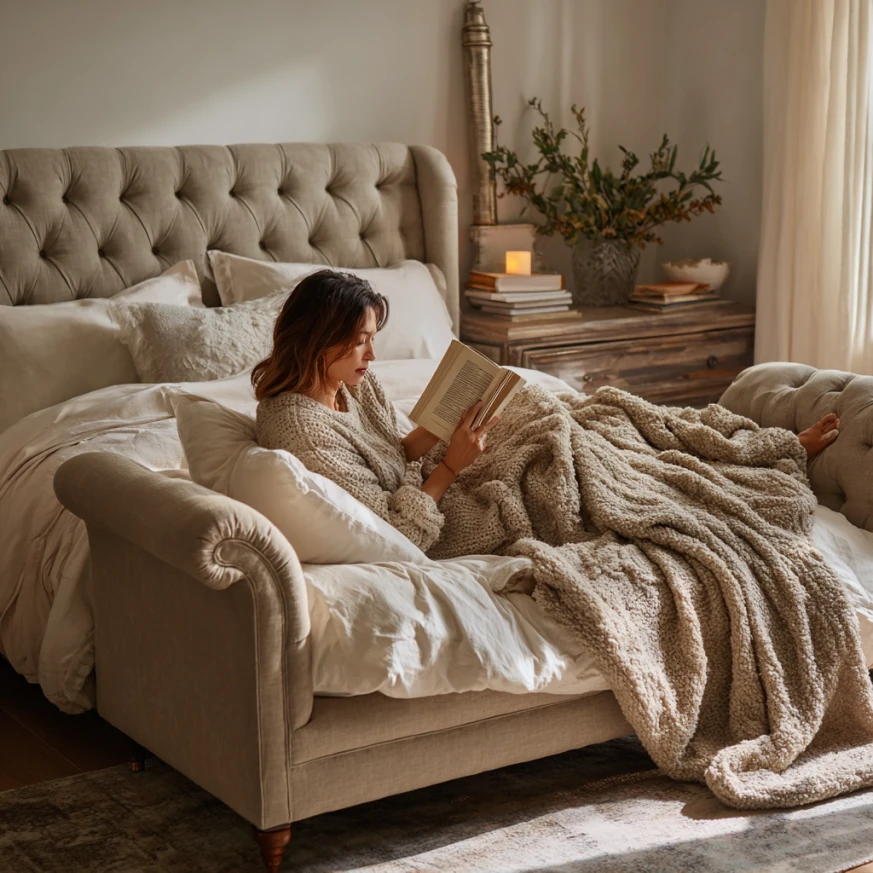
Modern velvet upholstered beds in a contemporary bedroom with soft lighting and a cozy design.

What Velvet Actually Is

Velvet is not a fibre — it is a construction. Britannica describes velvet as a fabric with a short, dense pile made in the pile weave from silk, cotton or synthetic fibres. That pile is why velvet behaves the way it does: it catches light differently depending on the angle you view it from, so a single colour can read light in one spot and deep in another. It is also why velvet shows brush marks and finger tracks, and why the pile can flatten in high-contact areas such as the centre of a headboard.

Most bed frames sold today use polyester velvet rather than cotton or silk. Polyester pile is more abrasion-resistant, holds colour well and tolerates water-based spot cleaning better than rayon or viscose velvet, which can water-spot. If a listing says “performance velvet,” that usually refers to a polyester pile with a stain-resistant finish — a useful signal, but not a regulated term, so read the fabric content and cleaning code rather than the marketing name.

Why People Choose a Velvet Bed

  • Comfort where you use it. A padded headboard is more forgiving to lean against — and to knock into — than wood or metal, which matters if you read or watch TV in bed.
  • Visual warmth. Pile absorbs and reflects light unevenly, which makes a velvet headboard read as a soft focal point rather than a flat panel.
  • Colour depth. Dyed pile gives richer, more saturated colour than most flat woven upholstery, which is why jewel tones look convincing in velvet and muddy in cheap flat fabric.
  • Quiet frame. Upholstered side rails and slat systems tend to squeak less than bolted metal frames, though this depends far more on assembly quality than on fabric.

If you are still weighing velvet against plain upholstery, our comparison of velvet vs upholstered bed frames lays out the trade-offs side by side.

The Main Velvet Bed Styles

Platform

Low, streamlined and slat-supported, so no box spring is needed. Platform frames are the easiest velvet style to live with in a small or low-ceilinged room, and they suit minimalist and Scandinavian rooms. See our overview of platform bed benefits if you are new to the format.

Wingback

The headboard wraps forward at the sides, creating an enclosed, hotel-suite feel and useful back support for reading. Wingbacks eat visual space and often add several inches of width, so measure carefully in rooms under about 11 by 11 feet.

Tufted and channel

Button (diamond) tufting adds depth and traditional character; channel stitching runs in straight vertical or horizontal lines for a cleaner, more contemporary look. Channel designs are easier to vacuum — buttoned tufts collect dust in the dimples.

Canopy and four-poster

Upholstered posts plus velvet give the most dramatic result, best in tall rooms where the frame does not crowd the ceiling. Our guide to upholstered canopy beds covers the practical side of living with one.

Storage

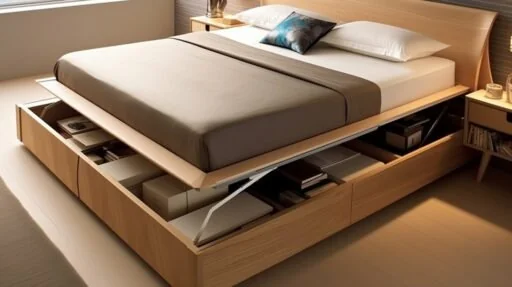
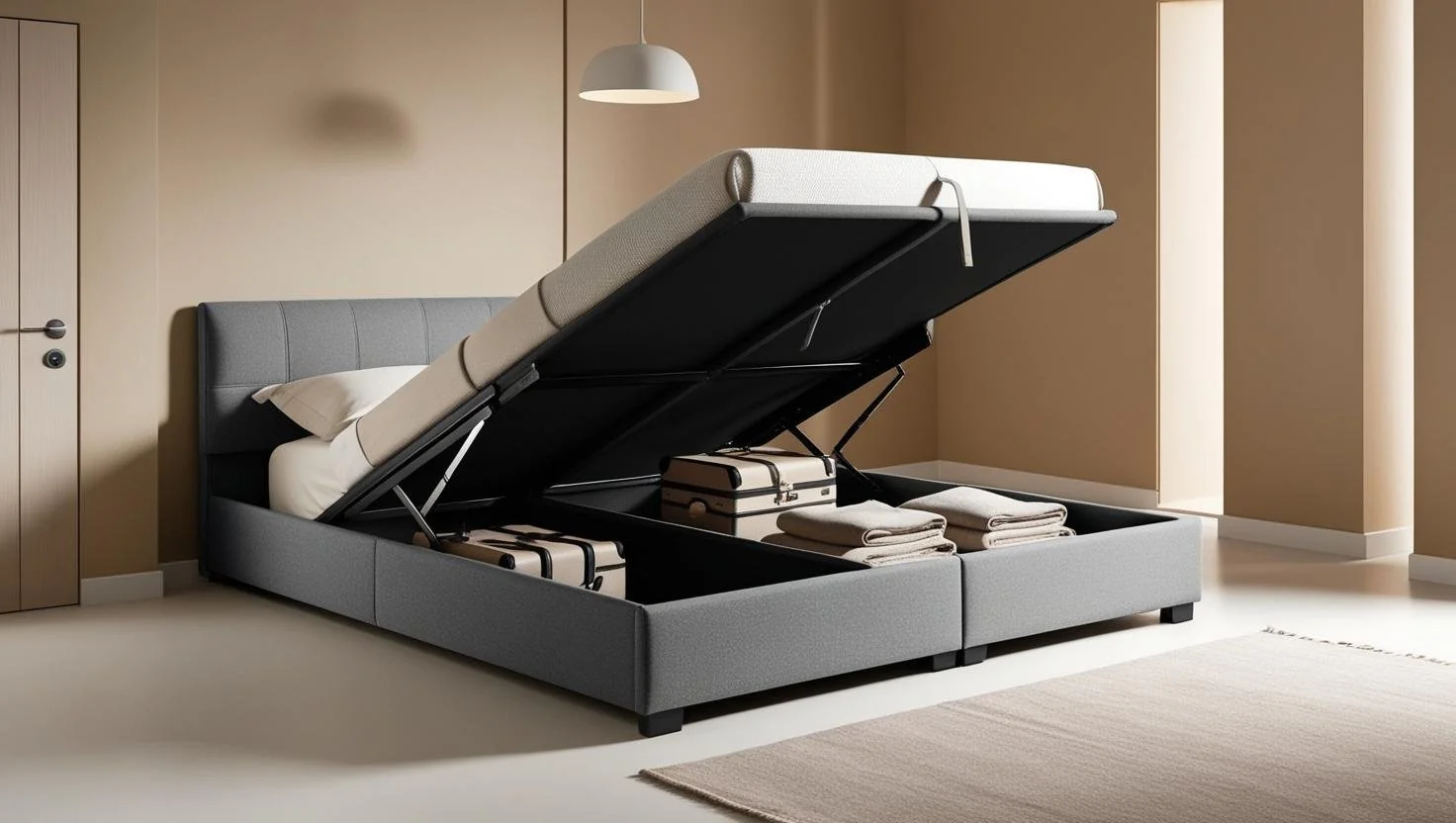
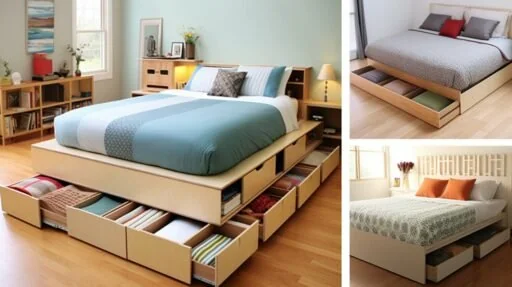
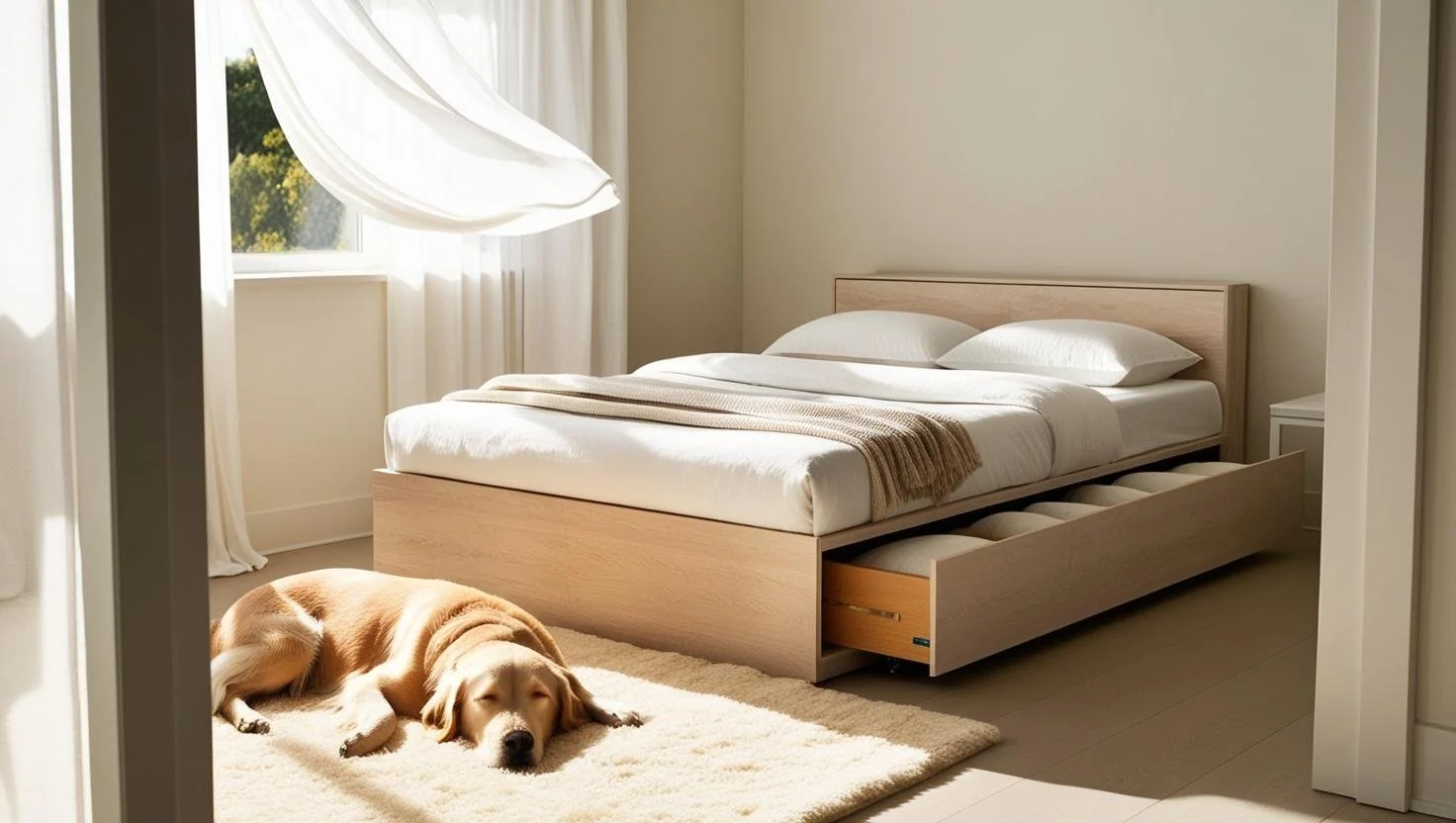
Side drawers or a gas-lift base turn the bed’s footprint into usable storage — the single most useful feature in a small bedroom. Check drawer clearance against your walls and rug before buying; more options are in our roundup of storage beds.

Sleigh, curved and scalloped

Curved silhouettes soften a room and photograph well, but they are harder to push flush against a wall and often cost more because of the shaped frame underneath.

emerald green velvet bed frame ideas, guide to velvet bed frames

Choosing a Colour

  • Emerald and forest green: works with brass, walnut and warm whites.
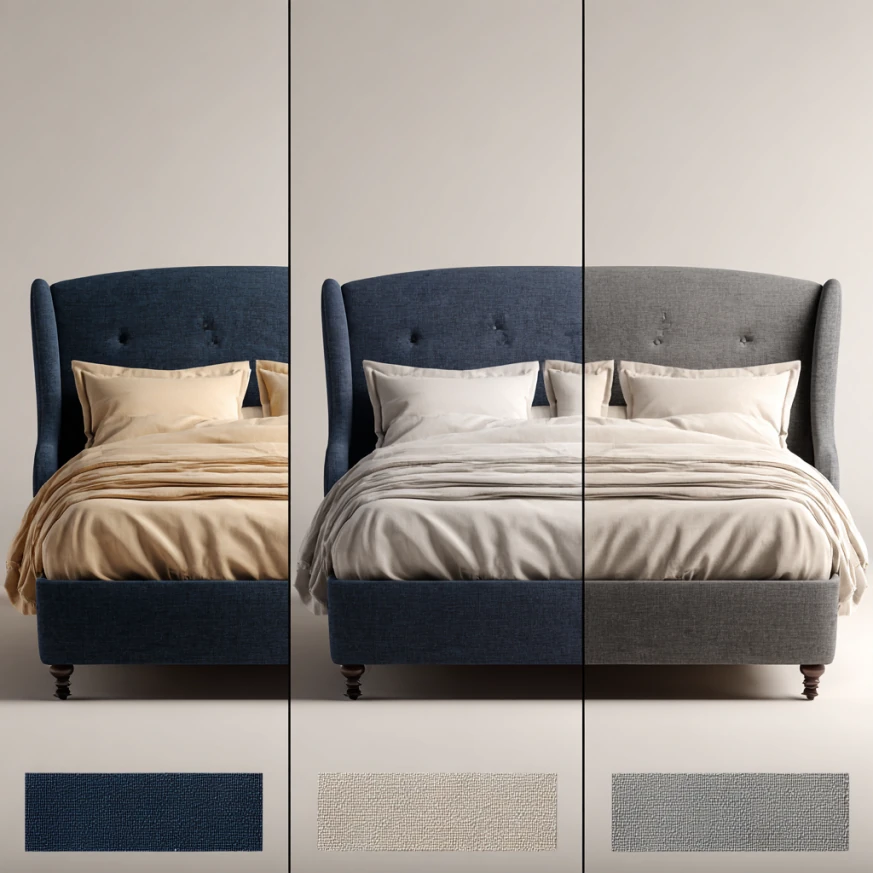
  • Navy and deep blue: the most forgiving dark tone; hides marks better than black or grey.
  • Charcoal and slate: a neutral with weight, easy to restyle season to season.
  • Blush and dusty rose: soft and light-reflective, but shows pile marks most clearly.
  • Cream, sand and taupe: calm and roomy-looking; hardest to keep clean with pets.

Two practical notes. First, velvet’s pile means the colour you see in a product photo may not match what you see at home under warm bulbs — order a swatch if the retailer offers one. Second, dark velvet does not automatically shrink a room; because pile reflects light unevenly, a deep colour reads as depth rather than a flat block. That is a design observation, not a measured effect.

Matching the bed to the room

  • Small bedrooms: platform or storage frames, lighter tones, low headboards.
  • Medium bedrooms: tufted or channel headboards in a saturated colour.
  • Large bedrooms: wingback, canopy or tall-headboard designs that can hold the wall.
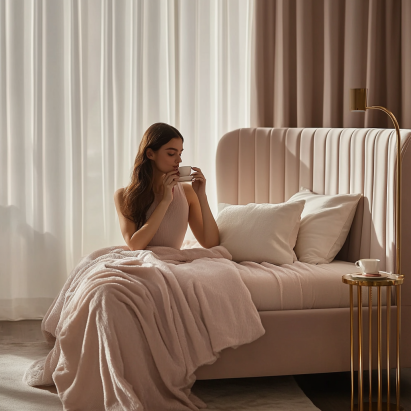
Modern velvet upholstered bed with a tufted headboard for comfort and stylish design.

What to Check Before You Buy

Feature What to look for
Frame material Kiln-dried hardwood or reinforced steel; treat all-particleboard construction as short-term
Fabric content Stated fibre (polyester, poly blend, cotton, viscose) — not just the word “velvet”
Cleaning code W or W/S means water-based cleaners are acceptable; S means solvent only; X means vacuum only
Stitching and seams Straight, tight seams, reinforced corners, no loose threads or puckering around tufts
Support system Closely spaced slats plus centre legs on queen and king sizes; check the mattress warranty’s slat-spacing requirement
Assembly and shipping Upholstered headboards are bulky; confirm carton dimensions fit your stairwell and doorways
Warranty Read what the fabric warranty excludes — pile crushing and fading are commonly excluded

On price: velvet beds span a very wide range, and published figures move constantly with sales and sizes, so we are not going to quote tiers we cannot verify. What reliably drives cost is the frame material, the density and fibre of the pile, whether the headboard is foam-padded over a solid panel, and whether slats and centre supports are included. Compare those specs rather than the sticker. If you are torn between materials entirely, our breakdown of wood vs metal vs upholstered frames is a useful next step.

Labels and certifications worth knowing

On sustainability claims, be sceptical of vague wording. Life-cycle comparisons generally credit mechanically recycled polyester with a lower greenhouse-gas footprint than virgin polyester, but the size of that gap varies a lot between studies and system boundaries, so treat “eco velvet” as a prompt to ask what the fibre actually is.
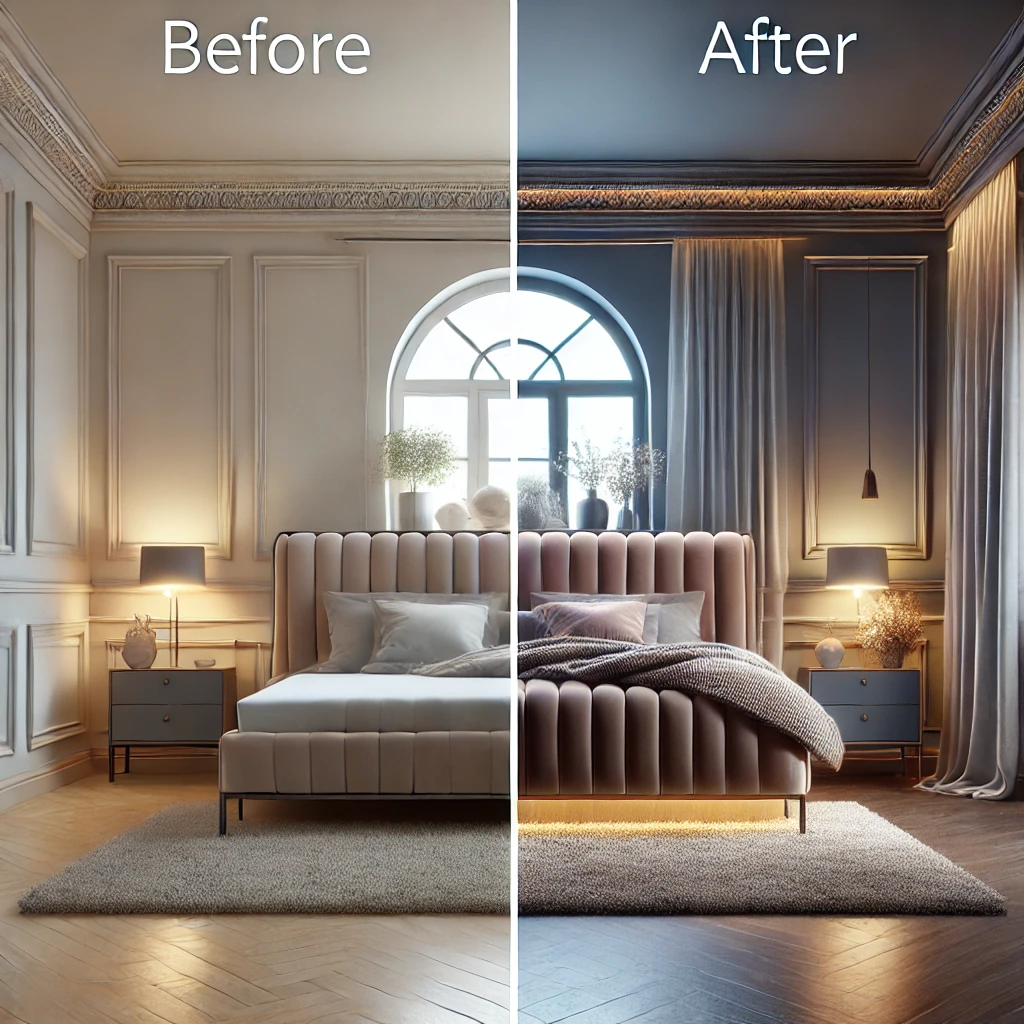
Modern velvet upholstered beds with hidden storage drawers for functional bedroom organization.

How to Care for a Velvet Bed Frame

Velvet is not fragile, but it is fussier than flat fabric because dirt and crushing both show up in the pile. A short routine prevents almost every problem.

  1. Vacuum weekly with a soft upholstery attachment, working in the direction of the pile. Do the headboard dimples and the rail tops where dust settles.
  2. Brush the nap monthly with a soft garment or upholstery brush to lift flattened areas and even out shading.
  3. Blot spills immediately — press with a dry white cloth, never rub. Rubbing pushes liquid into the backing and permanently distorts the pile.
  4. Spot clean to the code. On W or W/S fabrics, use a barely damp cloth with a drop of mild soap, then dry the area quickly. On S-coded fabric, use an upholstery solvent only. Test any product on a hidden section first.
  5. Keep it out of direct sun. The Canadian Conservation Institute notes that light fades textile colours and weakens fibres, and the damage is cumulative. Sheer or light-filtering curtains are the simplest fix.
  6. Steam gently, from a distance. A handheld steamer held a few inches away relaxes crushed pile; do not press the plate into the fabric.
  7. Avoid harsh cleaners. Solvent-heavy or high-alkaline products can strip finishes and stiffen the pile.
  8. Call a professional for set-in stains or an all-over refresh, and tell them the cleaning code.

Pets and kids are workable with polyester velvet: fur lifts off with a rubber brush or lint roller, and a tight, dense pile sheds crumbs better than a loose one. Claws are the real risk — a loose loop or snagged pile cannot be brushed out.

Velvet Compared With Other Upholstery Fabrics

Fabric Feel and look Everyday practicality
Velvet Plush pile, deep colour, light-catching Shows pile marks and dust; vacuum and blot, no rubbing
Linen Casual, matte, airy Breathable but creases and marks easily
Cotton weave Soft, flat, understated Easy to clean; colours look flatter than velvet
Microfibre / faux suede Smooth, matte, budget-friendly Very forgiving; less visual depth
Leather / faux leather Sleek and firm Wipes clean but scratches and can feel cool in winter

Styling a Velvet Bed

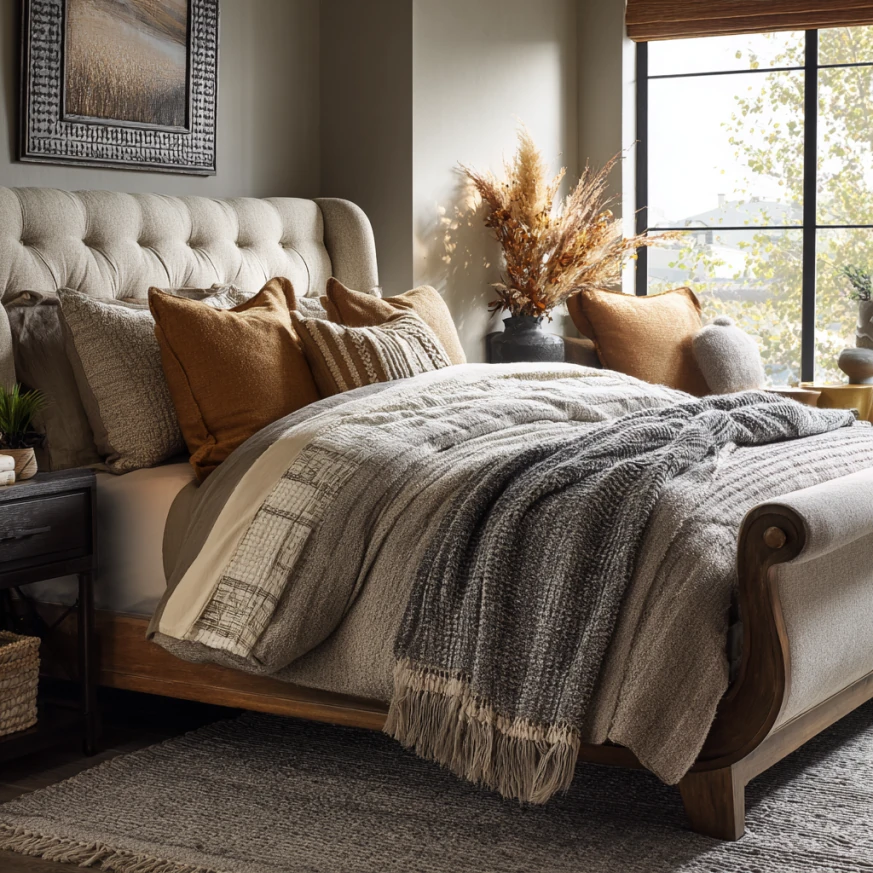
  • Contrast the texture. Velvet reads best next to matte surfaces — linen bedding, a wool throw, rattan or raw-wood nightstands.
  • Pick one metal. Brass and warm gold flatter green, rust and blush; matte black and chrome suit charcoal and navy.
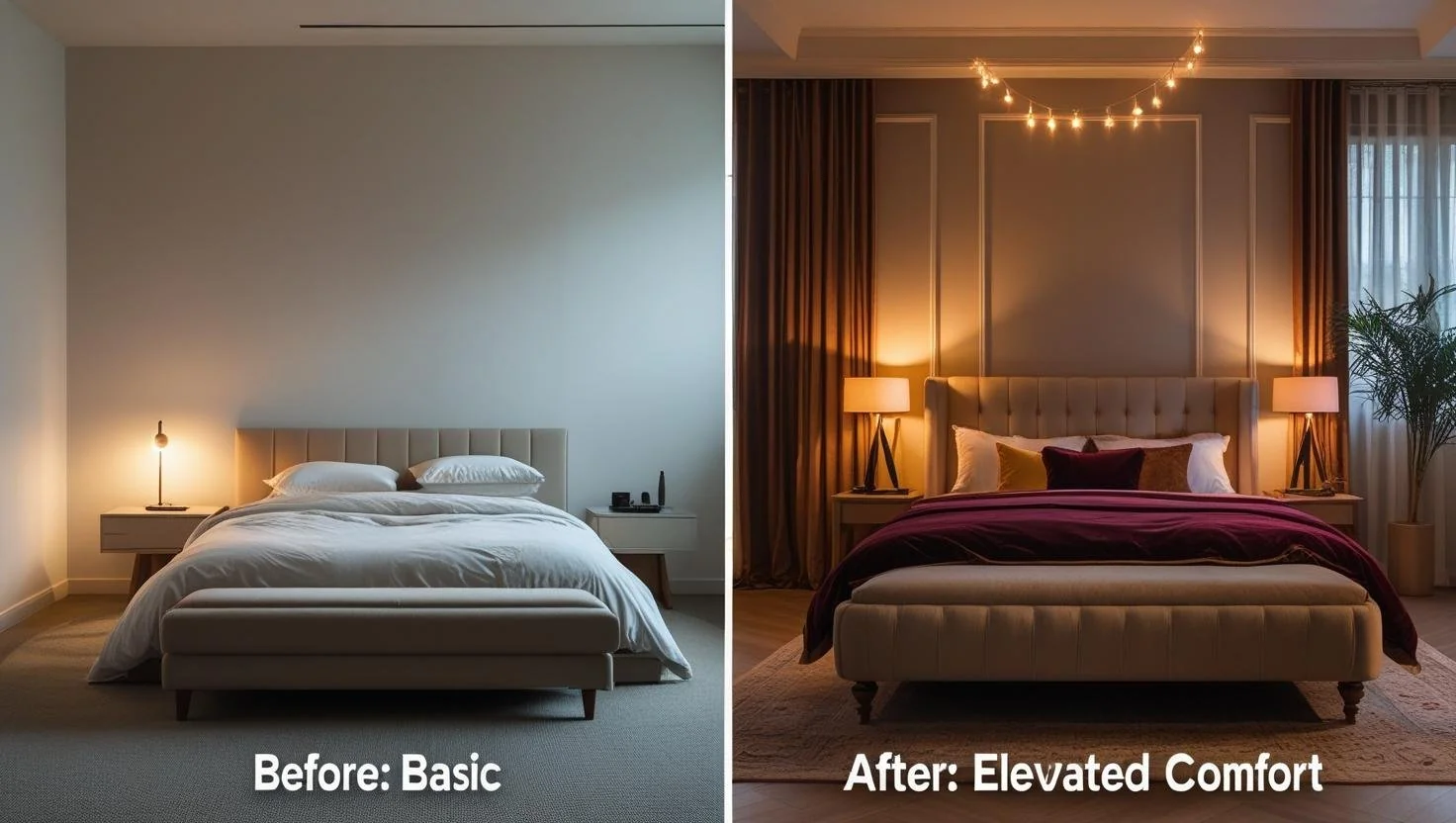
  • Light it deliberately. Because pile reacts to light angle, wall sconces or a dimmable lamp either side of the headboard do more for a velvet bed than a single ceiling fixture. Our bedroom mirror and lighting ideas cover the placement basics.
  • Keep the rest quiet. One statement texture per room is enough; too many shiny surfaces compete with the velvet’s sheen.
  • Repeat the fabric once, lightly. A velvet cushion or bench ties the scheme together — the same logic behind pairing it with a velvet sofa elsewhere in the home.

Common mistakes

  1. Oversizing. A tall wingback in a small room swallows the floor plan; scale the headboard height to the ceiling.
  2. Buying on photos alone. Pile depth and colour rarely translate accurately on screen.
  3. Parking it in a sunbeam. The fastest way to end up with a two-tone headboard.
  4. Ignoring the cleaning code. Water on an S-coded velvet can leave permanent rings.
  5. Skipping the centre support. Missing centre legs on a queen or king can void a mattress warranty and sag the slats.
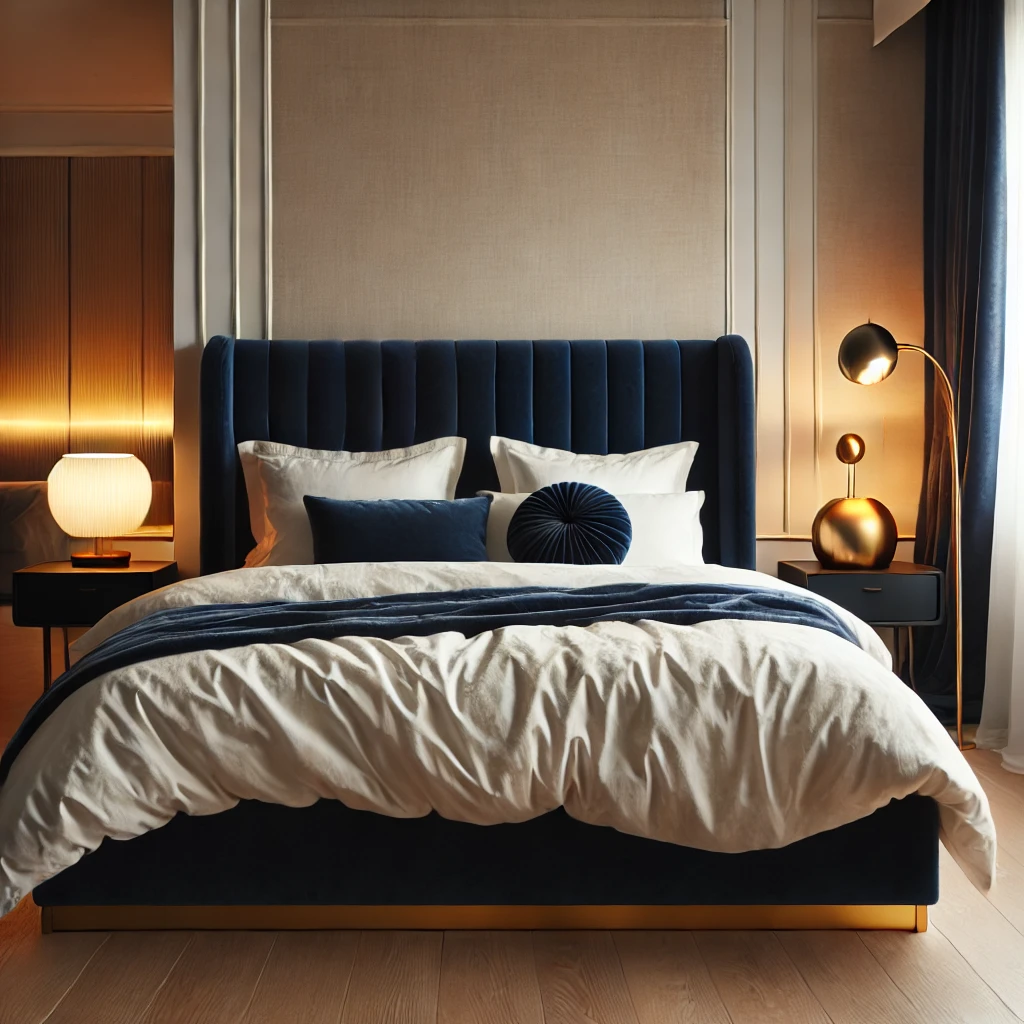
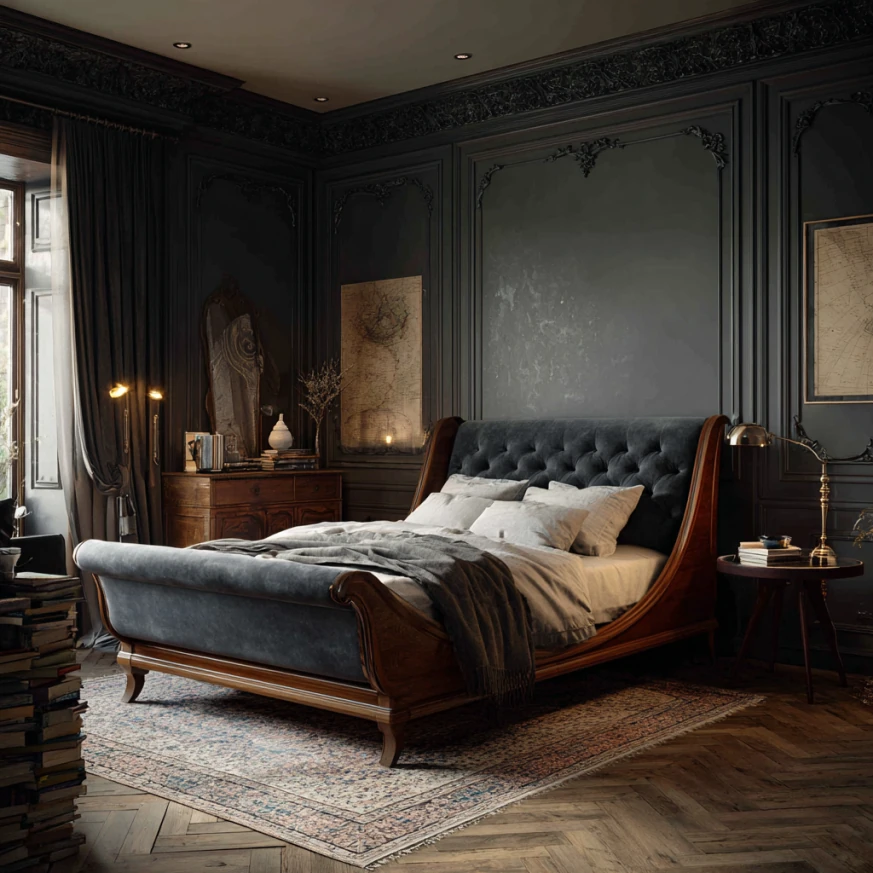
Cozy modern velvet upholstered bed styled with navy fabric, gold lamps, and white bedding.

FAQ

Are velvet beds hard to clean?

Not difficult, but specific. Weekly vacuuming, blotting rather than rubbing spills, and following the fabric’s cleaning code handle nearly everything. Deep stains usually need a professional upholstery cleaner.

Does velvet wear out quickly?

A dense polyester pile over a solid frame holds up well to normal bedroom use. The visible signs of age are usually crushed pile at contact points and sun fading, not fabric failure.

Will a velvet bed make a small room feel smaller?

The fabric itself does not; the silhouette does. A low platform or storage frame in a light tone keeps a small room open, while a deep-buttoned wingback will dominate it.

Can velvet work in a hot climate?

Yes — you only touch the frame, not sleep on it. Pair it with breathable cotton or linen bedding and the pile has no effect on how warm you sleep.

Is velvet a bad choice with pets?

It attracts fur, which lifts off easily with a rubber brush, but claws can snag the pile. A tightly woven performance velvet is the safer option.

Do velvet beds fit all mattress sizes?

They are made in standard sizes, but always check interior rail dimensions and slat spacing against your specific mattress, especially for thick hybrid or all-foam models.

Related Reading

Updated September 2026.

Velvet Sofas for Small Living Rooms: Sizes, Colors, and Care That Actually Holds Up

Best Velvet Sofas for Small Living Rooms - Skinny Fat Sofa in deep blue velvet.

Velvet sofas for small living rooms work best when they stay under about 72 inches wide, under 36 inches deep, and sit up off the floor on visible legs so you can see carpet underneath. Performance velvet — a tightly woven polyester or poly blend — handles kids, pets, and spilled coffee far better than cotton, viscose, or silk versions. Everything below is the measuring, fabric, and care detail that decides whether the sofa feels cozy or feels like it swallowed your room.

Sizing Velvet Sofas for Small Living Rooms

Three numbers matter more than the style name on the tag: overall width, overall depth, and how much floor you can still walk on afterward.

  • Width: loveseats run roughly 52–64 inches. “Apartment” sofas land around 68–78 inches. A standard three-seater is 84–90 inches and usually too much for a room under 12 feet wide. Leave at least 3 inches of air at each end so the piece doesn’t look wedged in.
  • Depth: 32–36 inches overall is the sweet spot. Deep-seat lounge sofas hit 40 inches or more, and that extra 6 inches comes straight out of your walkway.
  • Seat depth: 21–23 inches suits most people sitting upright. Anything past 25 inches needs a pile of pillows behind you, which then adds visual bulk.
  • Back height: under 33 inches keeps sightlines open across the room. Tall-back velvet sofas read like a wall.
  • Leg lift: 4–7 inches of visible leg makes a sofa look lighter and lets a vacuum head slide under.
  • Seat height: 17–19 inches off the floor feels normal to stand up from. Those low 15-inch mid-century frames look great and get old fast if anyone in the house has cranky knees.

Clearances to protect

Keep your main walking path at 30–36 inches. Between the sofa front and a coffee table, 14–18 inches lets you slide past without turning sideways and still reach your mug. If the sofa faces a TV, don’t let the table crowd the front edge — you’ll feel it every single day.

Before you buy anything, tape the footprint on your floor with painter’s tape and live with it for two days. Walk the path to the kitchen. Open the closet door. It’s free, and it catches mistakes a measuring tape hides.

Will it fit through the door?

This is the part people skip. Measure the doorway width and height, the narrowest hallway point, any stair turn, and the elevator if you have one.

Then measure the sofa’s diagonal depth: from the top back corner, run a straight line down to the front bottom of the arm or seat. That diagonal is what has to clear your door opening, not the listed depth. A standard 30-inch interior door handles most sofas with a diagonal depth of 30 inches or less. If yours is tight, look for models with unscrewable legs, knock-down frames that assemble in the room, or two-piece loveseats.

Emerald velvet sofa on tapered legs, one of the velvet sofas for small living rooms

Exposed legs and a low back keep a compact velvet sofa from visually filling the room.

Shapes that eat the least floor space

Track or square arms beat rolled arms in a tight room. A rolled or scroll arm can add 6–8 inches per side of width you can’t sit on — that’s over a foot of your sofa doing nothing.

Armless or low-arm settees squeeze the most seating into the least width, though they’re less comfortable for napping.

Small chaise sectionals can work if the chaise tucks along a wall instead of jutting into the room. Reversible-chaise models let you switch sides later, which is worth a lot if you move often.

Sleeper velvet sofas need a reality check: measure the open length, not the closed one. Most pull out 6–7 feet from the wall, which means your coffee table has to go somewhere on guest nights. If your space is genuinely tiny, a sofa-to-trundle-bed setup often hides a guest bed with less nightly fuss than a heavy pull-out mechanism.

Not all velvet is the same fabric

“Velvet” describes a weave with a cut pile, not a fiber. What that pile is made of decides how the sofa ages.

Type Feel and look Living with it
Performance polyester velvet Short, dense pile with a soft sheen The practical pick. Usually cleanable with water-based products, resists water rings, holds color in sunlight better than natural fibers
Cotton velvet Matte, deep color, expensive-looking Crushes and shows sit marks; develops a lived-in patina some people love and others hate
Viscose, rayon, or silk blends The glossiest, most dramatic shine Water spots easily and often carries a solvent-only care code — a rough match for kids or drinks on the sofa
Crushed velvet Deliberately rumpled texture Hides pressure marks and pet prints better than any flat pile

One thing to expect no matter what you buy: shading. Run your hand across a flat velvet and the pile lies in a new direction, which reads as a lighter or darker patch. That’s normal behavior for a cut pile, not a defect, and a quick brush resets it.

If a maker lists an abrasion rating — Wyzenbeek double rubs or Martindale cycles — higher is better for a sofa that gets daily use. Fabrics sold as heavy-duty residential typically list five-figure double-rub numbers.

Always order swatches. Velvet changes character dramatically between daylight and lamplight, and a navy that looks rich in the showroom can go flat-black in a north-facing room. Tape the swatch to the wall and check it morning and night.

Compact velvet sofa with hidden under-seat storage in a small living room

Under-seat storage earns its keep when the room has no closet to spare.

Colors that keep a small room feeling open

Dark jewel tones aren’t the enemy people assume they are. Emerald, navy, and rust read as one solid block of color, which is calmer than a busy pattern and makes the sofa feel like architecture rather than clutter. They also hide crumbs.

Light neutrals — oatmeal, dove gray, mushroom, taupe — let the sofa recede into a pale wall so your eye keeps traveling. The trade-off is visible soil, especially on arm fronts and the seat edge where hands land.

A trick worth stealing: pick a sofa color close in value (lightness) to your wall color. Low contrast makes furniture blur into the background, and the room feels bigger. High contrast does the opposite, which is great if you want the sofa to be the star.

Velvet’s real superpower in a small space is light. The pile catches and throws it, so a sofa near a window adds glow instead of a dead matte rectangle. Play that up with reflective surfaces — the same logic behind these mirror tricks for small rooms works in a living room.

Keeping velvet looking good

Find the care code on the tag before you touch any cleaner. The University of Illinois Extension spells out what each letter allows: W means water-based cleaners, S means solvents only, S-W allows either, and X means vacuuming or light brushing only. Using water on an S-code velvet is how you end up with a permanent ring.

The weekly routine takes five minutes:

  1. Vacuum with a soft brush attachment on low suction, following the pile direction. Loose grit is what actually wears a pile down.
  2. Rotate and flip loose cushions so wear spreads evenly instead of concentrating in one seat.
  3. Brush the pile back with a soft garment or velvet brush to erase sit marks.

For spills, blot immediately with a clean white cloth — press, lift, repeat, never rub, because rubbing drives the mess into the pile and mats it. Pretest any cleaner on a hidden panel, like the back corner or under a cushion.

Crushed spots on polyester velvet usually lift with a light pass of steam held a few inches away, followed by brushing while it’s warm. Skip steam entirely on viscose or silk blends.

Two more habits: keep the sofa out of a direct sun beam (all fabric fades, velvet obviously), and if one end gets more light than the other, spin the piece occasionally.

Pets? Cut-pile velvet handles claws better than bouclé or any loop weave, because there are no loops to snag and pull. Hair sits on top of a tight pile rather than burrowing in, and a rubber pet-hair brush clears it in one sweep.

What to check before you hand over your money

  • Frame: kiln-dried hardwood beats particleboard or plastic. Lift one front corner a few inches — if the other front leg stays on the floor, the frame is twisting, and that frame will loosen.
  • Joinery: corner blocks that are glued and screwed, not staples doing the structural work.
  • Suspension: sinuous S-springs or eight-way hand-tied are both fine. Plain elastic webbing sags soonest.
  • Cushions: high-density foam wrapped in fiber or down holds its shape; loose fiber-fill alone flattens within a year or two.
  • Safety label: upholstered furniture sold in the US must carry a permanent label reading “Complies with U.S. CPSC requirements for upholstered furniture flammability”. No label is a red flag on an import.
  • Delivery: confirm curbside versus in-room before you buy, especially for a walk-up. Also check the return window and who eats the return shipping on a 90-pound sofa.

If your living room doubles as a bedroom or office, sofa choice is only half the puzzle — these space-saving furniture ideas for small rooms cover the storage pieces that go around it.

Velvet sofa styled with throw pillows and a low coffee table in a small living room

A low coffee table about 16 inches from the sofa front keeps the walkway usable.

Velvet vs. linen vs. bouclé

  • Velvet: soft, light-reflective, rich color. Shows pile marks. Performance versions clean easily; natural-fiber versions don’t.
  • Linen: breathable and casual, cooler to sit on in summer. Wrinkles, stretches at the seat, and absorbs spills fast unless it’s treated.
  • Bouclé: cozy and texture-forward, but the looped surface is the one cats target, and dropped crumbs hide in it.

In a small room, velvet has one quiet advantage: the sheen gives a single-color sofa depth, so you don’t need a busy pattern to make it interesting — and busy patterns are exactly what makes small rooms feel cluttered.

FAQ

What size sofa fits a 10 x 12 living room?

Aim for 60–72 inches wide and no more than 35 inches deep, on legs. That leaves room for a 30-inch walkway plus a small side table.

Are velvet sofas practical with kids?

Performance polyester velvet, yes. It’s tightly woven, usually carries a W or S-W care code, and wipes up quickly if you blot fast. Cotton and viscose velvets are a harder ask with small kids.

Why does my velvet sofa look like it has water marks?

Usually it’s shading — the pile lying in different directions after someone sat down. Brush it in one direction and it evens out. Genuine water marks on viscose velvet, though, are often permanent, which is why that fiber gets a solvent-only code.

Does velvet make a small room feel smaller?

Not if the frame is compact and raised. What shrinks a room is bulk and blocked sightlines: deep seats, tall backs, skirted bases, and rolled arms. Fabric texture isn’t the problem.

Do velvet sofas fade?

Any fabric in a sun beam fades. Solution-dyed polyester velvets hold up best; silk and cotton fade fastest. Sheer curtains or rotating the sofa twice a year buys you years.

Can I use a steam cleaner on velvet?

Light steam held a few inches from the surface can revive flattened polyester pile. Don’t saturate it, and don’t steam viscose, silk, or anything labeled X.

Updated September 2026.

Twin Bed with Storage Underneath: Maximize Space and Style

Twin Bed with Storage Underneath: Maximize Space and Style - Featured Image

Twin Beds With Storage Underneath for Small Rooms

A Twin Bed with Storage Underneath is your secret weapon for transforming cluttered spaces into calm, organized havens—all without sacrificing style.

Key Takeaways

  • Maximize floor space with hidden storage compartments
  • Perfect solution for kids’ rooms, guest rooms, or small bedrooms
  • Multiple storage styles suit different organizing needs
  • Combines functionality with a variety of stylish designs

Why It’s a Space-Saver

A Twin Bed with Storage Underneath turns often-wasted under-bed space into a neat storage solution. Whether it’s drawers or bins, you can neatly organize toys, clothes, or bedding and instantly declutter your room. It’s a must-have for small spaces where every square foot counts. Explore more bedroom storage solutions. This approach not only frees up your floors but also encourages better use of vertical and hidden spaces throughout the room. For further inspiration, check out Apartment Therapy. Think of it as reclaiming territory you already have, making your home more livable without adding square footage.

Twin Bed with Storage Underneath maximizing space

Feels Like a Breath of Fresh Air

There’s a calming effect when you walk into a tidy bedroom. With a Twin Bed with Storage Underneath, everything has its place. This sense of order can make bedtime more peaceful—especially for kids. Clean space, calm mind. Try these under-bed organization hacks for even better results. A clutter-free space reduces visual stress, improves sleep quality, and helps create a restful sanctuary that promotes relaxation. Explore more design tips from The Spruce. It also makes daily cleaning easier, and your bedroom begins to feel like a true retreat from the world.

Twin Bed with Storage Underneath with hidden drawers

Different Storage Styles for Different Needs

No two rooms are the same, and that’s why Twin Beds with Storage Underneath come in versatile formats:

  • Built-In Drawers: Integrated into the bed frame, they offer easy access to everyday essentials like linens and pajamas. Learn more about custom under-bed drawers. Built-in drawers typically slide smoothly and blend seamlessly with the frame, keeping your space streamlined and stylish. They’re ideal for those who value convenience and a permanent storage fixture.
  • Storage Bins: Flexible and movable, ideal for storing seasonal decor or rarely-used items. These bins are perfect for those who want to change their layout frequently or use them in other parts of the home when needed. Choose stackable or lidded options for added protection from dust and dirt.
Twin Bed with Storage Underneath with built-in drawers

Perfect for Kids’ Rooms

Kids’ rooms tend to overflow with toys and school supplies. A Twin Bed with Storage Underneath creates dedicated homes for their treasures. Plus, it helps instill tidy habits early—making cleanup a fun and easy routine. When children know where their items go, they’re more likely to take responsibility and engage in maintaining their environment, which builds long-term organizational skills and independence. It also frees up floor space for play and learning activities, creating a more functional, inviting room they’ll enjoy.

Twin Bed with Storage Underneath for kids room

Fits Your Style Too

Functional can be fashionable. These beds come in a range of styles to match your decor:

  • Modern: Minimalist with clean lines, perfect for contemporary interiors. Smooth surfaces and neutral tones keep the look cohesive and polished.
  • Classic Wooden: Rich wood tones offer a timeless charm. See how this complements a rustic bedroom aesthetic. Wooden styles can also add warmth and a natural feel to your space. These are especially suited to cottage or farmhouse themes.
  • Custom Options: Choose finishes and materials to suit your personal style. From bold colors to unique handles, you can make the bed truly yours, ensuring it fits seamlessly into your home’s existing design. For inspiration, check Real Homes. Many retailers now offer 3D previews so you can design before you buy.
Modern Twin Bed with Storage Underneath design

Easy to Keep Clean

Low-maintenance and long-lasting, these beds simplify your cleaning routine:

  1. Dust regularly to keep the frame and drawers tidy
  2. Declutter monthly to avoid buildup
  3. Inspect hardware occasionally to ensure safety and stability

In addition, using drawer liners and organizing inserts can keep items neatly arranged and make cleanup faster. You’ll also extend the lifespan of both your bed and belongings by preventing wear and tear through thoughtful upkeep.

A Twin Bed with Storage Underneath offers more than just sleep—it brings organization, style, and serenity to small rooms. This simple upgrade can revolutionize how you use your space and simplify daily life. Make sure you’re also choosing the right twin mattress to complete your setup.

FAQ

What can I store under a Twin Bed with Storage Underneath?

You can store clothes, toys, books, seasonal items, shoes, or extra linens—whatever helps keep your room clutter-free.

Is a Twin Bed with Storage Underneath suitable for adults?

Yes, many styles are designed for adults and come in elegant finishes that suit grown-up bedrooms.

Do storage beds require special assembly?

Most Twin Beds with Storage Underneath come with standard assembly instructions. Some may require tools, but many are designed for quick setup. Always follow the manufacturer’s guide.

Are these beds compatible with standard twin mattresses?

Yes, they are built to accommodate standard twin mattresses. Just double-check dimensions if you’re using a thick or specialty mattress.

How do I keep items dust-free under the bed?

Using storage bins with lids or zippered organizers is the best way to keep stored items dust-free. Regular cleaning also helps maintain freshness.

Learn more in our guide on hidden storage beds and explore how to use vertical space with loft beds. For kids’ room ideas, don’t miss these space-saving kid bed options. More ideas are also available in our bedroom storage guide.

External resources like Sleep Foundation, Home Storage Solutions, The Spruce, Apartment Therapy, and Real Homes offer even more space-saving inspiration.

Cheap Mattresses: What You Actually Get for $300 to $700

Best Cheap Mattresses

Good cheap mattresses sit roughly between $300 and $700 for a queen as of September 2026, and the ones worth owning share three checkable specs: memory foam comfort layers at 3.0 PCF or denser, a support base around 1.8 PCF or denser, and a return window you can actually use. Everything else — the “cloud” names, the gel swirls in the photos — is marketing. Below is how to read a budget spec sheet, which size fits your room, what to measure before the box arrives, and where the corners get cut.

What cheap mattresses cost right now

Context matters more than a single number. U.S. News 360 Reviews notes that top-rated queens average around $1,600, and Mattress Nerd puts the bulk of the queen market between roughly $700 and $3,000. Against that, budget roundups in 2026 generally cap their picks at $1,000 a queen, with individual beds landing anywhere from about $300 to $999 (Mattress Clarity’s 2026 cheap list averages close to $800). All figures as of September 2026; mattress pricing swings hard around holiday sales, so treat any number you see as a band, not a price tag.

Here’s how the bands break down in practice:

  • $150–$300 queen: thin all-foam or a bonnell-coil bed, usually 6–8 inches (15–20 cm) tall. Fine for a guest room used ten nights a year, a bunk, or a short-term rental. Not fine as your nightly bed if you weigh much over 200 lb.
  • $300–$500 queen: the sweet spot for most people. You start seeing 10–12 inch (25–30 cm) hybrids with pocketed coils, published foam densities, and 100-night trials.
  • $500–$700 queen: better edge support, thicker quilted covers, longer non-prorated warranties. Diminishing returns begin here for many sleepers.

If you want the shortlist logic applied to a hard ceiling, our budget mattresses under $500 guide walks through the same filters.

Cheap mattresses shown in a small bedroom on a low platform frame with white bedding

The four specs that predict whether a budget bed survives

1. Foam density (PCF) — the single best durability clue

Density is measured in pounds per cubic foot: divide a foam layer’s weight by its volume. As the Sleep Foundation explains, density is separate from firmness — a soft foam can be dense and a firm foam can be flimsy. The working baselines quoted across the industry are 3.0 PCF or higher for memory foam comfort layers (4–5 PCF is premium territory, per Saatva’s materials explainer) and 1.8 PCF or higher for polyfoam support cores. Under those numbers, foam loses its structure faster and you get body impressions sooner.

Most budget brands don’t publish PCF. That silence is information. Ask customer service by email — if they can’t answer in writing, assume low density and lean on the return policy.

2. Total height

Under 8 inches (20 cm), there’s rarely enough material to support an adult over about 200 lb without bottoming out. Look for 10–12 inches (25–30 cm) for a main bed. Height also drives sheet choice: a 12-inch mattress plus a protector needs sheets with at least a 14-inch (36 cm) pocket.

3. Coils, if it has them

Cheap hybrids use pocketed coils (individually wrapped, better motion isolation) or bonnell coils (hourglass springs laced together, bouncier and noisier). Coil count on a queen is a rough guide, not a score — 600–1,000 is typical at this price. Perimeter reinforcement matters more day to day, because that’s what stops the edge from collapsing when you sit to put on socks.

4. Certifications — what they do and don’t mean

Every mattress sold in the U.S. must already meet federal flammability rules under 16 CFR Parts 1632 and 1633, enforced by the CPSC; the open-flame test caps peak heat release at 200 kW over a 30-minute burn, and the cigarette-ignition test limits char length to 2 inches. So “meets federal flammability standards” is the legal floor, not a feature. The CPSC’s own guidance spells this out.

CertiPUR-US is more meaningful but narrower than shoppers assume: it certifies the foam, not the finished mattress, and it verifies low VOC emissions (under 0.5 parts per million), no phthalates regulated by the CPSC, and screening for flame retardants classified as carcinogens, mutagens or reproductive toxins. Read the details on the CertiPUR-US certification page. It’s a chemical-content assurance, not a comfort or durability rating.

Sizes, dimensions and the room each one needs

Six standard U.S. sizes, and the numbers don’t change with price. Room figures below assume a 24-inch (61 cm) walkway on both long sides and at the foot — the clearance most layout guides treat as the minimum for getting around a bed without turning sideways.

Size Inches (W × L) cm Floor area Room needed with 24 in walkways Bedding note
Twin 38 × 75 96.5 × 190.5 20.3 sq ft 7’2″ × 8’3″ (218 × 251 cm) Widest, cheapest sheet selection
Twin XL 38 × 80 96.5 × 203 21.7 sq ft 7’2″ × 8’8″ (218 × 264 cm) Twin sheets are 5 in too short — buy Twin XL
Full (double) 54 × 75 137 × 190.5 28.1 sq ft 8’6″ × 8’3″ (259 × 251 cm) Full sheets; full comforters read narrow on a bed with a frame
Queen 60 × 80 152 × 203 33.3 sq ft 9’0″ × 8’8″ (274 × 264 cm) Cheapest bedding per square inch; most sale volume
King 76 × 80 193 × 203 42.2 sq ft 10’4″ × 8’8″ (315 × 264 cm) King sheets; two twin XLs equal a king footprint exactly
California King 72 × 84 183 × 213 42 sq ft 10’0″ × 9’0″ (305 × 274 cm) Cal King sheets only — king sheets will not fit

Queen dominates sales for a reason: it’s the size every budget brand makes in volume, so it’s the size that gets discounted hardest. If you’re choosing between a full and a queen and the room allows it, the queen usually costs little more and sleeps far better for two. Full details on every size live in our standard bed size chart.

Two practical notes people learn the hard way. Anyone over 6’2″ should skip the 75-inch sizes entirely — twin XL, queen, king and Cal King are the ones with real legroom. And two twin XL mattresses pushed together measure 76 × 80 inches, identical to a king, which is how split-king setups work on adjustable bases.

Mattress size comparison chart showing twin, twin XL, full and queen dimensions in inches

Which budget build suits which sleeper

Type Typical budget height Strength Weak spot Best for Spec to demand
All-foam (boxed) 8–12 in / 20–30 cm Motion isolation, quiet, easy to carry upstairs Sleeps warm; soft edges; sags first if foam is low density Side sleepers, light couples, tight stairwells Memory foam ≥3.0 PCF, base ≥1.8 PCF
Hybrid (pocketed coils + foam) 10–13 in / 25–33 cm Airflow, edge support, handles more weight Heavier to move; cheap versions use thin comfort foam over coils Back sleepers, combo sleepers, anyone over ~230 lb Pocketed (not bonnell) coils, reinforced perimeter
Innerspring (bonnell) 6–10 in / 15–25 cm Cheapest per inch, very firm, breathable Noise, motion transfer, minimal pressure relief Guest rooms, stomach sleepers who want firm, bunk beds Coil gauge and a quilted top with real padding
Tri-fold / futon foam 4–8 in / 10–20 cm Stores flat, cheapest option overall Thin, short lifespan, fold creases stay Occasional guests, floor sleeping, RVs, dorm extras Foam density; anything under 1.8 PCF is disposable
Budget latex/latex-blend 6–10 in / 15–25 cm Resilient, long-lived, cool Rare and usually blended under $700; heavy Hot sleepers who can stretch the budget Whether it’s Dunlop, Talalay or a blend, and what percentage

Matching build to sleep position matters more than brand. Side sleepers usually want a medium feel with enough comfort foam to let the shoulder sink; stomach sleepers want firm and flat to keep hips from dipping. Our breakdown of mattresses by sleep position goes deeper, and the memory foam vs. hybrid comparison covers the heat-and-motion trade-off in detail.

Cutaway of a budget hybrid mattress showing a foam comfort layer over pocketed coils

What to measure before you order

Five minutes with a tape measure prevents the most common budget-mattress disaster: a bed that physically cannot reach the bedroom.

  • Doorways. Most interior doors run 28–32 inches (71–81 cm) wide. A boxed, compressed mattress clears almost anything. A pre-built innerspring queen does not bend, so it has to tilt through on its side — measure the door’s narrowest point with the door stop in place.
  • Stair turns and landings. Measure the diagonal at the tightest turn and the ceiling height above it. This is the single strongest argument for a boxed bed in an older home or a walk-up.
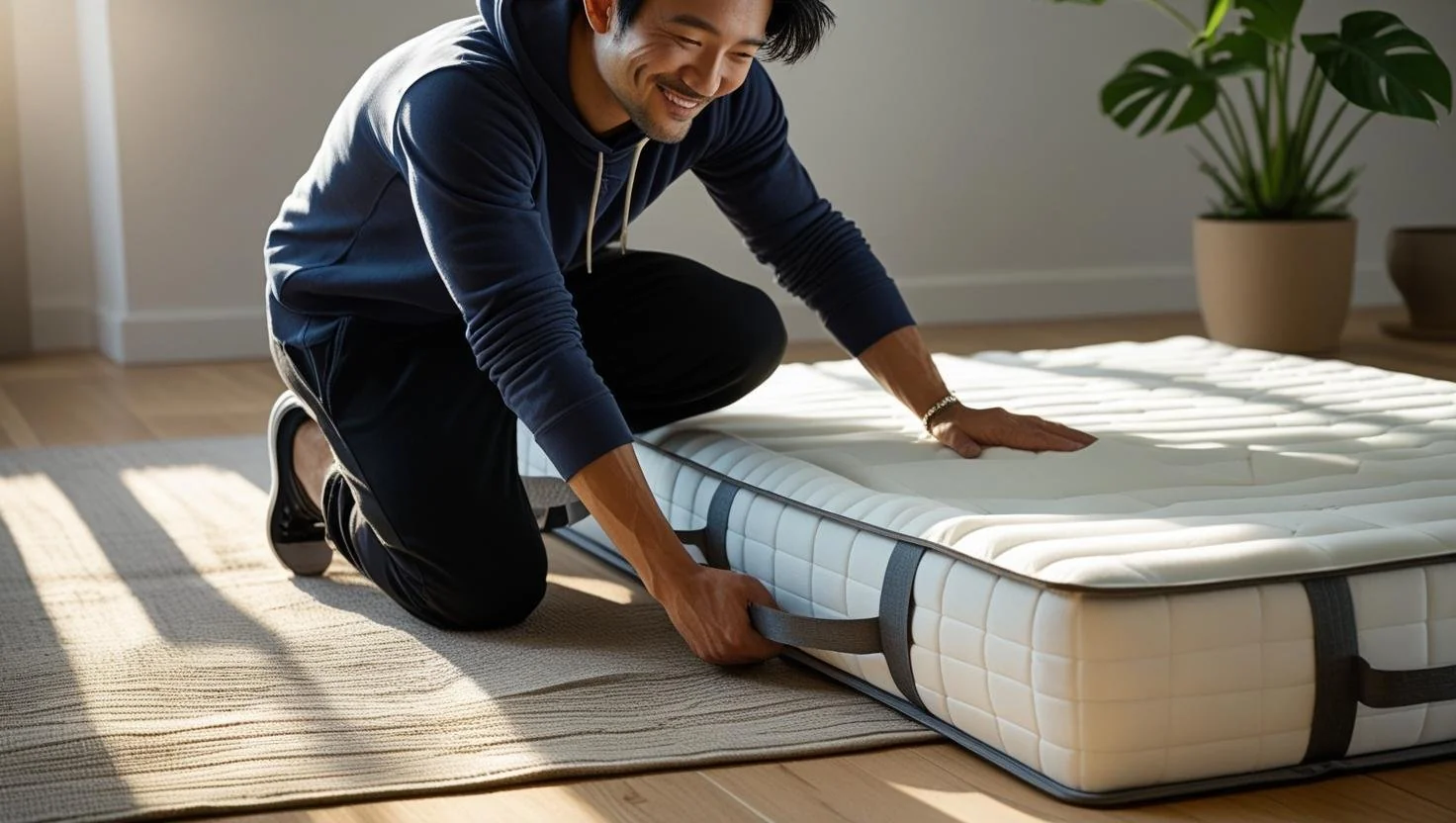
  • Carton weight. Boxed queens routinely run 60–90 lb (27–41 kg). Check the shipping weight on the product page and line up a second person before delivery day.
  • Frame slats. Foam and hybrid warranties usually specify maximum slat spacing — commonly around 3 inches (7.6 cm) — and an improper foundation is a standard warranty exclusion. Measure gap centre to centre before you blame the mattress.
  • Walkways. Aim for 24 inches (61 cm) on each side you need to walk; 30 inches (76 cm) feels comfortable, 18 inches (46 cm) is the squeeze-past minimum. Push one long side against a wall in a small room and you buy back a whole walkway.
  • Ceiling height if the mattress goes on a bunk or loft: you want room to sit up, so measure from the slat deck to the ceiling and subtract the mattress height.

Working with a genuinely small room? The layout math in our small bed space guide pairs well with this list.

Where cheap mattresses actually cut corners

These trade-offs are predictable. Knowing them beforehand is the difference between a good $400 purchase and a regretted one.

Edge support

Budget foam beds collapse at the perimeter. You lose usable sleeping surface — on a queen, a soft edge can cost you 3–4 inches (8–10 cm) per side in practice — and getting in and out is less stable. If you sit on the bed edge daily or have mobility issues, pay up for a hybrid with a reinforced perimeter.

Lifespan

GoodRx cites a roughly seven-year replacement guideline, and Naturepedic puts conventional mattresses at seven to ten years before support fades. Low-density foam sits at the short end of that range. Budget for replacement at year five to seven rather than expecting a decade.

Warranty fine print

Warranties cover sagging measured with no weight on the bed, beyond a stated depth — typically 1.5 inches (3.8 cm) for innerspring and hybrid beds, and around 0.75 inch (2 cm) for high-density foam and latex. A lower threshold is the consumer-friendly one. Two more things to check: whether coverage is prorated after the early years (prorated means you pay a growing share), and the stain clause. Nearly every warranty is void the moment there’s a stain, which is why a waterproof protector is the cheapest insurance you’ll buy.

Trials and returns

A “100-night trial” is only as good as its logistics. Ask three questions before you order: is return shipping free, is there a restocking or pickup fee, and is there a mandatory break-in period before you’re allowed to return? Many brands require 21–30 nights first. Marketplace sellers often have no trial at all beyond a standard 30-day return, and returning a re-expanded mattress is close to impossible.

Off-gassing

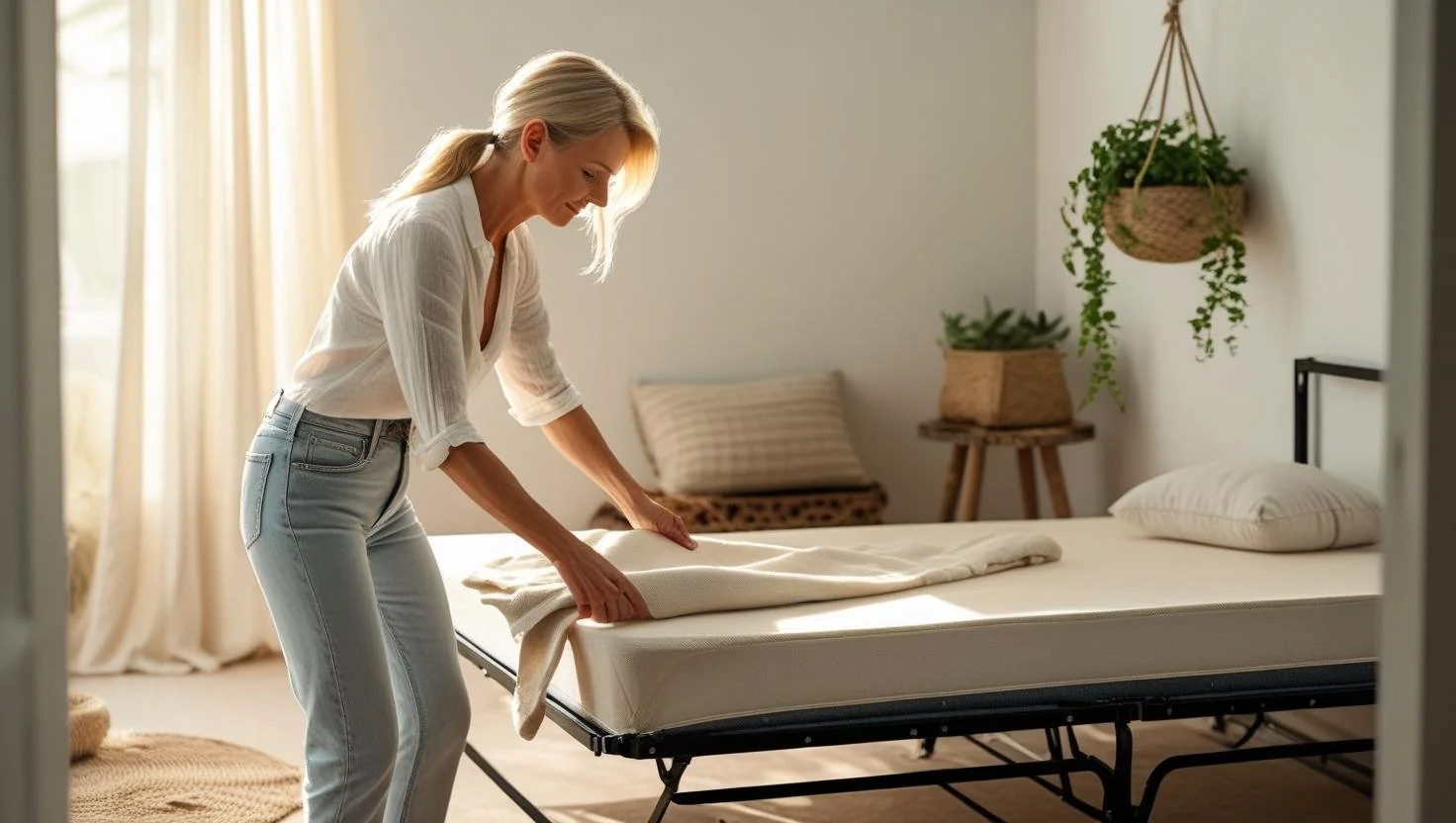
New foam smells. CertiPUR-US certified foam is tested to under 0.5 ppm VOC emissions, which is the reassurance most shoppers are looking for, but the odour is still real for the first few days. Unbox in a ventilated room, follow the maker’s stated expansion window (usually 24–72 hours, listed in the manual), and don’t put sheets on until it’s fully lofted. Our mattress break-in guide covers the adjustment period, which for foam typically runs two to four weeks.

Making a budget bed last longer

  • Protector from night one. A waterproof, breathable protector guards the warranty and the foam. Skip the crinkly vinyl ones — they sleep hot.
  • Rotate head to foot every 3–6 months. Nearly all modern beds are one-sided; flipping puts you on the support core, not the comfort layer.
  • Give it a real base. A sagging box spring under a foam mattress ruins it fast. Solid platform or slats within the spacing the warranty states.
  • Add a topper instead of replacing early. A 2–3 inch (5–7.6 cm) topper for $60–$150 can buy a year or two of comfort on a bed that’s gone firm — though it won’t fix sagging, only feel.
  • Vacuum the surface when you strip the bed, and let it air an hour before remaking it.

Full size bed in a bedroom with roughly 24 inches of walking clearance on both sides

Who should skip the budget aisle

Honest answer: cheap mattresses are the wrong call for some people, and no spec sheet fixes that.

  • Chronic back or hip pain. Support consistency over years is exactly what low-density foam can’t promise. If you wake sore now, buying a $300 bed is a gamble with your sleep.
  • Combined sleeper weight over about 400 lb. Look for beds explicitly rated for higher weight with 12+ inch hybrid builds; thin foam compresses permanently.
  • Light-sleeping couples with mismatched schedules. Cheap hybrids transfer motion, cheap foam has weak edges. This is one case where mid-range genuinely earns the money.
  • Anyone who can’t return it. No trial, no free return shipping, clearance final sale — that’s a $400 coin flip.

Where the evidence is thin: there’s no good independent data on how specific budget models perform at year five, because almost no one tests beds that long. Density specs and warranty thresholds are proxies, not proof. Treat confident lifespan claims — including round numbers like “lasts 10 years” — with suspicion.

FAQ

How much should I spend on a cheap mattress?

For a nightly-use queen, $300–$500 is the band where published foam densities and 100-night trials start showing up. Under $250 works for a guest room or a bed you’ll use a few weeks a year. Spending more than $700 moves you out of “cheap” and into mid-range, where edge support and warranty terms improve noticeably. Prices as of September 2026.

How long do cheap mattresses last?

Plan on five to seven years of good service. Conventional mattresses in general are usually cited at seven to ten years before support degrades, and thin, low-density builds land at the bottom of that range. Rotating every few months and using a protector genuinely stretches it.

Do two twin XL mattresses really make a king?

Yes. Two twin XLs side by side measure 76 × 80 inches (193 × 203 cm) — identical to a standard king. You’ll need king sheets, a king-width frame, and a gap filler or bridge pad down the middle, because the seam is noticeable.

Can I put a cheap mattress directly on the floor?

You can, and it’s firm and stable, but airflow underneath is the problem. Moisture from your body has nowhere to go, which invites mildew on carpet and in humid rooms. If you do it, stand the mattress on edge to air every couple of weeks, or use a slatted base a few inches off the floor.

Is a budget mattress better than a topper on my current bed?

If your current bed is structurally fine and just too firm, a topper is the better value. If it sags visibly, no topper fixes that — the dip follows you right through the foam. Check with a straight edge across the surface: a gap over about 1.5 inches (3.8 cm) means replace, not patch.

Are cheap mattresses safe, chemically?

Every mattress sold in the U.S. has to meet CPSC flammability rules, so that baseline applies whatever you pay. Beyond that, CertiPUR-US foam certification verifies low VOC emissions and screens for certain flame retardants and phthalates — worth looking for, and it costs nothing extra on many budget beds.

Updated September 2026.

5 Stunning Bed Skirt Styles to Transform Your Bedroom Decor

5 Stunning Bed Skirt Styles to Transform Your Bedroom Decor - Featured Image

Bed Skirt Styles That Enhance Bedroom Decor

Bed Skirt Styles can dramatically elevate your bedroom decor. From modern minimalism to soft romantic vibes, the right style makes a big difference. For a complete setup checklist, see our Bedroom Furniture Essentials.


Key Takeaways

  • Tailored bed skirt styles offer clean elegance for modern spaces
  • Ruffled skirts add cozy, romantic charm
  • Pleated designs balance structure and style
  • Elasticized skirts provide practical, easy-care solutions
  • Fabric, color, and seasonal styling choices influence your overall room vibe

Tailored Bed Skirt Styles: Sleek and Sophisticated

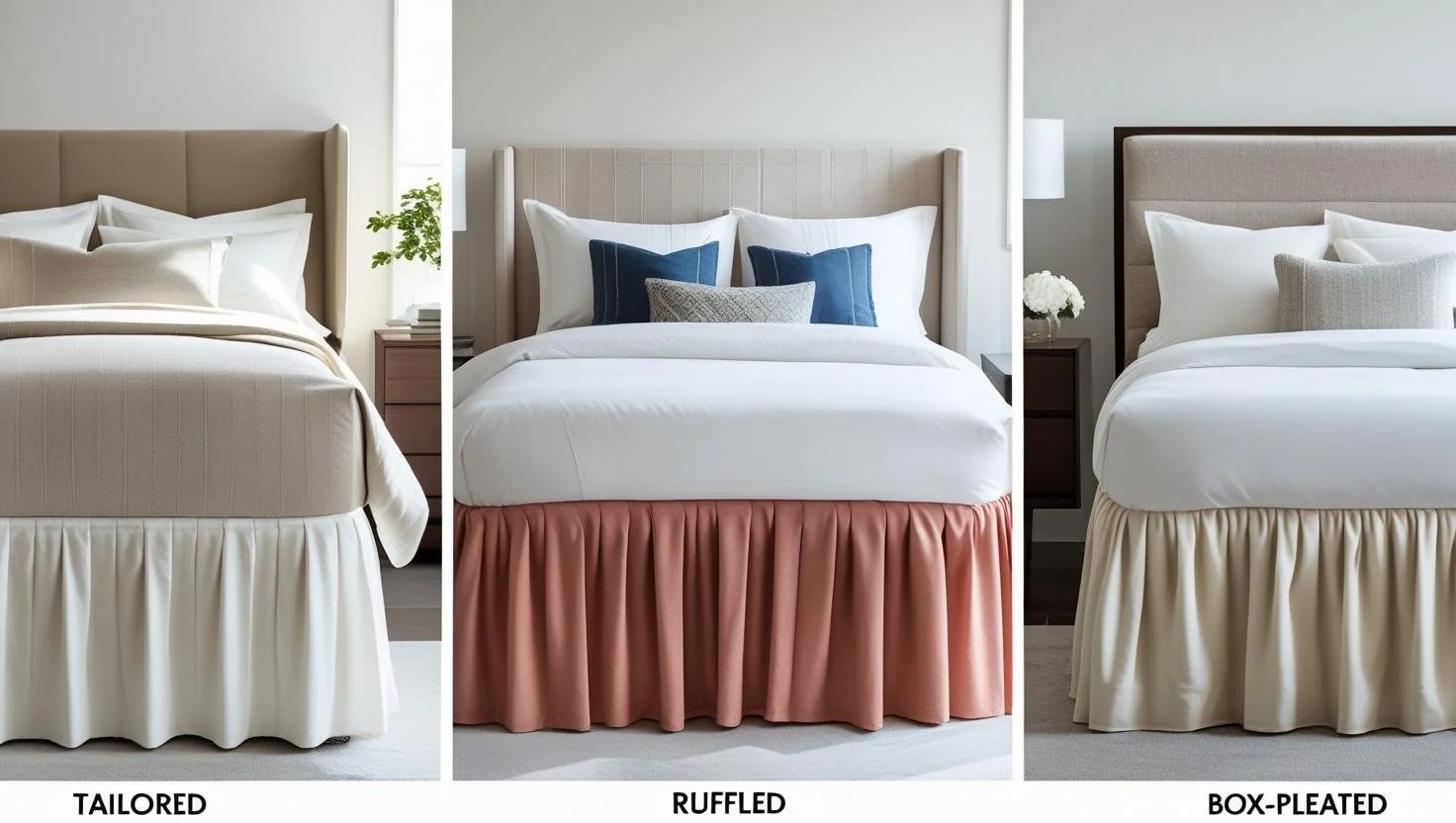
Tailored bed skirt styles are perfect for those who love clean lines and a streamlined look. These skirts typically fall straight without any frills or embellishments, making them ideal for modern, minimalist, or industrial-themed bedrooms. They’re often made of structured fabrics like cotton or linen, which hold their shape beautifully.

Tailored bed skirt styles in minimalist bedroom

When your goal is to keep things sleek and professional, tailored bed skirt styles are a winning choice. Pair with crisp bedding, luxury sheet sets, and monochromatic tones for a sophisticated finish.

Ruffled Bed Skirt Styles: Soft and Romantic

For a dreamy, romantic aesthetic, ruffled bed skirt styles are a top pick. These styles create a relaxed, cozy feel and work especially well in shabby chic or farmhouse-inspired spaces. Ruffles can be light and delicate or deep and dramatic, giving you room to express your personality.

Ruffled bed skirt styles for cozy bedroom decor

Ruffled bed skirt styles add texture and visual interest. They’re perfect for guest rooms, boho chic settings, or anyone who wants their bed to feel like a soft retreat.

Pleated Bed Skirt Styles: Structured Elegance

Pleated bed skirt styles combine structure with design appeal. Featuring evenly spaced vertical pleats, they add depth to your bed without appearing overly formal. These styles complement transitional and traditional bedrooms, particularly when matched with classic bedding patterns.

Pleated bed skirt styles in transitional bedroom

Pleated bed skirt styles strike a balance between tailored simplicity and decorative flair. Ideal for bedrooms that blend old and new elements.

Elasticized Bed Skirt Styles: Practical and Stylish

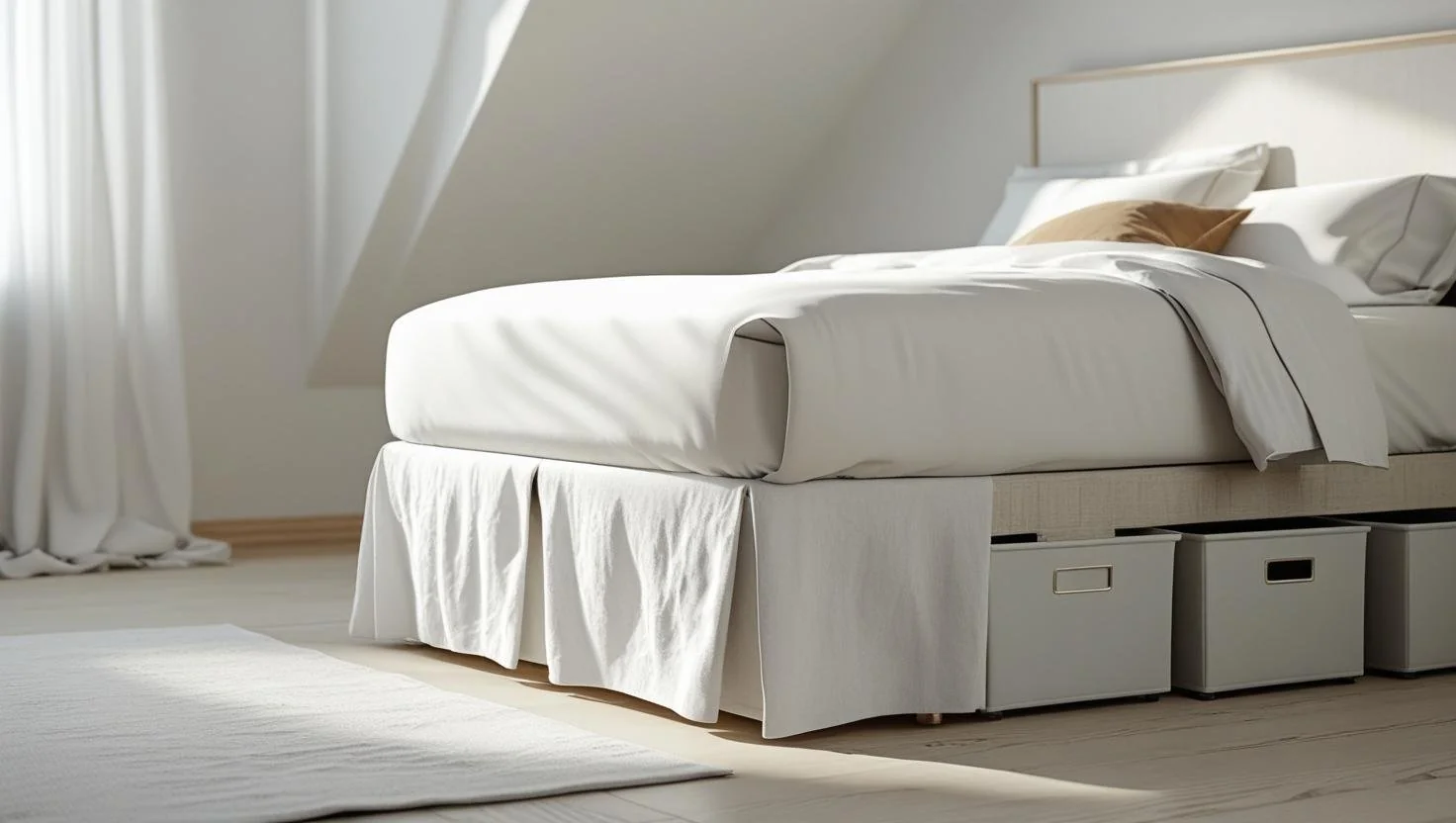
Elasticized bed skirt styles offer unmatched convenience. These skirts wrap around the base of your mattress like a fitted sheet, staying in place even with frequent movement. They’re available in both tailored and ruffled variants, giving you style flexibility with minimal effort.

Elasticized bed skirt styles for easy bedroom updates

If you’re looking for a bed skirt style that’s easy to install, remove, and wash, elasticized options are the clear winner. Great for busy households and small bedroom storage hacks.

Choosing the Right Fabric and Color

The material and hue of your bed skirt can subtly—but significantly—affect the vibe of your room. Opt for heavier fabrics like linen or twill for structure, or go light with cotton blends for easy movement and care. Color-wise, neutrals like white and beige create a seamless aesthetic, while bold prints or deep hues can serve as a dramatic accent.

  • Fabric: Choose linen for a high-end look, or polyester for budget-friendly ease.
  • Color: Match or contrast with your bedding set to define your room’s mood.

Whether blending into your decor or standing out as a centerpiece, fabric and color choices can make or break your bed skirt’s impact. Learn more from Sleep Foundation on bedroom air quality and the EPA’s guide to indoor air quality.

Seasonal Styling with Bed Skirt Styles

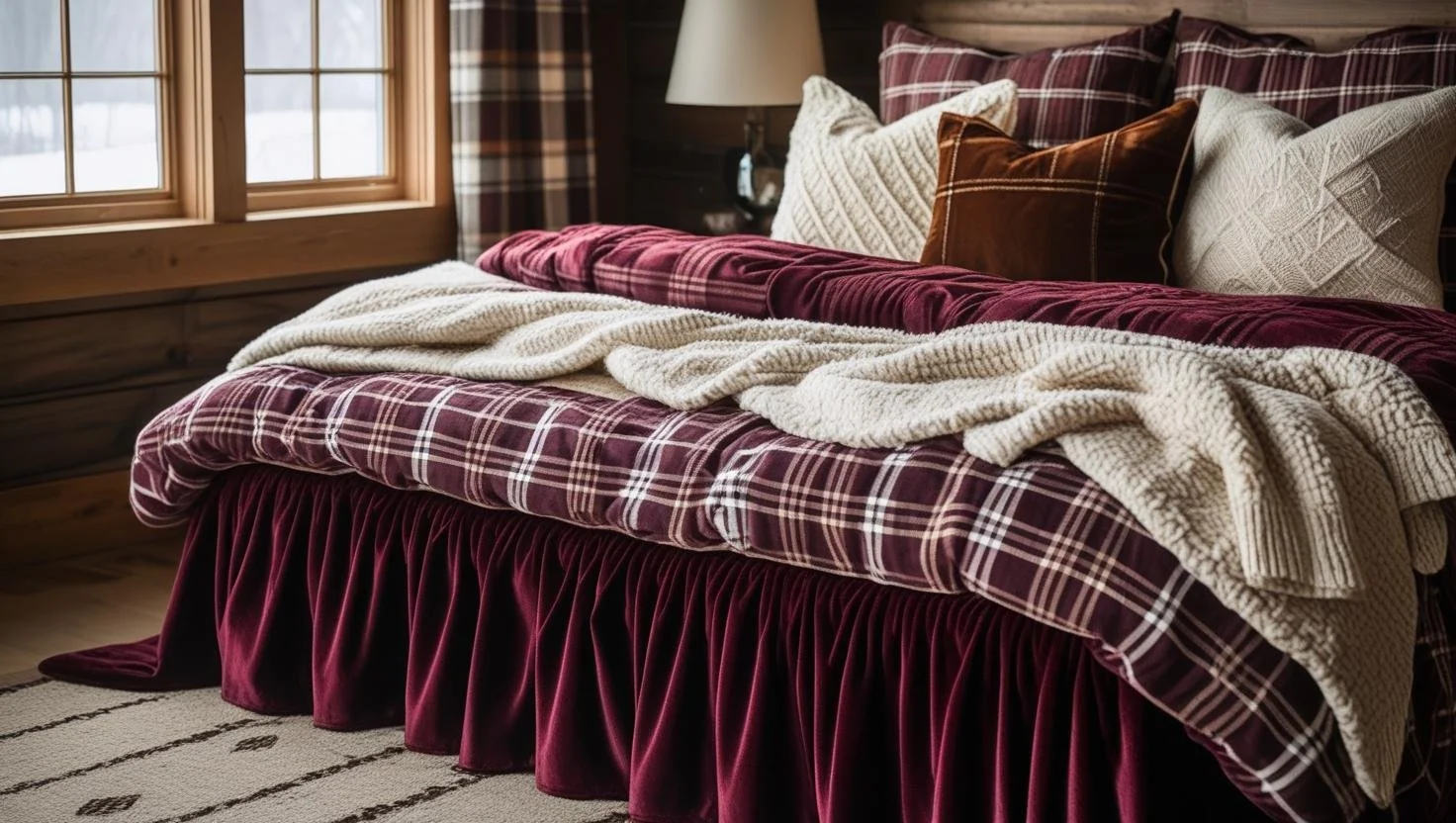
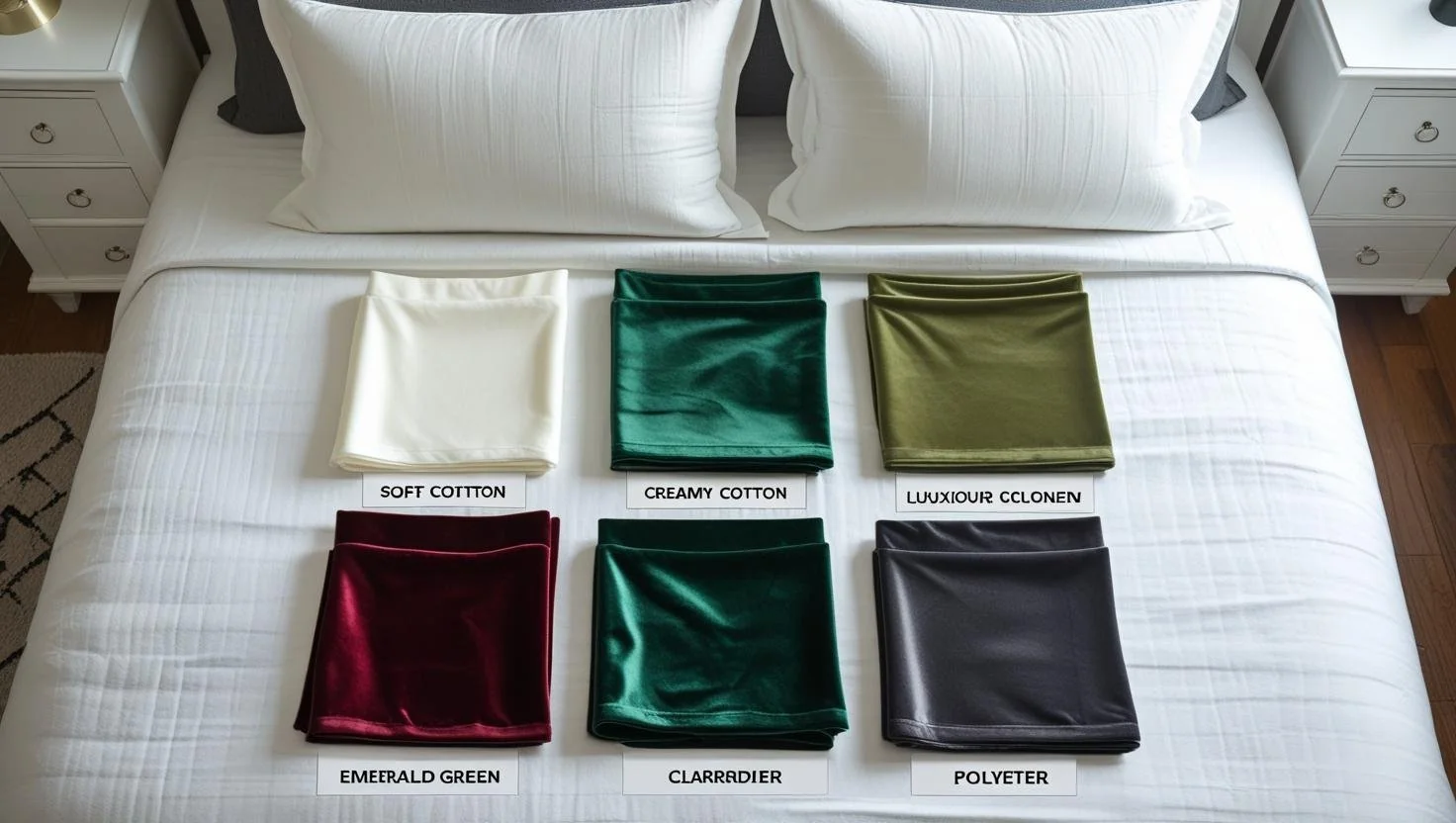
One of the most overlooked aspects of bed skirt styles is how they can be adapted for seasonal changes. In summer, lightweight cotton or linen skirts in bright colors or airy neutrals create a fresh, breathable vibe. For autumn and winter, heavier fabrics like velvet or twill in deep jewel tones add warmth and sophistication. Ruffled bed skirt styles in soft pastels work beautifully for spring, bringing in a touch of romance that mirrors blooming flowers.

If you enjoy changing up your bedding with the seasons, think of your bed skirt as part of the wardrobe. Just as you would rotate your comforter or layer blankets differently, your skirt can set the tone for the season. Pair with layered bedding techniques to create a cozy, dynamic look year-round.

Bed Skirt Alternatives to Consider

While bed skirt styles remain timeless, some people prefer alternatives. A fitted valance sheet offers a minimalist approach by covering the box spring directly. Platform-style covers fit tightly around the bed frame for a modern look. For ultra-sleek bedrooms, some homeowners skip the skirt entirely and opt for storage beds with concealed drawers. Each choice has its own pros and cons:

  • Valance Sheets: Low-maintenance but limited in design options.
  • Platform Covers: Clean and modern but require exact sizing.
  • No Skirt/Storage Bed: Sleek and functional but may feel less cozy.

These alternatives can be stylish, but bed skirt styles remain the most versatile option when balancing practicality, storage concealment, and decorative flair.

Pros and Cons of Bed Skirt Styles

Like any design choice, bed skirt styles come with benefits and potential drawbacks. Understanding these can help you choose the right fit for your lifestyle:

  • Pros: Hide under-bed storage, add decorative texture, easy seasonal updates, available in endless fabrics and colors.
  • Cons: Some styles (like ruffles) may feel dated if not styled well, skirts can shift during use unless elasticized, and they require occasional laundering.

For most households, the pros outweigh the cons, especially since elasticized or pleated versions offer a modern twist on traditional designs.

Buying Guide: Sizes and Fit

When shopping for bed skirt styles, sizing is critical. A poorly fitted skirt can bunch, drag, or look sloppy. The key measurement is the drop length—from the top of the box spring to the floor. Standard sizes include:

Twin
Standard drop: 14–16 inches • Typical mattress width: 39 inches
Full
Standard drop: 14–18 inches • Typical mattress width: 54 inches
Queen
Standard drop: 14–18 inches • Typical mattress width: 60 inches
King
Standard drop: 15–18 inches • Typical mattress width: 76 inches
California King
Standard drop: 15–18 inches • Typical mattress width: 72 inches

Always measure your bed before ordering—especially if you have a non-standard frame or adjustable base. Many brands now offer adjustable bed skirt styles, which allow you to fine-tune the drop for a perfect fit.

FAQ

What is the best fabric for bed skirt styles?
Linen and cotton are best for tailored looks, while polyester blends are ideal for ruffled and elasticized styles due to their flexibility and durability.
Are bed skirts still in style in 2025?
Absolutely. Bed skirt styles have evolved with modern trends, offering tailored, minimalist, and even eco-conscious options that remain stylish and functional.
How do I measure for a bed skirt?
Measure from the top of your box spring to the floor. Standard drop length is usually 14–16 inches, but adjustable styles are also available.

Conclusion

From tailored elegance to romantic ruffles, bed skirt styles allow you to personalize your bedroom decor while hiding storage or box springs. With the right fabric, color, and design, your bed skirt becomes more than a finishing touch—it transforms your room’s entire look.

Ready to upgrade your space? Explore more bedroom ideas below for inspiration!

Related Reading from Cozy Bed Quarters

Other Reading We Found Popular


Cozy Bedding Materials for Sheets Blankets and Comfort

Cozy Bedding Materials for Sheets Blankets and Comfort - Featured Image

Cozy Bedding Materials: Best Fabrics for Every Season & Sleep Style

Looking for the best cozy bedding materials to transform your sleep? From breathable cotton to luxurious silk, the right fabrics make all the difference. This guide highlights sustainable, organic options so you can build an eco-conscious sanctuary with soft, breathable, and durable layers.

Key Takeaways: cozy bedding materials

  • Cotton and bamboo are breathable, soft, and dependable year-round.
  • Flannel and fleece deliver exceptional warmth during colder months.
  • Silk regulates temperature and is gentle on skin and hair.
  • Organic, hypoallergenic picks like bamboo and organic cotton support sensitive sleepers.
  • Layering different fabrics creates adaptable comfort for every season.

Importance of Choosing Cozy Bedding Materials

The foundation of restorative sleep lies in the cozy bedding materials you choose. Each fabric has distinct strengths—from cooling breathability to plush warmth—so matching materials to your sleep style prevents night sweats, chills, and discomfort.

Hot sleepers usually favor crisp cotton or silky bamboo for airflow. Cold sleepers often prefer flannel or fleece for gentle insulation without bulk. Knowing how each fabric behaves helps you customize comfort and wake up refreshed.

importance of cozy bedding materials for comfort and sleep quality

Cotton

Answer first: Cotton is the balanced default—soft, breathable, and durable—making it a top pick among cozy bedding materials.

Classic percale offers a cool, crisp hand feel, while sateen drapes smoothly with a subtle sheen. Long-staple varieties (Egyptian, Pima) resist pilling and maintain strength through frequent washing. For eco-conscious sheets, look for organically grown cotton and third-party certifications to limit chemicals and retain that clean, airy feel.

cozy bedding materials organic cotton sheets breathable and durable

Flannel

Answer first: Flannel traps heat while staying breathable, delivering that “toasty without overheating” sensation in winter.

Made by brushing cotton to raise soft fibers, flannel’s fuzzy surface holds warmth close to the body. Choose midweight options to avoid bulk and seek tightly woven fabrics that resist linting. If sustainability matters, prioritize organic flannel and mindful care—wash on gentle and avoid high heat to preserve loft.

cozy bedding materials flannel sheets warm for winter

Fleece

Answer first: Fleece provides maximum softness and quick warmth, making it great for throws and top-layer blankets.

Modern fleece blankets feel plush, insulate well, and dry quickly—perfect for layering over lighter sheets when temperatures drop. For styling and extra snugness, add a fleece throw as a top layer at the foot of the bed.

fleece blanket cozy bedding materials for extra warmth

Exploring Luxurious Options: Bamboo and Silk

Bamboo

Answer first: Bamboo excels for hot sleepers—silky-soft, breathable, and moisture-wicking with a cool-to-the-touch feel.

Many bamboo fabrics drape beautifully and manage humidity to keep you comfortable through the night. They are naturally hypoallergenic and popular among fans of sustainable bedding. For a deeper overview of material pros and cons, explore the Sleep Foundation’s bedding materials guide.

Silk

Answer first: Silk is temperature-regulating and friction-reducing, helping protect hair and skin while keeping you comfy year-round.

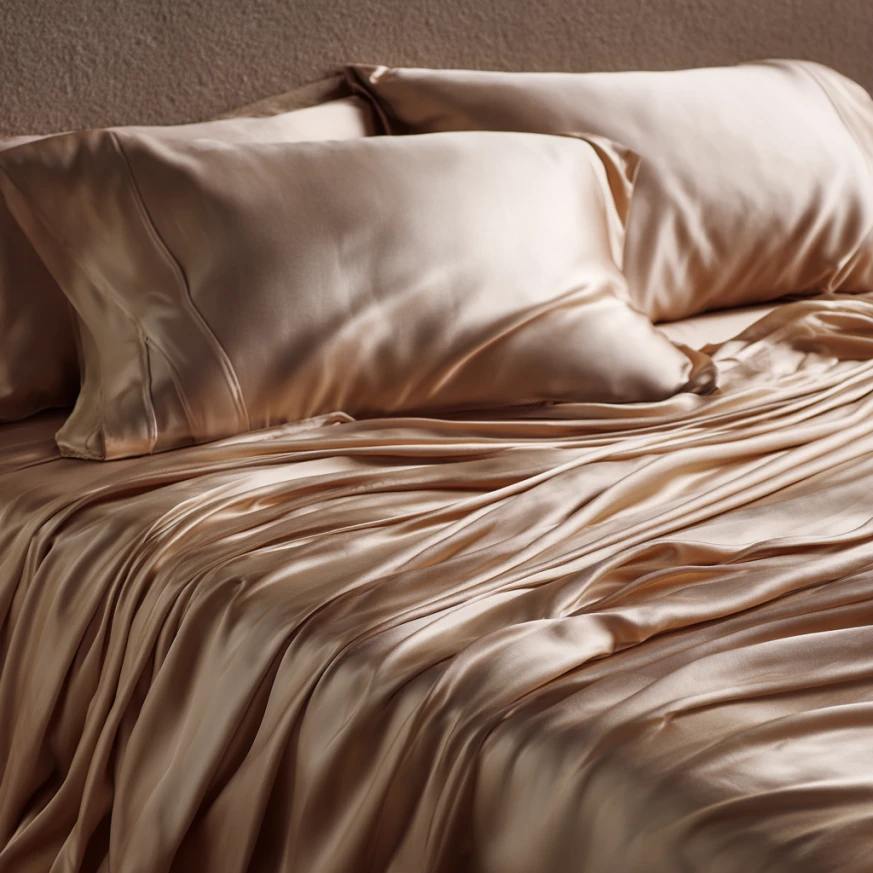
The smooth weave minimizes tugging on hair and reduces facial creasing. It feels light in summer yet cozy in winter. If you want a luxury upgrade with practical perks, a silk pillowcase or duvet cover is a smart way to sample this premium material.

bamboo and silk cozy bedding materials for luxury and breathability

Seasonal Adaptability with Cozy Bedding Materials

The best cozy bedding materials adapt to changing weather. In spring and summer, lightweight cotton or bamboo sheets keep airflow steady. In fall and winter, layer flannel or fleece for extra warmth without trapping excess heat.

Try this simple formula: crisp cotton or bamboo sheets + a midweight duvet + a fleece or flannel throw. This flexible stack lets you dial warmth up or down by adding or removing the top layer.

seasonal layering with cozy bedding materials for adaptable comfort

Benefits of Hypoallergenic Cozy Bedding Materials

Sensitive sleepers thrive with hypoallergenic cozy bedding materials like organic cotton and bamboo. These choices reduce exposure to harsh finishes and are less likely to irritate skin.

To verify materials, look for third-party labels such as GOTS (organic fiber certification) and OEKO-TEX (testing for harmful substances). Certifications support eco-conscious sheets that are safer for you and the planet.

hypoallergenic cozy bedding materials organic cotton and bamboo

Practical Tips for Choosing the Best Cozy Bedding Materials

  • Match materials to your sleep habits: hot sleepers prefer bamboo or percale cotton; cold sleepers love flannel.
  • Feel the fabric when possible. Touch reveals breathability, drape, and softness better than spec sheets.
  • Check trusted labels: learn how GOTS and OEKO-TEX help ensure safer, sustainable bedding.
  • Layer strategically for seasonal flexibility and design balance.
  • Care matters: gentle washing preserves loft, reduces pilling, and extends lifespan.
  • Know your top layer: choose a duvet or comforter that works with your fabric choices and local climate.
  • Match bedding with mattress firmness for balanced comfort.

FAQ

What are the best cozy bedding materials for winter?
Flannel and fleece are ideal for winter. They retain heat, feel soft on skin, and layer easily with cotton or bamboo sheets.
Are bamboo sheets good for hot sleepers?
Yes. Bamboo is breathable and moisture-wicking, helping manage temperature and humidity for cooler nights.
Which cozy bedding materials are hypoallergenic?
Organic cotton and bamboo are naturally hypoallergenic, especially when certified by GOTS or OEKO-TEX.

Final Thoughts: Choosing the Right Cozy Bedding Materials

Selecting the right cozy bedding materials transforms both comfort and sleep quality. Start with breathable cotton or bamboo, add warmth with flannel or fleece as needed, and consider a touch of silk for luxury and skin benefits. For more guidance, explore Cozy Bed Quarters for expert tips, buying advice, and room-by-room comfort ideas.

Related Reading

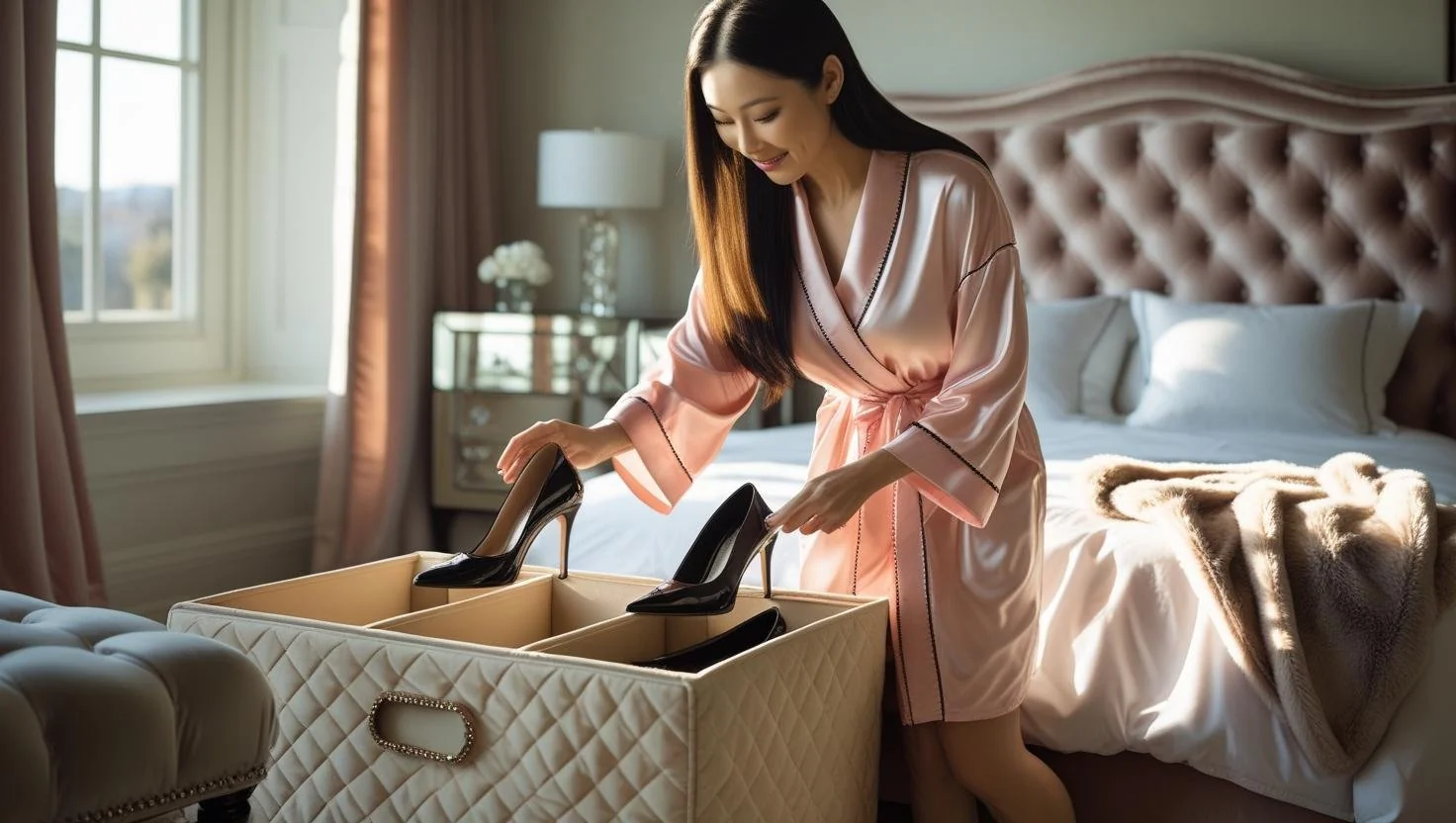
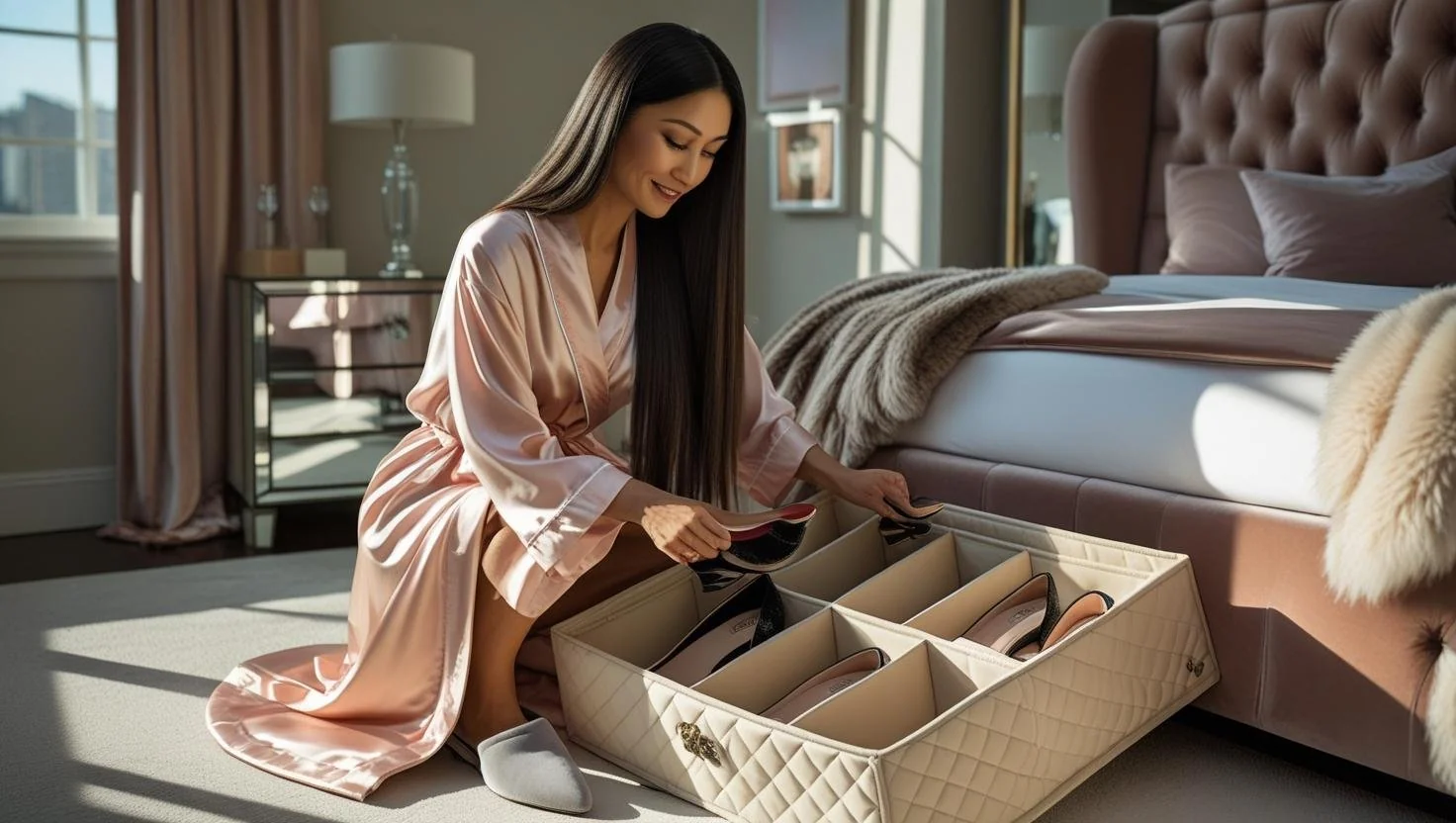
Under Bed Shoe Storage: Clearance, Bin Sizes and a Setup That Lasts

Under-Bed Shoe Storage

Good under bed shoe storage comes down to one number: the clearance between your floor and the lowest part of your bed frame. Pick a container about an inch shorter than that measurement, fill it with the shoes you wear this season, and keep daily pairs somewhere easier to reach. The rest — dividers, labels, odor control — is fine-tuning.

Measure three things before you buy a single bin

Most under bed shoe storage fails for the same reason: it was bought by eyeball. Grab a tape measure and write down these numbers.

  • Clearance (height). Floor to the lowest point under the bed — usually the bottom edge of the side rail, but on some frames it’s a slat, a center support, or the box spring itself. Measure the lowest thing, not the prettiest.
  • Depth (front to back). From the side rail inward to the center support leg or the far rail. On a queen, the usable strip on each side is often 15–18 inches before you hit the center bar.
  • Width (side to side). The clear run between the corner legs. Two 33-inch bins need about 68 inches of unobstructed space, and plenty of frames don’t have it.

Then subtract a buffer. On hardwood or tile, leave at least 1 inch between the top of the bin and the frame. On carpet, leave 1.5 to 2 inches — the pile compresses under wheels and lifts the box higher than you think.

Tape measure showing floor-to-frame clearance before choosing under bed shoe storage

What fits in how much clearance

Shoes are taller than people expect. A men’s size 10 running shoe stands roughly 4.5 inches at the heel collar, a women’s flat around 3 inches, a 3-inch pump about 5 inches tip to heel when it sits upright, and a lace-up boot 7 inches or more.

  • 3 to 4 inches: flat fabric trays and thin sliding drawers. Flats, sandals, slides, espadrilles.
  • 5 to 6 inches: the sweet spot. Standard 6-inch bins swallow most sneakers, loafers, and low heels upright.
  • 7 to 9 inches: rolling boxes on casters, taller heels, ankle boots, kids’ and adult shoes mixed in one box.
  • 10 inches and up: two-tier organizers or wooden drawers. Tall boots still go on their sides.

Under bed shoe storage types, side by side

Type Clearance needed Roughly holds Trade-off
Zippered fabric bag with clear top 4–6 in 6–12 pairs, slim styles Low cost and softest on carpet, but sags and offers no crush protection
Rigid plastic bin with lid 6–8 in 4–8 pairs Best dust and spill protection; you must pull the whole box out to dig
Rolling box on casters 7–10 in 6–10 pairs Easiest daily access; small hard wheels stall on thick carpet
Wooden or rattan drawer on wheels 8–12 in 6–9 pairs Looks good with no bed skirt; heavy and pricier
Open flat tray or sliding shelf 3–5 in 4–6 pairs Grab-and-go for daily shoes; collects dust fast
Riser plus a low shoe rack 12 in+ 8–16 pairs Great for tall frames; visible unless you add a skirt

One rule worth repeating: whatever style of under bed shoe storage you choose, skip vacuum-compression bags for footwear. They crush toe boxes, flatten padding, and leave creases that never quite hang out.

Rolling box, lidded bin and fabric bag options for under bed shoe storage

How many pairs will really fit?

Do the arithmetic instead of trusting the box copy. An adult shoe is about 11–12 inches long and 3.5–4 inches wide. In a typical 33 × 16-inch bin, you get one row lengthwise and roughly eight shoe-widths across — four pairs of men’s shoes, or six to eight pairs of smaller women’s styles if you nest them heel-to-toe.

Two of those bins under a queen bed put 8–14 pairs out of sight. That’s most people’s off-season collection. If you’re trying to fit 30 pairs under there, the problem isn’t the container.

Play the space smart

  • Nest shoes in opposite directions — toe next to heel — so the widest parts don’t collide. It gains you about one extra pair per bin.
  • Lay tall boots flat with the shafts alternating, and slide a rolled magazine or boot shaper inside to stop creasing at the ankle.
  • Keep one bin per category (work, sport, dressy) rather than one giant bin. Lighter boxes slide out with one hand.
  • Use adjustable dividers or stiff cardboard so shoes don’t tip and tangle laces every time you pull the box.
  • Tie a ribbon or fabric loop to lidless boxes if there’s no handle — much kinder to fingernails than gripping a plastic lip.

Prep shoes properly or you’ll regret it in spring

Anything headed into under bed shoe storage should be clean and bone dry. Damp shoes in a closed bin are how you end up with mildew spots on leather and a smell that survives two washes.

  1. Let worn shoes air out a full 24 hours before they go in. Sweat takes longer to leave a midsole than you’d guess.
  2. Brush grit off the outsoles and wipe the uppers. Trapped dirt holds moisture against the material.
  3. Pull out insoles on athletic shoes and let both parts dry separately.
  4. Stuff toe boxes with acid-free tissue or clean socks to hold shape — not newspaper, whose ink can transfer to pale linings.
  5. Add a silica gel pack or a cedar block per bin, and swap or dry out the silica each season.

Shoes cleaned, stuffed and sorted by season before going into storage bins

Humidity and odor: the part most guides skip

The air under a bed barely moves, so whatever humidity is in your room settles in and stays. The EPA advises keeping indoor relative humidity below 60 percent and ideally between 30 and 50 percent to discourage mold growth. A cheap hygrometer on the nightstand tells you where you stand.

If your room runs damp — basement bedroom, humid summer, no AC — use vented fabric bags rather than sealed plastic, or crack the lid on rigid bins so air can move. In a dry room, sealed bins are fine and keep dust off.

For smells, baking soda in a breathable pouch handles mild funk, and cedar handles both odor and moisture. Skip stuffing scented dryer sheets against leather for months at a stretch; airing the shoes out first fixes far more than masking does.

What shouldn’t go under the bed

Under bed shoe storage is a seasonal parking spot, not an everyday shoe rack. Daily pairs belong near the door or in a closet, because nobody kneels on the floor at 7:45 a.m. two days in a row.

A second reason to keep it tidy: pest control. University of Minnesota Extension notes plainly that storing things under the bed gives bed bugs more places to hide and makes an infestation harder to clear. Sealed, wipeable containers beat loose piles, and leaving a few inches of clear floor lets you vacuum and inspect.

Also think twice about storing anything under the bed if you’re sensitive to dust — that zone collects it, and open trays need wiping every couple of weeks.

Carpet, hardwood, and the sliding problem

Hard floors: almost anything glides, though bare plastic can scratch finished wood. Stick felt pads on the corners of rigid bins.

Carpet: small hard casters sink into the pile and fight you. Fabric bags with wide handles pull much more easily, or choose boxes with 2-inch-plus wheels. A thin plywood board or a cut-down rug pad laid smooth-side up under the bed also gives boxes a runway.

If your frame has a center support leg, you’ll be loading from both sides — plan bins for each side rather than one long box that only fits on paper.

Rolling shoe bin gliding on carpet beneath a bed frame

No clearance at all? Change the bed, not the bins

Low platform beds and frames that sit flush to the floor leave nothing to work with. Two fixes: add risers (typical sets lift a frame 3 to 8 inches, and you should check the weight rating and the leg diameter before buying), or switch to a frame built for storage.

Drawer bases and lift-up designs give you enclosed, dust-free space that’s easier on your back — worth comparing if you’re already shopping. Our guide to under bed storage frames covers drawer layouts, and platform and storage beds walks through hydraulic lift styles. In a tight room, space-saving bed frames and these small bedroom storage solutions are the next places to look.

Keep the system from collapsing

Under bed shoe storage only stays useful if you touch it twice a year. Roughly March and October, pull every bin out and do a 15-minute swap. Boots and closed shoes go under the bed in spring; sandals go under in fall. Wipe the floor while the boxes are out, check the silica packs, and be honest about the pairs you skipped all season.

A one-in, one-out rule keeps the bins from creeping past full. And label the short end of each box, not the top — that’s the side you’ll actually see.

FAQ

How much clearance do I need for under bed shoe storage?

At least 4 inches for flat trays, 6–7 inches for standard bins holding sneakers upright, and 8 inches or more for rolling boxes and heels. Always leave an inch of wiggle room above the container, or two on carpet.

How many pairs fit in one under-bed box?

Four to six pairs of adult shoes in a standard 33 × 16-inch bin, or six to eight pairs of smaller, slimmer styles. Slim fabric bags with individual compartments can hold 12, but only for flats and low sneakers.

Will storing shoes under the bed ruin them?

Not if they go in clean, dry, and shaped. Damage comes from damp shoes in sealed containers, crushing heavy boxes on top of soft uppers, and vacuum bags flattening toe boxes.

Are fabric bags or plastic bins better?

Fabric breathes and slides well on carpet, which suits humid rooms and low clearance. Rigid plastic blocks dust and protects shape, which suits dry rooms and heavier boots. Many people use both.

How do I stop shoes from smelling in storage?

Air them 24 hours first, remove insoles to dry, add silica gel or cedar, and don’t seal the lid if your room runs humid. Washing insoles and letting them dry fully solves most lingering odor.

Tidy bedroom floor after setting up under bed shoe storage bins

Updated September 2026.
Unique Wood Beds: Styles, Woods and How to Choose

Unique Wood Bed Designs: Transform Your Bedroom with Style - Featured Image

A unique wood bed is a solid frame with one distinctive move: a live-edge slab headboard, visible joinery, a canopy, hidden drawers, or a grain pattern you won’t see in a chain-store showroom. The best unique wood beds back that character with unglamorous fundamentals — hardwood construction, tight joints, slats close enough to support your mattress, and a finish you can repair. Here’s what the main styles look like, which woods hold up, and what to check before you hand over your money.

What actually makes unique wood beds unique

Three things, mostly. First, the material itself: no two boards share a grain pattern, and species like walnut, white oak and cherry each age differently. Second, the making — hand-cut joints, a shaped headboard, a chamfered post or a hand-rubbed oil finish all read as “someone thought about this.” Third, the form: canopies, platforms, lofts and storage bases change how a room feels, not just how the bed looks.

What does not make a bed unique is a marketing word. “Artisan,” “heirloom” and “hand-finished” are unregulated terms. Ask what the frame is made of, how it’s joined and whether the finish can be touched up — those answers tell you more than any product description.

Low-profile walnut-toned frame, one of the unique wood beds with a warm modern finish

Standout wood bed styles

Live-edge beds

A live-edge headboard keeps the natural outer contour of the tree, bark removed and edge sanded smooth. Every one is genuinely one-off, which is the appeal — and also the catch, since you’re buying a shape you can’t compare against a catalog photo. Slabs are heavy, so check that the headboard attaches to the frame with bolts rather than screws into end grain, and look for butterfly keys or epoxy fills across any checks in the slab. These sit happily in both rustic and stripped-back modern rooms.

Canopy and four-poster beds

Four tall posts, sometimes joined by a top frame, draw the eye upward and give a bedroom instant architecture. They need ceiling height and breathing room to work — a tall canopy in a low room feels cramped rather than grand. Wooden versions range from chunky reclaimed timber to slim square posts barely thicker than a broom handle. If you’re weighing proportions, our guide to canopy bed frames covers sizes and ceiling clearance in more detail.

Platform beds

A platform frame supports the mattress on a slatted or solid deck, so you skip the box spring entirely. That keeps the profile low and the lines clean, which helps a small room feel less crowded. Solid-wood platforms in oak, ash or walnut are the workhorse of modern bedrooms for a reason: fewer parts, fewer squeaks, less to go wrong.

Storage beds

Drawers in the base, a lift-up deck on gas struts, or shelving built into a thick headboard. Wood suits storage beds well because the frame is already substantial enough to carry drawer boxes without looking bulky. Measure your clearance first — side drawers need floor space to pull out, and a lift-up deck needs room to swing. If storage is the main reason you’re shopping, compare options in our roundup of king-size bed frames with storage.

Lofted and raised beds

Lifting the sleeping surface frees up the footprint underneath for a desk, drawers or a reading nook. Solid timber lofts feel far steadier than tubular metal ones, but height brings safety rules: guardrails on all open sides, a fixed ladder, and a ceiling gap that lets you sit up. Bunk-style and loft beds sold in the US fall under federal safety rules covering guardrails and openings, so check that any frame you buy — especially secondhand — still meets them. More small-room layouts here: the best beds for small rooms.

Minimalist wood platform bed with clean lines in a bright bedroom

Rustic and reclaimed-timber beds

Knots, saw marks, nail holes, weathered patina. Reclaimed beams and barn boards carry visible history, and the wood has usually spent decades acclimating, so it tends to be dimensionally settled. Ask the maker whether old paint was tested or fully removed — paint on pre-1978 US buildings may contain lead, and sanding it is the risky part. A sealed, clear-finished frame from a reputable builder is the safe version of this look.

Mid-century modern frames

Tapered legs, a low headboard, warm walnut or teak tones, minimal ornament. These frames are compact for their mattress size, which makes them useful in rooms where a heavy rustic bed would dominate. They also mix easily with other eras, since the shapes are quiet.

Carved and traditional beds

Turned posts, paneled headboards, molded rails, sometimes inlay. Traditional wooden beds have gone in and out of fashion for two centuries and keep coming back because the proportions are generous and the joinery on good examples is excellent. Secondhand is often the smart buy here.

Rustic reclaimed timber bed frame showing knots and visible grain

Choosing the wood

Species affects color, hardness, weight and price. Hardness is measured with the Janka test, which presses a steel ball into the wood and records the force needed; published Janka figures put sugar (hard) maple around 1,450 lbf and white oak around 1,360 lbf, while softwoods like pine sit far lower. For a bed, hardness matters less than it does for flooring — nobody walks on a headboard — but it does predict how easily rails and posts pick up dings.

Wood Look Good to know
White oak Pale gold, strong open grain Hard, stable, takes stain well; quarter-sawn shows ray flecks
Walnut Chocolate brown, sometimes purple undertones Softer than oak but very stable; lightens with sun exposure
Maple Creamy, tight and subtle grain Very hard; can look flat if you want visible character
Cherry Pinkish when new, deep red-brown later Darkens noticeably over the first year or two
Teak / acacia Warm, oily, golden brown Naturally durable; teak is costly, acacia is the budget cousin
Pine / fir Light, knotty, casual Affordable and easy to repaint, but dents easily
Mango / rubberwood Mid-brown, varied Fast-growing plantation species, common in mid-price frames

Solid wood, veneer or engineered panels?

Solid wood is not automatically better everywhere. Wide panels made from solid boards move with the seasons and can crack; a quality hardwood veneer over a stable core stays flatter and is what plenty of high-end furniture uses. What you want to avoid is a frame where the load-bearing rails and posts are thin engineered board dressed up with a printed wood-look foil.

If a frame uses plywood, MDF or particleboard, US-market products are required to be labelled as compliant with the EPA’s formaldehyde emission standards for composite wood products, which have applied to finished goods since March 2019. Look for that label, and air out a new frame for a few days before you sleep on it. For a wider comparison of frame materials, see wood vs metal vs upholstered bed frames.

What to check before you buy

  • Joinery. Mortise-and-tenon or dowelled joints at the posts beat staples and plastic corner blocks. Bolt-together rail hardware is fine and makes the bed movable.
  • Slat spacing and center support. Many mattress warranties specify a maximum gap between slats (commonly around 3 inches) and a center rail with legs on queen and larger sizes. Check your mattress paperwork rather than assuming — the requirements vary by brand, and an unsupported foam mattress will sag between wide slats.
  • Squeak risk. Wood-on-wood contact plus loose bolts equals noise. Felt pads between slats and rails, and a re-tighten every six months, fix most of it.
  • Weight and access. Solid hardwood beds are heavy. Confirm the frame disassembles and that the largest single piece fits through your doorway and up your stairs.
  • Finish type. Oil and wax finishes are easy to spot-repair but need refreshing. Lacquer and catalyzed finishes resist spills better but are harder to touch up invisibly.
  • Room fit. Leave roughly 24–30 inches of walking space on the sides you use, and remember that posts, sleigh curves and footboards add to the mattress footprint.

Sustainable and reclaimed options

If the environmental side matters to you, the clearest signal is third-party certification. The Forest Stewardship Council is a non-profit that certifies responsibly managed forests worldwide and runs a chain-of-custody system so a finished product can be traced back through the supply chain. An FSC label on a bed means that paper trail exists; a vague “sustainably sourced” claim on a product page means nothing in particular.

Reclaimed timber is the other route, and it’s a genuinely low-impact one since the wood already exists. Buy from a maker who can say where the material came from and how it was cleaned up. The honest caveat: reclaimed stock varies enormously, so judge the individual piece, not the category.

Reclaimed wood bed frame with a hand-finished headboard

Styling a wood bed so it reads as the centerpiece

  • Contrast your bedding. Warm-toned oak and teak sit well against white, oatmeal and sage; cool walnut takes deeper colors. Mixing linen with a chunkier woven throw stops the bed looking flat in photos and in person.
  • Ground it with a rug. A rug that runs past the foot and both sides softens hard frame edges. Sizing is the part people get wrong — our bedroom rug guide has the measurements.
  • Light it warmly. Warm bulbs on a dimmer bring out the red and amber in wood grain; cool white light flattens it. Wall sconces also free up your nightstands. See cozy bedroom lighting for layering ideas.
  • Don’t match everything. A bedroom where every piece is the same finish looks like a showroom set. One or two contrasting tones — painted nightstands, a cane dresser, black metal lamps — make the bed stand out more, not less.

Wood bed styled with layered neutral bedding and a large area rug

Caring for a wooden bed

Wood is hygroscopic: it takes on and gives up moisture as the air around it changes. Very dry indoor air makes furniture shrink, which is what loosens joints and opens cracks, so keeping indoor humidity in a moderate range — roughly 40–50% is the usual target for a home — does more for a bed frame than any polish. A humidifier in winter or a dehumidifier in a damp room is the practical fix.

  1. Dust with a dry or barely damp microfiber cloth. Skip silicone sprays, which build up and complicate future refinishing.
  2. Refresh oiled surfaces when the wood starts looking thirsty, typically once or twice a year. Lacquered frames just need cleaning.
  3. Keep it out of direct sun. UV fades stains and shifts natural color unevenly — cherry darkens, walnut lightens.
  4. Re-tighten the hardware every six months, and every time you move the bed.
  5. Inspect when you strip the bed. The EPA notes that bed bugs hide in cracks on the bed frame and headboard, so a quick look at joints and slat pockets is worth the thirty seconds.
  6. Lift, never drag. Dragging a loaded frame puts all the stress on the rail joints.

Pair the frame with nightstands that suit its scale rather than its exact finish — there are ideas in our nightstand guide.

FAQ

What’s the best wood for a bed frame?

Oak, maple, walnut, cherry and teak are the usual picks because they’re dense, stable and repairable. Pine costs less and looks great in a casual room, but expect dents.

Is reclaimed wood durable enough for a bed?

Generally yes. Old timber has had decades to reach equilibrium with indoor conditions, so it moves less than freshly kiln-dried stock. Quality depends on the individual boards and the maker’s prep work, not on the age alone.

Do I need a box spring with a wooden platform bed?

No. A platform deck or closely spaced slats supports the mattress directly. Confirm the slat gap meets your mattress manufacturer’s requirement before you buy.

Can I have a wood bed custom-made?

Yes, and it’s often the answer for odd room shapes, non-standard mattress sizes or built-in storage. Expect to discuss species, finish, headboard height and whether the frame breaks down for moving. Costs vary too widely by region and maker to quote a useful figure.

Are wooden beds noisier than metal ones?

Not inherently. Noise comes from loose fasteners and from parts rubbing, so it helps to know how to track down a squeak and silence it. A well-joined hardwood frame with felt-padded slats is usually quieter than a thin metal frame with bolted brackets.

Updated September 2026.

Adjustable Bed Mattress Compatibility Guide

Foam mattress demonstrating adjustable bed mattress compatibility with smooth flexibility.

Adjustable Bed Mattress Fit Guide for 2025

Adjustable bed mattress compatibility isn’t just technical jargon—it’s the secret to a cozier, healthier night’s sleep. If you’ve ever wondered whether your mattress will work with an adjustable base or want to avoid buying the wrong bed, you’re in the right place. Below, we’ll show you which mattress types bend smoothly, what to avoid, and how to check specs (and warranties) before you buy.

Key Takeaways

  • Choosing the right adjustable bed mattress compatibility ensures smoother motion, better comfort, and longer mattress life.
  • Memory foam, latex, and hybrid mattresses are typically the best options for adjustable bases.
  • Not every mattress is compatible—understanding the differences saves you time, money, and backaches.
  • Read labels and specs to confirm your mattress supports an adjustable base before buying.
  • Trying before you buy (with home trials) is the best way to find your perfect adjustable-friendly fit.

Why Adjustable Bed Mattress Compatibility Matters

A quick check on compatibility protects comfort, durability, and your warranty. The right match flexes cleanly with your base, so you get the full range of motion, targeted support, and pressure relief. Incompatible mattresses bunch, creak, or wear out early—and can even void coverage.
For deeper background, see the Sleep Foundation’s adjustable mattress guide.

Best Mattress Types for Adjustable Bed Mattress Compatibility

Not all mattresses play well with adjustable beds. Here’s how the main types stack up and what to look for when you shop.

A split king setup shows adjustable bed mattress compatibility in action with dual firmness and smooth flex for couples.

Foam Mattresses: The Flexibility Champions

  • Memory Foam: Contours closely and bends without fighting the base—often the easiest win for adjustable frames.
  • Latex Foam: Naturally buoyant yet flexible; great if you prefer a cooler, more responsive feel.

Foam mattresses shine with adjustable beds because their layered construction curves smoothly as you raise your head or legs. If you’re comparing materials, this helpful
memory foam vs. latex comparison outlines comfort, durability, and motion response.

Foam mattress demonstrating adjustable bed mattress compatibility with smooth flexibility.

Hybrid Mattresses: Modern Flexibility (With a Caveat)

  • Hybrids: Look for pocketed coils and flexible foam layers; these typically move well on an adjustable base.
  • Traditional Innerspring: Unless specifically labeled “adjustable-base compatible,” many won’t bend cleanly.

Hybrids can feel balanced—supportive yet plush—if they use individually wrapped coils and quality foams. For shopping context and sizing fit, see our in-depth
mattress selection guide.

Hybrid mattress showing adjustable bed mattress compatibility with flexible coils and foam layers.

Innerspring and Air Beds: The Caution Zone

  • Traditional Innerspring: Stiff builds and interconnected coils can create gaps and pressure points.
  • Air Beds: Some models are designed for adjustable use—read specs carefully before committing.

When in doubt, buy only mattresses labeled “adjustable base compatible.” Overly firm or two-sided designs often resist flexing and may wear prematurely.

Traditional innerspring showing poor adjustable bed mattress compatibility due to stiffness.

Pros and Cons of Adjustable Bed Mattress Compatibility

Picking a compatible design pays you back every night—while the wrong choice can cause noise, sagging, and buyer’s remorse.


Pros of Compatible Mattresses

  • Smoother movement and quieter operation
  • Reduces pressure points—especially for side and back sleepers
  • Improves longevity of both mattress and adjustable base
  • Unlocks features like zero-gravity and anti-snore modes

Cons of Poor Compatibility

  • Premature wear, sagging, or “hinge” hot spots
  • Risk of voided mattress or base warranties
  • Limited range of motion and disrupted comfort
  • Potential noise or mechanical strain from forced flexing

Want a broader comfort tune-up? Explore ways to upgrade your sleep quality in our quick guide to
bedding science for better sleep.

Common Myths About Adjustable Bed Mattress Compatibility

Let’s clear up the biggest misconceptions so you can shop with confidence.

Debunking myths about adjustable bed mattress compatibility with practical examples.

“All mattresses work with adjustable beds.”

Not true. Traditional innersprings and extra-firm, two-sided designs often can’t bend properly. Always check for “adjustable base compatible” in the specs.

“You have to buy an expensive mattress.”

Plenty of budget-friendly memory foam and latex options work great. Focus on construction details and compatibility markers, not price alone. See our
mattress size and compatibility guide to avoid common pitfalls.

“Adjustable beds ruin mattresses.”

Not if you choose the right mattress. Compatible builds are made to flex for years—choose carefully and follow care instructions.

How to Check Adjustable Bed Mattress Compatibility

Before buying, confirm the label or product page states “adjustable base compatible.” Scan construction details (pocketed coils, pliable foams), check thickness (often 10–13″ is a sweet spot), and read warranty language for adjustable use. When possible, choose brands with 30–100 night home trials so you can confirm the feel on your base at home.
For sustainability-minded setups, see our eco-friendly bed frame guide.

Final Thoughts on Adjustable Bed Mattress Compatibility

The right pairing makes your adjustable base feel like a personal comfort remote. Keep this short list handy:

  • Best picks: Memory foam, latex, and adjustable-ready hybrids
  • Avoid: Stiff innerspring or two-sided mattresses not labeled as compatible
  • Always: Read specs, confirm warranty coverage, and consider a home trial
  • Explore: More adjustable-friendly options in our side-by-side mattress guide

Choose a mattress with true adjustable bed mattress compatibility and you’ll unlock comfort, pressure relief, and customized lounging—night after night.

FAQ

What mattresses are best for adjustable beds?
Memory foam, latex, and hybrids with pocket coils and flexible foams. They bend easily while maintaining support.
Can I use my old mattress on an adjustable bed?
Only if it’s labeled “adjustable base compatible.” Traditional innersprings and extra-firm designs may be damaged and can void warranties.
Will using an adjustable base ruin my mattress?
No—choose a compatible model. These are engineered to flex repeatedly without premature wear.
Are adjustable-friendly mattresses more expensive?
Not necessarily. Many affordable memory foam and latex options work beautifully with adjustable bases.
How can I test adjustable bed mattress compatibility?
Opt for a 30–100 night home trial and confirm comfort and motion on your actual base before you commit.

Learn more in our mattress selection guide, explore adjustable-friendly mattresses, find eco-friendly options for your base, and get our full mattress compatibility breakdown.

For trusted external advice, visit the Sleep Foundation’s adjustable mattress guide, practical bedroom layout ideas from Apartment Therapy, and material insights in this latex vs. memory foam comparison. For healthy sleep habits, see the Mayo Clinic’s sleep tips.

Related reading from Cozy Bed Quarters

Other reading we found popular


Dulane Upholstered Sleigh Bed: What to Know Before Buying

Dulane Upholstered Sleigh Bed: Elegant Comfort for Your Bedroom - Featured Image

The dulane upholstered sleigh bed is a low-profile, fabric-covered sleigh bed sold under Wayfair’s Willa Arlo Interiors label, with a scroll wingback headboard, deep diamond button tufting, and an engineered wood frame. It ships with wooden slats and center support legs, so you don’t need a box spring — just a mattress. If you want the curvy, old-world sleigh shape without heavy carved wood, this is the softer, more modern take on it.

Below is what the bed actually is, how the fabric choices differ, how much room it needs, and the honest limits of what anyone can tell you about it without having one in the house.

What the Dulane upholstered sleigh bed actually is

Strip away the marketing and the spec sheet is simple. The retailer’s listing describes an engineered wood frame wrapped in chenille or velvet upholstery, a curved wingback headboard filled with dense foam, and 12 wooden slats plus center support legs that make a box spring unnecessary. Neutral colorways — think cream, grey and black — are what you’ll usually see in stock.

Engineered wood matters here. It’s not solid oak or walnut; it’s a manufactured panel core under fabric. That keeps the price and the weight down, and it’s perfectly normal for upholstered beds in this range, but it also means the joints and bolts are doing real work. Snug hardware is what keeps this kind of frame quiet. If long-term rigidity is your top priority, read our guide on how to choose a sturdy bed frame before you commit.

Dulane upholstered sleigh bed with a curved velvet headboard and low footboard in a neutral bedroom

Why the sleigh shape still works

A sleigh bed is defined by its curved or scrolled headboard and footboard, a silhouette that came out of the French and American Empire period of the early 19th century and looks like the sled it’s named after. Traditionally that meant thick, dark, heavy wood — beautiful, but it can swallow a small room.

The Dulane keeps the curve and drops the bulk. The headboard scrolls outward into wingback sides, the footboard stays low, and the whole thing sits closer to the floor than a classic wooden sleigh. You get the shape and the sense of enclosure without a wall of timber at the foot of the bed. If you want the full background on the style and how it’s evolved, see what is a sleigh bed.

Low-profile sleigh bed with scrolled headboard and footboard styled in a calm, neutral bedroom

Chenille vs velvet: which fabric to pick

This bed is offered in more than one fabric, and the choice changes how the room feels and how much upkeep you sign up for. Neither is “better” — they age differently.

Fabric Looks like Living with it
Chenille Soft, matte, slightly nubby; reads casual and warm Cozy underhand and forgiving about light. The looped pile can snag on claws and zippers, so vacuum gently
Velvet Short dense pile with a sheen that shifts as you walk past; reads dressy Shows pile marks and pressure lines. Brushing the nap back into place is part of the deal

Colour does as much work as texture. Cream lifts a dark room but shows every scuff near the footboard. Charcoal or black grounds a bright room and hides marks, though it collects lint and pet hair in plain sight. Our comparison of velvet vs upholstered bed frames walks through the trade-offs in more detail.

Chenille and velvet upholstery swatches in cream, grey and navy for an upholstered sleigh bed

No box spring needed — and what that means for you

The slat-and-centre-leg system carries the mattress directly, so skip the box spring. A few practical knock-ons:

  • Your mattress height sets the look. A low-profile frame plus a thin mattress can sit lower than you expect. If you like sliding off the edge at hip height, choose a taller mattress.
  • Foam and hybrid mattresses are happy on slats as long as the gaps are close together. Twelve slats across a queen is a reasonable spread.
  • Adjustable bases are usually a no. Beds with attached side rails and a fixed slat deck rarely accept one unless the base is sized to drop inside the frame. Ask the seller before you assume it fits.
  • Under-bed storage is limited. Low profile plus centre legs means shallow bins at best. If you need real storage, a different frame style will serve you better.

Sizing and room fit

Size availability shifts with stock, so confirm on the listing rather than trusting any blog — queen is the size most commonly shown. Whatever size you land on, measure the room before you buy, not after delivery.

For a queen, planning references suggest about 30 inches of clearance around the bed, with 36 inches being more comfortable. Run painter’s tape on the floor at the bed’s full outer dimensions — remember the sleigh curves push the footprint past the mattress size — then open every door and drawer in the room and see what collides. If you’re weighing a bigger frame, our breakdown of king vs California king dimensions covers the extra floor space each one demands.

One more thing people forget: getting the headboard up a narrow staircase or around a tight landing. Check the box dimensions, not just the assembled ones.

Side profile of an upholstered sleigh bed showing the padded wingback headboard and curved rails

Comfort: the headboard does the heavy lifting

The reason people buy padded beds over wooden ones is the sit-up position. A foam-filled wingback headboard gives you something to lean back into for reading, laptop work or a late episode, and the wings block a little draught and light from the sides. Against a plain wooden headboard, it’s a genuine difference you feel every night.

The footboard is a different story. Sleigh footboards curve up and inward, so tall sleepers who like to stretch a foot over the end don’t get that option. If you’re over about six feet, sit on a sleigh bed in person before ordering one online.

Person reading against the padded tufted headboard of an upholstered sleigh bed

Styling it without making the room feel heavy

A tufted, curvy bed is already doing a lot visually. Let it lead and keep everything else calm.

  • Bedding: one texture contrast is plenty — crisp cotton percale against velvet, or a chunky knit throw over smooth chenille. If you’re deciding between a duvet setup and an all-in-one, our guide to duvets vs comforters lays out the differences.
  • Pillows: two sleeping pillows, two euro squares, one lumbar. More than that and you’re moving furniture every morning.
  • Nightstands: because the frame sits low, tall nightstands look off. Aim for a top roughly level with the mattress.
  • Rug: run it under the bed and out past the sides by 18 to 24 inches so the curves have room to breathe.
  • Seasonal swap: heavier quilts and warm tones in winter, light cotton or linen in summer. It’s the cheapest way to make the room feel new.

Layered bedding, throw and accent pillows styled on an upholstered sleigh bed

Keeping the fabric looking new

Upholstered frames need a bit more attention than wood or metal, but it’s five minutes of work, not a project.

  1. Find the care code first. Upholstery tags carry a letter: W means water-based cleaners are fine, S means solvent only, WS means either, and X means vacuum or brush only, no liquid. Using water on an S-code fabric can leave rings you can’t remove.
  2. Vacuum weekly with a soft brush attachment, paying attention to the tufted buttons and the crease where the headboard meets the mattress — dust and hair collect there.
  3. Blot spills, never rub. Rubbing pushes the stain deeper and roughs up the pile. Test any cleaner on a hidden spot near the base first.
  4. Keep it out of direct sun. Strong afternoon light fades dyed fabric unevenly, and you’ll notice it first on the headboard wing that faces the window.
  5. Retighten the bolts a few weeks after assembly and then once or twice a year. Almost every “my bed creaks” complaint about engineered wood frames starts with a loose fastener.
  6. Rotate the mattress. Guidance varies by mattress type — roughly every six months for most modern mattresses and more often for older innersprings. Follow your mattress maker’s instructions over any general rule.
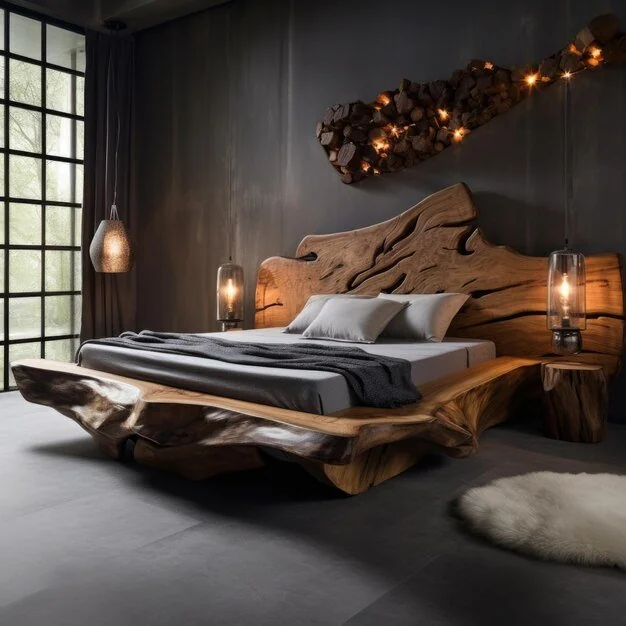

  7. Use a mattress protector so spills stop at the mattress instead of soaking into the rails.

Close-up of the upholstered corner and wooden frame joint on a sleigh bed

Who it suits — and who should skip it

Good fit if you want a soft, traditional-leaning focal point, you read or work in bed, you’re furnishing a guest room or primary bedroom in a neutral palette, and you’d rather not buy a box spring.

Look elsewhere if you need serious under-bed storage, you want an adjustable base, you’re tall and hate a footboard, or you have a cat who treats fabric as a scratching post. In those cases a painted wooden sleigh frame is worth comparing — see choosing a painted sleigh bed for that route.

Honest caveat: we haven’t tested this bed in person, and the only feedback available is customer reviews on the seller’s own listing. Treat those as directional, not proof, and check the return window before ordering.

FAQ

Does the Dulane sleigh bed need a box spring?

No. It comes with 12 wooden slats and centre support legs, which take the mattress directly.

What sizes does it come in?

Availability changes over time. Queen is the size most consistently listed; confirm current options on the retailer’s page rather than relying on a third-party list.

What tools do I need to assemble it?

Flat-pack upholstered beds like this normally need only a screwdriver or the supplied Allen key, with hardware and instructions in the box. Two people make the headboard far easier to handle.

Is it pet-friendly?

Fabric beds and claws are an uneasy mix. Chenille in particular can pull into loops. A washable throw over your pet’s favourite corner is cheap insurance.

Can I reupholster it later?

It’s not designed for that. The fabric is fixed at the factory, so choose the colour you can live with for years.

What décor styles does it match?

The curved shape plus neutral fabric lands in transitional territory, so it sits comfortably with modern, classic, farmhouse or softly glam rooms. It fights hard-edged industrial and strict mid-century schemes.

Updated September 2026.