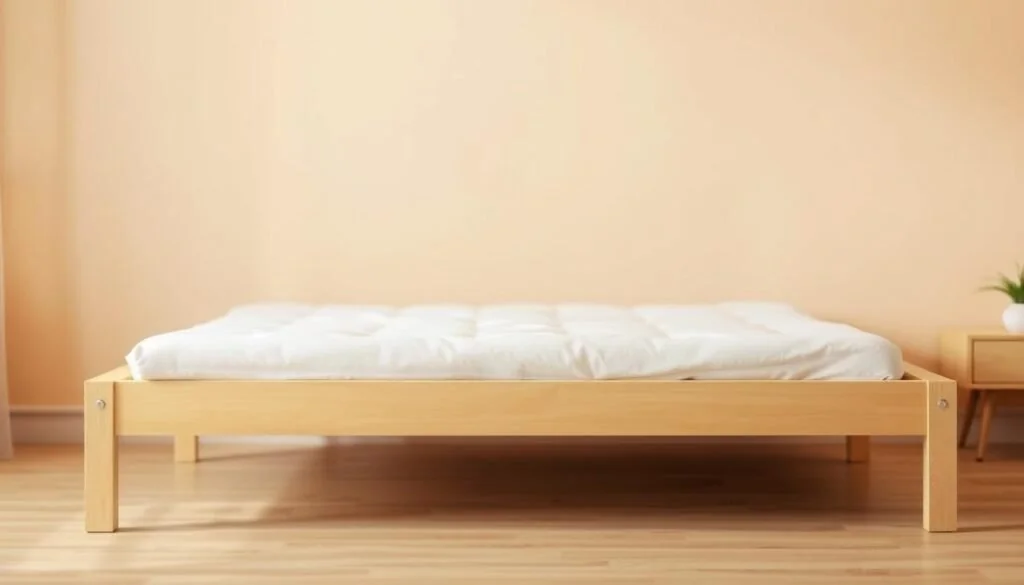

Trundle beds are beds with a second, lower bed on wheels that slides underneath and rolls out when you need it. They give you two sleeping spots in the floor space of one, which is why they show up so often in kids’ rooms, guest rooms and small apartments. The trade-off: the hidden mattress has to be thin enough to clear the frame above it, so it rarely feels like a full adult bed.
Here’s what to check before you buy one, how to match a mattress to the frame, and when a different space-saving bed makes more sense.
How trundle beds work
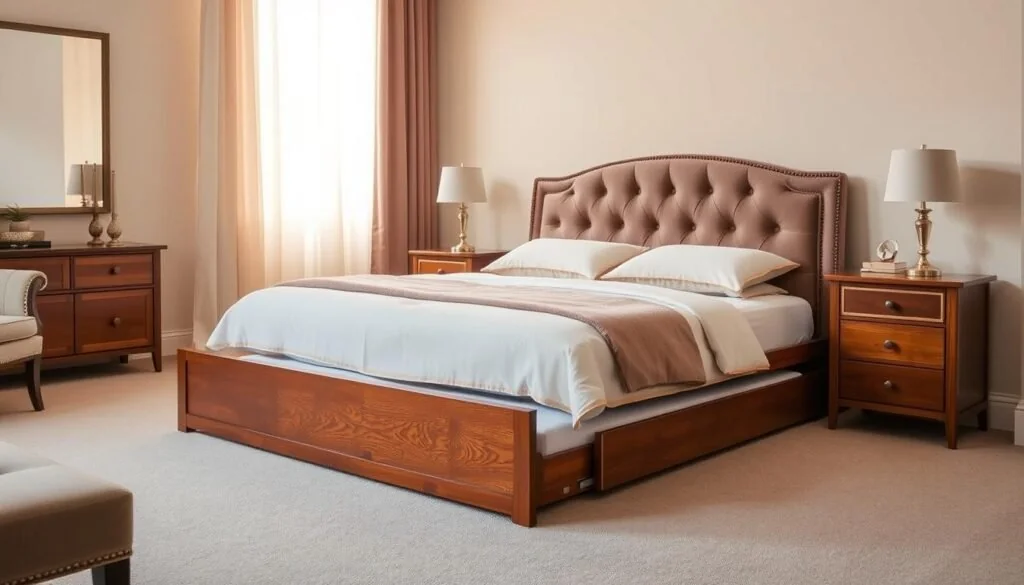
A trundle is a low platform on casters that lives under a main bed, daybed or captain’s bed. Roll it out, drop a mattress on it, and you have a second bed. Roll it back and the room looks normal again.
There are three common versions:
- Standard roll-out trundle. The lower bed stays close to the floor when it’s open. Cheapest and simplest, with the fewest parts to break.
- Pop-up trundle. A lifting mechanism raises the lower frame to roughly the height of the main bed. Pushed together, the two beds make one wide sleeping surface — handy for couples staying over. Pop-up models are designed specifically for this side-by-side setup.
- Drawer-style trundle. The underbed unit doubles as storage, or you get a mix: one drawer, one pull-out bed. Good if you need linen storage more than an extra mattress.
A daybed with a trundle is the same idea in sofa form. It sits against a wall with a back and two arms, works as seating during the day, and hides the second bed underneath. If you like that look, our sofa-to-trundle bed ideas cover the seating-first versions in more detail.

Sizes: what fits where
Most trundles hold a twin mattress (38 x 75 inches). Full trundles exist and are usually paired with a full or queen main bed; queen trundles are rare and heavy, because you need a long clear run of floor to pull one out.
Two measurements matter more than the label on the box:
- Pull-out clearance. You need roughly the length of the mattress plus about two feet of walking room beside the open trundle. A twin trundle that opens into a doorway is a trundle nobody will use.
- Underbed height. The gap between the floor and the underside of the main bed sets the ceiling for the trundle frame plus mattress. Measure it before you shop.
| Size | Mattress dimensions | Best for |
|---|---|---|
| Twin | 38 x 75 in | Kids, sleepovers, most daybeds |
| Twin XL | 38 x 80 in | Taller teens and adults |
| Full | 54 x 75 in | Adult guests, older teens sharing |
The mattress is where most people go wrong
Trundle mattresses have to be thin. Common guidance from furniture sellers puts the usable range at about 6 to 8 inches, but there’s no industry standard here — the real limit is whatever your frame allows, and it varies a lot between models. Measure the clearance yourself, subtract the height of the trundle platform and its casters, and shop to that number.
That rules out the 10 to 14-inch memory foam and hybrid mattresses most adults sleep on. What works instead:
- Thin all-foam mattresses — lightest, easiest to flip onto the frame, and the most common choice.
- Low-profile innersprings — a bit bouncier and usually cooler, but heavier to handle.
- Foam-and-fibre hybrids in the 6 to 8-inch range, which try to split the difference.
A thin mattress that feels fine for a 60-pound kid can bottom out under a 200-pound adult, so buy for whoever actually sleeps there. Our guide to choosing a trundle bed mattress goes deeper on thickness and firmness, and if you’re still deciding between foam, latex and springs, the mattress types explained guide breaks down how each one feels.
One practical note: a mattress stored flat under a bed for months gets dusty and can pick up moisture in humid rooms. Air it out before guests arrive, and use a zippered protector so it stays clean between visits.
Rooms where a trundle earns its keep
Kids’ rooms
This is the classic use. One bed for everyday sleeping, one that appears for sleepovers or when a sibling wants company. Look for a low main bed, rounded corners and a trundle that doesn’t need much force to open — a six-year-old should be able to work it without pinching fingers.
Guest rooms and home offices
If people stay over a handful of nights a year, a trundle keeps the room usable the rest of the time. A daybed with a trundle is the best fit here: seating by day, one or two beds by night. Compare it against a sofa bed for small spaces if the room doubles as a lounge, since a sofa bed looks less like furniture in a bedroom.
Studios and small apartments
A pop-up trundle turns two twins into one wide bed, which is a genuinely useful trick in a studio. Just be honest about the floor: you need room to open it every night, not just once.
What to check before you buy
- Stated weight limit. Manufacturers publish one for the main bed and a separate, usually lower one for the trundle. If it isn’t listed, ask — a missing spec is a red flag on a bed two people will sleep in.
- Casters and your floor. Hard plastic wheels roll well on carpet and can mark hardwood; rubber or soft-tread wheels are kinder to wood and laminate. Some frames ship with locking casters so the bed doesn’t drift.
- Slats, not just a frame. Closely spaced slats or a solid deck stop a thin mattress from sagging between supports.
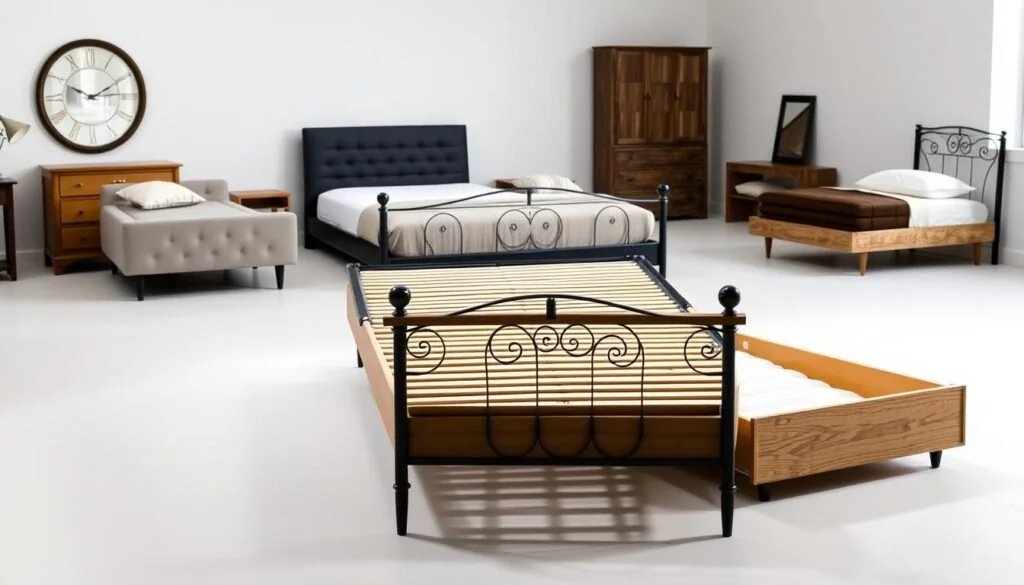
- Frame material. Solid wood is heaviest and most repairable. Metal is lighter and cheaper but squeaks sooner if bolts loosen. Upholstered frames look softest and are the hardest to clean — the same trade-off you get with velvet upholstered beds.
- Assembly reality. Trundles have more moving parts than a plain frame. Check whether the mechanism is bolted metal or stapled hardboard.
Skip the price ranges you see quoted online. Trundle prices swing wildly by material and retailer, and anything specific goes stale fast — set your own budget and compare frames on the checks above.
Safety, especially with kids
Trundles sit low, which helps: a fall from the lower bed is a short one. The risks that matter are pinched fingers in the mechanism, an unsecured trundle rolling out on its own, and putting a child in one before they’re ready for an open bed.
On the crib question, Nationwide Children’s Hospital notes that the American Academy of Pediatrics suggests moving a child out of a crib once the crib rail sits lower than their chest, and that the switch usually happens between 2 and 3½ years old, with many experts suggesting you wait until around age three if you can. Climbing out of the crib is the usual sign the clock has run out.
If you’re adding a portable rail, check who it’s designed for first. The U.S. Consumer Product Safety Commission explains that portable bed rails are meant for children who can get in and out of bed unassisted, typically ages 2 to 5, and that they’re intended for use on an adult bed. Babies and young infants should never sleep on a trundle mattress.
Other habits worth building:
- Close the trundle every morning so nobody trips over it in the dark.
- Keep the open bed away from window cords, radiators and anything that can tip.
- Retighten bolts every few months — trundles get moved, and movement loosens hardware.

Setting one up so it actually gets used
Unpack and sort the hardware before you start — missing parts are easier to deal with on day one than mid-build. Attach the headboard and footboard to the main rails, fit the slats, then build the trundle unit and test it empty. It should roll out and back smoothly with one hand, with no scraping.
For placement, push the main bed against the wall and leave the long side clear. Corners are fine for the head of the bed, but don’t box in the side the trundle opens from. Check where the nearest outlet is, too — guests want somewhere to charge a phone without stretching a cable across the open bed.
Make the trundle up in advance with a fitted sheet and keep a folded blanket and pillow in the storage drawer or a bin nearby. A bed you can open in thirty seconds gets used; one that needs a linen hunt doesn’t.
Keeping it in good shape
| Task | How often | What to do |
|---|---|---|
| Dust the frame | Weekly | Soft dry cloth; vacuum under the main bed while the trundle is out |
| Wipe down | Monthly | Mild soap and a barely damp cloth; skip harsh cleaners and heavy water on wood |
| Check hardware and casters | Every 3 months | Tighten bolts, clear hair and dust from the wheels |
| Air and rotate the trundle mattress | Every 3-6 months | Stand it up for a few hours, rotate head to foot |
Sheets, protectors and pillows wear out on their own schedule — our guide to how long bedding lasts has the replacement timelines.
Trundle beds vs the other space savers
| Option | Strength | Weakness |
|---|---|---|
| Trundle bed | Two real beds, no daily setup, low cost per sleeping spot | Thin mattress; needs clear floor to open |
| Sofa bed | Looks like seating, works in a living room | Heavier to open; folding mechanism can be felt through the mattress |
| Rollaway bed | Stores in a closet, wheels to any room | Thin mattress, not for nightly use |
| Murphy / wall bed | Full-thickness mattress, frees the whole floor | Costly and usually needs wall fixing |
If you only need a bed a few nights a year and have a closet to spare, a rollaway bed or a folding cot is cheaper and more flexible. If the room is permanently tight, look at other space-saving bed types before committing.
Common questions
Can adults sleep on a trundle bed?
Yes, for occasional nights. The limits are mattress thickness and the frame’s weight rating, so check both. For regular adult use, a pop-up trundle with a firmer 8-inch mattress is far more comfortable than a low frame with a 5-inch foam pad.
Do you need a special mattress?
Not a special type, just a thin one that clears your frame. Any low-profile twin or full mattress works if the height fits.
Can a trundle go under any bed?
No. It needs enough underbed clearance and a frame with no centre supports or storage drawers blocking the opening. Platform beds with solid bases and most storage beds won’t take one — see our hidden storage bed guide if drawers matter more to you than a second bed.
Are trundle beds noisy?
They can be. Squeaks usually come from loose bolts or dry casters, both easy fixes. Metal frames tend to talk more than solid wood ones.
How long do they last?
A solid wood trundle can last as long as any bed frame. The mechanism and casters are the parts that fail first, so favour metal glides and replaceable wheels over stapled particleboard.
Updated September 2026.