Thuma Bed Frame Review: Real Specs, Real Costs, Honest Verdict

Full size Thuma bed frame in a warm, inviting guest bedroom setup

The short version of this thuma bed frame review: it is a quiet, tool-free solid-wood platform rated above 1,500 lb (680 kg) with 9 inches (22.9 cm) of space underneath, and it costs several times what a competent metal platform does. Buy it if silence, easy breakdown for moves and a low, clean wood look are what you care about. Skip it if you need built-in drawers, a tall bed or a frame under $500.

Thuma bed frame review: the two-minute verdict

Thuma sells three wood platform beds — the Classic, the Essential and the upholstered Signature — plus headboard options that swing the price hard. All share one idea: precision-cut upcycled rubberwood that slides together without tools, on felt-wrapped slats instead of metal-on-metal contact.

It is probably worth it if you:

  • Sleep light, or share a bed with someone restless, and squeak is what ruins your night.
  • Move every year or two and want a frame that breaks down in minutes without stripped bolts.
  • Want solid wood rather than veneered particleboard, and plan to keep the frame a decade or more.
  • Have a mattress that needs close slat support — Thuma’s slats sit just under 3 inches (7.6 cm) apart.

Buy something else if you:

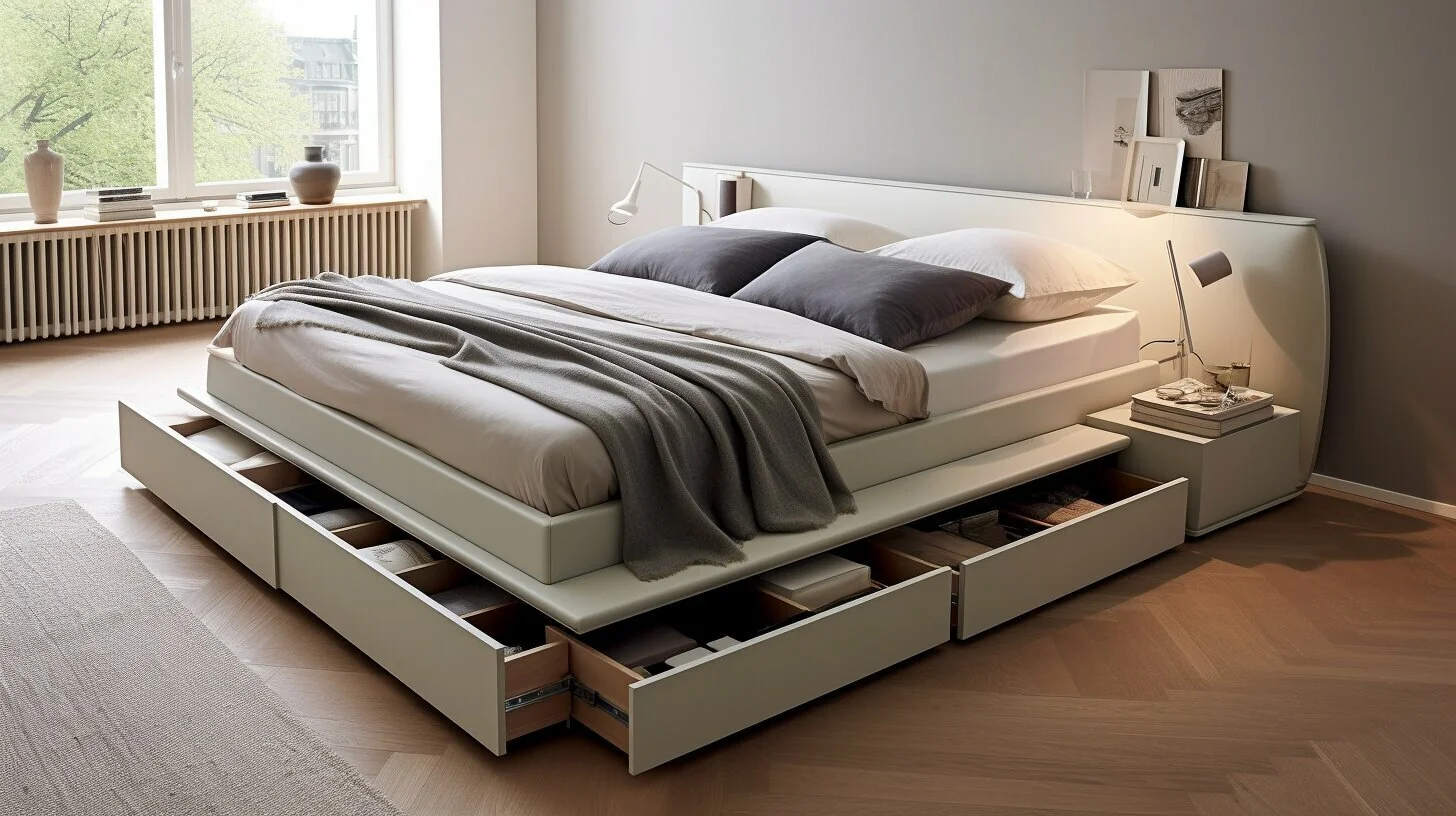
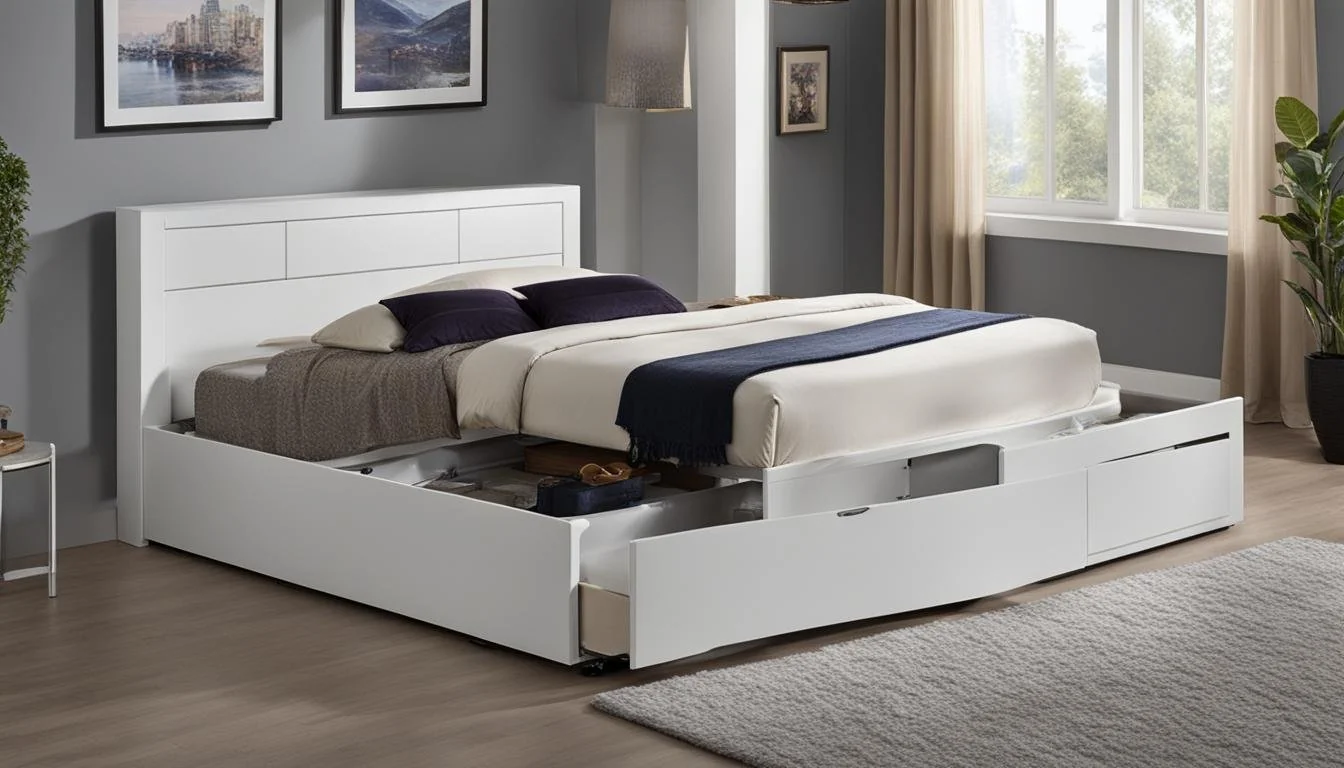
  • Need storage drawers built in. Thuma sells an underbed drawer separately; the bed itself has none.
  • Have knee, hip or back trouble. The mattress deck sits about 12.25 inches (31.1 cm) off the floor before the mattress goes on.
  • Want a tall upholstered headboard for reading without paying for the top configuration.
  • Are furnishing a rental you will leave in two years.
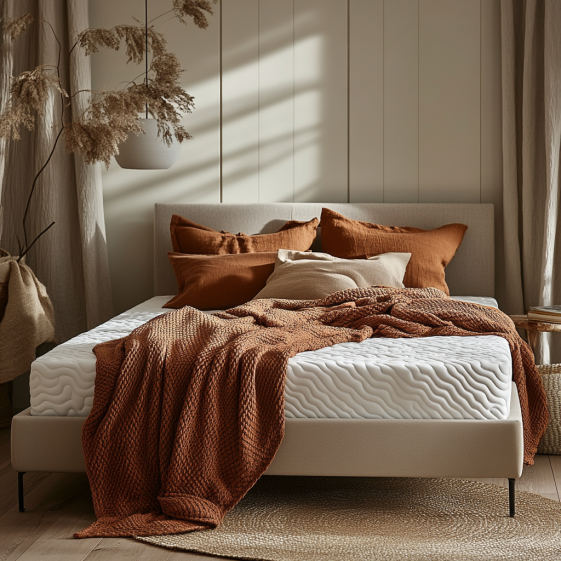
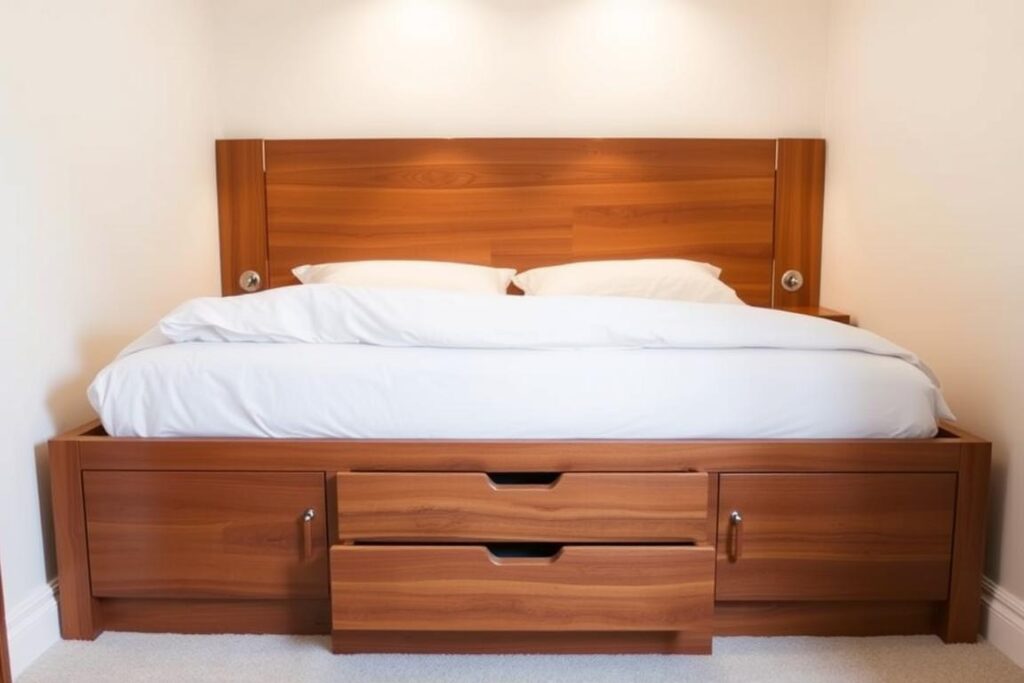
Walnut Thuma bed frame with white bedding in a minimalist bedroom, the main subject of this thuma bed frame review

What a Thuma bed actually costs once you add a headboard and delivery

No Thuma bed frame review can quote one flat price, which is why so many of them disagree. The total depends on three choices: the model (Classic, Essential or Signature), the size, and the top option — bare frame, PillowBoard, Headboard, or Headboard plus Cushion.

As of September 2026, Thuma’s product pages listed the Classic Bed at $1,995, the Signature at $2,195 and the Essential at $2,395 for the configurations shown on screen, while Mattress Clarity’s 2026 update puts a queen frame at around $1,100. Both can be true: the high figures reflect bigger sizes and the headboard-plus-cushion build, the low one a simpler queen. Configure your exact size and top option before you budget — the spread is roughly the price of a second bed.

The extras that people forget:

  • Shipping: free on orders over $1,000 at the time of writing, so most bed orders ship free. Smaller add-on orders may not.
  • White Glove delivery: listed at $295 for unlimited items — worth it only if stairs or a bad back make carrying flat cartons a problem.
  • Headboard or PillowBoard: a separate line item on top of the frame price.
  • Underbed drawer or felt bin: separate again, if you want that 9 inches of clearance to do real work.
  • Mattress: sold separately.

Run the cost-per-year math before you flinch. A $1,995 bed kept 12 years costs about $166 a year; a $350 metal frame replaced every four years costs about $88 a year. Cheaper, yes — but you handle the replacing, the hauling and the squeaks in between. The gap is narrower than the sticker suggests, and it only works in Thuma’s favour if you actually keep the bed.

Sizes, dimensions and clearance: what to measure first

The single most useful number in any thuma bed frame review is the footprint, because the frame is bigger than your mattress. A queen Thuma listed on resale sites measures about 65 inches wide by 85 inches deep by 13 inches high (165 × 216 × 33 cm) — roughly 5 inches (12.7 cm) of extra width and length around a standard 60 × 80 inch queen mattress. That surprise ruins tight alcove installs.

Size Mattress (in) Mattress (cm) Estimated frame footprint (in) Room width that feels comfortable
Twin 38 × 75 96.5 × 190.5 ~43 × 80 8 ft / 2.4 m
Twin XL 38 × 80 96.5 × 203 ~43 × 85 8 ft / 2.4 m
Full 54 × 75 137 × 190.5 ~59 × 80 10 ft / 3.0 m
Queen 60 × 80 152 × 203 65 × 85 (measured on a resale listing) 11 ft / 3.4 m
King 76 × 80 193 × 203 ~81 × 85 12.5 ft / 3.8 m
California King 72 × 84 183 × 213 ~77 × 89 12.5 ft / 3.8 m

Only the queen figure is from a real listing; the others add the same ~5 inches and should be confirmed on Thuma’s Materials and Dimensions tab before you order. Sizes run twin, twin XL, full, queen, king and California king.

Heights, in inches and cm

  • Top of the side rails: 13 in (33 cm).
  • Under-bed clearance: 9 in (22.9 cm) — enough for most flat storage bins, not enough for a standard suitcase on its side.
  • Mattress deck: about 12.25 in (31.1 cm) off the floor, because there is a 3/4 in (1.9 cm) lip and the mattress sits down inside it.
  • With the PillowBoard: 35 in (89 cm) from floor to top.
  • With the Headboard: 39 in (99 cm) from floor to top.

Measure these five things before you click buy

  1. Wall-to-wall width, minus the frame footprint. Leave at least 24 in (61 cm) on any side you walk down, 30 in (76 cm) to pass carrying laundry, 36 in (91 cm) if anyone uses a walker or wheelchair.
  2. Stair turns and door widths. The frame ships flat, but the side rails are as long as the bed — around 85 in (216 cm) on a queen. A tight 90-degree stair landing is the usual failure point, not the doorway.
  3. Baseboard or radiator depth. A full-length rail cannot tuck over a baseboard heater, so the bed sits further into the room than planned.
  4. Mattress height. On a 12.25 in (31.1 cm) deck, a 10 in (25 cm) mattress lands the sleep surface near 22 in (56 cm) — chair height. A 14 in (36 cm) mattress reaches about 26 in (66 cm), which most people stand up from more easily.
  5. Sloped ceiling clearance, if the 39 in (99 cm) headboard is going under a dormer.

Bedding that actually fits

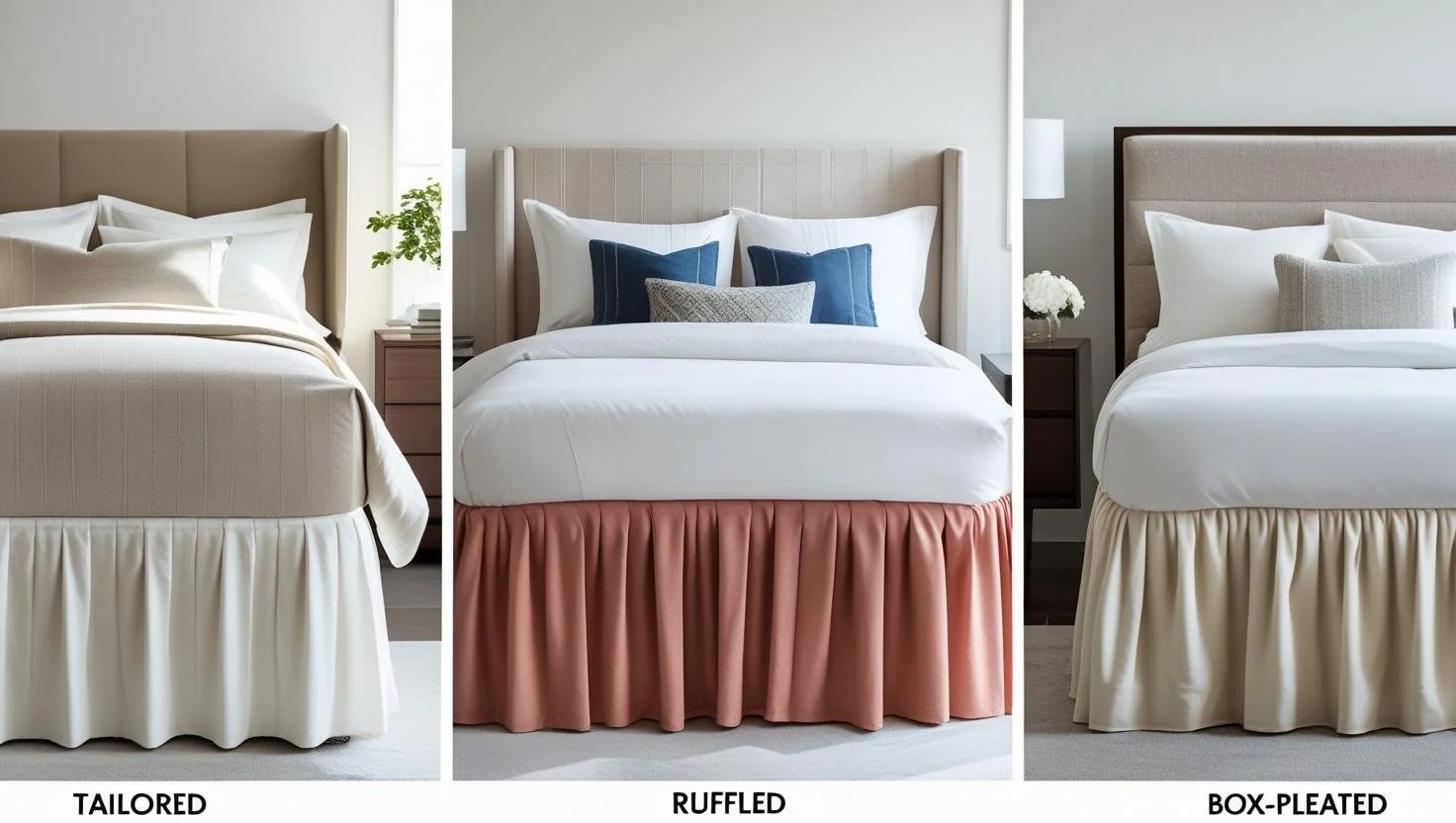
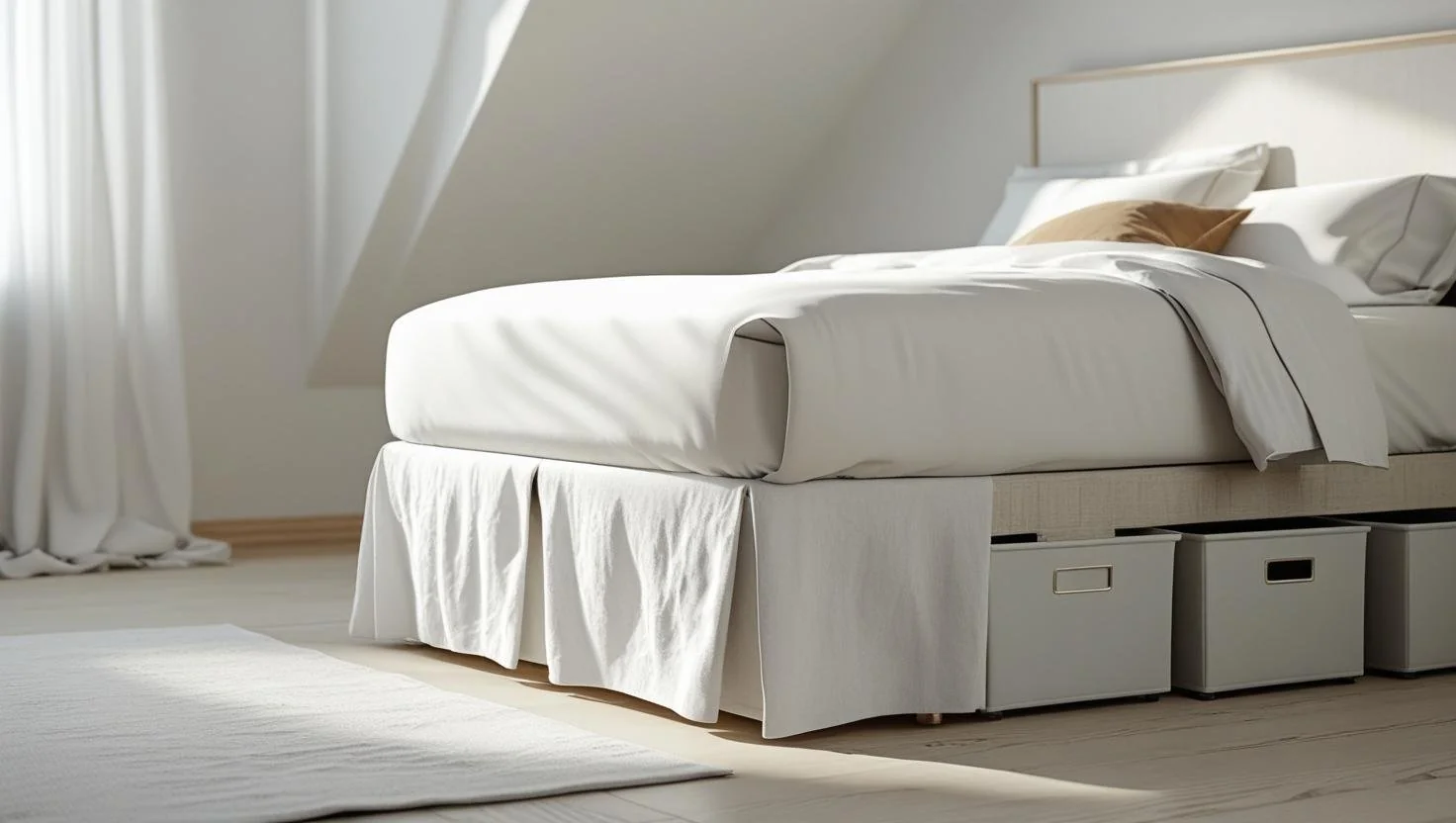
Low frames change your bedding math. With the mattress sitting inside a 3/4 in lip about 12.25 in off the floor, a standard 14–15 in (36–38 cm) drop bed skirt pools on the carpet — and there is no box spring to drape one over anyway. Buy fitted sheets matched to your mattress depth, not oversized, and go generous on the comforter (queens typically run 86–90 in / 218–229 cm wide) so it covers the wood rail rather than stopping short of it.
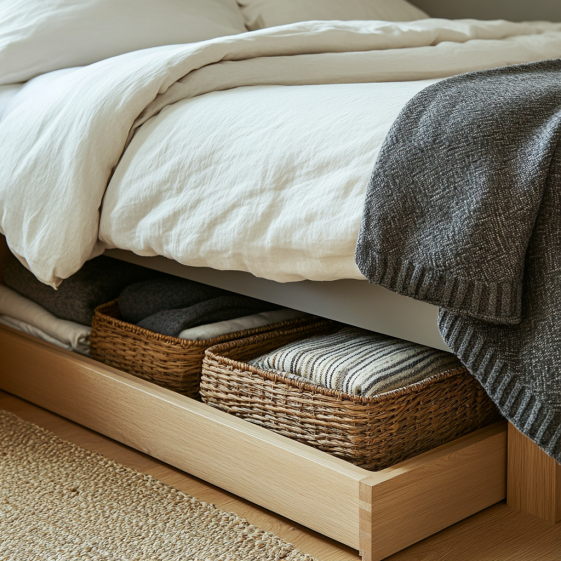
Low-profile Thuma platform bed showing nine inches of under-bed clearance in a modern room

Assembly and disassembly: how long it really takes

Assembly is the part every Thuma bed frame review praises, fairly. The Classic uses exposed Japanese joinery; the Essential hides it inside and adds hand screws. Neither needs a screwdriver, an Allen key or a partner reading instructions aloud. Reviewers who built one report about 15 minutes.

Practical notes for moving day:

  • Breakdown is setup in reverse and just as fast. Nothing is glued and there are no cam locks to wear out — the usual reason flat-pack frames feel loose by their second apartment.
  • Wood-on-wood joints do pick up small compression marks. Slide pieces apart instead of levering them and the fit stays tight.
  • Keep the cartons if you can. Rubberwood edges chip when they ride loose in a van.
  • The slats are joined by felt banding, so they roll up instead of travelling as loose boards.

Build quality: wood, joinery, slats and weight capacity

Materials are where a Thuma bed frame review earns its keep. Thuma builds with 100% upcycled rubberwood — trees that have finished their latex-producing life and would otherwise be discarded — and the beds are GREENGUARD Gold certified for low chemical emissions. That certification is about indoor air, not strength, but it is a real third-party test rather than a marketing word.

The structural numbers, from Thuma’s own specification pages:

  • Slats: 3/4 in (1.9 cm) thick, spaced just under 3 in (7.6 cm) apart, wrapped in eco-felt made from recycled plastic.
  • Weight capacity: 1,500 lb (680 kg) and up — far beyond two adults, a dog and a toddler on a Sunday morning.
  • Mattress compatibility: all types, including foam, hybrid and innerspring, with no box spring needed.

That sub-3-inch slat gap matters more than the headline capacity. Many foam and hybrid warranties require slats no more than about 3 inches apart, and cheap platforms routinely miss it. Check your own mattress warranty wording — this is one of the few places Thuma’s spec is objectively better, not just prettier.

Where the evidence is thin: rubberwood is mid-density, tougher than pine but softer than white oak, and no independent long-term abrasion or joint-fatigue testing on these frames appears to be published. Five-year durability claims from anyone, Thuma included, are projections rather than measurements. For the structural side of what you are paying for, our guide to bed frame material types breaks down how wood, metal and upholstered bases age differently.

Noise, wobble and squeak

Squeak is why most people land on a thuma bed frame review at all. The design attacks noise three ways: no metal fasteners in the main frame, felt-lined slats so wood never rubs bare wood, and a lip that keeps the mattress from sliding. Testers at Sleep Advisor described near-silence in use, and Thuma states the bed is designed not to squeak or creak — though with any frame it helps to know how to track down a squeak.

Honest caveats. A quiet frame on an unlevel floor still rocks, and what you hear is a leg tapping the boards, not the joint. Springy joists in older houses transmit movement whatever the bed is made of. Shim the legs with felt pads before you blame the joinery. If you are still fighting a noisy bed you already own, our fixes for a squeaking metal frame solve most of it for under $20 and may save you the whole purchase.
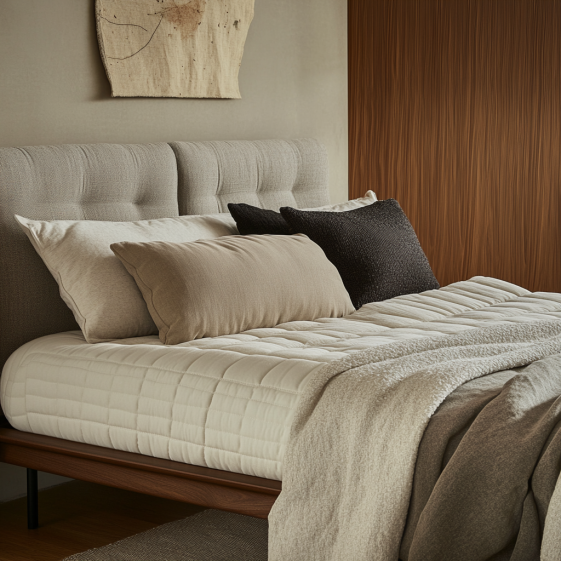
Thuma PillowBoard upholstered backrest leaning against the wall behind a low wood bed frame

PillowBoard vs Headboard: which upgrade is worth it

The PillowBoard is an upholstered cushion — CertiPUR-US foam under a pebbled linen-weave polyester — that sits between the wall and the mattress rather than bolting to the frame. Total height with it is 35 in (89 cm). The wood Headboard attaches to the frame and reaches 39 in (99 cm).

Pick the PillowBoard if you read in bed and want something soft at your back, or if you rent and dislike drilling. Pick the wood Headboard if you want the bed to read as one sculpted object and would rather not own fabric that needs cleaning. Pick the bare frame if a wall-hung headboard or nothing at all is your plan — it is the cheapest way into the line and you can add a board later.

One trade-off nobody mentions: the PillowBoard is a loose piece pinned between wall and mattress, so a thicker mattress hides more of it. Thuma photographs the bed with 10–11 in (25–28 cm) mattresses; a 14 in (36 cm) hybrid will cover more of the board than the product shots suggest.

Thuma vs cheaper Japanese-style platform beds

The Japanese-joinery look is everywhere now, from marketplace frames to US-made modular systems, and a fair Thuma bed frame review has to say where the extra money goes. Here is what actually differs.

Feature Thuma (Classic / Essential) Budget wood platform Modular direct-to-consumer (Floyd-style)
Frame material 100% upcycled rubberwood, solid Often pine, MDF or veneered particleboard Birch plywood with steel or aluminium hardware
Fasteners Tool-free joinery; Essential adds hand screws Bolts and cam locks — the usual squeak source Quick-release metal clamps or straps
Slat spacing Just under 3 in (7.6 cm), felt-wrapped Commonly 3–5 in (7.6–12.7 cm), bare wood Usually close-spaced plywood slats
Stated weight capacity 1,500 lb+ (680 kg+) Often 500–800 lb; many don’t publish a figure Usually published; confirm per model
Under-bed clearance 9 in (22.9 cm) Varies widely, 6–14 in Often taller, sometimes adjustable
Warranty Lifetime, as listed by the brand 1 year is common Multi-year, varies by brand
Rebuild after a move Minutes, no tools, nothing to strip Bolt holes loosen with each rebuild Fast; hardware is designed to be reused

The honest read: a budget platform bought for a guest room and assembled once will do fine for years. The case for Thuma strengthens the more you move, the lighter you sleep and the longer you plan to keep it. If the price is out of reach, compare alternatives in our roundup of queen bed frames for comfort and style, or read up on what platform beds do well in general before you decide the brand matters.

Returns, warranty and what to pressure-test before ordering

Thuma lists a 30-day trial with complimentary returns and a lifetime warranty on its beds. Thirty days is short by mattress standards but normal for furniture, and it is enough to learn two things: whether the height suits your body, and whether the frame fits your room the way you drew it.

What to check during that window:

  • Getting out of bed. Stand up from it ten times on day one. Low beds feel fine at 30, less fine with a bad knee.
  • Walkways. Live with the real footprint, not the tape outline — that extra 5 in (12.7 cm) of frame is where door swings go wrong.
  • Storage reality. Measure your bins against 9 in (22.9 cm) of clearance before you assume they slide under. If under-bed storage is the whole point, a dedicated storage bed gives you more for the money.
  • Finish and colour. Wood photographs warmer than it looks under LED bulbs. Judge it at night, in your room.
  • Noise with your own mattress. Plenty of squeak blamed on frames comes from an ageing innerspring.

The recurring criticisms across published reviews are consistent and fair: price, no integrated storage, low profile. Mattress Clarity’s reviewer calls it a good buy for fans of low modern beds and easy setup, and the wrong buy for anyone who wants something very cheap or needs under-bed storage. Those complaints match the spec sheet instead of contradicting it, which is a decent sign the marketing is honest.

Wide view of a natural-finish Thuma platform bed frame anchoring a calm minimalist bedroom

Is a Thuma bed worth it? A straight answer by situation

  • Light sleeper with a restless partner: yes — the one case where the price argues for itself.
  • Frequent mover: yes, if your stair turns clear an 85 in (216 cm) rail.
  • Bedroom under 10 ft (3 m) wide: probably not. The oversized footprint eats walkway you cannot spare.
  • Storage-starved: no, unless you buy the underbed drawer and accept 9 in (22.9 cm) of height.
  • Mobility limits: usually no. Look at taller frames or an adjustable base instead.
  • Heavier sleepers: yes on paper — 1,500 lb (680 kg) is among the highest published capacities here.

Thuma bed FAQ

Does a Thuma bed need a box spring?

No. The mattress rests straight on the felt-wrapped slats, and a box spring would push the bed past its designed height while hiding the wood rail the look depends on. Platform beds generally do not need one, as the Sleep Foundation explains in its slats-versus-box-spring guide.

How long does a Thuma bed take to assemble and take apart?

Reviewers who built one report about 15 minutes, no tools, with disassembly running the same process backwards. There are no bolts to strip, which is why it handles repeated moves better than typical flat-pack frames.

What is the weight limit on a Thuma bed?

Thuma publishes a capacity of 1,500 lb (680 kg) or more. That covers two adults, bedding, pets and someone sitting hard on the edge with a lot of margin.

How much space is under a Thuma bed?

Nine inches (22.9 cm) of clearance, with the top of the rails at 13 in (33 cm). Flat storage bins and shallow drawers fit; upright suitcases and tall crates do not. Thuma sells its own underbed drawer and felt bin as paid add-ons.

Is the Thuma PillowBoard the same as a headboard?

Not quite. The PillowBoard is an upholstered cushion pinned between wall and mattress, bringing total height to 35 in (89 cm); the wood Headboard bolts to the frame and reaches 39 in (99 cm). One is softer to lean on, the other looks more like a traditional bed.

Where can I check the exact dimensions for my size?

Thuma publishes heights, clearances and slat spacing on its official FAQ and dimensions pages. Confirm the footprint for your size there before committing — every number in this thuma bed frame review comes from those published specs or from reviewers who built the bed.

Updated September 2026.

Fold Up Single Bed: How to Choose, Fold and Store One

Fold up single bed stored in a home office guest room setup

A fold up single bed is any one-person bed that collapses for storage: a wall-mounted Murphy bed, a wheeled rollaway frame, or a lightweight folding cot. The right pick comes down to three numbers you can measure in ten minutes: how much floor space the bed needs open, how deep the folded bed is, and how thick a mattress the frame will take. Get those right and the bed sleeps like a real bed instead of a punishment for your guests.

The three types, and who each one suits

Wall-mounted (Murphy or wall bed)

The mattress lives inside a cabinet bolted to the wall and swings down when you need it. Closed, a single wall bed cabinet usually sticks out about 15 to 18 inches, so it reads like a shallow wardrobe. Open, expect it to project roughly 80 to 90 inches from the wall, plus a walking lane of at least 24 inches beside or in front of it.

Best for: studios and home offices where the bed is used weekly and the room has to look like a room the rest of the time. Worst for: renters who can’t drill into studs. More on the layout side of this in our guide to a bed that folds into the wall.

Rollaway frame

A hinged metal frame on casters that folds in half, mattress and all, then rolls into a closet. This is the hotel-style option, and it’s the best middle ground: a real 5 to 8 inch mattress, no drilling, and setup in under a minute.

Best for: guest rooms that are also offices, or anyone who wants the bed gone by Monday. Watch the folded height, which often lands near 60 to 70 inches when it’s standing upright.

Folding cot

Steel or aluminum legs, a fabric or slat deck, and a thin pad. Cots fold flat, weigh the least, and cost the least. They’re also the narrowest — many sleep surfaces run 25 to 32 inches wide rather than a full 38.

Best for: kids’ sleepovers, camping, an emergency extra bed. Not for someone staying a month.

Fold up single bed set up in a small guest room beside a window

Measure these five things before you buy a fold up single bed

  1. Open footprint. A standard US twin mattress is 38 by 75 inches; twin XL is 38 by 80. A UK single is 90 by 190 cm (about 35 by 75 inches), and a small single is 75 by 190 cm. Frames add 1 to 3 inches on each side, so chalk out roughly 41 by 80 inches on the floor and see what it hits.
  2. Folded depth and height. Measure the closet, alcove, or wall gap where the bed will live. A typical reach-in closet is 24 inches deep — plenty for most rollaways folded, tight for some with thick mattresses.
  3. Doorways and turns. Interior doors are commonly 30 to 32 inches wide. If the folded bed is 40 inches wide, it has to go through sideways, and a tight hallway corner can stop it cold.
  4. Mattress thickness limit. Folding frames usually cap out around 6 to 8 inches because the mattress has to bend at the hinge. Wall beds often allow 10 to 12 inches. The spec sheet will say; if it doesn’t, assume thin.
  5. Weight capacity. Listed capacities vary a lot between a camping cot and a steel rollaway. Read the number, and read whether it’s static or for a sleeping adult.

Quick comparison

Type Space when closed Typical mattress Setup time Best use
Wall / Murphy bed Cabinet about 15–18 in deep, stays put 8–12 in, strapped in place Seconds, but two hands Daily or weekly use in a studio
Rollaway frame Folds to roughly 20–24 in deep, rolls away 5–8 in foam or innerspring Under a minute Regular guests, flexible rooms
Folding cot Folds flat, slides under a bed or behind a door 2–4 in pad, topper recommended A minute or two Occasional, travel, kids
Tri-fold foam mattress Stacks into a cube in a closet 4–6 in, no frame at all Seconds Floor sleeping, tiny rooms

Folded single bed stored upright inside a closet cabinet

Storing it so it actually stays out of the way

The storage plan matters more than the bed itself. A fold up single bed parked in the corner of the living room is just clutter with wheels.

  • Give it a home, not a gap. Closet, under a stairwell, behind a door, or flat under a platform bed. Measure before you buy, not after.
  • Strap it upright. A folded rollaway standing on end is tall and top-heavy. A cam strap or hook-and-loop strap around the frame and a wall cleat keeps it from tipping if someone bumps it.
  • Cover the mattress. A zippered cover or an old duvet cover keeps closet dust and pet hair off the foam. Skip plastic bags for long storage — trapped moisture is how foam starts smelling like a basement.
  • Air it out. Foam that’s been folded for months takes a set. Unfold it a few hours before bedtime and it’ll recover most of its loft.
  • Lock the casters. If the bed has wheels, at least two should lock. Unlocked casters on hard floors mean the bed drifts every time someone rolls over.

If the folded bed has nowhere to go, the problem is storage, not beds. Our roundup of storage ideas for small bedrooms with no closets covers the vertical tricks that free up that slot.

Anchoring and safety

Wall beds hang off the wall, so the mounting is the whole safety story. Hit the studs, use the hardware that came with the kit, and don’t improvise with drywall anchors on a bed frame. The US Consumer Product Safety Commission’s Anchor It! campaign covers why furniture that leans or hangs needs to be fastened to structure, and Consumer Reports’ how-to on anchoring furniture walks through finding studs and choosing hardware.

Two more checks worth a minute: the lift mechanism on a wall bed should hold the bed at any angle rather than slamming down, and any folding frame should have a latch or lock that stops it folding while someone is on it.

Portable rollaway folding bed with wheels partly folded

Making a fold up single bed comfortable

The usual complaints about a fold up single bed are a ridge down the middle, a saggy deck, and a mattress you can feel the frame through. All three are fixable.

The hinge ridge. A folding frame has a bar where it bends, and thin mattresses telegraph it. A 2 to 3 inch foam topper on top of the existing pad hides it almost completely. Any thicker and you start fighting the fold.

Sag. Fabric decks stretch over time. Spring-suspension decks hold up better than fabric slings. If the deck already dips, a slatted roll-up base or a thin plywood sheet cut to 37 by 74 inches evens things out — just drill a few holes in the plywood so the mattress can breathe.

Bedding. Standard twin sheets fit a 38-inch bed fine. On narrow cots, twin fitted sheets bunch, so a flat sheet tucked hospital-style stays put better. Deep-pocket sheets are overkill on a 4-inch mattress.

Temperature. Beds that sit off the floor on a mesh deck breathe well but also let cold air under the sleeper. In a cool room, add a mattress pad or a folded blanket underneath rather than piling more on top.

Folding single bed with a foam mattress and twin bedding made up for a guest

Trade-offs worth knowing

  • Cheap frames squeak. Thin tubing and loose bolts sing every time someone shifts. Retightening every bolt after the first night fixes most of it.
  • Wall beds are a commitment. Installation means holes in the wall and, in a rental, a conversation with the landlord. Freestanding wall beds exist but need wall clearance anyway.
  • Cots are for short stays. Narrow, low, and firm. Fine for a weekend, rough for a two-week visit.
  • Folded doesn’t mean invisible. A folded rollaway still occupies a closet you may need for coats.

Still weighing options? Compare with a foldable bed frame, look at rollaway beds for guests, or check the bigger picture in our guide to the best beds for small rooms.

FAQ

Can an adult sleep on a fold up single bed every night?

On a wall bed with a proper 8 to 12 inch mattress, yes — it’s the same mattress you’d sleep on in a normal frame. On a folding frame with a 5 to 8 inch mattress, most adults do fine with a topper. A camping cot is a short-term answer, not a nightly one.

What size sheets do I need?

Twin (38 by 75 inches) for most US frames, twin XL if the bed is 80 inches long, and UK single bedding for a 90 by 190 cm bed. Measure the mattress rather than trusting the label on the box.

Rollaway bed or cot — what’s the real difference?

A rollaway has a rigid frame on locking casters and takes a thicker mattress; it stays made up when folded. A cot is lighter, packs smaller, usually narrower, and needs the bedding stripped each time.

Will a fold up single bed fit through a standard door?

Usually, but check. Most fold to around 40 inches wide, and interior doors run 30 to 32 inches, so the bed goes through on its side. Tight hallway corners are the usual failure point.

How do I keep the mattress from sliding off when the bed folds?

Wall beds use straps across the mattress — use them. On rollaways, a tight fitted sheet plus a strap or bungee around the folded halves keeps everything together while you wheel it.

Is a fold up single bed cheaper than a sofa bed?

Generally yes, because you’re buying a frame and a thin mattress instead of a sofa. The trade-off is that a sofa bed earns its floor space during the day and a folding bed doesn’t.

Updated September 2026.

The Military Sleep Method: Why It Works for Insomnia & How to Use It

Diagram showing how the Military Sleep Method activates the parasympathetic nervous system.


Military Sleep Method: How to Fall Asleep Fast (No Boot Camp Required)

The Military Sleep Method is a two-minute relaxation and visualization routine that eases body tension and quiets racing thoughts so you can fall asleep faster—no apps or gadgets required. Follow the steps below, then pair them with simple sleep boosters for even better results.

Key Takeaways on the Military Sleep Method

  • It targets body and mind: progressive relaxation + calm imagery to reduce tension and overthinking.
  • It’s quick: with a little practice, the full routine takes about two minutes.
  • Consistency wins: repeat nightly so your brain recognizes the wind-down cues.
  • Pair with basics: cool room, white noise, and low light to boost the Military Sleep Method effect.
  • Skip screens late: blue light delays melatonin and can slow you down.

Illustration of the Military Sleep Method key relaxation steps


Why the Military Sleep Method Matters for Your Sleep & Sanity

Bottom line: this method relaxes your nervous system fast by combining muscle release with peaceful mental imagery.

We all know sleep is important, but let’s be honest—it’s hard to drift off when your body’s tense and your mind’s racing. The Military Sleep Method works because it targets both problems at once: physical tension and mental overthinking.

It uses a blend of progressive muscle relaxation and visualization to trigger your body’s parasympathetic nervous system—aka the chill-out mode that helps you rest, digest, and recharge. In just a few steps, you can reset your system, quiet the noise, and ease into sleep naturally.

And the best part? It doesn’t require apps, gadgets, or supplements. Just your breath, your body, and a little practice.

Diagram showing why the Military Sleep Method works for better sleep


How to Do the Military Sleep Method (Step-by-Step)

Start here: get comfortable, breathe slowly, and move through each step without rushing.

🛏️ Step 1: Relax Your Face

Unclench your jaw. Let your forehead, cheeks, and eyes soften. Imagine tension melting away like warm wax.

🛏️ Step 2: Drop Your Shoulders

Let them fall naturally. Think of them sinking into your mattress. No more holding stress in your neck and upper back.

🛏️ Step 3: Loosen Your Arms and Hands

Let your arms go heavy—like they’re made of sand. Relax all the way through your fingertips.

🛏️ Step 4: Breathe Deeply & Relax Your Chest

Inhale slowly. As you exhale, feel your chest soften. Let the breath carry out any lingering tension.

🛏️ Step 5: Relax Your Legs

Start from your thighs and work down to your calves, ankles, and feet. Picture them sinking into the bed, completely still.

🛏️ Step 6: Visualize Calm

Imagine you’re floating in a canoe on a quiet lake, or lying in a sunny meadow. Let your mind stay there.

🛏️ Step 7: Repeat a Gentle Mantra

If thoughts sneak in (they will), quietly repeat “Don’t think, don’t think” for about 10 seconds.

According to the University of Minnesota, this method works by combining structured relaxation with focused mental imagery—two proven techniques for faster sleep onset.

Visual guide to performing the Military Sleep Method


Common Mistakes to Avoid

Avoid these speed bumps: forcing sleep, skipping imagery, and shallow breathing slow your progress.

  • Trying too hard: The goal isn’t to fall asleep immediately, but to relax deeply. Sleep follows naturally.
  • Skipping visualization: This isn’t optional—it’s how you quiet racing thoughts.
  • Shallow breathing: Make sure your breaths are deep and slow.
  • Too much screen time: blue light delays melatonin production.
  • Sleeping flat with reflux: Try Inclined Bed Therapy to reduce nighttime heartburn.

Sleep Boosters That Pair Well With This Method

Layer these gentle helpers to make the Military Sleep Method even more effective.

🌿 Try Aromatherapy

A diffuser with lavender or chamomile oil can signal calm to your brain. Scent is powerful—don’t underestimate it.

🌊 Add White Noise or Nature Sounds

Block out the barking dog or creaky pipes with steady, soothing background noise.

❄️ Keep Your Room Cool

Experts recommend 60–67°F for optimal sleep. A breathable comforter and cozy socks help balance warmth and chill.

📚 Read a Physical Book

Avoid screens. A low-light lamp and a good (but not too exciting) book can ease your brain into sleep mode.

For more breathing-based relaxation, try the 4-7-8 breathing technique for sleep, which pairs well with the Military Sleep Method for deeper relaxation.

If your partner tosses and turns all night, consider the Doppelbett Method, a cozy German tradition of sleeping with separate mattresses for better rest and fewer wakeups.


Myth Buster: “It Won’t Work for Me…”

Give it a few nights: this routine trains your body and brain—like building a muscle.

Think your brain’s too busy for something this simple? You’re not alone. But here’s the thing—this method trains your body and brain over time. The first night might feel awkward, but by night three or four, your body starts recognizing the cues and says, “Oh, we’re winding down now.”

Want more ideas to build a consistent bedtime routine? Check out these 10 simple sleep hacks that really work.


FAQ

How long does the Military Sleep Method take?
About two minutes once you learn the sequence. Go slowly at first; speed comes with practice.
Do I need any tools or apps?
No. It’s entirely analog—just your breath, your body, and calm imagery.
What if I still can’t fall asleep?
Focus on relaxing rather than “trying to sleep.” If you’re awake after ~20 minutes, get up briefly, read a few pages in dim light, then restart the steps.
Can I use the Military Sleep Method for naps?
Yes. Short sessions help you switch off quickly—set a gentle alarm so you don’t oversleep.

Related reading from Cozy Bed Quarters

Other reading we found popular


Bed That Folds Into the Wall: Sizes, Clearances and Safe Installation

Modern studio with a Bed That Folds Into the Wall, featuring a minimalist setup and space-saving furniture.

A bed that folds into the wall — the Murphy bed — stores a full mattress upright inside a cabinet so you get your floor back during the day. Plan on about 83 inches of ceiling height for a twin or full and roughly 88 to 91 inches for a queen if the bed folds down vertically, a mattress no thicker than 12 inches, and a cabinet that sits 16 to 18 inches proud of the wall when closed. The part people skip is anchoring: these units have to be screwed into framing, not drywall plugs.

What a bed that folds into the wall actually is

The bed frame is hinged at the head (vertical) or along one side (horizontal), counterbalanced by springs or gas pistons, and hidden in a cabinet when it’s up. The mattress stays strapped to the frame. You don’t strip the bed every morning — you tuck the duvet in, lift, and walk away.

Three broad types are sold:

  • Hardware kit only. You buy the lift mechanism and frame and build the surrounding cabinet yourself from plywood or a flat-pack carcass. Cheapest route, most work.
  • Freestanding cabinet unit. Arrives as panels, assembles in the room, still gets anchored to the wall. Most common for renters and DIYers.
  • Built-in / custom millwork. Fitted into an alcove or wall of cabinetry, often with side towers, shelving or a fold-down desk. Priciest, best fit.

The concept is over a century old. William Lawrence Murphy worked on counterbalanced fold-away beds in San Francisco in the early 1900s and received patents including a “Disappearing Bed” in 1912. The mechanism hasn’t changed in principle; the cabinetry and lift hardware have.

How much room you need for a bed that folds into the wall

Measure three things before you fall in love with a unit: ceiling height, wall width, and how far the bed projects into the room when open.

Measurement Vertical (folds down from head) Horizontal (folds down sideways)
Ceiling height needed About 83 in. for twin/full; 88–91 in. for queen Works under 7-ft ceilings and sloped attic rooms
Wall width needed Roughly mattress width plus cabinet sides (about 47 in. for a twin) Roughly mattress length plus sides — about 80 in. or more
Floor projection when open Close to mattress length (75–80 in.) Close to mattress width (about 54–60 in.)
Closed cabinet depth Typically 16–18 in., deeper with a thick mattress or integrated shelving

Those are typical ranges — every maker publishes its own spec sheet, and a 2-inch difference decides whether the door clears the ceiling fan. Add at least 24 inches of walking room along one long side so the open bed doesn’t trap you in a corner.

Mark it out on the floor first

Painter’s tape is free. Tape the open footprint on the floor, then live with it for a couple of days. Open the closet door. Pull out the desk chair. Walk to the window. If you’re stepping over the tape line ten times a day, size down or go horizontal.

Check what’s inside and around the wall

  • Studs. Find them before you buy. A stud finder plus a small test screw tells you spacing (usually 16 in. on center).
  • Outlets and switches. The cabinet will bury anything behind it. Plan a surface-mounted outlet in a side tower or have an electrician relocate the box.
  • Baseboard. Most units want the baseboard cut back or a filler strip added so the cabinet sits flush.
  • Floor type. Thick carpet and pile can stop a bed leg from closing flat. Some kits are floor-mounted instead of wall-mounted; that shifts the load to the floor plate and still needs anti-tip hardware.
  • Radiators, vents, sloped ceilings. All decide vertical versus horizontal faster than aesthetics will.

Lift mechanisms: springs vs gas pistons

Spring systems use steel tension springs and have been around since the original patents. They’re adjustable — you add or subtract springs to match your mattress weight, and a tired spring is a cheap replacement part.

Gas piston systems work like a hatchback strut: sealed nitrogen cylinders that make the bed feel weightless and quiet. They’re tidier and need no tuning, but pistons lose pressure eventually and come as a matched pair to replace.

Either is fine. What matters more is whether you can buy replacement hardware in five years, and whether the mechanism has a safety catch that holds the bed closed. Ask that question before you ask about finishes.

The mattress rules nobody mentions until it’s too late

  • Thickness cap. Most wall beds are built around a 12-inch maximum. Some DIY kits cap at 11 inches. A pillow-top that’s 15 inches won’t let the cabinet close.
  • No box spring. The platform is the foundation. You buy the mattress alone.
  • Weight matters. The lift is balanced for a weight range. A dense latex queen can exceed it and make the bed hard to lift or prone to sagging open.
  • Some types are excluded. Adjustable bases, air beds and certain latex mattresses aren’t compatible with most wall bed frames — check the maker’s list.
  • Straps are not optional. The supplied straps hold the mattress to the frame during the lift. Use them every time.

Foam and hybrid mattresses in the 8–11 inch range are the sweet spot. If you’re still narrowing it down, our guide to choosing a mattress covers firmness and materials in more depth.

Installation and safety: the part that deserves your attention

A wall bed is a heavy cabinet that swings. Done right, it’s stable for decades. Done wrong, it’s genuinely dangerous — in April 2022 the U.S. Consumer Product Safety Commission announced a recall of roughly 129,000 Bestar wall beds because the beds could detach from the wall and fall on people; one adult death and dozens of injuries were reported (CPSC recall notice).

Practical takeaways:

  1. Hit real studs. Drywall anchors are weakest against a straight pull-out force, which is exactly what a wall bed applies. CPSC’s furniture anchoring guidance is the standard to follow (Anchor It!). Plaster or masonry walls need the right fastener for that substrate — ask an installer.
  2. Use the supplied hardware. Not “similar” screws from the garage. Length and gauge are specified for a reason.
  3. Two people, minimum. Springs and pistons are under load during assembly. Several makers require professional install to keep the warranty valid.
  4. Register the product. It’s how you hear about a recall. Also worth checking the CPSC recall database for any unit you buy secondhand.
  5. Re-check the fasteners. Once a year, put a screwdriver on every mounting screw and confirm the safety latch still catches.
  6. Kids and pets. Teach the rule that only adults operate it, and keep the area clear when lowering.

What drives the price

Costs vary too much by region and material to quote a number that stays true, but the levers are consistent: hardware-kit-plus-your-own-cabinet sits at the bottom, flat-pack laminate units in the middle, and solid wood or custom built-ins with side towers, LED strips and a desk fold at the top. Add delivery for a heavy, oversized carton and professional installation if the warranty requires it. Electrical work and baseboard modification are separate line items people forget.

Wall bed vs the alternatives

Option Best for Trade-off
Bed that folds into the wall Nightly use in a dual-purpose room Permanent install, wall damage on removal, highest cost
Sofa bed Rooms that need seating all day Thinner mattress, bulky frame, heavier to open
Folding cot or portable frame Occasional guests, storage in a closet Narrow, less supportive, not a nightly bed
Storage platform bed When the bed can stay up permanently Keeps the full footprint all day

If a permanent cabinet feels like too much commitment, compare it with a foldable bed frame or the lower-cost picks in our roundup of space-saving bed frames.

Living with one day to day

The honest annoyances: you can’t pile books and a laptop on the bed and walk away, because the bed has to be clear to close. Fitted sheets with deep pockets and a lightweight duvet work best — heavy quilts bunch at the fold. Bedside surfaces have to be wall-mounted or on the side towers, since the open bed covers the floor where a nightstand would go.

The upside is real, though. A guest room becomes a working office five days a week. A studio stops feeling like a bedroom with a sofa in it. Pair it with vertical storage instead of floor furniture — our small bedroom storage solutions cover the shelving and closet tricks that keep the reclaimed floor space clear.

Common questions

Is it comfortable enough for every night? Yes, because comfort comes from the mattress, and you’re choosing a normal one within the thickness limit. The frame is a flat slat or platform deck.

Will it wreck the wall? Removal leaves screw holes and possibly cut baseboard. Patchable, but not zero-trace — get a landlord’s written okay before drilling.

Can you leave the bedding made? Straps hold the mattress, sheets and duvet in place. Pillows usually go on a shelf or inside a side cabinet.

Does it add resale value? It can make a small room read as flexible to buyers, but it’s a taste-specific built-in. Treat it as a livability upgrade for you, not a guaranteed return.

For a broader look at how other countries solve the small-space sleeping problem — tatami, box beds, alcove sleeping — see bed designs from around the world.

Neutral living room with a sofa in front of a closed cabinet holding a bed that folds into the wall

Updated September 2026.

Morning Sunlight: The Simple Habit for Better Sleep & Mood

Woman enjoying morning sunlight on a balcony to boost energy and sleep.

Benefits of Morning Sunlight on Sleep Cycles

Brightened Intro

If you’re waking groggy or wired at bedtime, morning sunlight is likely the missing piece. Just 10–20 minutes of morning sunlight within an hour of waking helps reset your circadian rhythm, lowers sleep latency, and lifts mood so you fall asleep faster and wake feeling refreshed.

Key Takeaways on Morning Sunlight

  • Get light early: Step outside within 30–60 minutes of waking for 10–20 minutes.
  • Anchor your clock: Consistent morning sunlight keeps your sleep-wake cycle predictable.
  • Boost mood & energy: Early light supports serotonin and a healthy a.m. cortisol rise.
  • Backups help: On dark mornings, use a 10,000‑lux therapy lamp near eye level.
  • Stack habits: Pair sunlight with movement, journaling, or breakfast for easy consistency.

Feeling Groggy in the Morning? Morning Sunlight Might Be the Missing Piece

Ever wake up feeling groggy—even after a solid eight hours under the covers? Or maybe you lie in bed wide-eyed at night, wondering why you’re not tired even though you’re completely drained? Here’s something that might surprise you: the real culprit could be a lack of morning sunlight.

☀️ Yep, that soft, golden light streaming through the window isn’t just pretty—it’s powerful. It resets your circadian rhythm, improves sleep, and even lifts your mood. Let’s explore how catching early rays can transform your days (and nights), plus easy ways to make it part of your cozy morning routine.


Why Morning Sunlight Matters for Sleep and Mood

In one line: early light is your body’s daily “start” signal. Your internal clock (the circadian rhythm) uses morning light to time alertness, sleep pressure, and hormones that influence energy, mood, and metabolism—making morning sunlight a simple, no-cost way to feel and sleep better.

Your body has its own internal clock, called the circadian rhythm, and it loves natural cues. Light tells your body when to be alert, when to rest, and how to balance hormones that influence everything from your sleep to your stress levels.

Without enough sunlight in the morning? Your clock gets out of whack. That’s when you might start feeling foggy, anxious, or wired at bedtime. But the fix is easier (and cheaper) than melatonin gummies: morning sunlight.


What Is the Circadian Rhythm?

Quick answer: it’s a ~24‑hour timer that uses light and dark to cue alertness by day and melatonin at night—so your morning sunlight routine sets up better sleep later.

Your circadian rhythm works like a built-in timer that follows a 24-hour cycle. It responds to light and darkness to help regulate melatonin production—a
hormone that controls your sleep.

  • Morning light = wake-up call → Bright light signals your brain to cut melatonin production, so you feel awake and alert.
  • Evening darkness = bedtime prep → As the sun sets, your body naturally ramps up melatonin, making you sleepy.

But when you’re indoors all day or scrolling through screens late at night, that rhythm gets scrambled. Result? Tossing and turning at night. Struggling to stay awake during morning meetings.


The Power of Morning Sunlight to Reset Your Rhythm

Bottom line: ten calm minutes outdoors after waking can realign your sleep-wake cycle, helping
you fall asleep faster and wake up more refreshed.

Here’s what those golden rays can do:

  • ☀️ Suppress Melatonin – Helps you feel alert by telling your body it’s daytime.
  • ☀️ Boost Serotonin – Light lifts your mood and helps
    create melatonin for better sleep later.
  • ☀️ Balance Cortisol – A healthy cortisol spike in the morning energizes you without caffeine.
  • ☀️ Strengthen Your Internal Clock – Consistent light exposure each morning keeps your sleep schedule predictable.

For a deeper dive into how sunlight
affects your natural rhythm, check out this guide from 1000 Hours Outside.


Easy Ways to Get More Morning Sunlight (Even If You Work Indoors)

Quick win: design a low-effort cue (coffee on the porch, short walk, watering plants) so morning sunlight happens on autopilot—no extra willpower needed.

🌤️ Real-Life Tips:

  • Step outside within 30–60 minutes of waking up. A 10–20 minute stroll or just sitting with your coffee in the light is enough.
  • Open those curtains wide. Let the natural light pour in—even if you’re still in your robe.
  • Sit near a sunny window. Especially while eating breakfast or working on your laptop.
  • Use a light therapy lamp. On cloudy days or in winter, a 10,000-lux lamp is a great backup.

Pair that with your morning playlist or journaling time, and you’ve got yourself a cozy wellness ritual.


How Morning Light Impacts Sleep Quality

Snapshot: without daily light, your brain stays in “sleepy mode” too long, then refuses to power down at night—consistent morning sunlight flips that script.

  • Lying awake at night, wired and restless
  • Feeling groggy or foggy throughout the day
  • Experiencing mood dips or seasonal blues
  • Slower metabolism and low energy

On the flip side, people who get early sunlight often fall asleep faster, sleep deeper, and feel more energized during the day. If you’re working on
building better sleep hygiene, this is a game-changer.


Boost the Effects: Pair Morning Sunlight with These Sleep Habits

TL;DR: stack light with simple routines—consistent schedule, earlier movement, and a calm wind‑down—to multiply the benefits of morning sunlight.

💤 Sleep-Boosting Combos:

  • Stick to a set bedtime and wake-up time. Even on weekends. (Yes, we know, it’s hard.)
  • Cut screen time at least an hour before bed. Try switching to reading or journaling instead.
  • Exercise earlier in the day. Morning movement can support better sleep later.
  • Create a calm wind-down routine. Think soft lamps, cozy blankets, and a good book.

Need help creating a cozy, sleep-friendly bedroom? Check out our complete
guide to bed sizes and comfort.


Bonus Perks: Morning Light = Better Mood and Focus

Quick hit: beyond sleep, early light supports dopamine and stable energy so you feel focused, upbeat, and resilient all day.

  • 🌞 Feel more focused. Light triggers dopamine, helping with alertness and concentration.
  • 🌞 Avoid that 3 p.m. crash. Morning sunlight helps keep your energy stable throughout the day.
  • 🌞 Support mental health. A balanced circadian rhythm can lower anxiety and improve your overall mood.

morning sunlight streaming through a cozy window during breakfast


FAQ

How many minutes of morning sunlight do I need?
Start with 10–20 minutes outside within 30–60 minutes of waking. On overcast days, aim for a bit longer or use a 10,000‑lux light box.
Does sunlight through a window count?
Some light helps, but outdoor light is significantly stronger and more effective for circadian timing. If you can’t get outside, sit by the brightest window as a backup.
What if I wake before sunrise?
Use indoor lights to start your day, then get morning sunlight as soon as it’s up. A light therapy lamp can bridge the gap in winter.
Will morning light keep me up at night?
No—early light actually helps you feel sleepy at bedtime by strengthening the body’s internal clock and building healthy sleep pressure.
Can I wear sunglasses?
For circadian benefits, skip dark sunglasses during your brief morning exposure (protect your eyes if needed; never stare at the sun). Regular eyeglasses are fine.

Cozy Wrap-Up: Let the Sunlight In, Sleep Better Tonight

The next time you’re wondering why you feel groggy or restless, take a peek at your morning routine. Just a few minutes of morning sunlight might be the missing puzzle piece.

🌞 So tomorrow morning, open the curtains wide, step outside, or sip your tea by a sunny window. Let the light work its magic—you might just
sleep like a baby tonight.

Related reading from Cozy Bed Quarters

Other reading we found popular

More Expert Insights

Motion transfer reduction ideal for couples means you won’t feel your partner’s every move. It’s the easiest way to prevent wake‑ups from tossing and turning—so you both get deeper, uninterrupted rest.

Shared beds should feel calm, not chaotic. Motion transfer reduction ideal for couples keeps movement localized, so when one person shifts, the other barely notices. The result is better sleep quality and fewer morning grumbles—which is great for health and harmony.

In short: memory foam absorbs and isolates movement. That means fewer ripples across the bed and more consistent sleep for both of you.

It’s the mattress’s ability to prevent movement on one side from traveling to the other. Traditional springs can behave like a trampoline, while memory foam cradles each sleeper individually—ideal for undisturbed rest.

Thanks to viscoelastic properties, memory foam compresses slowly and absorbs energy, stopping motion from spreading. Think of it like built‑in movement‑canceling tech that keeps midnight repositioning from waking your partner.

Better motion isolation doesn’t just feel nicer—it pays off in measurable ways: deeper sleep, smoother mornings, and more flexibility around different routines.

Uninterrupted sleep is linked to improved memory, immunity, and mood. The Sleep Foundation explains how quality sleep benefits nearly every system in the body.

One of you tosses while the other reads late? Memory foam absorbs both movement and micro‑vibrations so you can keep your own routines. See our guide on
sleeping positions for couples for staying comfy together.

Poor sleep can fuel cranky mornings. With motion transfer reduction ideal for couples, nights stay calmer—supporting better communication and fewer sleep‑related squabbles.

Start with memory foam (or foam‑forward hybrids) and focus on density, thickness, and cooling. These specs matter more than brand hype and will have the biggest impact on your real‑life sleep.

Our guide to choosing the best memory foam mattress can help narrow your options quickly.

Explore more about how to choose a mattress and memory foam vs. hybrid options if you’re comparing features. If overheating is a concern, read our cooling bedding solutions guide.

Not true. Memory foam stands out for motion isolation—you’ll notice the difference when your partner gets up at 3 a.m. and you don’t.

Modern foams incorporate cooling gels, ventilated layers, and breathable covers to offset heat retention.

If you sleep solo, maybe. But for couples, motion transfer reduction ideal for couples can be the difference between restless nights and consistently restorative sleep.

When it comes to shared sleep, motion transfer reduction ideal for couples isn’t a luxury—it’s a necessity. Memory foam can bring the extra calm you both deserve, night after night.

White noise machines are powerful tools for enhancing sleep by masking distractions and creating a calm environment. Whether you’re a light sleeper, parent, or frequent traveller, these devices offer restful solutions. The significance of a good night’s sleep cannot be overstated, as it contributes not just to our physical health but also to our mental well-being. By fostering an environment that is conducive to sleep, white noise machines can play a pivotal role in ensuring that individuals achieve their best rest.

In today’s fast-paced world, the constant bombardment of sounds from traffic, electronic devices, and other external disturbances can make it increasingly difficult to relax and drift off to sleep. White noise machines serve as a buffer against these unwelcome noises, providing a consistent auditory backdrop that can help soothe the mind. By generating sounds that are smooth and steady, they eliminate the jarring interruptions that often disrupt our sleep cycles.

White noise machines generate steady sounds that mask environmental noises, making it easier to fall and stay asleep. These machines often come with a variety of sound options, including fan sounds, static, or natural noises like rain or ocean waves, allowing users to choose what works best for them. The advancements in technology mean that many of these machines can now be controlled via apps on smartphones, giving users the flexibility to adjust settings without getting out of bed. These are some of the best machines available for deep, undisturbed rest.

In addition to enhancing sleep quality, white noise machines can also improve concentration and productivity during wakeful hours. By masking distracting sounds in work environments, these machines create a more serene space for focus. Studies have shown that employees who utilise sound machines report higher levels of productivity and creativity. Therefore, investing in a quality white noise machine can be beneficial not only for sleep but also for daily tasks that require concentration.

Moreover, incorporating soundtracks designed specifically for relaxation can further enhance the calming effects of white noise. These soundtracks often include elements such as soft piano music or gentle nature sounds, which can complement the white noise and create a more immersive experience. This can be particularly beneficial for those who may struggle with anxiety or stress, as the combined sounds can promote a greater sense of tranquility.

Sleep soundtracks offer calming alternatives with ambient nature sounds and soothing melodies. They’re especially useful through apps that offer portability and customization.

Parents benefit from baby-specific white noise machines that mimic womb-like sounds. These devices soothe infants for better sleep patterns and nighttime routines.

Learn how to elevate your baby’s bedtime with Using Essential Oils for Relaxation.

Travel often disrupts sleep; however, portable white noise machines recreate your home sleep environment wherever you are, ensuring restful sleep on the road. These devices are lightweight, convenient, and provide a familiar soundscape that can help alleviate the stress and discomfort often associated with sleeping in new environments. Many travellers have found that using these machines not only helps them to sleep better but also to adapt more quickly to different time zones.

For more travel-friendly sleep options, visit Sleep Sound Solutions for Better Nights.

Some white noise soundtracks enhance focus and relaxation, making them ideal for meditation or work. These ambient soundscapes help balance brain activity and encourage mindfulness.

Pair these with essential oils for a serene experience—explore Using Essential Oils for Relaxation.

White noise machines can significantly improve your sleep by reducing disruptions and enhancing relaxation. From smart apps to portable devices, there’s a solution tailored to every lifestyle.

In conclusion, white noise machines are versatile tools that can enhance both sleep and productivity. By masking disruptive sounds and providing a calming audio environment, they cater to a wide range of needs. Whether used for better sleep, focused work sessions, or as part of a baby’s bedtime routine, these devices can significantly improve one’s quality of life. It’s important to choose a machine that fits your specific needs and preferences. Experimenting with different settings and sounds can also help you discover the best combination for your unique situation.

Yes, white noise machines help many people sleep better by masking disruptive sounds and creating a calming audio environment.

When used correctly at a safe volume, white noise machines are safe and effective in soothing infants and promoting sleep.

Absolutely. Many white noise machines are designed to be portable and are ideal for creating familiar sleep conditions on the go.

Learn more in Sleep Sound Solutions for Better Nights, Using Essential Oils for Relaxation, and staying cool with temperature-regulating bedding. Remember, finding the right white noise machine can be a game changer for restful nights and productive days. With options available for every lifestyle, it’s worth investing time to select the perfect one that meets your needs.

Best Sleeping Positions: Back, Side and Stomach Guide

Person showing the best sleeping positions for stomach sleepers with thin pillow and pelvic support

For most people, the best sleeping position is the one that keeps your head, neck and spine in a straight, neutral line while leaving your airway open — and side sleeping achieves that most easily for the widest range of sleepers. Back sleeping is excellent for spinal alignment and pressure relief but tends to make snoring worse, while stomach sleeping is the hardest position on the neck and lower back. The good news: you rarely need to change positions entirely, because pillow height, a knee or pelvis pillow, and the right mattress feel fix most of the problems people blame on their posture.

Key Takeaways

  • Side sleeping suits the most people: it keeps the airway open, helps nighttime reflux (especially on the left), and works in pregnancy. Use a pillow tall enough to fill the gap at your shoulder, plus one between your knees.
  • Back sleeping distributes weight evenly and keeps the spine neutral. Add a pillow under the knees and use a thin or contoured pillow — but expect more snoring.
  • Stomach sleeping is the least spine-friendly. If you can’t give it up, use an ultra-thin pillow (or none) and a pillow under your hips.
  • Combination sleepers do best with an adjustable-loft pillow, a medium-firm mattress and a body pillow to steady the hips.
  • Snorers should avoid lying flat on the back; side sleeping and modest head-of-bed elevation are the two simplest changes to try.

Why Your Sleeping Position Matters

You spend roughly a third of your life in one posture, held there for hours without the micro-adjustments you make when awake. That makes sleep position one of the few “free” levers you can pull for comfort. Position influences:

  • Spinal alignment — whether your neck and lower back rest in a neutral curve or are held at an angle all night.
  • Breathing and snoring — gravity can let the tongue and soft palate fall back into the throat when you lie flat on your back.
  • Reflux and heartburn — the position of the stomach relative to the esophagus changes how easily acid travels upward.
  • Pressure points — shoulders and hips carry most of the load when you’re on your side; the ribs and pelvis do when you’re face down.
  • Sleep continuity — pain and breathing interruptions cause awakenings you may not remember, which is often why you wake up unrefreshed.

One honest caveat: most position advice is based on anatomy, clinical experience and relatively small studies rather than large trials. Pain and comfort are highly individual, so treat the guidance below as a starting point and let your own mornings be the tiebreaker.

Back, Side and Stomach Sleeping Compared

Position Best for Watch out for Key fix
Side (especially left) Snoring, reflux, pregnancy, lower-back pressure Shoulder and hip pain, arm numbness Pillow between knees; loft matched to shoulder width
Back Neutral spine, even weight distribution, sore joints Snoring and sleep apnea; lumbar aching Pillow under knees; thin or contoured head pillow
Stomach Habitual comfort; keeps airway clear for some snorers Neck rotation, lumbar extension, tingling arms Ultra-thin or no pillow; pillow under the pelvis
Combination Natural pressure relief from movement Gear that only works in one position Adjustable-loft pillow; medium-firm surface

Best Sleeping Positions: Back, Side & Stomach Compared - sleep quality

Side Sleeping: The Most Broadly Useful Position

Side sleeping keeps the tongue and soft palate from collapsing backward, which is why it’s the first thing recommended for snorers and for people with mild, position-dependent sleep apnea. Johns Hopkins Medicine notes that side sleeping supports healthy airflow while keeping the spine in reasonable alignment.

The trade-off is pressure: your shoulder and hip carry your body weight on a small contact area, so a surface that’s too firm creates soreness, and one that’s too soft lets the hips sink and twist the lower back.

  • Choose a pillow tall and firm enough to fill the space between your ear and the mattress — your nose should line up with your breastbone, not tilt down toward the bed.
  • Put a pillow between your knees so the top hip doesn’t rotate forward.
  • Keep the legs only gently bent. A tightly curled fetal position limits chest expansion and can aggravate stiff hips and lower backs.
  • If your shoulder aches, try a softer comfort layer or topper — see our guide to memory foam mattresses for different sleepers for pressure-relief options.
  • Avoid tucking your arm under your head or pillow; that’s the usual cause of a numb, tingling hand at 3 a.m.

side sleeping best sleep positions to reduce snoring

Back Sleeping: Best for Neutral Alignment

Lying on your back spreads your weight across the largest possible area and keeps your head, neck and spine naturally stacked, with no twisting. It’s often the most comfortable choice for painful joints and for anyone recovering from shoulder problems.

Two things spoil it. First, snoring and obstructive sleep apnea are usually worst flat on the back. Second, if the mattress doesn’t support the lumbar curve, the lower back arches and aches by morning.

  • Slide a pillow under your knees to flatten the lumbar arch slightly and release tension in the low back.
  • Use a thin or contoured pillow. A tall pillow pushes your chin toward your chest, which strains the neck and narrows the airway.
  • A medium-firm feel is the usual sweet spot; our overview of mattress types and how they support the body explains the differences.
  • If you snore on your back, raise the whole upper body rather than just the head — see the elevation section below.

Stomach Sleeping: Manageable, Not Ideal

Face-down sleeping forces the neck to rotate nearly 90 degrees for hours and pushes the lower back into extension, which is why it’s the position most often linked to morning neck and lumbar soreness. It does keep some people’s airway clear, and plenty of lifelong stomach sleepers sleep soundly — so the practical goal is damage control rather than a total ban.

  • Use an ultra-thin pillow or none at all, so the neck isn’t extended on top of being rotated.
  • Place a flat pillow under your pelvis and lower abdomen to reduce the arch in your lower back.
  • Alternate which way you turn your head rather than always favouring one side.
  • Try a “three-quarter” transition: hug a body pillow and roll most of your weight onto one side while one leg stays forward. It feels similar to stomach sleeping but spares the neck.

Person showing the best sleeping positions for stomach sleepers with thin pillow and pelvic support

Combination Sleeping

Shifting positions is normal and even useful — it’s how your body relieves pressure. The problem is gear tuned to a single posture. An adjustable-loft pillow (one you can add or remove fill from), a medium-firm mattress with enough surface give for the shoulder, and a body pillow to stop the hips from rolling too far will cover most transitions. Use morning soreness as your diagnostic: a stiff neck points to pillow height, a sore low back points to support, and aching shoulders point to the comfort layer.

Best Sleeping Positions to Stop Snoring

Snoring happens when relaxed tissue in the throat and nose vibrates in a narrowed airway. Position matters because gravity decides where that tissue falls.

  • Sleep on your side. Positional therapy — deliberately keeping people off their backs — has been studied as a treatment for position-dependent snoring and mild sleep apnea, with research published in the sleep medicine literature reporting reduced snoring when patients stayed off their backs. Effects vary a lot between individuals.
  • Make rolling over harder. The classic home version is the “tennis ball trick” (a ball or firm object attached to the back of a sleep shirt); purpose-made positional trainers and firm body pillows do the same job more comfortably.
  • Raise your upper body. Elevating the head and torso a few inches reduces the tendency for the airway to collapse and helps reflux-related throat irritation. A wedge that supports the shoulders, an adjustable base, or risers under the head of the bed all work; stacking pillows under the head alone just kinks the neck. We cover the practical methods in sleeping on an incline, and an adjustable bed lets partners elevate independently.
  • Don’t stay flat on your back if you snore heavily, and avoid a tightly curled posture that restricts chest expansion.

Lifestyle factors work alongside position: alcohol and sedatives before bed relax throat muscles, nasal congestion forces mouth breathing, dry air irritates the throat, and excess weight around the neck narrows the airway. Nasal strips and a humidifier are cheap, low-risk things to try, though evidence that they help snoring is modest.

elevated sleeping best sleep positions to reduce snoring

Best Position for Acid Reflux and Heartburn

If heartburn wakes you, position is one of the more evidence-backed adjustments available. A systematic review and meta-analysis found that sleeping in the left lateral (left-side) position was associated with improved gastroesophageal reflux symptoms compared with other positions. Raising the head of the bed has also been reviewed as a reflux measure, with a systematic review of head-of-bed elevation finding symptom benefit, though the underlying studies are small. Combining the two — left side plus a gentle incline — is a reasonable, low-cost experiment; our notes on inclined bed setups cover how to do it without sliding down the bed.

Special Situations

Pregnancy

Sleeping on the side is the standard recommendation in later pregnancy, and many people find the left side most comfortable for circulation and reflux. A wedge under the bump and a pillow between the knees help. Follow the advice of your own midwife or doctor, since individual circumstances differ.

Neck and shoulder pain

Pain on waking that fades within an hour usually points to pillow height or mattress feel rather than the position itself. Change one variable at a time and give each change several nights.

Infants

Adult position advice does not transfer to babies. Safe-sleep guidance for infants is specific — on the back, on a firm flat surface — so check current recommendations with your pediatrician rather than applying anything from this guide.

Woman demonstrating the best sleeping positions for back sleepers with proper neck and knee supportWoman demonstrating the best sleeping positions for back sleepers with proper neck and knee support

How to Actually Change Your Sleep Position

  1. Set the stage first. Fix pillow loft and add the knee or hip pillow before trying to switch positions; often the discomfort that keeps pushing you back to an old habit disappears.
  2. Use a physical barrier. A body pillow behind your back, or pillows either side of you, makes rolling less automatic.
  3. Start at lights-out. You control only the position you fall asleep in, and that’s enough to shift a good share of the night.
  4. Give it two weeks. New positions feel wrong for several nights before they feel normal.
  5. Keep the room cool. Overheating causes tossing that undoes positional work; breathable bedding helps you hold a position longer.

When to See a Doctor

Position changes are for ordinary snoring and everyday aches. Seek medical advice if you have witnessed pauses in breathing, gasping or choking at night, heavy daytime sleepiness, morning headaches, reflux most nights, or pain that wakes you or persists through the day. These can indicate sleep apnea or another condition that no pillow arrangement will fix.

FAQ

What is the single best sleeping position?
Side sleeping suits the largest number of people because it balances spinal alignment with an open airway. Back sleeping is the best choice for neutral alignment if you don’t snore.
Left side or right side?
The left side has the better evidence for reducing nighttime reflux symptoms. Otherwise, choose the side that leaves your shoulder and hip comfortable, and switch when one gets sore.
Is stomach sleeping ever OK?
It’s the least spine-friendly position, but it’s workable with a very thin pillow (or none) and a pillow under the pelvis. If you wake with neck or back pain, move toward a side position.
What pillow height should I use?
Back: thin or contoured. Side: firmer and tall enough to match your shoulder width. Stomach: ultra-thin or none. The test is whether your nose stays in line with your breastbone.
Does sleeping with the head raised really help snoring?
Elevating the upper body helps some people, and it’s well supported for reflux. Evidence specific to snoring is thinner, so treat it as a cheap experiment rather than a guaranteed fix — and raise the torso, not just the head.
How do I stop shoulder pain from side sleeping?
Soften the surface under the shoulder with a topper or a more conforming comfort layer, keep the head properly supported so the shoulder isn’t crushed, and add a knee pillow so the hips stay level.
Does my mattress matter more than my position?
They interact. A medium-firm surface works for most positions, but side sleepers usually need more surface give and stomach sleepers need firmer support to stop the hips from sinking.

Updated September 2026.

Ivory Night Stand: How to Choose the Right Size, Finish and Style

Ivory night stand with books and lamp next to a luxury wooden bed frame

Pick an ivory night stand whose top lands within about 2 inches of your mattress surface — usually 24 to 28 inches tall — and leave a 2 to 6 inch gap between it and the bed so you can reach a glass of water without knocking it over. Width of 18 to 24 inches suits most bedrooms, and a warm ivory finish (a white with a yellow or beige base) reads softer next to wood tones than a bright, blue-based white. Everything else — drawers versus open shelf, solid wood versus veneer, knobs versus pulls — follows from those numbers.

Ivory, white or cream: what the color actually does

Ivory is white with a drop of yellow in it. That tiny shift changes how the piece behaves in a room.

Next to warm woods — walnut, cherry, oak, pine — a cool bright white can look chalky, almost like a primer coat. Ivory picks up the same yellow undertone as the wood, so the two stop fighting. Against a crisp white wall or white trim, though, an ivory piece can look slightly dingy if the contrast is strong. Hold a paint chip or a fabric swatch against your trim before you commit.

Quick way to tell what you’re looking at: put the finish beside a sheet of printer paper in daylight. Printer paper is brutally cool white. If your sample looks warm and buttery, it’s ivory or cream. If it disappears, it’s a true white and will sit differently in the room than you expect.

One more thing about photos online: white furniture is notoriously hard to photograph accurately. Listings shot under warm studio lights make true white look ivory. Look at customer photos taken in real bedrooms, or order a sample door or finish chip if the maker offers one.

Ivory night stand styled with a lamp, books and a small tray beside a bed

How to size an ivory night stand to your bed

Height: measure the mattress, not the bed frame

Grab a tape measure and measure from the floor to the top of your mattress — with the sheets on, since a thick mattress pad adds an inch or two. That number is your target.

  • Ideal: nightstand top within 2 inches above or below the mattress top.
  • Typical range sold: 24 to 28 inches tall.
  • Platform beds and low frames: mattress tops often sit 18 to 24 inches up, so a 28-inch nightstand looms. Look for 22 to 24 inches.
  • Tall beds, pillow-tops, adjustable bases: mattress tops can reach 30 inches or more. An adjustable base that lifts the head section also changes what you can reach, so measure with the base flat.

A nightstand that’s too low means fumbling downward for the lamp switch in the dark. Too high, and the top edge cuts into the bed’s profile and blocks light from a table lamp.

Width, depth and the walkway

Width is mostly about balance. A 16-inch pedestal beside a king bed looks like an afterthought; a 30-inch chest beside a twin swallows the wall. Rough guide:

Bed size Nightstand width that looks right
Twin / full 16-20 inches
Queen 20-24 inches
King / California king 24-30 inches

Depth of 15 to 20 inches covers most designs. Deeper than 20 and the front edge starts sticking past the mattress into the walkway.

Speaking of walkways: keep at least 24 inches of clear floor between the bed and any wall or dresser, and 30 to 36 inches if two people pass on the same side or you need room to make the bed. Measure your wall before you shop — bed width plus two nightstands plus a couple of inches of breathing room has to fit, and king beds are the ones that blow the budget. If you’re still deciding on the frame, our king vs. California king comparison lays out the footprint difference.

Two ivory night stand sizes compared next to a queen bed

When you can’t fit a pair

Tight room? A single nightstand on the side you sleep on, plus a wall-mounted shelf or a swing-arm sconce on the other, reads intentional rather than cramped. Floating nightstands free up the floor and make vacuuming easy. Asymmetry works as long as the two sides have similar visual weight — a nightstand on one side and a chair or narrow plant stand on the other, say.

Finishes and materials: what holds up in ivory

Light painted finishes show every ding, so construction matters more here than with a dark stain.

  • Painted solid wood: heaviest and most repairable. A chipped corner can be touched up with matching paint. Poplar and rubberwood are common under paint; both are fine.
  • MDF or particleboard with a painted or laminate finish: smoother and cheaper, and paint sits beautifully on MDF. But chipped edges expose brown core that you can’t sand out, and water damage swells the board permanently.
  • Veneer over engineered core: a middle ground. Check the edges — a thin veneer wrapped around a corner is the first place to peel.
  • Distressed or “antique ivory” finishes: rubbed-through edges hide future scuffs, which is genuinely practical in a kid’s room or a busy household.

If the piece uses MDF or particleboard, look for the compliance label. Composite wood products and the finished furniture made from them that are sold in the US must be labeled as TSCA Title VI compliant under EPA rules, which cap formaldehyde emissions. It’s a sticker or stamp, often inside a drawer or on the back panel. Airing a new piece out in a ventilated room for a few days before it goes next to your pillow isn’t a bad habit either.

Ask about the topcoat, too. A catalyzed lacquer or conversion varnish resists the oils and lotions that end up on a bedside surface; a thin water-based paint with no clear coat will pick up marks from a moisturizer bottle within months. Strong, direct sun can also yellow some white and ivory finishes over time, so if your nightstand sits in a sunny window, a sheer shade helps.

Drawers, doors or open shelf

Decide by what actually lives on your bedside table tonight.

Style Best for Trade-off
Two drawers Medication, chargers, reading glasses, small clutter Less vertical space; cheap glides stick
One drawer + open shelf Books and a stack of magazines plus hidden bits The shelf gets messy fast
Cabinet door Bulky items, a tissue box, a CPAP or humidifier Door swing needs clearance beside the bed
Open pedestal or table Small rooms, minimal setups Nowhere to hide anything

Drawer hardware is where budget pieces give themselves away. Full-extension ball-bearing slides let you reach the back of the drawer and usually carry 75 to 100 pounds; soft-close versions stop the 2 a.m. slam. Plain wood-on-wood runners swell in humid rooms. Pull a drawer all the way out in the store if you can — if it tips forward when it’s three-quarters open, it has no stop.

Also check for a cord notch in the back panel. A nightstand that hides a charging brick inside a drawer, with the cable running out a grommet, keeps the top clear.

Ivory night stand with drawers in a modern bedroom with wood bed frame

What to check before you buy

  1. Weight. Shipping weight tells you a lot. A 24-inch two-drawer piece at 25 pounds is thin board; 45 to 60 pounds suggests solid parts.
  2. Back panel. A stapled cardboard back racks and wobbles. A fitted plywood back keeps the box square.
  3. Top surface. Run your hand across it. Bumps under the paint mean filler that will telegraph more as it ages.
  4. Leg joints. Screw-in legs on a painted piece loosen; corner blocks or a solid apron hold up.
  5. Finish match. If you’re buying two, confirm they ship from the same batch. Ivory varies between production runs.
  6. Return window and parts. Painted furniture arrives chipped more often than stained. Check whether the maker ships a touch-up pen and replacement drawer slides.
  7. Stability. The federal tip-over rule for clothing storage units applies to pieces 27 inches and taller, which leaves most nightstands outside its scope. If kids climb, follow the CPSC’s Anchor It! guidance and strap it to a stud anyway.

Pairing an ivory night stand with wood, metal and paint

Ivory gets along with almost everything, which is why it’s easy to overdo. Two guidelines keep it from looking flat:

  • Don’t match everything. Two ivory nightstands plus an ivory dresser plus an ivory bed is a lot of one note. Let one piece be wood or upholstered. Our guide to choosing a dresser for your room size and style covers how to balance the bigger piece.
  • Pick a hardware metal and stick to it. Aged brass and antique bronze pull out ivory’s warmth; polished chrome or nickel pushes it cooler and more modern. Swapping knobs is the cheapest upgrade there is — just measure the existing hole spacing (3 inches and 96 mm are the usual centers, and they’re close but not interchangeable).

Specific pairings that tend to work:

  • Walnut or cherry frame: ivory lightens the room without the hard contrast of true white.
  • White oak or weathered pine: both sit in the same warm family, so the look stays calm and coastal.
  • Black or dark-stained bed: ivory breaks up the mass. Repeat the black somewhere else — a lamp base, a picture frame — so the nightstands don’t look orphaned.
  • Upholstered or tufted headboard: a curved or fluted ivory nightstand echoes the soft lines better than a hard-edged box.

Flooring matters too. Over a dark floor, ivory pops; over honey-toned wood or beige carpet, it can vanish. That’s where a rug earns its keep — see our notes on rug size for a king bed for the placement that actually anchors the nightstands too.

Distressed ivory night stand with open shelf storage and books

Styling the top without burying it

Leave at least a third of the surface empty. You need somewhere to set a phone and a glass.

  • Lamp: aim for the bottom of the shade to sit near eye level when you’re sitting up reading — on a 26-inch nightstand, that usually means a lamp 24 to 27 inches tall overall. Too tall and the bulb glares straight into your eyes.
  • One tall, one short, one flat: lamp, small plant or candle, stacked books or a tray. Odd numbers look less staged.
  • A small tray corrals jewelry, lip balm and earplugs and makes dusting a two-second job.
  • Warm, dimmable light. A bulb around 2700K with a dimmer or a low-lumen setting is friendlier at bedtime than an overhead fixture at full blast. If overheads are the bigger issue in your room, our take on bedroom ceiling fixtures gets into layering.

Cleaning and keeping ivory looking ivory

Dust weekly with a dry microfiber cloth — grit is what scratches painted tops. For marks, a barely damp cloth with a drop of mild dish soap, then dry immediately. Skip bleach wipes and ammonia glass cleaners on painted finishes; they dull the sheen and can leave lighter patches you can’t blend back.

For scuffs on a satin finish, a melamine foam eraser works but also abrades the topcoat, so use it lightly and only on the mark. Coasters under water glasses and a felt pad under a lamp base prevent the two most common rings.

FAQ

What height should an ivory night stand be?

Within about 2 inches of your mattress top, which puts most people in the 24 to 28 inch range. Measure with bedding on, since a mattress topper can add 2 to 4 inches.

Do both nightstands have to match?

No. Matching pairs look tidy and traditional; two different pieces of similar height and visual weight look collected. Keeping the heights within an inch or two is what makes mismatched pairs read deliberate.

Is ivory better than white?

It depends on your wood tones and trim. Ivory is more forgiving beside warm woods and warm-toned walls, hides dust slightly better, and won’t compete with cream bedding. Next to bright white trim, a true white often looks cleaner.

Will an ivory finish yellow over time?

Some painted finishes shift with long, direct UV exposure, especially oil-based topcoats. Sheers or blinds on a sunny window help, and rotating a pair of nightstands occasionally evens out any change.

How far should the nightstand sit from the bed?

Two to six inches. Any farther and you’re leaning out of bed to reach the lamp; flush against the frame and you’ll scrape the finish every time the bed shifts.

Can a nightstand double as storage in a small room?

Yes — a two-drawer model with a cabinet base holds more than it looks like it should. If floor space is the real problem, built-in headboard storage may beat a freestanding piece entirely; see our guide to the bookcase storage bed.

Updated September 2026.

Bed Skirt Styling Ideas for a Polished Bedroom Look

Bed Skirt Styling Ideas for a Polished Bedroom Look - Featured Image

Bed Skirt Styles That Add a Polished Bedroom Look

Bed skirts are a small yet powerful way to elevate your bedroom’s look while hiding storage and keeping things clean. Here’s how to style them perfectly and choose the right type for your space. Pillar read: [CBQ_LINK:bed-styling-guide]

How to style bed skirts for a polished bedroom look while hiding storage

Key Takeaways

  • Bed skirts hide clutter, complete the bed look, and support sleep hygiene.
  • Choose from styles like tailored, ruffled, and elasticized to suit your décor.
  • Fabrics and colors influence the vibe—go from casual cotton to luxe velvet.
  • Bed skirts add warmth, symmetry, and depth to any bedroom design.
  • Pro styling tips ensure a balanced, cohesive, and seasonal bedroom refresh—bed skirts are the secret finisher.

1. What Are Bed Skirts?

A bed skirt—sometimes called a dust ruffle—is a decorative piece of fabric that covers the box spring or bed foundation and hangs to the floor. It serves dual purposes: enhancing the visual appeal of your bedroom and concealing any items stored underneath your bed. This simple textile addition creates a polished, hotel-like look and provides a clean transition from the bed to the floor.

Think of it as the frame around a picture—it completes the whole image. For instance, in our bed styling guide, we suggest incorporating bed skirts for rooms aiming for cohesion and design flow: [CBQ_LINK:bed-styling-guide]

In my own bedroom, adding a crisp white tailored skirt instantly concealed storage bins while making the bed look “dressed up,” much like putting on a blazer over casual clothes. It felt neater and more intentional.

To sum up, bed skirts are practical and aesthetic game-changers, especially for those who value both form and function in bedroom design. According to the Sleep Foundation, a tidy and cohesive bedroom environment can promote better rest.

Bed skirts provide a stylish way to hide under-bed storage and enhance bedroom aesthetics

2. Types of Designs

The style of your bed skirt can either complement your existing decor or create an eye-catching statement. Understanding the different design types ensures your choice fits both your taste and the practical setup of your bed.

  • Tailored Bed Skirts: Crisp lines, minimal design, structured elegance.
  • Ruffled Bed Skirts: Soft and charming, perfect for vintage vibes.
  • Box-Pleated Skirts: Balance of structure and detail for transitional decor.
  • Elasticized Bed Skirts: Convenient and easy to install, ideal for busy homes.
  • Split-Corner Designs: Great for beds with posts or footboards, drapes cleanly.

For a deeper breakdown by bed frame and mattress type, see: [CBQ_LINK:bed-accessories-upgrade-sleep]

Layering more décor? Explore options in: [CBQ_LINK:bedding-accessories-cozy-stylish-bedroom]

Bed skirts add softness or structure depending on the design you choose

3. Choosing Fabric and Color

Fabric and color choices shape the look and performance of your bed skirt—think of them as your room’s “texture and tone.” Light, breathable cotton or linen reads casual and effortless; velvet or satin turns up the drama. Designers often start with texture to set the mood and then layer color and pattern. See guidance on layering from Architectural Digest and material pros/cons in Parachute’s fabric guide.

  • Cotton & Linen: Light, breathable, easy to maintain.
  • Polyester: Durable, cost-effective, great for kids’ rooms.
  • Velvet or Satin: Luxurious and dramatic for upscale decor.
  • Blends: Softer hand + strength; ideal for high-traffic rooms.
  • Neutrals: Timeless and flexible with any palette.
  • Bold Hues: Add contrast and personality.
  • Patterns/Reversible: Seasonal styling with quick flips.

Coordinating with your duvet and shams? Try: [CBQ_LINK:bedding-color-mix-and-match-guide]

Bed skirts are available in a variety of fabrics and colors to suit your bedroom design

4. Practical Benefits

Beyond aesthetics, bed skirts deliver handy perks: they hide bins and boxes, minimize dust bunnies, protect frames from scuffs, and can support better sleep hygiene when combined with good cleaning routines.

  • Conceal Storage: Especially useful in small spaces.
  • Block Dust: Easier upkeep and cleaner floors.
  • Prevent Damage: A barrier against scuffs and scratches.
  • Health Boost: Combine with air-quality habits; see the EPA’s guide to improving indoor air.

More on sensitivities: [CBQ_LINK:bedding-and-allergies-facts]

Keep everything fresh: [CBQ_LINK:how-often-wash-bedding]

Bed Skirt Styling Ideas for a Polished Bedroom Look

5. Styling Tips

These finishing moves take your setup from good to gorgeous. Start with the right drop, then unify color and texture across your bedding for a designer look—without going overboard. Bed skirts offer one of the easiest ways to switch up a bedroom’s mood, so don’t be afraid to experiment.

  • Match Your Bedding: Repeat tones across shams, duvet, and skirt for cohesion.
  • Get the Right Drop: Measure from top of box spring or platform to floor—your skirt should gently “kiss” the floor.
  • Play with Texture: Mix linen sheets, a quilted coverlet, and a smooth skirt for depth.
  • Change with Seasons: Swap in airy cotton for summer; richer velvet for winter.

Seasonal Looks

In warmer months, light bed skirts in cotton or linen add breezy freshness. Pair them with crisp percale sheets and pastel throws. For autumn, a deep-hued box-pleated skirt in flannel or tweed creates instant coziness. Winter calls for velvet or faux suede bed skirts—both add depth and warmth. Spring is the perfect time to try reversible designs or patterned dust ruffles that echo florals and greenery outside.

Common Mistakes to Avoid

A few missteps can make bed skirts look sloppy. The biggest mistake is choosing the wrong length: a skirt that pools on the floor looks messy, while one that hovers awkwardly above the floor feels unfinished. Another error is clashing fabrics—if your bedding is silky, a coarse skirt can break the flow. Finally, avoid neglecting seasonal care; dusty, wrinkled skirts detract from the whole room.

Budget vs Luxury Options

If you’re on a budget, elasticized bed skirts are affordable, easy to install, and often machine washable. They’re a great choice for kids’ rooms or rental apartments. On the other hand, luxury options—such as custom-made linen or velvet bed skirts—can be tailored to your exact bed height and finished with box pleats or piping for a designer feel. Mixing both approaches works too: invest in one timeless, high-quality skirt and rotate with budget-friendly styles for everyday use.

Bed skirts might seem like a small detail, but they pack a punch for style, storage, and cleanliness. By understanding types, fabrics, colors, and benefits, you can choose one that enhances your space in both form and function. Whether you’re aiming for a minimalist refresh or a cozy makeover, the right bed skirts help your bedroom feel complete and thoughtfully styled.

FAQ

What is the purpose of a bed skirt?
It conceals under-bed storage, protects the bed frame, and gives your setup a polished, cohesive finish. Many homeowners find bed skirts essential for balancing style with function.
Are bed skirts outdated?
No—modern, tailored dust ruffles and pleated skirts feel current and pair well with layered bedding. In fact, many designers use bed skirts as a secret tool to finish a high-end look.
How do I choose the right size bed skirt?
Measure the drop (top of foundation to floor) and choose a matching length for a neat drape. A properly sized bed skirt transforms a bed from casual to intentional.
Can I use a bed skirt on a platform bed?
Yes. Look for wrap-around or elastic styles; split corners also help with platform frames and footboards. These options ensure your bed skirts fit cleanly.
How do I wash a bed skirt?
Most are machine-washable on gentle—always check the label. For delicate fabrics like velvet, consider dry cleaning to maintain texture and drape.

Related Reading from Cozy Bed Quarters


Under Bed Storage Frames That Maximize Bedroom Space

Beds with Built-In Storage


Beds With Built-In Storage for Organized Living

If your bedroom feels cluttered or you’re looking to make the most of every square foot, Beds with Built-In Storage offer the perfect solution. These smart designs integrate drawers, shelves, or hidden compartments directly into the bed frame, combining comfort with practicality. For more ideas, explore Hidden Storage Beds: Smart Space Savers.

Serene modern bedroom featuring Beds with Built-In Storage to maximize floor space and organization

Key Takeaways

  • Beds with Built-In Storage help maximize bedroom space while maintaining a stylish design.
  • Popular choices include platform beds, ottoman beds, captain’s beds, and Murphy beds.
  • These designs are ideal for small apartments, guest rooms, or multipurpose spaces.
  • Choosing the right storage bed depends on accessibility, storage needs, and room layout.

Why Choose Beds with Built-In Storage?

Bedrooms often double as storage areas, leaving closets overstuffed and under-bed bins in disarray. That’s where Beds with Built-In Storage stand out. By integrating storage into the frame itself, they eliminate clutter and free up valuable floor space. Whether in a city apartment or a compact guest room, these beds make organization effortless. For further ideas, check out Better Homes & Gardens’ bedroom storage solutions.

Types of Beds with Built-In Storage

There are multiple types of Beds with Built-In Storage, each offering a different balance of convenience, accessibility, and storage capacity. From sleek drawers to hidden lift-up compartments, the right choice depends on your space and lifestyle. For guidance, see How to Choose the Right Platform Bed with Storage.

Type of Storage Bed Best For Storage Capacity Key Advantage
Platform Beds with Drawers Minimalist bedrooms, daily essentials Moderate Accessible drawers without visible clutter
Ottoman Beds Small spaces, bulky seasonal storage High Gas-lift design reveals full under-bed space
Captain’s Beds Kids’ rooms, multipurpose layouts Moderate Mix of drawers and shelving
Murphy Beds with Storage Studios, guest rooms, tiny homes Moderate to High Saves floor space while adding hidden compartments

Each of these Beds with Built-In Storage caters to different needs. The best option depends on how much space you need and how you prefer to access it.

Platform Beds with Drawers

Answer first: choose platform beds if you want simple, everyday storage that blends into a minimalist design. Platform beds integrate two to four drawers into the frame, ideal for linens, shoes, or clothing. They’re especially useful in rooms with enough clearance for drawer access. Explore IKEA’s storage bed collection for affordable options.

Buyer’s tip: Opt for full-extension drawers to reach the back easily; felt-lined bottoms protect delicates. If your rug is thick, confirm the drawer height clears the pile.

Wood platform storage bed with drawers keeping a small bedroom organized and clutter-free

Ottoman Beds

Answer first: pick an ottoman base when you need maximum capacity in the same footprint as a standard bed. The mattress lifts on gas struts to reveal a single large compartment—ideal for winter duvets and gear. For complementary ideas, read Under-Bed Drawers for Small Bedroom Storage.

Buyer’s tip: Side-lift models are easier to open in tight rooms. Always match the gas-lift rating to your mattress weight, and add bins or cubes so the big cavity doesn’t become a jumble.

Space-saving ottoman bed raised to show under-bed compartment for seasonal storage

Captain’s Beds

Answer first: choose a captain’s bed for kid-friendly organization and multi-zone storage. These ship-inspired frames combine side drawers with headboard shelves, corralling toys, clothes, and books without extra furniture. See this Sleep Foundation guide to the best storage beds for inspiration.

Buyer’s tip: Prioritize soft-close drawers to protect little fingers, and look for adjustable shelving in the headboard to handle everything from picture books to baskets.

Captain’s storage bed with drawers and headboard shelves organizing a busy kids’ room

Murphy Beds with Storage

Answer first: select a Murphy bed when you need daytime floor space plus cabinetry for linens and gear. Wall-mounted designs fold away and often include side closets, cubbies, or hidden compartments. Explore more ideas in Space-Saving Bed Frame Solutions.

Buyer’s tip: Verify ceiling height, wall studs, and swing clearance before purchase. Many systems need professional installation; plan for lead times and anchoring hardware.

Murphy bed with side storage cabinets folded into a compact studio for flexible floor space

How to Choose the Right Storage Bed

Answer first: match access (drawers vs. lift) to how often you’ll use items, then confirm clearance and mattress compatibility. A quick checklist below narrows the field.

  • Measure movement: Map drawer swing, lift height, and door clearances; tape the footprint to test flow.
  • Match mattress weight: Dense foam/hybrids are heavy—verify gas-lift ratings or choose drawers instead. See Innovative Bed Frames with Storage Options.
  • Plan ventilation: Use breathable bags, cedar inserts, and avoid storing damp textiles.
  • Hardware quality: Full-extension slides, soft-close action, and reinforced corners extend lifespan.
  • Assembly needs: Murphy systems and heavy ottomans may need pros; check delivery path and stairwells.
  • Warranty & returns: Longer warranties signal durability; review weight limits and trial windows.
Style Access Best Use Capacity Room Fit
Platform Drawers Side pull-out drawers Daily linens, clothing Moderate Needs 24–36″ side clearance
Ottoman Lift Top lift on gas struts Bulky/seasonal items High Great for tight rooms; plan top clearance
Captain’s Bed Drawers + headboard shelves Kids’ rooms, multi-use Moderate Compact footprint replaces extra furniture
Murphy + Cabinets Folds into wall unit Studios/guest rooms Moderate–High Requires wall anchoring and ceiling clearance

FAQ

Are beds with built-in storage worth it?
Yes, they maximize space, reduce clutter, and add convenience, especially in smaller bedrooms.
Which storage bed offers the most capacity?
Ottoman beds typically provide the most storage, as they use the full under-bed space.
Can storage beds support heavy mattresses?
Many can, but always check manufacturer specifications. Reinforced frames and gas-lift systems work best with dense foam or hybrid mattresses.
Do storage beds require special care?
Keep drawer tracks clean, inspect gas-lift hardware annually, and avoid overloading compartments to preserve performance.

Final Thoughts

A thoughtfully chosen Bed with Built-In Storage transforms your bedroom into an organized, clutter-free retreat. From platform drawers to wall-mounted Murphy beds, these designs enhance both function and comfort. For even more inspiration, explore the full range of ideas at Cozy Bed Quarters.

Related Reading from Cozy Bed Quarters

Other Reading We Found Popular


More Expert Insights

Before discovering under-bed storage bags, my bedroom floor felt like a dumping ground. I unearthed forgotten treasures like a concert ticket from 2010, entire dust colonies, and, of course, the infamous odd sock graveyard. These discoveries were my wake-up call to start organizing smartly with proper storage solutions.

For expert recommendations, explore Real Simple’s under-bed storage solutions or browse Better Homes & Gardens’ best picks. You can also find budget-friendly yet stylish options at IKEA.

Organization starts with categorizing items—seasonal clothing, spare bedding, and those “just in case” items. For bulky items, vacuum-sealed bags work wonders, reducing volume significantly. Rolling clothes instead of folding makes packing more efficient and even satisfying, like completing a perfect game of Tetris.

To maximize space, I place rarely used items toward the back and stack bags in an even layer. I even created a quick “storage map” to remember where everything is—no more pulling out three bags just to find a scarf!

Every season, I rotate my under-bed storage bags to keep my wardrobe fresh and relevant. I follow a one-in-one-out rule to prevent unnecessary buildup and toss a dryer sheet inside each bag to maintain a pleasant scent. Regular checks ensure bags stay in good condition, protecting my belongings from damage.

Besides saving space, under-bed storage bags protect items from dust, moisture, and pests. No more finding sweaters with moth holes or bedding that smells musty. According to The Spruce, vacuum-sealed bags also help reduce allergens by keeping dust mites at bay.

For real-world user insights, see discussions on Reddit’s organization tips or trusted reviews on Consumer Reports.

From overstuffing bags (and sitting on them to zip them shut!) to crushing fragile ornaments, I’ve made all the rookie mistakes. Labeling fragile items and not overpacking has helped me refine my storage strategy.

Under-Bed Storage Bags are more than just convenient—they transform cluttered bedrooms into functional, tidy spaces. With a little effort, you can reclaim your under-bed area and make it work smarter for you.

Under-bed storage is more than just a place to stash random items. When used strategically, it frees up valuable closet and drawer space, reduces clutter, and creates a serene, minimalist atmosphere in your bedroom. By organizing this hidden zone, you can store seasonal clothes, linens, keepsakes, and occasional gear without sacrificing accessibility.

The golden rule of under-bed storage is simplicity. Start by sorting your belongings into key categories such as seasonal clothing, bedding, shoes, memorabilia, and occasional gear. Avoid placing daily-use items under the bed to prevent constant digging. For example, winter coats and comforters are perfect for storage during summer months, while flip-flops and summer hats can be stored in winter.
For more insights on bedding care, visit the Bedding Guide from Jabbour Linens.

The right storage tools can make all the difference. Use clear containers to instantly see what’s inside. Vacuum-seal bags are ideal for compressing bulky bedding. Rolling storage bins offer smooth accessibility, especially for heavier items. Lastly, dust-proof covers protect items from dirt and allergens.

Label each bin or container with both its contents and storage date. This prevents confusion and keeps your under-bed storage system organized. A quick glance at the labels means no more wasting time rummaging for that extra sheet or holiday decoration.

Even with limited clearance, you can optimize vertical space. Stackable containers and multi-compartment organizers work like a charm, creating layers of storage that function like a game of Tetris—every inch counts!

Place frequently used items near the front for quick access, while less-used items like holiday decorations or camping gear can be pushed to the back. This approach keeps your storage system functional and hassle-free.

Sketching a simple map of your under-bed layout might sound excessive, but it’s a huge time-saver. Tape this map inside your closet door, marking exactly where each category lives—no more searching in the dark abyss!

A clutter-free under-bed space requires periodic maintenance. Every 3–6 months, rotate seasonal items, remove things you no longer need, and ensure everything is stored properly. This keeps the space efficient and prevents buildup.

An organized under-bed storage system gives you more space in your bedroom, improves accessibility to your items, and maintains a tidy, clutter-free environment that promotes relaxation and better sleep. For deeper insights into bedding essentials, see the Sleep Foundation’s guide on bed shams or explore Crane & Canopy’s explanation of shams.

Organizing your under-bed storage is a simple yet powerful way to reclaim hidden space. By decluttering, using smart tools, and maintaining the system, you’ll enjoy a more functional and serene bedroom. Start small today, and soon you’ll wonder how you ever lived without this storage hack!

Bed Risers for Storage: How to Pick, Fit and Load Them Safely

Bed risers for storage lifting a bed frame to fit bins underneath

Bed risers for storage lift each leg of your bed 2 to 8 inches, turning the dead zone under the frame into space for bins, luggage, and off-season bedding. Most sets are stackable plastic or solid wood with a recessed cup that grips the leg or caster, and a good set fits your leg shape, holds the combined weight of frame plus mattress plus sleepers, and still leaves your mattress at a height you can sit on comfortably. The measurement that decides everything isn’t the riser height — it’s the clearance under the side rail, because that’s the opening your bins actually pass through.

What bed risers for storage actually add

A riser lifts the leg. Your storage opening, though, is measured from the floor to the lowest point of the frame — usually the bottom edge of the side rail, sometimes a center support leg or a low slat. On a lot of metal frames the rail hangs 2 to 3 inches below the top of the leg, so a 5-inch riser doesn’t give you 5 inches of usable slot. It gives you 5 inches added to whatever slot you already had.

Fabric storage bag sliding into the gap created by bed risers for storage

Here’s roughly what different lifts get you:

Riser height Typical result What fits underneath
2–3 in Mild lift, bed still looks normal Low-profile bins (about 6 in tall), shoes, flat vacuum bags
5 in Noticeably taller; bed skirts start to fall short Standard underbed bins, rolling carts, carry-on luggage
8 in (usually 3 + 5 stacked) High bed; you may slide off the edge rather than step down Tall totes, duffels, storage drawers, a folded stroller

Keep the mattress top in mind too. For most adults, a mattress top around 22 to 25 inches lets you sit on the edge with your feet flat and knees about level with your hips. If you’re already at 25 inches and you add 8, you’re climbing into bed — fine for a young renter, rough for anyone with knee, hip, or balance trouble.

Take these three measurements first

  1. Floor to the bottom of the side rail. Tape measure at the middle of the long side, not at the corner. This is your real storage opening.
  2. The leg or caster footprint. Measure the width of a square leg and the diameter of a round post or wheel. Most molded risers take legs up to about 3 inches round or 2 1/4 inches square, with a cup roughly 1 inch deep. Chunky farmhouse posts and wide plinth feet often won’t seat.
  3. The bin you plan to buy. Underbed boxes commonly run 6 inches tall, and rolling ones sit a bit taller with the casters. Add an inch of wiggle room, or you’ll be shoving lids off every time you pull one out.

Also check ceiling-adjacent stuff: a bolted-on headboard has fixed bolt slots, and lifting the frame 5 inches can leave the headboard sitting low against the mattress. Slotted headboard brackets usually have a couple of inches of play. If yours doesn’t, the headboard legs need risers too.

Matching riser type to your bed

Stackable plastic risers

The cheap, common ones. They’re light, they stack (3 + 5 to reach 8), and many have a foam or rubber pad in the cup that grips a caster. Downsides: the plastic can splay under a heavy platform bed with a big mattress, and they slide on hard floors if the base has no rubber. Good pick for dorm frames, twin beds, and light metal frames.

Solid wood blocks

Heavier, steadier, and easier to live with under a king. Look for a routed recess at least 3/4 inch deep. A flat wood block with no recess is a slipping hazard — legs walk off it over months of getting in and out. Add felt pads underneath on hardwood.

Steel or adjustable clamp risers

These bolt or clamp to the leg instead of just cupping it, which is the safest setup for frames with odd leg shapes or for anyone who moves around a lot in bed. They’re the priciest option and usually the ugliest, but they don’t skate.

Risers with outlets or USB ports

Handy, and fine when the unit carries a recognized safety certification mark (UL, ETL, or similar) printed on the housing. Don’t plug a space heater or an air conditioner into one, and don’t run a power strip into another power strip under the bed where you can’t see it.

Weight limits: read the number twice

Listings love big numbers. “Supports up to 5,000 lbs” is often the figure for a set of four under ideal, perfectly centered load — not what one riser holds at an angle when you flop down on the corner. Add up your real load: a queen mattress runs roughly 100 to 160 pounds, a foundation or box spring another 50 to 70, the frame 30 to 80, plus two adults, plus whatever you stash underneath. That’s easily 600 pounds on four contact points.

Three habits that prevent the wobble-then-crack sequence:

  • Use a riser under every load-bearing point, including the center support leg that most queen and king frames have. Lifting only the corners leaves the middle hanging and puts the whole load on four legs it wasn’t designed for.
  • Re-check the bolts. Frame hardware loosens when you lift and set down. Snug every bolt the day after, then again in a month.
  • Do a shove test. Push each corner sideways with your hip. Any rock or slide means the leg isn’t seated, the floor isn’t level, or the riser is too small for the leg.

Installing them without hurting yourself or the frame

  1. Strip the bed and pull the mattress off. That single step removes most of the weight and most of the risk. Lean it against a wall, not on your foot.
  2. Clear the floor all the way around, and set the risers where each leg will land before you lift anything.
  3. Work one corner at a time with a helper. Lift just enough to slide the riser under — an inch or two. Tilting the whole bed up on two legs is how frames bend.
  4. Seat each leg fully in the cup, then lower slowly and feel for the leg dropping in.
  5. Do the center leg last; many are threaded and adjust up or down, so you may be able to spin it out instead of adding a riser.
  6. Put the mattress back, sit hard on each corner, and re-check.

Renting or in student housing? Check the rules before you buy. Policies vary a lot — the University of Colorado Boulder’s housing guide, for instance, permits bed risers up to 6 inches and notes that many residence hall beds already adjust to different heights, while other schools ban risers outright.

What to store under there — and what to skip

Good candidates: off-season clothing, spare sheets and blankets, empty suitcases (nest the small one inside the big one), wrapping paper, shoes in clear boxes, sports gear. Rolling bins on the sides you can reach; long, awkward stuff pushed toward the wall side.

Clear zippered storage box holding boots being tucked beneath a low bed frame

Leave out anything that hates heat or humidity, and anything you’d hate to lose: important documents, photos, candles, anything in cardboard if you’re in a basement bedroom. Skip bulk food, too, unless it’s sealed in hard plastic — crumbs under a bed are an open invitation to pantry moths and mice.

A few space tricks that genuinely pay off:

  • Vacuum bags for lofty items only. Duvets, puffer coats, and pillows compress well. Don’t crush memory foam pillows or down you plan to use soon; they need time to recover loft.
  • Uniform bin sizes. Three of one size beats six random tubs — they slide evenly and you can see the row at a glance.
  • Label the short end, the side facing out. Labels on the lid are useless once the bin is under a bed.
  • Leave a lane. Keep 6 inches of empty floor at the front so you can pull a bin without moving two others.

Dust, allergens, and airflow

A raised bed is easier to vacuum under — as long as you can still get the nozzle in there. If you pack the whole footprint solid, you’ve built a dust trap you’ll never clean. Lidded bins beat open baskets for this reason, and a quick vacuum pass under the bed every few weeks keeps things reasonable.

It matters more if anyone in the house has allergies or asthma. The American Lung Association advises keeping indoor humidity below 50 percent and cutting down on the fabric surfaces where mites settle, so sealed containers make more sense than loose piles of blankets right under where you sleep.

Bed risers for storage vs. a frame built for it

Risers are the fast, cheap fix: a set costs less than dinner out, installs in 20 minutes, and comes back off when you move. What you give up is looks and convenience. You’ll see the risers, you’ll see the bins unless you add a longer bed skirt (standard skirts drop about 15 inches; after a 5-inch lift you need 18 to 21), and you’re still crawling on the floor to reach things.

Wooden platform bed with built-in drawers set into the base instead of risers

If you’re buying a bed anyway, drawers built into the base are a better long-term answer. Compare the options in our guide to platform and storage beds, and see how built-in drawer frames handle the same problem in under-bed storage frames. For a kid’s or guest room, a twin bed with storage underneath usually beats risers because the drawers glide instead of dragging on carpet. Working with a larger room, a king frame with storage gives you far more capacity than any riser setup.

Common questions

Are bed risers safe?

They are when the legs seat fully in the cup, every support point is raised, and you stay under the rated load. The failure cases are predictable: a leg perched on an oversized cup, a plastic riser under a heavy king, or a riser sitting on plush carpet that lets it tip. Check the corners for rocking every few months.

Will risers work on a platform bed?

Sometimes. Platform beds with four distinct legs work fine. Solid panel, sled, or plinth bases have no leg to cup, and lifting those on blocks is asking for a slide. Beds with a floating base or a wide center rail need risers under the center supports too.

Can I use bed risers on carpet?

Yes, but pick a wide, flat base rather than a narrow foot, and expect the riser to sink a bit into thick pile. Re-level after a couple of weeks. On hardwood or vinyl, add felt pads to protect the finish.

What about a bed with caster wheels?

Most risers have a cup sized for casters, which is actually a nice bonus — the bed stops rolling. Alternatively, unscrew the casters and use the bare post in a deeper cup for a lower, steadier result.

Do risers make the bed noisier?

They can. Adding height to a wobbly frame amplifies existing creaks. Tighten the hardware, add a nylon washer at any metal-on-metal joint, and make sure all four risers touch the floor before blaming the risers themselves.

How high is too high?

Once you can’t sit on the edge with your feet flat on the floor, you’ve gone past useful for daily life. Reserve 8-inch stacks for guest rooms, dorms, and anyone young and nimble. Also want the room to feel bigger, not just hold more? Pair the extra clearance with the tricks in our post on hidden storage beds.

Updated September 2026.