Vintage Mirrors for Bedroom: Timeless Ideas to Elevate Your Décor

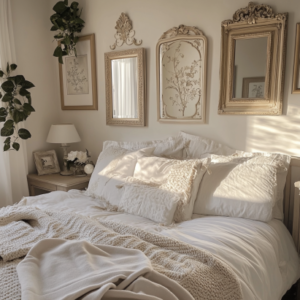
Oval vintage mirrors for bedroom with pastel accents.

Vintage Mirror Ideas for Bedroom Decor

Vintage mirrors for bedroom spaces bring timeless charm, light, and character—transforming any room with elegance and personality.

Key Takeaways

  • Vintage mirrors enhance bedroom aesthetics with light, texture, and timeless design
  • They create the illusion of space and add decorative flair
  • Styles range from rustic wood to ornate Venetian and playful gallery walls
  • Layering, color, and placement elevate their impact

Why Vintage Mirrors for Bedroom Décor Matter

Vintage mirrors for bedroom décor don’t just reflect your image—they reflect history, design, and mood. With distressed wood frames, gilded edges, or etched glass, these mirrors become storytelling pieces. They enhance natural light, expand space visually, and provide a warm, curated look that modern mirrors often can’t replicate.

Vintage mirrors for bedroom with ornate frame reflecting natural light

Timeless Ways to Style Vintage Mirrors

1. Ornate Gold Frames

Bring opulence to your bedroom with vintage gold-framed mirrors. Their detailed carvings and warm sheen pair beautifully with classic or boho interiors. Lean one against the wall for an effortlessly elegant look.

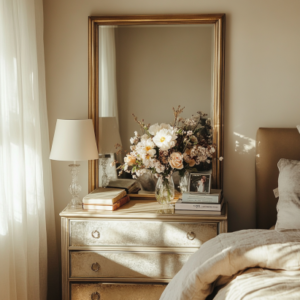
Vintage mirrors for bedroom in gold frame over dresser

2. Rustic Wood Frames

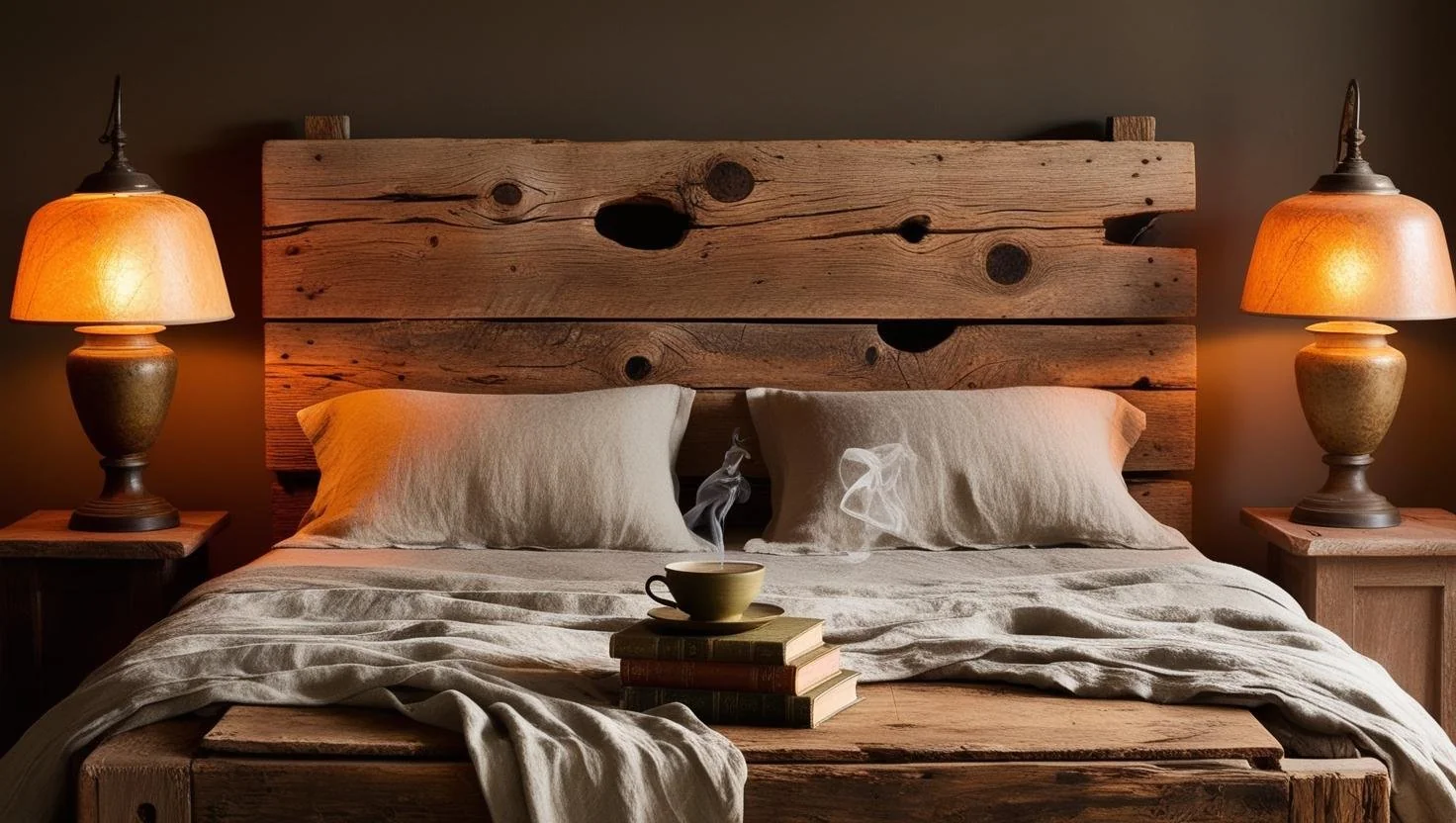
Distressed wood-framed vintage mirrors for bedroom corners complement earthy palettes and cozy textures. Combine them with linen bedding, rattan accents, and neutral tones to complete the rustic vibe.

3. Venetian Elegance

Venetian mirrors offer delicate etching and intricate beauty. Above a vanity or headboard, they infuse the room with old-world glamour and grace.

4. Oval Classics

Oval vintage mirrors for bedroom walls lend soft elegance and a romantic tone. They shine alone or as focal points in gallery walls.

5. Gallery Walls

Create a visual feast with a gallery wall of vintage mirrors. Mix shapes, finishes, and sizes for artistic impact. This design trick also reflects light and enlarges your space visually.

Vintage mirrors for bedroom wall in mix of shapes and styles

6. Floor-Length Statements

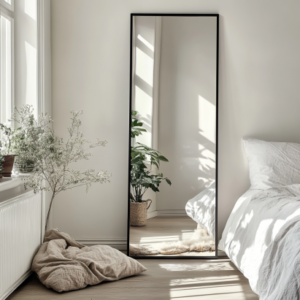
A floor-length vintage mirror makes both a dramatic design choice and a practical piece. Choose one with a thick antique frame for impact and lean it near a window to reflect daylight.

7. Sunburst Styles

Retro sunburst vintage mirrors inject mid-century charm. These decorative mirrors are ideal above a bed or dresser as dynamic centerpieces.

8. Painted Frames

Personalize your vintage mirror by painting the frame in bold or muted tones. It’s a great way to match your palette while maintaining the mirror’s aged appeal.

9. Layered Looks

Layer smaller mirrors with frames of varying textures and finishes on a dresser or wall shelf. This layered look adds dimension and an artful sense of curation.

10. Mirrored Wardrobes

Incorporate mirrored wardrobe doors with antique finishes. They double your storage space and function as full-length mirrors while preserving that vintage aesthetic.

Vintage mirrors for bedroom on wardrobe doors with antique finish

Quick Styling Tips

  • Placement: Place mirrors opposite windows to amplify natural light.
  • Contrast: Pair bold mirrors with minimalist surroundings for balance.
  • Texture: Surround mirrors with soft items—rugs, throws, or candles—for a cozy finish.

Debunking the Mirror Clutter Myth

Too many mirrors in a room? Not when styled right. Vintage mirrors for bedroom settings act as focal points or background enhancers—never clutter. Use restraint and harmony to let each mirror add depth, not distraction.

Vintage mirrors for bedroom transformation go beyond reflection—they infuse personality, expand your space, and honor timeless design. From ornate to rustic, find a mirror that resonates with your room’s soul.

FAQ

Are vintage mirrors good for small bedrooms?
Yes, they reflect light and space, making small rooms feel larger and brighter.
How can I tell if a vintage mirror is authentic?
Look for signs like patina, aged backing, and old-style screws or labels. Flea markets and antique stores are good sources.
Can I use vintage mirrors in a modern bedroom?
Absolutely. Mixing vintage mirrors with modern elements creates a stylish, eclectic blend.
What is the best way to hang heavy vintage mirrors?
Use wall anchors or professional picture-hanging hardware rated for the mirror’s weight.

Learn more in our guide to creative mirror placement, discover unique mirror and wall décor ideas, or explore how to style farmhouse bedroom wall décor.

For expert insights, visit Sleep Foundation’s bedroom environment guide, check out antique mirror styling tips, browse glamorous vintage mirror ideas, explore decorating with vintage mirrors, check ideas from Home & Texture’s vintage mirror styling guide, and read Veranda’s vintage mirror shopping guide.

Sleeping on an Incline: 5 Easy Ways to Elevate Your Sleep and Health

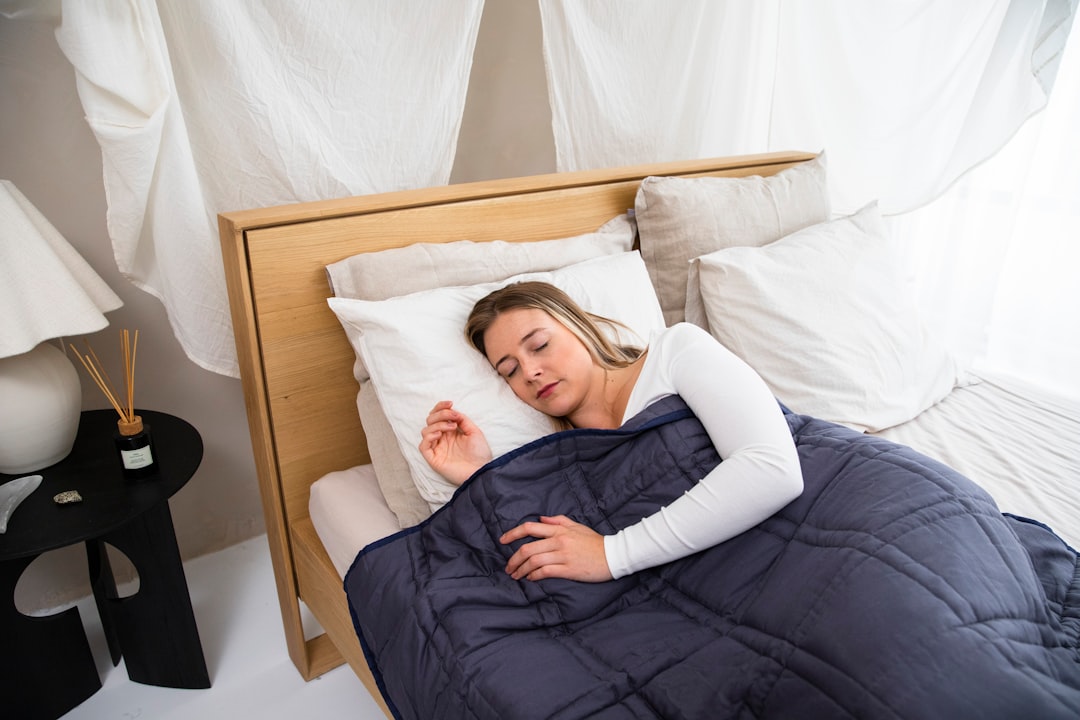
Sleeping on an Incline: 5 Easy Ways to Elevate Your Sleep and Health - Featured Image

Sleeping on an Incline Benefits and Safety Guide

Sleeping on an incline can be a game-changer if you struggle with reflux, snoring, or congestion. By slightly elevating your upper body, you may find calmer nights and easier mornings. Let’s explore how this simple change can transform your sleep setup.

Key Takeaways

  • Sleeping on an incline usually means raising the head of your bed by 6–8 inches so gravity supports your body while you rest.
  • It can help ease acid reflux, reduce snoring, clear sinuses, and support circulation.
  • Simple tools like wedge pillows, risers, or adjustable beds make it easy to start.
  • Comfort and consistency matter most for seeing lasting benefits.
Sleeping on an Incline: 5 Easy Ways to Elevate Your Sleep and Health
Gentle elevation can make nights calmer and mornings easier.

Why Sleeping on an Incline Matters More Than You Think

When you’re lying flat, gravity isn’t doing you any favors. By slightly elevating your upper body, you reduce pressure on your stomach and lungs—leading to less reflux, clearer airways, and improved blood flow. Even a modest 6–8 inch lift can bring noticeable improvements.

Want a deeper dive into the science and experiences? Explore our Inclined Bed Therapy Benefits Guide.

How Inclined Sleep Helps With Reflux and Breathing

Reflux Relief Without the Meds

If you deal with nighttime acid reflux, you know how uncomfortable it can be. Elevating your upper body helps stomach acid stay in place. According to the Cleveland Clinic, head-of-bed elevation is among the most effective non-medication methods for managing GERD. Learn more here.

Want a personal perspective? Here’s a real-life story about how gentle elevation improved sleep quality.

Better Breathing = Deeper Sleep

Sleeping flat can narrow the airway, especially if you snore or experience sleep apnea. A mild incline helps keep passages open so you breathe easier and wake less often. See the NHLBI overview of sleep apnea and the National Sleep Foundation’s guide on sleep positions.

Sleeping on an Incline: 5 Easy Ways to Elevate Your Sleep and Health
Wedge pillows create a supportive incline for reflux and snoring relief.

Who Should Consider It (and Who Shouldn’t)

Inclined sleeping is generally gentle and non-invasive. It’s often used by people with reflux, snoring, nasal congestion, or mild positional apnea. Pregnant sleepers and those with cardiovascular or spinal issues should check with a clinician first to confirm the safest angle.

Easy Ways to Try Sleeping on an Incline

Use a Wedge Pillow

Wedge pillows are firm, triangular pillows that lift your upper body while keeping you aligned. Memory foam models contour well and help maintain posture through the night.

Adjust Your Bed Frame

Bed risers or adjustable bases can raise the entire head of your bed. A 6–8 inch lift is usually enough. For detailed methods, see our Sleeping on an Incline Guide.

Sleeping on an Incline: 5 Easy Ways to Elevate Your Sleep and Health
Bed risers are a quick, budget-friendly way to elevate your bed.

Try Extra Pillows (with Caution)

Stacking pillows might seem easy, but they often shift and create awkward angles. If you try it, support your shoulders and spine to prevent strain.

But Won’t It Be Uncomfortable?

It may feel unusual at first, but most people adjust within a few nights. You can ease in by using a wedge for part of the night and gradually increase. DIY enthusiasts can check out Kim Holman’s incline setup.

Light sleepers may also benefit from sound masking while adjusting. See our white noise primer for easy options.

What to Avoid When Sleeping on an Incline

Don’t Just Prop Up Your Head

Raising only your head with loose pillows can strain your neck. Aim for a smooth slope that lifts your entire upper body.

Watch for Sliding

If your mattress or bedding is slick, you may slide during the night. Non-slip mattress pads or grippy wedges can prevent shifting.

Sleeping on an Incline: 5 Easy Ways to Elevate Your Sleep and Health
Non-slip mattress pads keep your bed stable on an incline.

Final Thoughts: Is Inclined Sleeping Right for You?

Sleeping on an incline isn’t a one-size-fits-all solution, but if you struggle with reflux, snoring, or sinus congestion, it’s a low-effort adjustment worth trying. It could be the small change that leads to better sleep and refreshed mornings.

For more detail, see our step-by-step guide and our deep dive into Inclined Bed Therapy benefits.

FAQ

Is inclined sleeping safe for everyone?
Generally, yes—but people with health conditions should check with a provider first.
Can I use regular pillows to achieve the incline?
Not ideal. Loose pillows slip and strain your neck. Wedge pillows or risers are better.
How long does it take to see benefits?
Some notice improvements in a few nights. Others may need a couple of weeks.
Will my mattress slide down?
It can. Use non-slip mats or wedges with grip features.
Can inclined sleeping help beyond reflux?
Yes—it may also improve circulation, reduce snoring, and ease sinus congestion.

Related reading from Cozy Bed Quarters

Other reading we found popular

Maximizing Space: Clever Mirror Hacks for Small Bedrooms

Round brass-framed mirror wall art reflecting a luxurious canopy bed.

When decorating a small bedroom, creating the illusion of space is key. One of the most effective tools for this is mirrors. They not only reflect light but also add depth, making compact areas appear larger and brighter. Here are 10 ingenious mirror hacks for small bedrooms that will transform your space into a cozy yet spacious retreat.


1. Full-Length Mirror on the Wall

A full-length mirror is a simple yet powerful addition to a small bedroom. Mount it on a wall or door to avoid taking up precious floor space. Placing it opposite a window amplifies natural light, brightening the entire room.

Full-length mirror with a black frame reflecting natural light in a small bedroom, enhancing the space with a minimalist design.

For more full-length mirror inspiration, check out this guide from Cozy Bed Quarters.


2. Mirrored Closet Doors

Replace traditional closet doors with mirrored ones. This upgrade serves a dual purpose: it saves space and doubles as a full-length mirror. The reflective surface enhances the room’s size and adds an elegant touch.


3. Create a Gallery Wall of Mirrors

Art isn’t the only option for a gallery wall. Use mirrors of various shapes and sizes to create an eye-catching display. Combining different frames—metallic, wooden, or painted—adds personality while bouncing light around the room.

Gallery wall of mirrors in decorative frames reflecting light and adding depth to a cozy small bedroom setup.

Learn more about gallery mirror placement from Better Homes & Gardens.


4. Leaning Mirror in a Corner

A large leaning mirror is a chic and functional decor piece. Placing it in a corner creates a focal point while reflecting light and space. Choose a frame that matches your room’s aesthetic, whether minimalist, vintage, or industrial.

For ideas on where to place mirrors in your bedroom, visit Cozy Bed Quarters.


5. Mirrored Furniture

Mirrored furniture, like bedside tables, dressers, or desks, is a clever way to incorporate reflections without adding separate mirrors. These pieces make the room feel airier while serving practical purposes.

 Mirrored dresser reflecting light in a small bedroom, styled with fresh flowers, books, and a lamp to create a spacious feel.

Discover how to incorporate mirrored furniture with Elle Decor’s guide.


6. Mirror Above the Headboard

Hanging a horizontal mirror above your bed’s headboard draws the eye upward, creating the illusion of higher ceilings. It also serves as a stylish statement piece for your bedroom.


7. Sliding Mirrored Partitions

For studio apartments or shared spaces, sliding mirrored partitions offer privacy while maintaining openness. These partitions reflect light, making the entire space feel more connected and spacious.


8. DIY Mirror Frame Accents

Transform basic mirrors into stunning decor pieces by adding custom frames. Whether you prefer a rustic wooden frame, sleek metallic design, or vintage gilded look, framing enhances the mirror’s style and complements your bedroom theme.


9. Mirrors Behind Lighting Fixtures

Placing mirrors behind lamps or sconces doubles the light output, brightening your room while adding an artistic flair. This hack works particularly well in rooms with limited natural light.

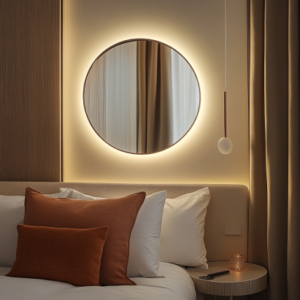
Circular mirror placed behind a wall-mounted sconce, reflecting warm light to brighten a compact small bedroom corner. Demonstrating practical mirror hacks for small bedrooms.

Find more ideas on mirror placement in bedrooms at The Spruce.


10. Corner Mirror Panels

Install mirror panels on adjacent corner walls to create an expansive, multi-dimensional effect. This technique makes the room appear larger by eliminating visual boundaries.


Bonus Tips for Maximizing Mirror Effectiveness

  • Keep them clean: Smudged mirrors reduce their reflective quality. Regularly clean them with a microfiber cloth and glass cleaner.
  • Choose strategic placements: Always position mirrors where they can reflect light or visually interesting elements, like artwork or greenery.
  • Avoid clutter: Keep the area around your mirrors tidy to maintain a clean and spacious look.

Why Mirrors Are Perfect for Small Bedrooms

Mirrors are not just decorative but practical solutions for compact spaces. They enhance light, add depth, and blend seamlessly with any decor style. By strategically incorporating mirrors, you can make your small bedroom feel more open and inviting.

Internal Link Suggestion: Explore Creative Storage Solutions for Tiny Bedrooms to further optimize your space.
External Link Suggestion: For expert advice on mirror decor ideas, check out The Spruce.

By applying these mirror hacks for small bedrooms, you can turn even the tiniest space into a bright and functional haven. Whether you choose mirrored furniture, a gallery wall, or a simple leaning mirror, these ideas will elevate your bedroom’s design and utility.

Sustainable Bedding Brands for Eco Conscious Sleepers

Organic cotton sustainable bedding set in a minimalist, eco-conscious bedroom.

Sustainable Bedding Brands for Eco Conscious Sleep

Ever wonder if your cozy bed could be harming the planet—or your health? Discover how switching to sustainable bedding brands can improve your sleep and support the environment.

Key Takeaways

  • Sustainable bedding brands use organic, eco-conscious materials
  • Top brands include Ettitude, Quince, Naturepedic, Pact, and Coyuchi
  • Certifications like GOTS and OEKO-TEX® ensure safer, ethical products
  • Eco bedding is breathable, hypoallergenic, and durable
  • Making the switch benefits both your health and the planet

Why Sustainable Bedding Brands Matter

We spend about a third of our lives in bed. Traditional bedding often includes synthetics and chemicals that can irritate skin or affect sleep quality. Bedding materials impact not only our comfort but also our health and the planet.

Sustainable bedding brands use organic fabrics and ethical production practices. Brands that care about sustainability prioritize cleaner manufacturing, reduce water waste, and offer fair wages. These choices reduce your exposure to toxins and lower your carbon footprint.

Sustainable bedding brands with eco-friendly sheets and natural light

Top Sustainable Bedding Brands to Consider

1. Ettitude

Ettitude’s CleanBamboo® fabric is silky, breathable, and hypoallergenic. Their closed-loop system reuses water, making it ideal for hot sleepers and eco-conscious consumers alike.

2. Quince

Quince offers OEKO-TEX® certified European linen at accessible prices. Their wide range of colors means you don’t have to sacrifice style for sustainability.

3. Naturepedic

Certified by GOTS and the EWG, Naturepedic provides toxin-free bedding with a focus on safety and comfort. Ideal for those with allergies or chemical sensitivities.

4. Pact

Made in Fair Trade Certified factories, Pact’s bedding uses 100% organic cotton. With options in percale, sateen, and jersey, you can find the perfect fit for your sleep style.

5. Coyuchi

Coyuchi is a pioneer in the eco-bedding space. Their GOTS-certified products are built to last and come in serene color palettes. Their commitment to sustainability goes beyond the bed.

Coyuchi bedding in soft neutrals for sustainable sleep design

Explore more in our eco-friendly sleep guide for a holistic transformation.

What Makes Bedding “Sustainable”?

Not all eco claims are equal. True sustainable bedding brands typically include:

  • Trusted certifications: GOTS, OEKO-TEX®, Fair Trade
  • Earth-friendly materials: bamboo, TENCEL™, linen, or organic cotton
  • Low-impact processes: water-saving production and ethical labor practices
  • Longevity: durable design to reduce waste

Want more detail? Read Ethical Bedding’s ultimate guide.

Busting a Couple Common Myths

Myth: Sustainable bedding is too expensive

Truth: While some brands cost more upfront, they last longer, saving you money and reducing waste in the long term.

Myth: Eco-friendly equals dull and beige

Truth: Today’s sustainable bedding brands come in rich hues and chic designs. Brands like Coyuchi and Quince prove that green can be gorgeous.

Everyday Reasons to Switch

Want to breathe easier, sleep cooler, or support fair labor? Changing your sheets is an easy place to start. With eco-friendly bedding, you’ll enjoy:

  • Fewer allergies and skin irritations
  • Temperature regulation and breathability
  • Less environmental guilt

Think of it as self-care that extends to the planet. Your sleep space becomes a sanctuary that nurtures both your body and your values.

Ready to Make the Switch?

Choosing sustainable bedding brands is a simple way to make a big impact. Better sleep, healthier skin, and reduced environmental harm start with a better bed. For more ideas, check out our posts on eco-friendly sleep and bedding fabrics.

The path to a greener home begins where you rest your head—on sustainable bedding brands that reflect your values.

Bedroom showing before and after using sustainable bedding brand upgrades

FAQ

What is the best material for sustainable bedding?
Look for bamboo, organic cotton, TENCEL™, or linen—each offers eco benefits and comfort.
Is sustainable bedding worth the investment?
Yes! It lasts longer, improves sleep quality, and reduces exposure to harmful chemicals.
Where can I buy affordable sustainable bedding?
Brands like Quince and Pact offer budget-friendly, high-quality options with certified materials.
How do I know if bedding is truly sustainable?
Check for certifications like GOTS, OEKO-TEX®, and Fair Trade. Transparency in sourcing is also key.
Can sustainable bedding help with allergies?
Yes, many eco-friendly fabrics are naturally hypoallergenic and free from irritants.

Queen Size Bed Dimensions: Inches, Feet, cm & Room Fit

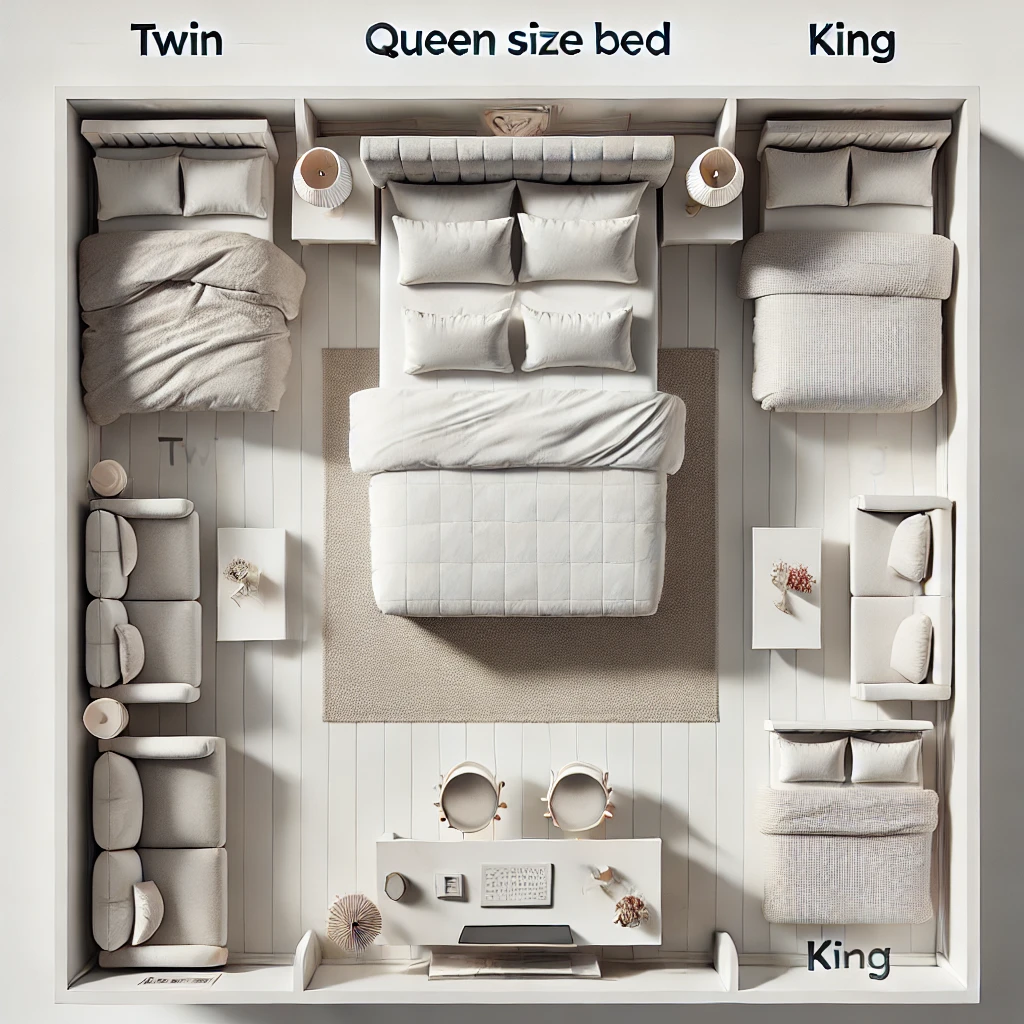
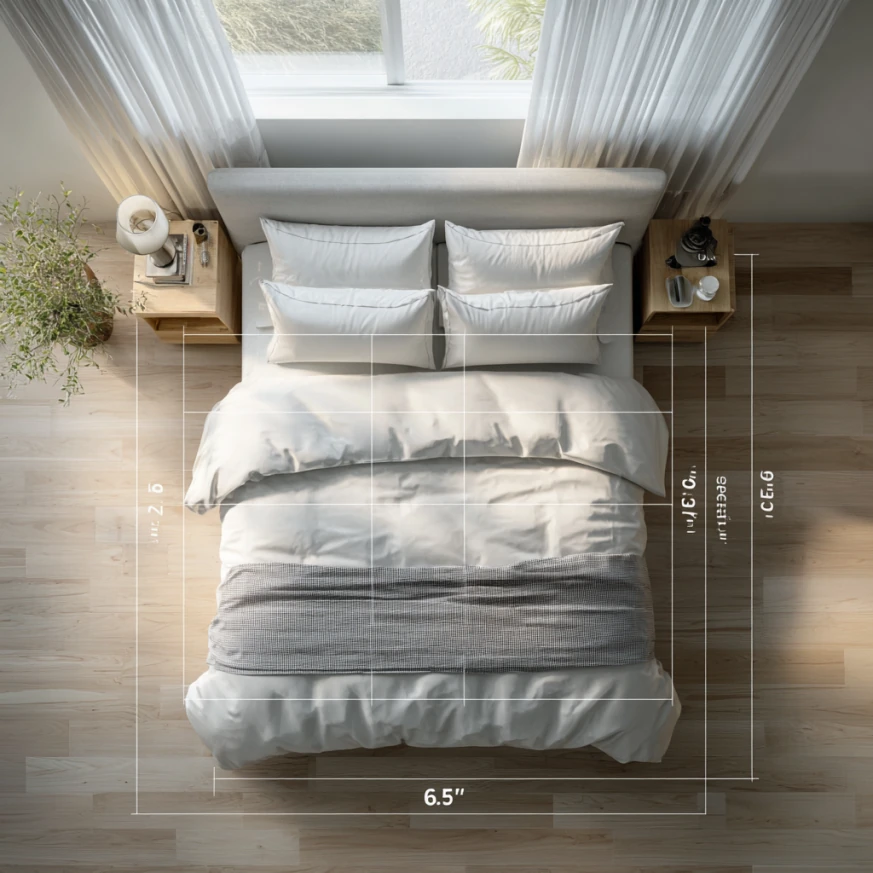
Bedroom layout showing standard queen size bed dimensions in context.

A standard queen mattress measures 60 inches wide by 80 inches long — that is 5 feet by 6 feet 8 inches, or roughly 152 x 203 cm. That gives two sleepers about 30 inches of width each, and it fits comfortably in a bedroom of about 10 x 10 feet or larger once you leave walking space on both sides. Bed frames add a few inches all round, so always plan around the frame’s outside dimensions rather than the mattress alone.

Queen Size Bed Dimensions at a Glance

Measurement Inches Feet Centimetres
Width 60″ 5 ft 152.4 cm
Length 80″ 6 ft 8 in (≈6.7 ft) 203.2 cm
Sleeping area 4,800 sq in ≈33.3 sq ft ≈3.1 sq m
Space per sleeper (two people) 30″ wide 2.5 ft 76 cm

These figures describe the North American standard. Manufacturers work to the same nominal size, but finished mattresses can vary by up to an inch, and mattress height (usually somewhere between 8 and 15 inches) is not standardised at all — which matters for sheet depth and for how high the finished bed sits.

queen size bed dimensions in a cozy bedroom setup

Queen Bed Size in Feet (and Why the Conversion Confuses People)

Because 80 inches does not divide neatly into feet, you will see the queen length written as 6.6 ft, 6.7 ft, or 6 ft 8 in. All three are describing the same mattress. The cleanest way to say it is 5 ft x 6 ft 8 in; if you are sketching a floor plan to scale, use 5.0 x 6.67 ft, which works out to about 33 square feet of floor taken by the mattress itself.

queen bed size in feet diagram showing 5 feet by 6.6 feet

Queen Bed Variations: Olympic, California and Split

Not every bed labelled “queen” is 60 x 80. A few specialty sizes exist, and they are genuinely harder to shop for because bedding and frames are made for the standard size.

Type Typical dimensions Best for Availability
Standard queen 60″ x 80″ (5 x 6.67 ft) Couples, solo sleepers who spread out, guest rooms Everywhere
Olympic queen 66″ x 80″ (5.5 x 6.67 ft) Restless sleepers who want extra width without a king Specialty; a few makers list it at 66″ x 84″
California queen 60″ x 84″ (5 x 7 ft) Taller sleepers who need extra length Rare; mostly custom or regional makers
Split queen Two halves of 30″ x 80″ Adjustable bases, tight stairwells, differing firmness needs Sold as pairs with compatible bases

Be plain-eyed about the trade-off: an Olympic or California queen buys you six inches of comfort but costs you easy access to off-the-shelf sheets, mattress protectors and frames. Published dimensions for these niche sizes are not fully consistent between suppliers, so confirm the exact measurements on the product page before you buy bedding to match.

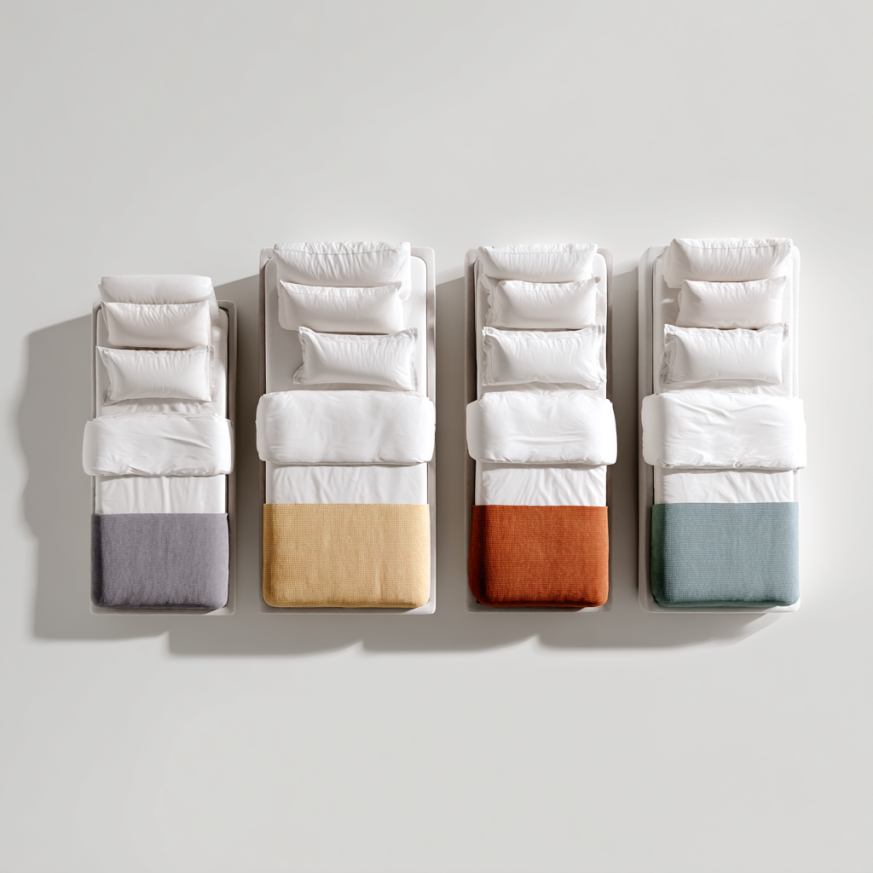
queen size bed dimensions comparison chart

Queen vs Other Bed Sizes

Here is where the queen sits among the standard US sizes. Full-size mattresses are listed as either 53 or 54 inches wide depending on the manufacturer.

Size Inches (W x L) Feet (approx.) Suits
Twin 38″ x 75″ 3.2 x 6.25 Children, single sleepers, bunk setups
Twin XL 38″ x 80″ 3.2 x 6.67 Tall solo sleepers, dorms, split-king halves
Full / Double 53–54″ x 75″ 4.5 x 6.25 Solo sleepers with room to spare
Queen 60″ x 80″ 5 x 6.67 Couples, guest rooms, most primary bedrooms
King 76″ x 80″ 6.3 x 6.67 Couples who want maximum width, co-sleeping families
California King 72″ x 84″ 6 x 7 Taller sleepers who still want king-scale width

Two comparisons do most of the decision-making work:

  • Queen vs full: a queen is 6–7 inches wider and 5 inches longer. That extra length is the part people underestimate — a full stops at 75 inches, which is only 6 ft 3 in. If you are sizing down, our full size bed dimensions guide covers the fit in small rooms.
  • Queen vs king: a king is the same 80-inch length but 16 inches wider, so it adds roughly 8 inches of personal space per sleeper — and about 9 more square feet of floor. The king size mattress dimensions guide walks through whether the room can take it.

For every size side by side, including twin XL and split options, see the standard bed size chart.

queen bed size in feet compared to twin full king and california king

What Room Size Do You Need for a Queen Bed?

The mattress takes 5 x 6.67 ft. The usable room is what is left after clearances:

  • 10 x 10 ft — the practical minimum. A queen centred on one wall leaves roughly 2.5 ft on each side and about 3 ft at the foot. Workable, but there is little room for a dresser.
  • 10 x 12 ft — comfortable. Two nightstands, a dresser and a clear walking path all fit.
  • 12 x 12 ft or larger — generous. Room for a bench, a reading chair, or a rug that extends well past the bed.
  • 9 x 10 ft or smaller — possible, but plan carefully: push the bed to one wall, use a single nightstand or wall-mounted shelf, and skip the footboard.

For circulation, aim for about 24 to 30 inches of clear floor on each side you actually walk down, and closer to 36 inches where a door swings, a wardrobe opens or a dresser’s drawers need to extend. Interior design guidance on bedroom clearances and spacing follows the same principle: measure the path, not just the floor area. If one side of the bed is against a wall, you only need clearance on the other side — but making the bed becomes noticeably harder.

Frame Size vs Mattress Size

This is the measurement most people miss. A 60 x 80 mattress almost never sits inside a 60 x 80 footprint:

  • Platform beds and low-profile metal frames: often add only 1–3 inches in each direction.
  • Frames with a headboard and footboard: typically add 3–6 inches of total length, sometimes more with a thick upholstered panel.
  • Storage beds with drawers: add length or width, plus the pull-out depth of the drawers — allow 20+ inches of clear floor in front of them.
  • Sleigh beds and canopy frames: the most generous of all; measure the widest external point, not the mattress cut-out.

Check three numbers before you order: the frame’s overall length and width, the headboard height (against sloped ceilings or window sills), and the largest carton dimension against your doorways, hallway corners and stair turns. Flat-pack and modular frames solve most access problems; one-piece headboards do not. Style and build options are compared in our roundup of queen size bed frames.

Bedding That Fits a Queen

  • Fitted sheets: made to 60 x 80 inches, but the pocket depth is the deciding factor. Standard pockets suit mattresses up to about 12 inches; taller or pillow-top mattresses need deep-pocket sheets.
  • Flat sheets and duvet covers: queen sizes vary between brands because the drop (overhang) differs. A wider duvet gives better coverage if one sleeper pulls the covers.
  • Pillows: two standard or queen pillows sit neatly across 60 inches; two king pillows (20 x 36) overhang a queen headboard.
  • Full vs queen bedding: they are not interchangeable — a full sheet is too short in both directions, and queen bedding on a full bed bunches at the corners.

Is a Queen the Right Size for You?

A queen is the default recommendation for couples because it balances 30 inches of personal width per person against a footprint most bedrooms can absorb. It is also the safest choice for a guest room, since it suits one or two people and bedding is easy to replace.

Consider sizing up to a king if you and your partner are both broad-shouldered, if a child or a dog regularly joins you, or if one of you is a restless sleeper and motion transfer keeps waking the other. Consider extra length — a California queen, or a king/California king — if either sleeper is over about 6 ft 2 in, since 80 inches leaves little margin once you add pillows. Mattress construction matters as much as size here; our overview of mattress types explains how foam, hybrid and innerspring builds handle motion and support differently.

One honest caveat: the queen is widely described as the best-selling mattress size in North America, but the sales figures behind that claim come almost entirely from industry and retailer sources rather than independent data, so treat it as a strong trend rather than a verified statistic.

queen size bed dimensions illustrated in room setting

Layout Tips for a Queen Bedroom

  1. Centre the bed on the longest usable wall. Symmetry makes a small room read as larger and keeps both sides accessible.
  2. Tape it out first. Mark 60 x 80 inches (plus your frame allowance) on the floor with painter’s tape and live with it for a day before buying.
  3. Go vertical for storage. Tall, narrow dressers, wall-mounted lights and floating shelves free the floor that clearance needs.
  4. Keep the window clear. Placing the bed near — but not blocking — natural light keeps the room feeling open.
  5. Size the rug properly. An undersized rug shrinks a room visually; the rug sizing guide for queen beds covers the standard placements and how much rug should show past the sides.

Frequently Asked Questions

What are the dimensions of a standard queen bed?

60 inches wide by 80 inches long — 5 ft x 6 ft 8 in, or 152.4 x 203.2 cm.

What is a queen bed size in feet?

5 feet by 6.67 feet (often rounded to 5 x 6.6 or written as 5 ft x 6 ft 8 in). That is about 33 square feet of floor space.

How much bigger is a queen than a full?

About 6–7 inches wider and 5 inches longer. Per sleeper, that is roughly 30 inches of width on a queen versus about 27 inches on a full.

Can a queen bed fit in a 10 x 10 room?

Yes. Centred on a wall, it leaves roughly 2.5 ft on each side. It works, but expect limited space for a dresser or a footboard.

Is a queen bed big enough for two adults?

For most couples, yes. It becomes tight if both sleepers are broad, if one moves a lot in the night, or if pets and children share the bed regularly.

Do I need a box spring under a queen mattress?

Not usually with a modern slatted platform frame. If slats are more than about 3 inches apart, add a bunkie board or low-profile foundation — and check what your mattress warranty requires.

What size room is ideal for a queen bed?

10 x 12 feet or larger gives comfortable clearance plus room for nightstands and a dresser.

Getting the dimensions right is the part of bedroom planning that quietly determines everything else — how the room flows, how easily you make the bed, and how well you sleep in it. More on that connection in our guide to bed size and sleep quality.

Updated September 2026.

Organic Bedding Materials for Better Sleep in 2025

Organic Bedding Materials for Better Sleep in 2025 - Featured Image

Organic Bedding Materials Guide for Sleepers

Looking for a healthier bed setup fast? Organic bedding materials like cotton, bamboo, linen, Tencel, wool, and hemp are free from harsh chemicals, breathable, and responsibly sourced—helping you sleep cooler, sneeze less, and shrink your environmental footprint in one upgrade.

Key Takeaways

  • Best all-rounder: Organic cotton for softness, breathability, and easy care.
  • Coolest feel: Bamboo or Tencel for moisture-wicking, silky comfort.
  • Most durable: Linen and hemp for long life and lived‑in texture.
  • Coziest warmth: Wool for temperature regulation year‑round.
  • Shop by standards: Look for GOTS, OEKO‑TEX® Standard 100, Fair Trade, and FSC.

In an era where sustainability is at the forefront of consumer choices, the bedding industry is experiencing a significant shift toward organic materials. More homeowners are prioritizing comfort without compromising the environment, opting for organic and sustainable bedding options that promote better sleep and a greener planet. If you’re looking to upgrade your bedroom with organic bedding materials, this guide will introduce you to the best materials, brands, and care tips to ensure your sleep is as sustainable as it is restful.


The Growing Demand for Organic Bedding

Summary first: Organic bedding is rising because people want safer, longer‑lasting fabrics without toxic finishes or heavy resource use.

With increased awareness of climate change and eco-conscious living, more people are making informed decisions about their home essentials. Bedding, which directly affects our health and well-being, is no exception. Organic bedding materials offer several benefits:

  • Non-toxic and chemical-free: Traditional bedding is often treated with harsh chemicals that can trigger allergies or respiratory issues.
  • Biodegradable and renewable: Natural fibers decompose faster and have a lower carbon footprint.
  • Durability and comfort: High-quality organic bedding lasts longer and provides superior breathability for a better night’s sleep.

For more insights on maintaining a sleep-friendly environment, check out our guide on
How to Keep Your Mattress Fresh and Allergen-Free.


Popular Organic Bedding Materials

Summary first: Choose by need—cotton for balance, bamboo/Tencel for coolness, linen/hemp for durability and texture, wool for cozy regulation.

1. Organic Cotton

Quick take: The safest “first step” into organic—soft, breathable, widely available.

One of the most widely used organic bedding materials, organic cotton is grown without synthetic pesticides or harmful chemicals. It is breathable, hypoallergenic, and soft, making it an excellent choice for all seasons.

Best for:

  • People with sensitive skin or allergies
  • Year-round comfort

Learn more about different bedding materials and their benefits. For deeper dives, see our guides on
Linen vs. Cotton Sheets and
Best Bedding for Hot Sleepers.

2. Bamboo Fabric

Quick take: Cool, drapey, and moisture‑wicking—great if you overheat at night.

Bamboo-derived fabrics, such as bamboo rayon and bamboo lyocell, are naturally antimicrobial, moisture-wicking, and ultra-soft. Bamboo is a fast-growing plant that requires minimal water, making it a highly sustainable option.

Best for:

  • Hot sleepers needing moisture-wicking properties
  • Those seeking a silky-smooth texture

Compare plant-based options in
Tencel vs. Bamboo Sheets and our
Bamboo Sheets: Pros & Cons.

3. Linen

Quick take: Airy, strong, and beautifully rumpled—improves with every wash.

Linen bedding, made from flax fibers, is naturally breathable and gets softer with every wash. It has a luxurious texture and excellent moisture-absorbing properties, keeping you cool in the summer and warm in the winter.

Best for:

  • Those who prefer a rustic, relaxed bedding look
  • Individuals living in humid climates

4. Eucalyptus-Derived Tencel (Lyocell)

Quick take: Smooth, cool, and made in a closed‑loop process—an elegant alternative to silk.

Tencel, made from eucalyptus trees, is an environmentally friendly alternative to synthetic fibers. It is produced using a closed-loop system that recycles water and solvents, reducing waste.

Best for:

  • People looking for a sustainable alternative to silk
  • Individuals with sensitive skin

5. Wool and Hemp

Quick take: Naturally regulates temperature (wool) and offers exceptional strength (hemp).

Wool is naturally temperature-regulating, making it ideal for all-season bedding. Hemp, on the other hand, is one of the most durable natural fibers and requires little water to grow. Both materials are biodegradable and provide excellent insulation.

Best for:

  • Cold sleepers who need extra warmth
  • Eco-conscious buyers looking for long-lasting bedding options

organic bedding materials in an eco-conscious bedroom: sustainable furniture, indoor plants, and neutral tones
Calm, chemical‑light spaces start with the right materials.

Eco-Friendly Certifications to Look For

Summary first: Trust labels—GOTS, OEKO‑TEX® Standard 100, Fair Trade, and FSC help verify safety and sourcing.

When shopping for organic bedding materials, look for the following certifications to ensure authenticity:

  • GOTS (Global Organic Textile Standard) – Ensures organic materials and fair labor practices.
  • OEKO-TEX® Standard 100 – Guarantees that the fabric is free from harmful substances.
  • Fair Trade Certified – Ensures ethical labor practices and sustainable sourcing.
  • Forest Stewardship Council (FSC) – Certifies responsibly sourced wood-based fibers (like Tencel).

Learn more about how to choose sustainable bedroom furniture and accessories in our
Sustainable Bedroom Ideas.


Best Brands Offering Organic Bedding in 2025

Summary first: Start with trusted names for quality and transparency across materials and price points.

  • Cozy Earth – Known for ultra-soft bamboo sheets and breathable fabrics.
  • Parachute Home – Offers high-quality organic cotton and linen bedding.
  • Buffy – Specializes in Tencel-based comforters and pillows.
  • Boll & Branch – Uses 100% organic cotton with Fair Trade certification.
  • Avocado Green – Provides eco-friendly mattresses, pillows, and bedding made from organic materials.

How to Care for Organic Bedding Materials

Summary first: Wash cool, use gentle detergents, dry low or line‑dry, and store in breathable spaces.

  • Use cold water washes – Reduces energy consumption and preserves fabric integrity.
  • Opt for natural detergents – Harsh chemicals can damage organic fibers.
  • Air dry when possible – Reduces carbon footprint and prevents shrinkage.
  • Store properly – Keep linens in a cool, dry place to prevent mildew.

For more tips, check out
our complete guide to mattress hygiene and cleaning.


FAQ

Summary first: Quick answers to common questions about organic bedding materials.

What are the safest organic bedding materials for sensitive skin?
Start with GOTS-certified organic cotton or Tencel. Both are smooth, breathable, and less likely to irritate skin than heavily finished synthetics.
Are bamboo and Tencel sheets really cooler?
Typically yes. Both fabrics wick moisture effectively and drape close to the body, which can help hot sleepers feel drier and cooler overnight.
How do I know if a product is truly organic?
Look for GOTS for organic content and OEKO‑TEX® Standard 100 for safety testing. Fair Trade and FSC add sourcing and labor transparency.
Will linen feel rough?
New linen can feel textured at first but softens significantly after a few washes while remaining durable and breathable.
Do organic sheets last longer?
Often yes—fewer harsh finishes mean fibers maintain integrity. Proper care (cool wash, gentle detergent, low heat or line‑dry) extends lifespan.

Conclusion

Summary first: Pick the material that fits your sleep style and verify with trusted certifications—then care gently to make it last.

Switching to organic bedding materials is a small but impactful step toward a more sustainable lifestyle. Not only does it benefit the environment, but it also improves sleep quality and overall well-being. With an array of sustainable materials and brands to choose from, making the switch to greener bedding has never been easier. Start your journey today by investing in bedding that’s good for you and the planet!


Did you find this guide helpful?

Share your thoughts in the comments below, and check out our recommended organic bedding picks for 2025!

Related reading from Cozy Bed Quarters

Other reading we found popular


Sustainable Bed Frames Guide: 7 Eco-Friendly Picks You’ll Love

Cozy bedroom corner with reclaimed wood sustainable bed frame and soft warm lighting

Complete Guide to Sustainable Bed Frame Choices

A sustainable bed frame is made from eco-friendly materials and built to last. In this sustainable bed frames guide, you’ll discover how to choose stylish, quiet, and planet-friendly options that support healthier sleep and greener living.

Key Takeaways

  • Sustainable bed frames use eco-friendly materials and non-toxic finishes
  • Durability and smart design reduce waste and increase longevity
  • Eco-conscious frames can be stylish, affordable, and easy to assemble

Why a Sustainable Bed Frames Guide Matters

Your bed should be a sanctuary. But if it’s built from questionable materials and coated in toxic finishes, it can silently disrupt your health. This guide to sustainable bed frames helps you choose options that support restful sleep and a cleaner planet. Beyond comfort, it’s about making choices that reflect your values—helping reduce pollution and promote better manufacturing practices for a brighter future.

Sustainable Bed Frames Guide

What Makes a Bed Frame Sustainable?

🌿 Eco-Friendly Materials

Look for FSC-certified wood, reclaimed timber, or recycled metals. Bamboo is a standout—fast-growing, strong, and sustainable. Visit World Bamboo to learn more about bamboo’s benefits. These materials not only reduce your carbon footprint but also support responsible sourcing and forest preservation efforts worldwide, promoting harmony between your home and the earth.


🛡️ Non-Toxic Finishes

Traditional frames may release VOCs, impacting indoor air quality. Sustainable options use zero-VOC finishes. See how the EPA explains VOC risks. Choosing non-toxic finishes means you’re breathing easier, avoiding harmful chemical exposure while creating a safe, nurturing space for rest and relaxation every night.

🛠️ Built to Last

Durability is essential. Brands like Thuma use repurposed rubberwood for frames that last years. Explore their design in our sleep hacks guide. A well-constructed bed frame won’t just save money over time—it reduces waste, minimizes resource consumption, and becomes a dependable foundation in your nightly routine.

Top Picks: Sustainable Bed Frames Guide Favorites

1. Avocado’s City Bed Frame

  • Materials: 100% FSC-certified timber
  • Features: Tool-free setup, GREENGUARD certified, non-toxic finishes
  • Why It Shines: Minimalist and mindful craftsmanship

This bed frame is a beautiful marriage of sustainability and style. Its clean lines and eco-conscious design make it ideal for those wanting to minimize their environmental impact without sacrificing aesthetics. It’s a top pick for anyone embracing simplicity and substance in their sleep sanctuary.

2. Thuma’s The Bed

  • Materials: Repurposed rubberwood
  • Features: Quiet, easy assembly, eco-fi felt
  • Why It Shines: Modern, sustainable, and super solid

Thuma’s design shines for its sleek silhouette and thoughtful construction. With noise-reducing touches and sustainable components, it’s built to support every stretch, snooze, and Sunday morning. Plus, the minimalist aesthetic means it fits effortlessly into any modern bedroom setup.

3. Silk & Snow’s Wooden Bed Frame

  • Materials: Acacia and rubberwood
  • Features: Tool-free Japanese joinery
  • Why It Shines: Clean lines and conscious design

Combining traditional joinery with sustainable materials, Silk & Snow offers a frame that’s easy to love and easier to assemble. It’s ideal for anyone looking to add elegance and eco-conscious integrity to their sleep space without the need for tools or frustration.

Busting a Bed Frame Myth

Myth: Sustainable bed frames are pricey luxuries.
Truth: Brands like Quagga Designs offer affordable, eco-conscious frames, showing that sustainability can be budget-friendly too. In fact, investing in a frame made to last and crafted responsibly can save you from frequent replacements—making it a smarter, long-term decision for your wallet and the world.

Sustainable Bed Frames Guide

Tips for Picking Your Perfect Sustainable Frame

  1. Certifications Matter: Look for FSC, GREENGUARD, OEKO-TEX labels. These certifications give peace of mind that your bed frame meets high environmental and safety standards, ensuring every night’s sleep is supported by clean, green values.
  2. Smart Materials: Choose solid wood, bamboo, recycled metals. These materials are not only environmentally responsible but also contribute to the strength and character of your furniture—adding beauty that lasts.
  3. Think Long-Term: A quality frame avoids frequent replacements. Fewer replacements mean fewer trees cut, less manufacturing energy used, and less landfill waste—big wins for your conscience and comfort.
  4. Simple Setup: Tool-free assembly = low stress and eco wins. Less hassle in setup usually means better design, easier moves, and a product that’s thoughtfully engineered for your convenience and sustainability goals.

Choosing a sustainable bed frame isn’t just about what’s under your mattress—it’s about aligning your sleep space with your values. With so many beautiful, durable, and eco-friendly options, it’s easier than ever to rest easy knowing your bed is part of a better future.

FAQ

What materials should I look for in a sustainable bed frame?
FSC-certified wood, bamboo, reclaimed timber, and recycled metals are all eco-conscious choices.
Are non-toxic finishes really that important?
Yes—non-toxic, zero-VOC finishes reduce your exposure to harmful chemicals and improve indoor air quality.
Do sustainable bed frames cost more?
Not necessarily. Many brands now offer affordable options that balance sustainability with budget-friendliness and durability.

Five Star Bedroom Tips for Hotel Style Comfort at Home

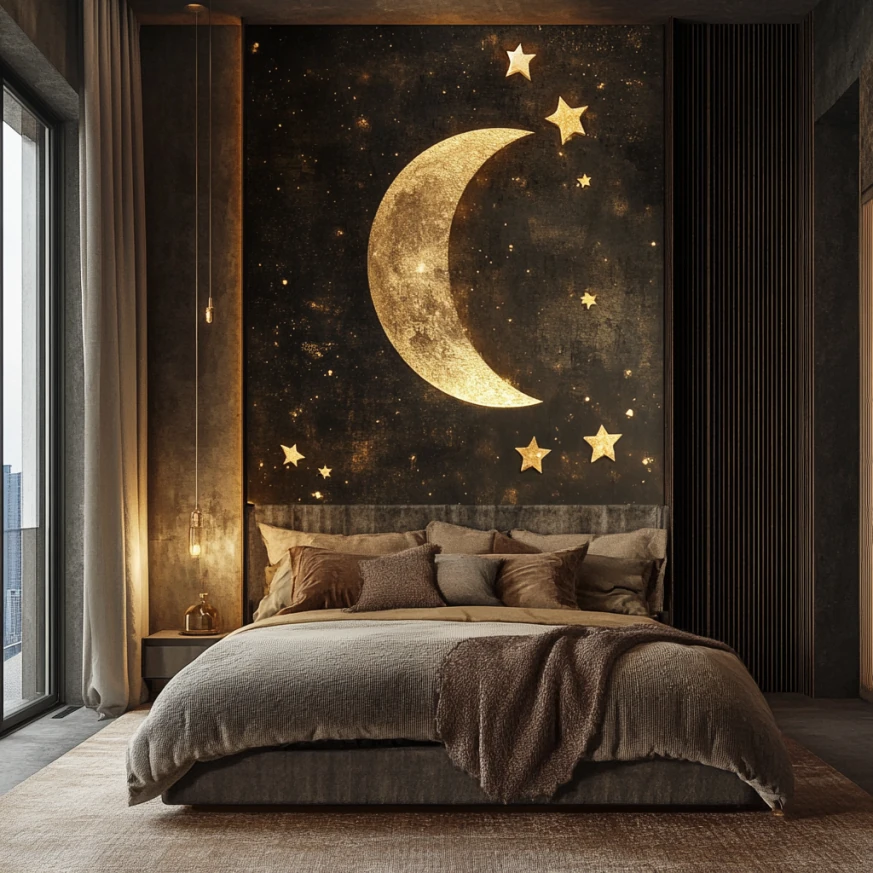
"A stunning five-star bedroom with a celestial theme, featuring a moon and stars accent wall, warm lighting, and a cozy bed with plush textiles for ultimate comfort."

Five-Star Bedroom Tips for Everyday Luxury

Five-Star Bedroom design brings hotel luxury into your home. With plush bedding, elegant decor, and calming ambiance, you can enjoy five-star comfort every night—no booking required. It’s like gifting yourself a vacation without packing a suitcase.

Key Takeaways

  • Layered luxury: Premium bedding and rich textures create comfort and visual depth
  • Mattress magic: Invest in medium-firm support with cooling features for restful sleep
  • Soothing design: Use warm lighting and a neutral palette to evoke calm and serenity
  • Sensory serenity: Aromatherapy and calming sounds enhance restfulness
  • Functional elegance: Smart storage keeps clutter at bay while maintaining style

Read our full guide to bedroom lighting for more cozy design ideas and ambiance-enhancing tips.

What Is a Five-Star Bedroom?

A five-star bedroom is more than a fancy name—it’s a deliberate design choice that mirrors the restful, polished experience found in top-tier hotels like the Ritz-Carlton or Four Seasons. Think crisp sheets, whisper-quiet ambiance, flattering lighting, and a bed that practically hugs you to sleep. According to Peacock Alley, luxury hotel bedrooms create a multi-sensory retreat by layering texture, color, sound, and scent in a way that promotes rest and wellness.

But here’s the secret: you don’t need a hotel keycard to enjoy that same sense of luxury. By intentionally choosing elements like high-end bedding, dimmable lighting, and relaxing aromatherapy, you can replicate that five-star feeling at home. It’s about crafting a space that makes you breathe easier the moment you walk in.

An opulent five-star bedroom with gold-themed decor and luxurious bedding.

Bottom line? A five-star bedroom brings together elegance, comfort, and intentional design to create a restful sanctuary that feels like a nightly vacation.

Top Benefits of a Five-Star Bedroom

A cozy five-star bedroom setup with plush textures and soft lighting.

1. Enhanced Sleep Quality

High-quality sheets—think Egyptian cotton or silky bamboo—feel cool and breathable against your skin. Pair that with a memory foam or hybrid mattress that cushions your pressure points, and you’ve got a recipe for deep, restorative slumber.

2. Daily Stress Relief

A five-star bedroom soothes your senses: warm-toned lighting helps relax your eyes, ambient sounds like soft jazz or rain help quiet the mind, and cozy textures—like a velvet throw or chunky knit blanket—add emotional comfort.

3. Elevated Home Value

Features like custom lighting, upscale drapery, and built-in storage signal thoughtfulness and quality. Even if you’re not selling soon, you’ll enjoy the feeling of living in a home that feels curated and complete.

How to Choose the Right Five-Star Bedroom Elements

Detail shot of luxury bedding in a five-star bedroom design.
  • Bedding: Aim for breathable, durable fabrics like cotton percale or bamboo viscose.
  • Mattress: Look for medium-firm mattresses with cooling gel and breathable layers.
  • Lighting: Use overhead pendants, bedside lamps, and sconces with dimmers.
  • Textiles: Add velvet throw pillows, faux-fur benches, or blackout curtains.
  • Aromatherapy: Use a diffuser with lavender, chamomile, or cedarwood oils.

Explore SmartLinen for high-tech sheets, and Comfort Beddings for thread count insights.

Best Luxury Bedroom Styles Compared

Modern luxury bedroom style with clean lines and neutral tones.
Style Signature Elements Best For
Ritz-Carlton Inspired Deep neutrals, tufted headboards, silk accents, soft ambient lighting Fans of timeless elegance
Four Seasons Inspired Minimalist decor, crisp white linens, live greenery, curated art Lovers of sleek modern luxury
Scandinavian Spa Soft grays, blonde wood, organic cotton, wool throws Calm, simplicity, and hygge

Quick Answer

Hotel-inspired five-star bedroom with elegant decor and high-end furnishings.

A five-star bedroom recreates hotel luxury at home using premium bedding, soft lighting, and sensory relaxation features like aromatherapy and soundscapes.

With intentional choices—like premium linens, layered lighting, and calming scents—you can enjoy five-star comfort and elegance every night without leaving your home.

FAQ

What thread count is best for a five-star bedroom?
Thread counts between 300–600 offer softness, durability, and breathability.
How do luxury hotels layer their beds?
Use a topper, fitted sheet, flat sheet, duvet, blanket, and 4–6 pillows in various sizes.
What scents are used in five-star hotel bedrooms?
Lavender, eucalyptus, bergamot, and sandalwood are common calming choices.

Want more inspiration like this? Keep your sanctuary clean and serene with our bed bug prevention guide.

 

Bed Size and Sleep Quality: Maximize Restful Sleep

Bed Size and Sleep Quality comparison chart showing the effects of different bed sizes on sleep comfort"

How Bed Size Impacts Sleep Quality

Bed Size and Sleep Quality go hand-in-hand—when your sleeping space is too small, it restricts movement and comfort. Choosing the right bed size can dramatically improve your rest. Learn why your mattress dimensions matter and how to find the perfect fit for your needs.

Key Takeaways

  • A larger bed reduces movement restrictions and improves comfort
  • More space minimizes sleep disturbances for couples and families
  • Proper bed size supports better posture and spinal alignment
  • Bed size and sleep quality directly influence daily energy and mood

Why Bed Size and Sleep Quality Matter for Restful Sleep

Your bed size plays a significant role in how well you sleep. A bed that’s too small can lead to restricted movement, disturbed sleep from your partner’s motions, and poor posture due to cramped positions. On the other hand, a larger bed provides ample space to move freely, enhances comfort, and promotes healthy spinal alignment.

Several sleep studies, including research from the National Sleep Foundation, confirm that larger beds reduce disturbances and improve sleep satisfaction. When researchers asked couples to compare sleeping in smaller versus larger beds, participants overwhelmingly reported fewer nighttime awakenings and better quality rest in the bigger options. This makes it clear that bed size and sleep quality are not just connected—they are inseparable factors in your overall health.

Room setup showing how bed size and sleep quality are connected

The Benefits of a Larger Bed for Better Sleep Quality

1. Improved Comfort and Freedom to Move

Whether you’re a solo sleeper who sprawls or a couple navigating nighttime turns, more space equals more freedom. A larger bed reduces disturbances caused by limited space and lets you find a comfy sleeping posture with ease.
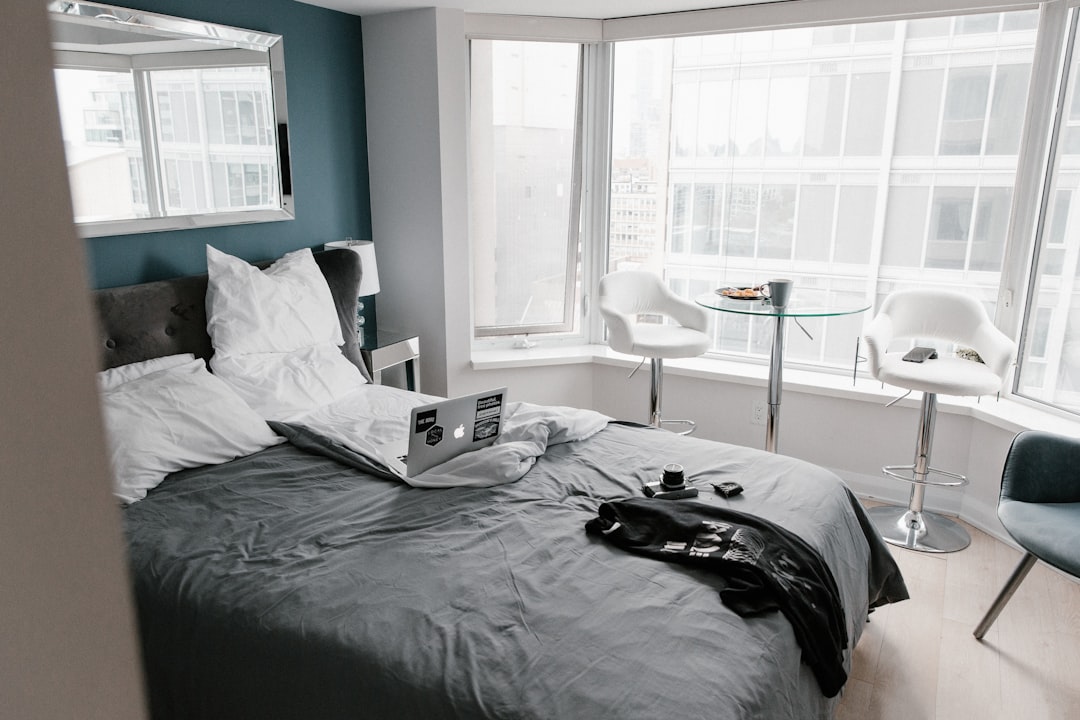
Spacious bed setup improving sleep comfort and quality

  • Active sleepers: Enjoy moving freely without interruption.
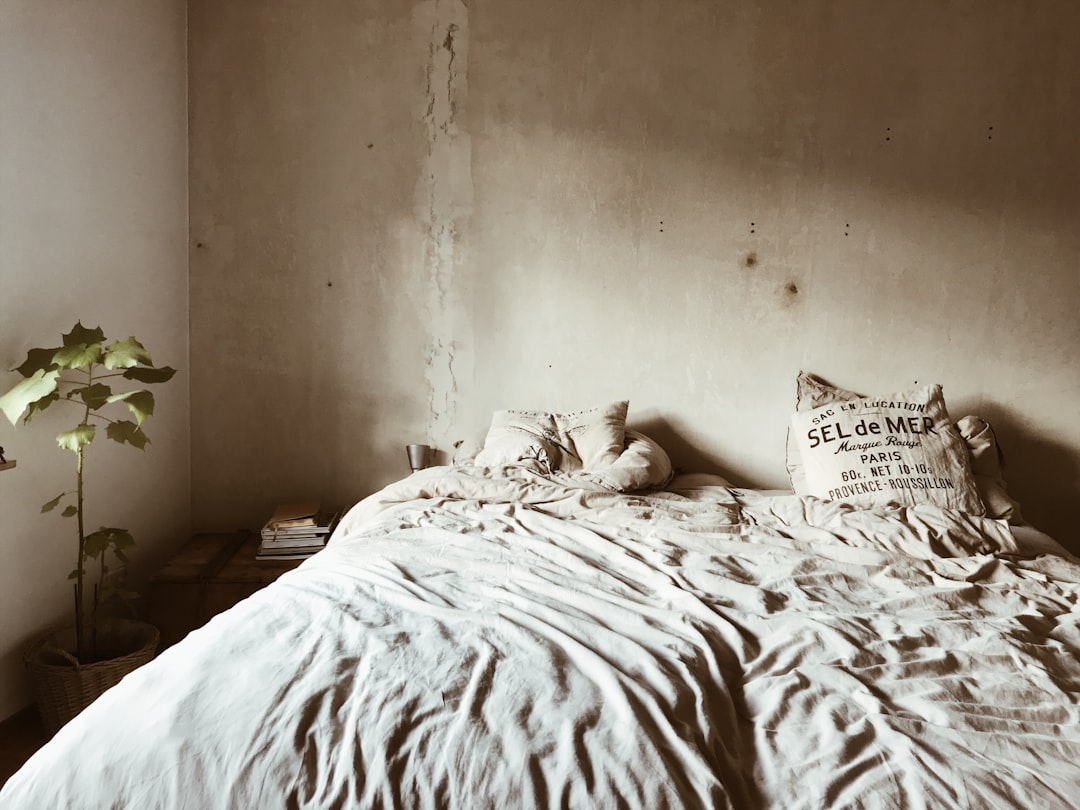
  • Couples: Avoid midnight nudges and elbow jabs.
  • Pet owners: Accommodate furry friends without sacrificing comfort.

2. Reduced Sleep Disturbances

A cramped bed amplifies every turn, twitch, or shift. A spacious mattress absorbs motion better, keeping both partners undisturbed even with differing sleep patterns or schedules.

Sleep researchers note that motion transfer is one of the biggest contributors to poor rest among couples. If your partner tosses and turns, a small bed acts like a trampoline, transferring every movement directly to you. In contrast, a king or California king reduces that transfer dramatically, making bed size and sleep quality especially important for light sleepers.

Couple sharing a large bed to reduce sleep disturbances

  • Reduces motion transfer
  • Decreases temperature clashes
  • Allows each sleeper their own comfort zone

3. Better Spinal Alignment and Support

Improper posture during sleep often comes from awkward positioning on a small mattress. A wider bed supports neutral spine alignment, crucial for reducing back and neck pain.

In fact, orthopedic specialists often recommend upgrading bed size when treating chronic back pain. When you have space to stretch naturally, your body maintains proper alignment—helping you wake up refreshed instead of stiff.

Proper bed size supporting spine alignment for quality sleep

4. Enhanced Sleep for Families

Kids or pets sneaking into bed? A king-size bed or California king provides the extra room you need to share without sacrificing sleep quality.

Many families underestimate how much of a difference just a few extra inches can make. If your toddler occasionally climbs in after a nightmare, or your dog curls up at your feet, a wider bed ensures you still get the restorative sleep you deserve.

How to Choose the Best Bed Size for Sleep Quality

Assess Your Space

Measure your bedroom carefully and ensure there’s at least 24 inches of walking room around your bed. This prevents the room from feeling cramped and allows free movement.

Bedroom layout showing optimal bed size for sleep quality

Consider Your Sleep Habits

  • Do you toss and turn at night?
  • Do you share the bed with a partner, kids, or pets?

Think About Future Needs

  • Will your family grow?
  • Are you planning a bedroom redesign?

Test It Out

Visit a mattress store and lie on different sizes. Bring your partner and try your natural sleeping positions to find the best fit.

Buying online? Look for brands that offer generous trial periods and free returns. This way, you can test whether your new mattress size truly enhances your comfort and supports long-term sleep quality.

Bed Size and Sleep Quality: Finding the Perfect Fit

Bed Size Best For
Twin (38” x 75”) Kids, single sleepers in small rooms
Full (54” x 75”) Single adults, guest rooms
Queen (60” x 80”) Couples, individuals who like extra space
King (76” x 80”) Couples, families co-sleeping with kids
California King (72” x 84”) Tall individuals, luxury master bedrooms

Common Myths About Bed Size and Sleep

  • Myth 1: “A bigger bed is always better.” It depends on room size and layout—comfort needs balance.
  • Myth 2: “Couples only need a queen-size bed.” Many sleep better in a king, especially if one partner moves a lot.
  • Myth 3: “Bed size doesn’t affect sleep.” Studies show that sleep space matters for posture and sleep continuity.

Your bed size isn’t just a furniture choice—it’s an investment in your rest. Bed Size and Sleep Quality are inseparable when it comes to better sleep, less pain, and more energy every day. For more expert resources and buying guides, visit our Cozy Bed Quarters homepage to start creating your perfect sleep setup.

FAQ

Does bed size really affect sleep?
Yes! A properly sized bed reduces disturbances and improves posture and comfort throughout the night.
Is a queen bed big enough for two adults?
Often yes, but a king-size bed may offer more space and comfort if either partner moves frequently.
Can a larger bed help with back pain?
Definitely. Extra space promotes proper alignment and pressure relief, both critical for reducing back pain.
What if my room is small?
Opt for minimalist furniture or rearrange your layout to accommodate a larger bed without cramping your space.

Learn more in The Ultimate Guide to Bed Sizes: Queen, Full, and King Compared, Benefits of Choosing the Right Bed Size, and Room Layout Ideas for Better Sleep.

Sources: National Sleep Foundation, Sleep.org: Mattress Sizes

Related Reading from Cozy Bed Quarters

Other Reading We Found Popular


Metal Canopy Beds: Timeless Styles, Tips & FAQs Guide

Metal Canopy Beds: Timeless Styles, Tips & FAQs Guide - Featured Image

Metal Canopy Beds: Modern, Industrial & Vintage Ideas

Short answer: Metal canopy beds instantly add height, drama, and durable style to your bedroom; choose a frame that matches your look (modern, industrial, or vintage), then layer simple linens and lighting for a luxe, airy retreat.

Key Takeaways on Metal Canopy Beds

  • Metal canopy beds combine height, elegance, and sturdy construction to anchor your room.
  • Pick a style—modern minimalist, industrial chic, or vintage glamour—to align with your decor.
  • Keep bedding simple; add drapes or lights to the canopy for instant ambiance.
  • In small rooms, slim, open frames keep things feeling spacious.
  • Maintain with quick wipe-downs and periodic bolt tightening to prevent squeaks.

Elevate Your Space: The Allure of Metal Canopy Beds

Answer first: A metal canopy bed becomes an instant focal point that blends modern lines with classic romance—perfect for turning any bedroom into a luxurious-feeling escape.

Imagine stepping into your bedroom and being greeted by the elegant silhouette of a metal canopy bed. This striking piece of furniture not only serves as a focal point but also embodies a blend of modern style and classic charm. Have you ever dreamed of creating a sanctuary that feels like a luxurious escape?
Metal canopy beds can help you achieve that dream. Let’s explore how this timeless
design can enhance your bedroom experience and become the centerpiece of your personal haven.

modern bedroom with sleek metal canopy bed next to a traditional wooden four poster bed
A sleek metal canopy bed contrasted with a traditional four-poster design.

What Is a Metal Canopy Bed?

Answer first: A metal canopy bed is a sturdy metal frame with vertical posts and an overhead canopy rail that you can leave bare for minimalism or dress with drapes for softness.

When you hear the term metal canopy bed, what comes to mind? For many, it conjures images of dreamy bedrooms where elegance meets functionality. A metal canopy bed is more than just a sleeping surface; it’s a statement piece that brings a touch of sophistication to any room.

At its core, a metal canopy bed is defined by its distinct structure—a sturdy metal frame that supports an overhead canopy. This canopy can be left bare for a modern, minimalist look or adorned with flowing drapes for a romantic touch.

Historically, canopy beds have been synonymous with luxury. Over time, metal canopy beds emerged, offering a modern twist on this classic style.

metal canopy bed with elegant drapes in a beautifully styled bedroom
Elegant drapes soften the structure of a metal canopy bed.

Why Choose a Metal Canopy Bed?

Answer first: Choose a metal canopy bed for durability, style flexibility, dramatic vertical presence, and easy customization.

  1. Durability and Stability: Metal frames are incredibly sturdy.
  2. Versatility: Fits styles from industrial to vintage.
  3. Height and Drama: Adds grandeur to any room.
  4. Customization Options: Easily accessorized with lights or drapes.

Popular Design Styles

Answer first: Choose from modern minimalist, industrial chic, or vintage glamour styles to suit your decor.

  • Modern Minimalist: Sleek lines and matte finishes.
  • Industrial Chic: Raw finishes like brushed steel.
  • Vintage Glamour: Ornate details and metallic tones.

A minimalist take on the metal canopy bed.

Styling Around a Metal Canopy Bed

Answer first: Keep bedding simple, layer textures, and use canopy lights to highlight the frame.

  1. Bedding and Accessories: Choose linens that complement your bed’s finish.
  2. Layered Lighting: Fairy lights or pendant lamps work well.
  3. Space Optimization: Use slim frames for smaller rooms. For inspiration, see a canopy bed with a minimalist design.

Care and Maintenance

Answer first: Clean regularly, tighten hardware, and address wear quickly to keep your bed in top condition.

  • Cleaning: Wipe with a damp cloth and mild soap; dry thoroughly to prevent rust.
  • Preventing Squeaks: Tighten screws periodically and add felt pads at contact points if needed.
  • Seasonal Care: Inspect for scratches or loose parts and touch up promptly.

Transform Your Bedroom Today

Answer first: A metal canopy bed can anchor your style and elevate comfort instantly—choose your silhouette, add lighting, and enjoy an airy retreat.

Ready to transform your bedroom? Visit
Cozy Bed Quarters for more inspiration.

FAQ

Answer first: Quick answers to the most common questions about metal canopy beds.

Do metal canopy beds make rooms feel smaller?
No—slim, open frames often make rooms feel taller and airier, especially in lighter finishes.
Can I add curtains or drapes?
Yes—sheers or light fabrics add privacy and softness without overpowering the frame.
Are they noisy?
With proper assembly and tightened hardware, metal canopy beds are quiet; a little lubricant can help at friction points.
What mattress works best?
Most standard mattresses fit; follow your frame manufacturer’s guidance on slats or box spring for optimal support.


Related reading from Cozy Bed Quarters

Other reading we found popular